Water Balancing - Why It Matters for Your Hot Tub
Water balancing for hot tubs explained: learn key chemical levels, benefits of proper balance, common pitfalls, and effective spa water solutions.
Cloudy water, stubborn scale, and strange smells can turn a relaxing soak into a headache for any UK hot tub owner. These issues often signal that your water balance is off, opening the door to bacteria and putting both comfort and equipment at risk. Proper water balancing is the key to a safe, hygienic, and inviting hot tub, safeguarding your spa from costly damage and health worries. Discover how ClearSpa products simplify this essential routine, so you enjoy crystal clear, welcoming water every time.
Table of Contents
- Defining Water Balancing For Hot Tubs
- Key Water Parameters And Their Roles
- How Proper Balancing Impacts Spa Health
- Common Water Balancing Mistakes To Avoid
- Choosing The Right Products For UK Spas
Key Takeaways
| Point | Details |
|---|---|
| Importance of Water Balancing | Maintaining a balanced hot tub prevents issues like bacteria growth and equipment damage. Regular chemical checks are essential for safety and comfort. |
| Key Water Parameters | Focus on four parameters: pH, alkalinity, sanitiser levels, and temperature, as they interact and affect each other. Regular testing ensures proper levels and prevents problems. |
| Consequences of Neglect | Skipping routine tests can lead to cloudy water, skin irritation, and costly equipment repairs. Regular maintenance is a preventative measure against significant issues. |
| Choosing the Right Products | Use UK-approved water treatment products designed for local water conditions for effective results and to avoid damage to your hot tub. Quality products ensure safer and more comfortable experiences. |
Defining Water Balancing for Hot Tubs
Water balancing is simply maintaining the right chemical environment in your hot tub to keep it safe, clean, and enjoyable. It sounds technical, but it’s really about preventing three main problems: bacteria growth, water clarity issues, and equipment damage.
Think of your hot tub water like a living ecosystem. Without proper balance, unwanted organisms thrive, scale builds up on pipes, or corrosion eats away at your equipment. Managing the chemistry of spa pool water prevents legionella bacteria and maintains water safety, which is why UK hot tub operators take this seriously.
What Water Balancing Actually Involves
Water balancing focuses on four key measurements:
- pH level - Controls how acidic or alkaline your water is
- Alkalinity - Stabilises pH and prevents wild swings
- Sanitiser levels - Kills bacteria and keeps water hygienic
- Temperature - Maintains comfort and chemical effectiveness
These four work together. If one drifts out of range, the others become harder to control. This is why proper balancing chemical levels requires checking all of them regularly, not just one or two.
Why This Matters to You
When water balancing goes wrong, you notice it quickly. Cloudy water makes your soak unpleasant. Itchy skin signals chemical imbalance. Scale deposits discolour your tub surfaces and corrode heaters. Worse, unbalanced water creates conditions where harmful bacteria can multiply.
Proper water balancing prevents these issues before they start. Your hot tub stays crystal clear, smells fresh, and feels comfortable on your skin. Your equipment lasts longer too, saving you hundreds in repairs down the line.
Balanced water is the difference between a hot tub you enjoy daily and one you avoid because something feels “off.”
The Real-World Impact
Think about the last time you swam in a public pool with strong chemical smell. That’s usually a sign of imbalance, not good maintenance. The chlorine reacts with contaminants instead of preventing them, creating that harsh odour. Your hot tub should smell like nothing at all - just warm water.
Regulating the chemical properties of hot tub water prevents scale build-up, corrosion, and bacteria growth. This isn’t complicated chemistry; it’s straightforward maintenance with the right tools.
Your water’s balance determines whether your hot tub is a sanctuary or a source of frustration. Getting it right takes minutes weekly. Getting it wrong costs time, money, and your relaxation.
Pro tip: Test your water twice weekly using strips or a digital test kit, and keep a simple log of your readings - spotting trends early prevents expensive problems.
Key Water Parameters and Their Roles
Your hot tub’s water quality depends on four interconnected parameters working in harmony. Each one plays a specific role, and each one affects the others. Understanding what they do helps you maintain consistently perfect water.
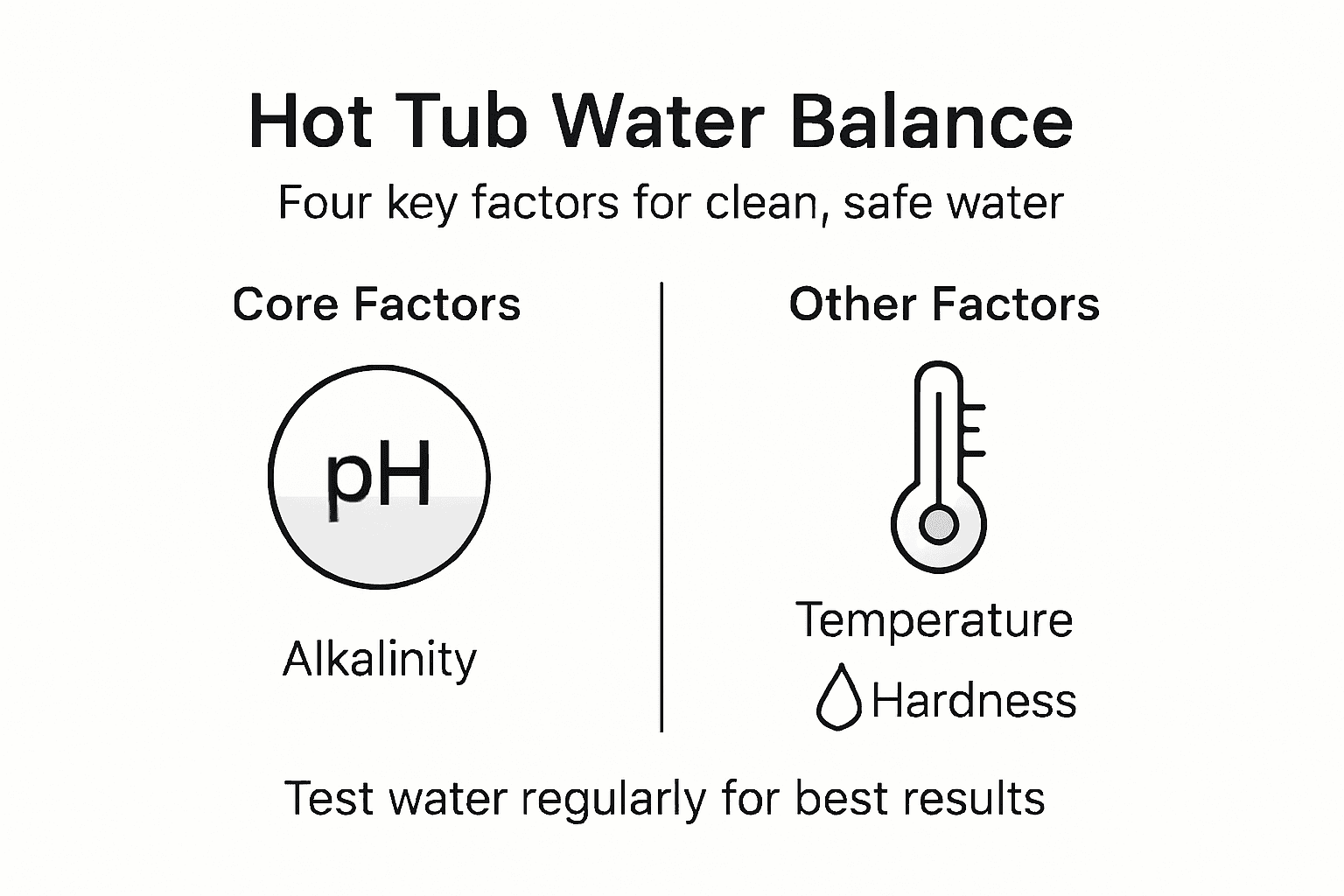
Think of these parameters like the vital signs doctors check during a health appointment. If one is off, it signals an underlying problem. Master these four measurements, and your hot tub stays safe and inviting.
Here’s how the core water parameters interact and why each is essential:
| Parameter | Key Role | Main Risk If Mismanaged | How It Affects Others |
|---|---|---|---|
| pH | Balances acidity/alkalinity | Corrosion or scale formation | Alters sanitiser efficiency |
| Alkalinity | Stabilises pH fluctuations | Wild pH swings, unstable water | Impacts pH control |
| Temperature | Maintains comfort and safety | Promotes bacteria in danger range | Changes chemical behaviour |
| Sanitiser | Destroys bacteria and algae | Increased infection risk | Relies on correct pH/alkalinity |
pH: The Acid-Alkaline Balance
pH measures how acidic or alkaline your water is, on a scale from 0 to 14. For hot tubs, the ideal range is 7.2 to 7.6. Water outside this range causes multiple problems.
When pH drifts too low (acidic water), your eyes sting, skin feels irritated, and equipment corrodes. Too high (alkaline), and scale builds up on surfaces whilst sanitiser works poorly. Your chlorine or bromine becomes ineffective at killing bacteria.
- Low pH damages metal pipes and heater elements
- High pH reduces disinfectant effectiveness
- Proper pH keeps chemicals stable and skin comfortable
PH is your first checkpoint. Test it twice weekly and adjust slowly using pH increasers or decreasers before anything else gets out of balance.
Alkalinity: The Stabiliser
Alkalinity acts like a buffer, preventing pH from swinging wildly. It’s measured in parts per million (ppm), ideally between 80 and 120 ppm for hot tubs. Think of it as a shock absorber for your water.
Without adequate alkalinity, adding a single dose of pH increaser or decreaser causes dramatic swings. Your water becomes unstable, making it impossible to maintain proper sanitiser levels. Understanding alkalinity’s role helps you avoid the frustration of constantly chasing pH readings.
Alkalinity also prevents corrosion and scale formation. Low alkalinity lets acidic water eat away at your equipment. High alkalinity promotes scale build-up and cloudiness.
Test alkalinity weekly. Adjust it before touching pH, because alkalinity affects how pH behaves.
Water Temperature: The Danger Zone
Temperature matters more than many people realise. Legionella bacteria thrives in water between 20 and 45 degrees Celsius, making temperature control essential for safety. Maintaining water above 60°C inhibits harmful bacterial growth.
However, most hot tub owners keep water between 38 and 40°C for comfort. This means your sanitiser must work harder to compensate. Temperature also affects how quickly chemicals work and how volatile chlorine becomes.
Colder water requires more sanitiser. Hotter water destabilises chemicals faster. Your heater should maintain a consistent temperature, not fluctuate throughout the day.
Water Hardness: The Scale Problem
Hardness refers to dissolved minerals, primarily calcium and magnesium. Water hardness causes scale formation on heating elements and surfaces, reducing equipment efficiency and lifespan.
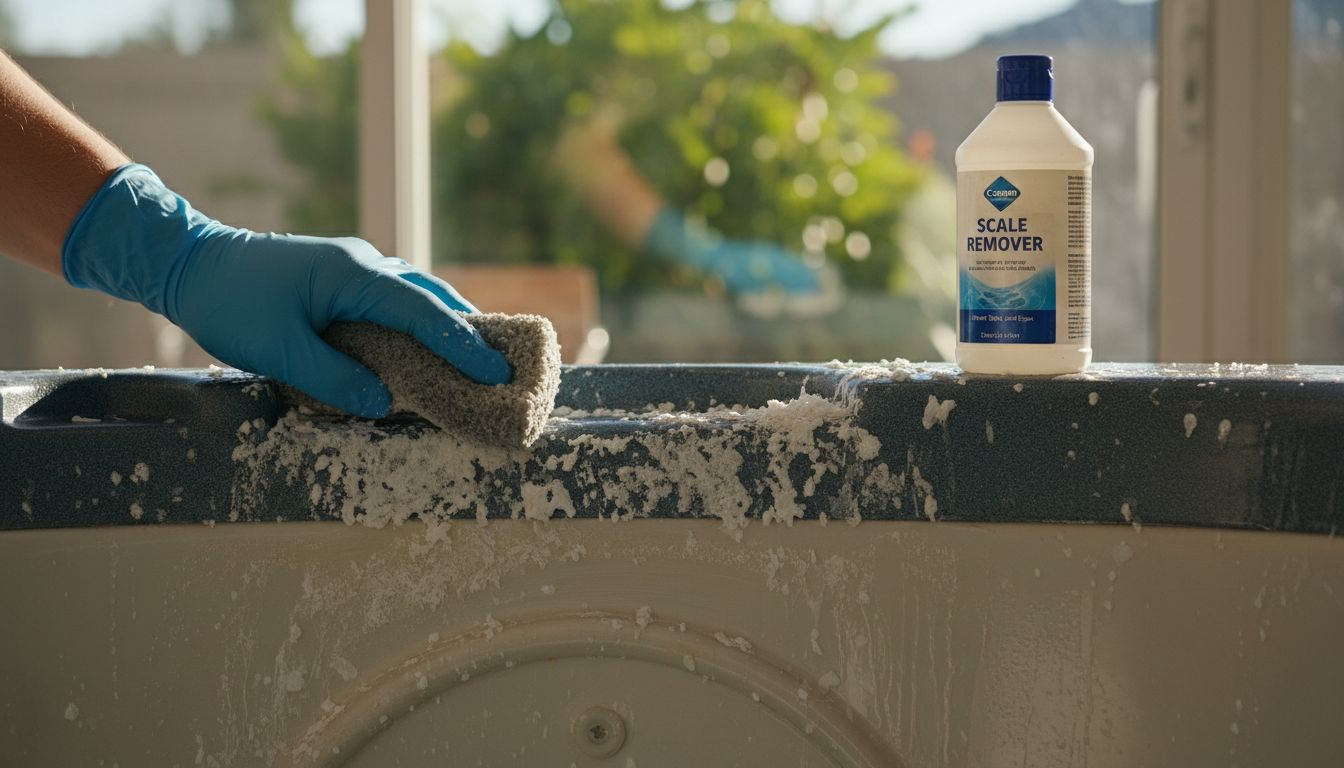
Hard water needs more chemical treatment. Soft water causes corrosion instead of scale. The ideal range is 200 to 400 ppm of hardness.
Test hardness monthly. If it climbs too high, you’ll notice white deposits on jets and heating elements. These deposits insulate your heater, making it work harder and fail sooner.
Sanitiser Levels: The Germ Fighter
Sanitiser (chlorine or bromine) kills bacteria and algae. For chlorine, maintain 2 to 4 ppm. For bromine, keep 4 to 6 ppm. Test daily or every other day - this is your most frequent measurement.
Sanitiser levels drop as water temperature rises and UV light penetrates. Weekly shocks replenish levels and oxidise contaminants. Without adequate sanitiser, bacteria multiplies rapidly, regardless of pH or alkalinity.
All four parameters work together; ignoring one throws the others into chaos.
Pro tip: Create a simple weekly testing chart listing pH, alkalinity, temperature, and sanitiser levels - spotting trends across weeks reveals patterns and prevents crisis management.
How Proper Balancing Impacts Spa Health
Proper water balancing does far more than keep your hot tub looking clean. It directly affects whether your spa becomes a health hazard or a sanctuary. The consequences of neglect are real, from infections to equipment failure.
When chemistry drifts out of balance, dangerous bacteria multiply silently. You cannot see or smell the problem until someone gets sick. Reducing the risk of infections such as legionnaires’ disease depends entirely on maintaining balanced water.
Bacterial Growth and Safety
Legionella bacteria thrives in neglected hot tubs. This bacterium causes severe respiratory infections that send people to hospital. It multiplies in warm, stagnant water with poor disinfection.
Proper water balancing prevents this through three mechanisms:
- Adequate sanitiser kills bacteria before it multiplies
- Correct pH allows disinfectant to work at full strength
- Consistent temperature above 60°C inhibits bacterial growth
Neglect even one of these, and legionella can colonise your pipes. Maintaining balanced water chemistry supports public health by preventing harmful microbes from gaining a foothold.
Equipment Longevity
Imbalanced water corrodes or scales your equipment with surprising speed. Low pH eats through copper pipes and heater elements. High pH deposits minerals that insulate your heater and reduce efficiency.
A corroded heating element fails suddenly, costing £300 to £800 to replace. Scale-covered jets perform poorly and eventually clog. Pumps struggle against the resistance, burning out prematurely.
Proper balancing extends equipment life by years. Your investment stays protected, and you avoid expensive emergency repairs that ruin a relaxing weekend.
Water Clarity and Comfort
Balanced water stays crystal clear. Cloudy water signals chemical problems. Murky or discoloured water means bacteria or algae is thriving, making the tub unsafe.
Your skin tells you immediately when chemistry drifts. Itchy skin, red eyes, and dry hair indicate improper pH or sanitiser levels. Balanced water feels soft and comfortable, never harsh or irritating.
Clarity also matters psychologically. Nobody wants to soak in water they cannot see through. Proper balancing keeps your tub visually inviting and physically safe.
Cost Savings Over Time
Maintaining balance costs pennies weekly but saves pounds yearly. The cost of chemicals for proper balancing is minimal compared to equipment replacement. A single heater failure pays for months of testing strips and adjusters.
Regular testing and minor adjustments prevent emergency situations. You avoid last-minute calls to engineers and emergency repair fees. Your hot tub stays functional, reliable, and ready to use whenever you want it.
Balanced water is preventive medicine for your hot tub - cheap insurance against costly problems.
Peace of Mind
When you maintain proper balance, you know your water is safe. Guests can relax without health concerns. You soakwithout worrying about bacterial infection or skin irritation.
That confidence comes from routine testing and small, timely adjustments. You control the environment instead of reacting to problems.
Pro tip: Keep a logbook of your weekly readings and any adjustments made - patterns in your data reveal seasonal trends and help you stay ahead of problems before they develop.
Common Water Balancing Mistakes to Avoid
Most hot tub problems stem from simple oversights, not complex chemistry. The mistakes people make are predictable and easily preventable. Learning what to avoid saves you time, money, and frustration.
Neglect creates a cascade of problems. Skip testing for two weeks, and you discover cloudy water, equipment corrosion, or worse. The good news: these mistakes are fixable once you know what causes them.
Testing Irregularly or Not at All
The biggest mistake is skipping water tests. Many owners test monthly or only when something looks wrong. By then, damage has already started.
Proper testing happens twice weekly minimum. Your water changes constantly due to bather load, sunlight, and temperature fluctuations. Missing these shifts means you’re always playing catch-up instead of staying ahead.
Without regular testing, you cannot detect problems early. Alkalinity drifts slowly, then pH swings wildly. Sanitiser depletes silently whilst bacteria multiplies. By the time you notice cloudiness, you’ve got a real problem.
Ignoring Temperature Monitoring
Temperature seems stable, so many owners ignore it. This is a critical mistake. Failing to regularly monitor temperature and disinfectant levels creates ideal conditions for bacterial growth.
Temperature affects how all your chemicals work. Warmer water destabilises chlorine faster. Cooler water requires higher sanitiser doses. Without temperature readings, you cannot accurately adjust anything else.
Check temperature during every test. It takes thirty seconds and reveals whether your heater is working properly or failing silently.
Adding Chemicals Without Testing
Some owners guess at chemical needs instead of testing first. They assume alkalinity is low, add increaser, then shock the water. Result: overshooting and overcorrecting repeatedly.
This wastes chemicals and creates swings between extremes. Your water becomes unstable and harder to control. Test first, then adjust. Always.
- Test before any chemical addition
- Add chemicals slowly in small doses
- Wait and retest before adding more
- Avoid multiple adjustments in one day
Neglecting System Maintenance
Water balancing only works when your equipment functions properly. A clogged filter reduces circulation, creating stagnant zones where bacteria thrives. A failing heater cannot maintain safe temperature.
Neglecting cleaning and maintenance schedules undermines all your chemical efforts. Your sanitiser cannot reach dead spots in poorly circulating water. Scale builds up on internal surfaces, reducing efficiency.
Clean filters monthly. Flush pipes regularly. Inspect jets for blockages. Small maintenance tasks prevent major failures.
Overdosing Sanitiser
More sanitiser does not mean safer water. Over-chlorination irritates skin, reddens eyes, and smells awful. It wastes money and creates false security.
Your sanitiser works best within specific ranges. Too much breaks down too quickly and becomes less effective. Test regularly and maintain proper levels rather than adding “extra” for safety.
Ignoring System Flushing
Inadequate flushing of infrequently used outlets allows bacteria to hide in pipes. Dead legs and stagnant zones become bacterial breeding grounds.
Run all jets regularly. Flush pipes if you leave your tub unused for more than a week. Stagnant water is dangerous water.
One skipped test leads to one skipped week, which becomes one skipped month of problems.
Pro tip: Set phone reminders for Tuesday and Friday testing - making it a habit removes the guesswork and catches drift before it becomes damage.
Choosing the Right Products for UK Spas
Not all water treatment products are created equal. Using the wrong ones wastes money and potentially damages your hot tub. UK regulations exist to protect you, and choosing approved products ensures safety and effectiveness.
Your hot tub deserves products designed for British water conditions and regulatory standards. Budget brands cut corners that cost you later in equipment repairs or ineffective treatment.
Understanding UK Approval Standards
Water balancing products must meet UK water quality regulations, ensuring chemicals and materials are safe and effective. Approved products have been tested and verified to perform as advertised without introducing harmful contaminants.
When you see products labelled as compliant with British Standards, that means they’ve passed rigorous safety testing. Your water is safer. Your equipment lasts longer. This matters.
Approved chemicals are formulated for British water chemistry. Hard water in the Midlands behaves differently than soft water in Scotland. Approved products account for these regional differences.
Sanitisers: Chlorine vs. Bromine
Chlorine remains the most popular choice for UK hot tubs. It’s effective, affordable, and readily available. However, chlorine breaks down faster in warm water, requiring frequent dosing.
Bromine works better in hot tubs than in pools because it’s more stable at higher temperatures. It doesn’t produce the harsh odour of chlorine, making it gentler on skin and eyes. Understanding different spa sanitizer options helps you choose based on your water conditions and personal preferences.
Choose whichever suits your situation:
The following table compares chlorine and bromine for UK hot tub owners:
| Factor | Chlorine | Bromine |
|---|---|---|
| Performance in heat | Less stable in hot tubs | More stable at high temps |
| Sensory impact | Stronger smell | Milder odour |
| Skin and eye comfort | Potential for irritation | Gentler for sensitive users |
| Cost | More affordable | Slightly more expensive |
- Chlorine for budget-conscious owners who test regularly
- Bromine for sensitive skin or consistent comfort
- Neither is inherently “better” - both work when used correctly
pH Adjusters and Alkalinity Products
pH increasers and decreasers come in powder or liquid form. Powders cost less but dissolve slowly. Liquids work faster but cost more. For most UK owners, powders are sufficient if you test regularly.
Alkalinity increasers stabilise your pH and prevent wild swings. These are essential, not optional. Without adequate alkalinity, every chemical adjustment becomes a battle against unstable water.
Buy from reputable suppliers who stock products specifically formulated for spas, not pools. Pool chemicals differ slightly and may not perform optimally in hot tub temperatures.
Shock Treatments and Clarifiers
Weekly shocks oxidise contaminants and replenish sanitiser. Non-chlorine shocks work gently without spiking chlorine levels dramatically. Chlorine-based shocks are cheaper but require waiting before water use.
Clarifiers remove suspended particles that make water cloudy. They work best alongside proper filtration. Never use a clarifier to mask poor water chemistry - fix the underlying problem first.
Scale and Corrosion Control
UK water hardness varies regionally. Scale and corrosion products address mineral buildup on heating elements and pipes. Descalers prevent expensive damage in hard water areas.
Test your water hardness. If it’s above 400 ppm, invest in a descaler to protect your heater. Prevention costs far less than replacement.
Where to Buy
Purchase from suppliers who specialise in hot tub chemicals, not general pool supplies. ClearSpa products are specifically tested for UK water conditions and comply with all regulatory standards. Quality suppliers can advise on regional water chemistry differences.
Cheap chemicals create expensive problems; approved products prevent both.
Pro tip: Buy products from a single trusted supplier rather than mixing brands - different product lines are formulated to work together, reducing compatibility issues and chemical conflicts.
Keep Your Hot Tub Perfectly Balanced with ClearSpa
Maintaining the delicate balance of pH, alkalinity, sanitiser levels and temperature can be challenging but is essential for a safe and enjoyable hot tub experience. Common issues like cloudy water, irritating skin, and costly equipment damage are all linked to water chemistry imbalances. ClearSpa understands these struggles and offers a complete range of rigorously tested, high-quality water treatment products designed to help you take control effortlessly.
Enhance your water balancing routine with ClearSpa’s trusted hot tub chemicals and spa essentials. Whether you need pH adjusters to stabilise acidity or effective sanitisers to keep harmful bacteria away, you can find everything at ClearSpa. Start protecting your spa today by choosing products tailored to UK water conditions and backed by expert quality standards. Visit our site now to explore the full collection and enjoy crystal-clear, comfortable water all year round.
Explore the benefits of proper water management and find the right solutions at ClearSpa’s homepage. Learn how our products support balanced chemistry at ClearSpa and take the first step towards hassle-free hot tub care.
Frequently Asked Questions
What is water balancing for hot tubs?
Water balancing involves maintaining the right chemical environment in your hot tub to prevent bacterial growth, water clarity issues, and equipment damage. It focuses on four key parameters: pH level, alkalinity, sanitiser levels, and temperature.
Why is pH level important in hot tub water?
The pH level measures how acidic or alkaline your water is. For hot tubs, the ideal pH range is between 7.2 and 7.6. If the pH level is too low, it can cause corrosion, while a high pH level can lead to scale buildup and reduced sanitiser efficiency, both affecting water quality and the integrity of your equipment.
How often should I test my hot tub water?
It is recommended to test your hot tub water at least twice a week. Regular testing helps you catch any chemical imbalances early, preventing cloudy water, skin irritation, or damage to your hot tub’s equipment.
What happens if I neglect water balancing in my hot tub?
Neglecting water balancing can lead to several issues, including bacterial growth (potentially leading to infections), cloudy or discoloured water, itchy skin, and damage to your hot tub’s equipment. Proper maintenance ensures your hot tub remains safe, pleasant, and long-lasting.