Complete Guide to the Role of Alkalinity
Role of alkalinity explained: discover its impact on water balance, testing methods, common issues, and maintenance for clear, safe hot tubs.
Over 60 percent of equipment failures in pools and hot tubs can be traced to poor water chemistry, with unbalanced alkalinity as a leading culprit. Water’s ability to neutralise acids and steady its own pH keeps your hot tub running smoothly and comfortable to use. Understanding alkalinity is the key to avoiding costly repairs, protecting your skin, and making water care much less confusing.
Table of Contents
- Defining Alkalinity and Its Importance
- How Alkalinity Affects Water Balance
- Testing and Managing Alkalinity Levels
- Common Alkalinity Problems and Solutions
- Alkalinity Maintenance for Hot Tub Owners
Key Takeaways
| Point | Details |
|---|---|
| Understanding Alkalinity | Alkalinity is crucial for maintaining stable pH levels in water, preventing acid fluctuations, and protecting aquatic ecosystems and infrastructure. |
| Importance in Hot Tubs and Pools | Proper alkalinity levels enhance water quality and equipment longevity, making it essential for hot tub and swimming pool maintenance. |
| Regular Testing and Management | Consistent monitoring of alkalinity is vital, with weekly tests recommended to ensure levels remain within the optimal range of 80-120 ppm. |
| Addressing Alkalinity Problems | Recognizing common issues like low or high alkalinity enables effective solutions, such as adjusting pH or using appropriate chemical treatments. |
Defining Alkalinity and Its Importance
Alkalinity represents a fundamental water chemistry characteristic that describes water’s ability to neutralise acids and maintain stable pH levels. According to the Drinking Water Inspectorate, alkalinity primarily emerges from the presence of bicarbonate, carbonate, and hydroxide salts, which play a critical role in water’s chemical balance.
At its core, alkalinity functions as a natural buffering system, preventing dramatic shifts in water’s acidity or basicity. The Core Academic Study highlights that alkalinity characterises water’s capacity to neutralise protons (H+ ions), which is essential for maintaining ecological stability. This remarkable property helps protect aquatic environments and infrastructure from potentially damaging chemical fluctuations.
Key characteristics of alkalinity include:
- Ability to neutralise acids
- Stabilising pH levels
- Protecting against corrosion in water systems
- Supporting biological processes
In hot tub and swimming pool contexts, understanding alkalinity becomes particularly crucial. Why is Total Alkalinity so important in hot tubs or pools provides deeper insights into managing water chemistry effectively. Maintaining the right alkalinity levels ensures not just water quality, but also equipment longevity and user comfort.
How Alkalinity Affects Water Balance
Alkalinity plays a crucial role in maintaining water’s delicate chemical equilibrium. According to the Drinking Water Inspectorate, water’s alkalinity fundamentally determines its capacity to balance pH levels, preventing potential system damage through excessive acidity or alkalinity.
Research from the University of Southampton reveals that alkalinity significantly influences water’s chemical composition. It directly impacts the solubility and availability of nutrients and metals, which can dramatically alter the chemical interactions within aquatic environments. This means slight variations in alkalinity can profoundly affect water’s overall chemical behaviour and ecosystem sustainability.
Key ways alkalinity impacts water balance include:
- Regulating pH stability
- Controlling metal solubility
- Preventing corrosion in water systems
- Managing nutrient availability
- Supporting biological processes
In hot tub and pool maintenance, understanding these interactions becomes paramount. High pH and alkalinity in your hot tub provides essential guidance for maintaining optimal water chemistry, ensuring both equipment protection and user comfort.
Testing and Managing Alkalinity Levels
Testing and managing alkalinity levels is a critical aspect of water chemistry maintenance. The Drinking Water Inspectorate outlines several essential methods for monitoring and adjusting water alkalinity, emphasising the importance of precise pH control and strategic chemical interventions.
In practice, alkalinity testing involves using specialised test kits that measure the water’s buffering capacity. According to the Agriculture and Horticulture Development Board, water quality assessment requires careful monitoring of alkalinity levels, with treatments like acid dosing used to make targeted adjustments.
Key steps in managing alkalinity include:
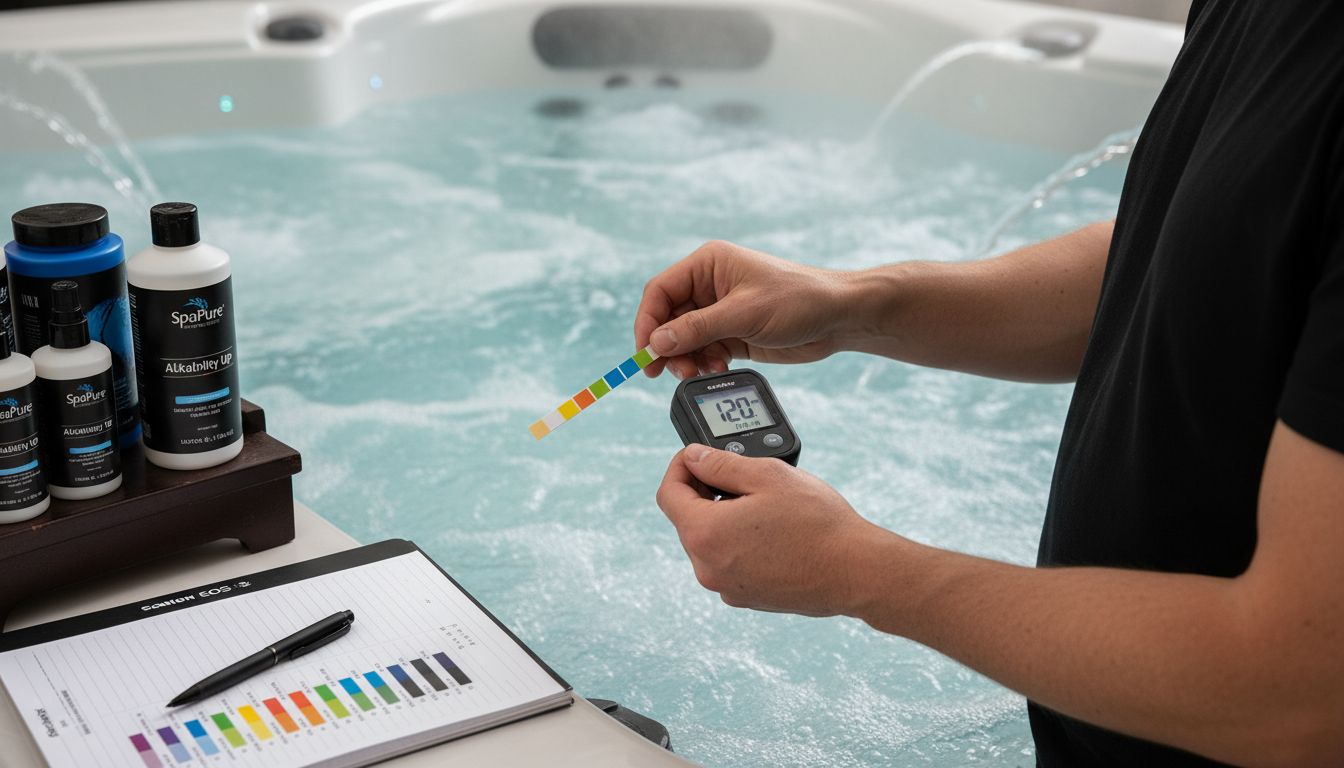
- Regular testing using reliable test strips or digital meters
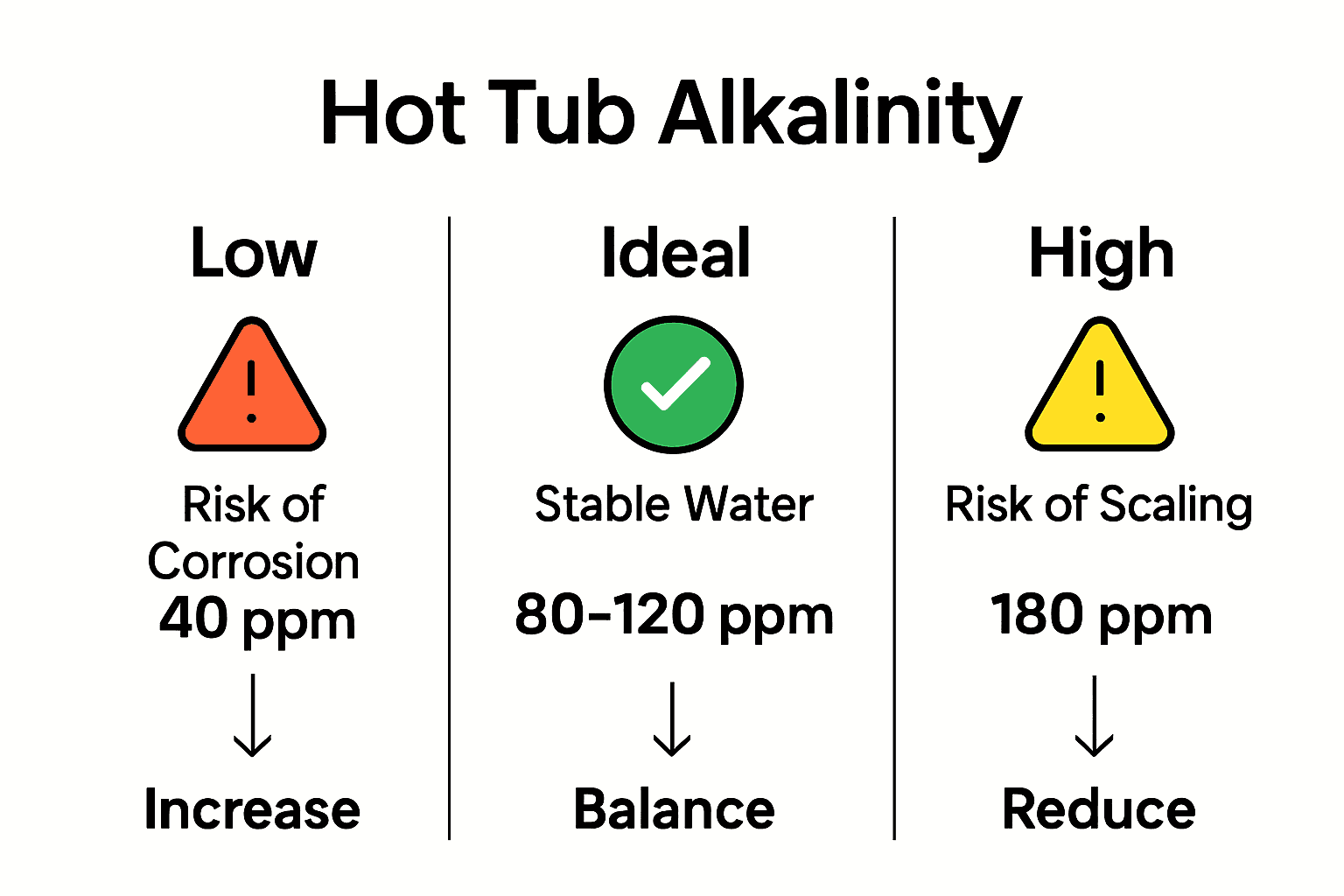
- Understanding ideal alkalinity range (typically 80-120 ppm for hot tubs)
- Using alkalinity increasers or reducers as needed
- Monitoring pH levels alongside alkalinity
- Performing consistent water chemistry checks
For hot tub owners seeking comprehensive guidance, the Total Alkalinity: Complete Guide for Hot Tub Owners provides in-depth insights into maintaining optimal water chemistry and preventing potential equipment damage.
Common Alkalinity Problems and Solutions
Improper alkalinity levels can lead to significant water chemistry challenges. The Drinking Water Inspectorate highlights two primary issues: corrosion in pipes and problematic scaling, which can severely impact water system integrity and performance.
When alkalinity levels become unbalanced, they create a cascade of potential problems. According to the Anglian Craft Brewers, incorrect residual alkalinity can result in unexpected consequences, such as compromised water quality and undesirable chemical interactions.
Common alkalinity problems include:
Here’s a summary of common alkalinity problems and their recommended solutions:
| Problem | Causes | Effects | Solutions |
|---|---|---|---|
| Low alkalinity | Acidic water Overdosing acid |
pH instability Corrosion risk |
Use alkalinity increaser Monitor pH |
| High alkalinity | Excess chemicals Hard water |
Scale buildup Cloudy water |
Add pH reducer Partial water change |
| Corrosion of metal components | Low alkalinity Low pH |
Damaged surfaces Shortened equipment life |
Increase alkalinity Maintain pH |
| Poor sanitiser performance | Unbalanced alkalinity | Ineffective disinfection | Balance alkalinity and pH |
- Low alkalinity leading to pH fluctuations
- High alkalinity causing scale buildup
- Corrosion of metal components
- Ineffective sanitiser performance
- Potential equipment damage
For hot tub owners looking to address these challenges naturally, How do you raise alkalinity in a hot tub effectively provides practical insights into maintaining optimal water chemistry and preventing potential system complications.
Alkalinity Maintenance for Hot Tub Owners
Maintaining proper alkalinity levels is crucial for hot tub water quality and equipment longevity. The Drinking Water Inspectorate emphasises the critical role of alkalinity in preventing corrosion and scaling within water systems, a principle directly applicable to hot tub maintenance.
Regular alkalinity monitoring involves several strategic approaches. According to the Drinking Water Inspectorate, controlling pH and alkalinity requires precise chemical adjustments to ensure optimal water conditions and protect your hot tub’s infrastructure.
Key maintenance practices include:
- Testing alkalinity levels weekly
- Using reliable testing strips or digital meters
- Adjusting alkalinity within the 80-120 ppm range
- Balancing pH alongside alkalinity measurements
- Using appropriate chemical treatments
- Cleaning and maintaining filtration systems
- Preventing mineral buildup
For hot tub owners seeking comprehensive water management guidance, Understanding Water Balancing provides expert insights into maintaining pristine water chemistry and protecting your investment.
Keep Your Hot Tub Perfectly Balanced with ClearSpa
Understanding and managing alkalinity is vital to prevent pH fluctuations, equipment corrosion, and ineffective sanitiser performance in your hot tub. If you want to avoid the frustration of cloudy water or costly repairs caused by unbalanced water chemistry, ClearSpa offers a trusted selection of water treatment products designed specifically to help you maintain the ideal alkalinity level between 80 and 120 ppm.
Take control of your hot tub experience now by exploring our range of carefully formulated hot tub chemicals and spa essentials. Visit ClearSpa for expert solutions and start protecting your investment today with our reliable guides and products. Discover how easy it is to balance your water chemistry and enjoy a safer, cleaner soak with Total Alkalinity: Complete Guide for Hot Tub Owners and explore tips on How do you raise alkalinity in a hot tub effectively to maintain that perfect balance.
Frequently Asked Questions
What is alkalinity and why is it important for water?
Alkalinity is a measure of water’s ability to neutralize acids and stabilise pH levels. It helps prevent dramatic shifts in acidity, protects aquatic environments, and ensures the longevity of water-related infrastructure.
How does alkalinity affect the balance of hot tub or pool water?
Alkalinity plays a crucial role in maintaining pH stability, controlling metal solubility, preventing corrosion, and managing nutrient availability. Proper alkalinity levels are essential for water quality and the comfort of users.
What are the ideal alkalinity levels for hot tubs?
The ideal alkalinity range for hot tubs is typically between 80-120 parts per million (ppm). Maintaining alkalinity within this range helps prevent issues like corrosion and scaling.
How can I test and adjust the alkalinity levels in my hot tub?
To test alkalinity, use specialised test kits or strips. If levels are too low, add an alkalinity increaser. If they are too high, use a pH reducer or perform a partial water change to restore the balance.