Hot Tub Descaler: Why It Matters for UK Spa Care
Hot tub descaler explained: discover what it is, how it removes limescale, types available and safe UK use to keep your spa running smoothly and efficiently.
Hard water impacts many british households, with over 60 percent of homes facing issues caused by mineral buildup in hot tub systems. When minerals like calcium accumulate, they can seriously affect your spa’s performance and lifespan. For anyone maintaining a hot tub, understanding the role of descalers is essential. This guide explains what hot tub descalers do, how they work, and why they’re crucial for british spa owners aiming to keep their systems clean and running smoothly.
Table of Contents
- What Is A Hot Tub Descaler
- Variations Of Descaling Products
- How Descalers Actually Work
- Using Descalers Safely In UK Spas
- Risks And Common Mistakes
- Alternatives And Preventative Options
Key Takeaways
| Point | Details |
|---|---|
| Hot Tub Descalers are essential | They effectively remove mineral scale and calcium buildup, improving efficiency and performance. |
| Regular Maintenance is Crucial | Descaling every 3-4 months can prevent significant buildup and extend equipment lifespan. |
| Choose the Right Product | Use descalers that match your water hardness and spa recommendations to avoid damage. |
| Follow Safety Procedures | Always adhere to manufacturer guidelines and wear protective gear when handling descalers. |
What Is A Hot Tub Descaler
A hot tub descaler is a specialised chemical treatment designed to remove mineral scale and calcium buildup from your spa’s internal surfaces and plumbing system. These mineral deposits naturally accumulate over time due to hard water minerals like calcium carbonate, which can progressively reduce your hot tub’s efficiency and performance.
Scale formation occurs when dissolved minerals precipitate out of water and create hard, crusty deposits inside pipes, heating elements, and jet systems. This buildup can significantly impact your hot tub’s functionality, potentially leading to reduced water flow, increased energy consumption, and potential damage to expensive components. Controlling these mineral deposits is crucial for maintaining your spa’s long-term health and operational efficiency.
Descalers work through a chemical process that breaks down and dissolves these mineral deposits, restoring your hot tub’s internal surfaces to their original condition. Typically, these products contain mild acids or chelating agents that safely react with calcium and magnesium scale, allowing them to be flushed out of the system. The result is improved water circulation, more efficient heating, and reduced strain on your hot tub’s mechanical components.
Hot tub maintenance expert tip: Regular descaling every 3-4 months can prevent significant mineral buildup and extend the lifespan of your spa equipment by up to 50%.
Pro Maintenance Tip: Apply descaler during a complete system flush to ensure comprehensive cleaning of all internal components and plumbing lines.
Variations Of Descaling Products
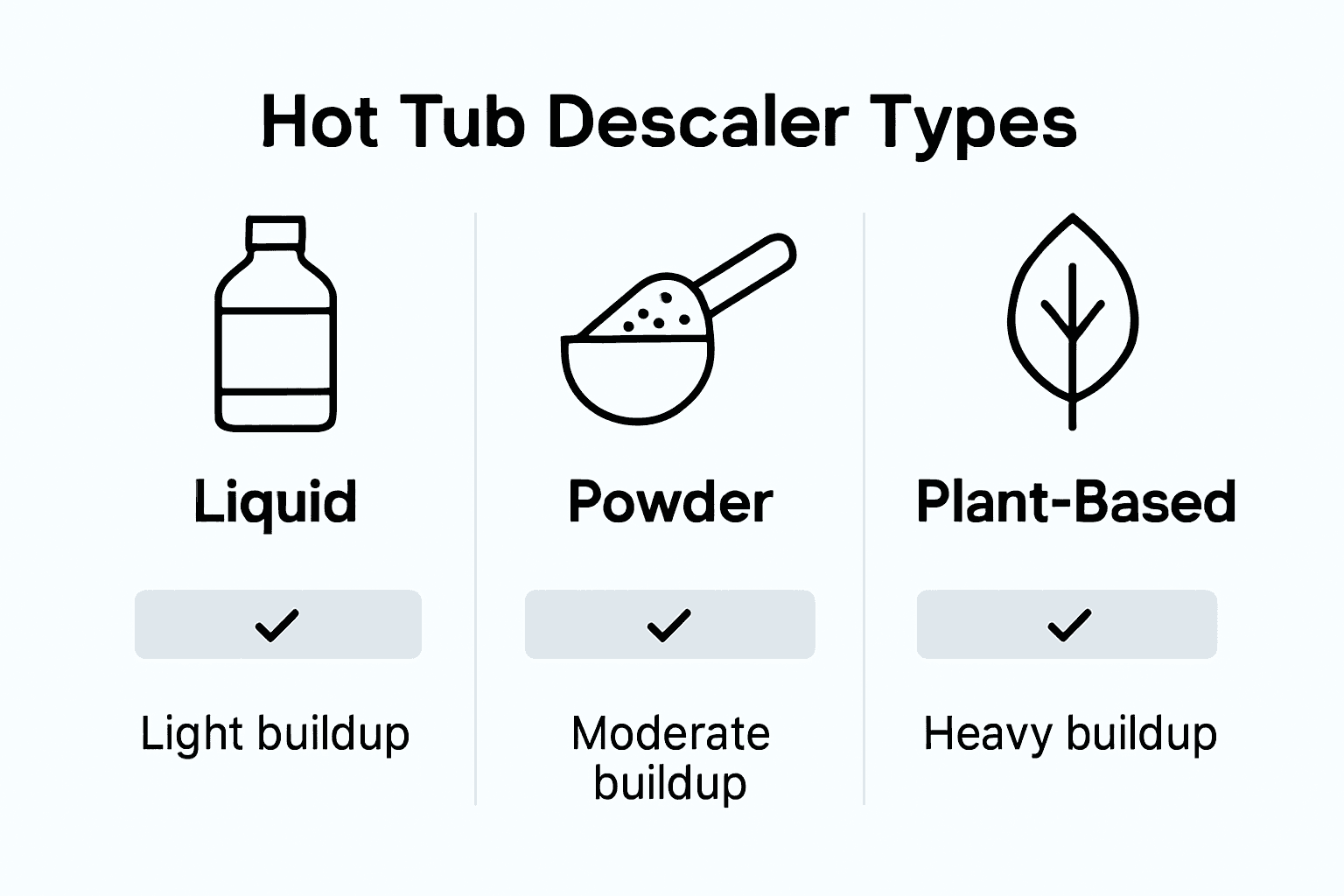
Hot tub descaling products come in several distinct variations, each designed to address specific mineral buildup challenges. The most common types include liquid descalers, powder descalers, and professional-grade chemical formulations tailored to different water hardness levels and spa system configurations.
Liquid Descalers represent the most versatile category, offering quick and efficient scale removal. Plant-based descaling solutions have gained popularity due to their environmentally friendly composition, providing effective mineral deposit removal without harsh chemical interactions. These liquid formulations typically contain mild organic acids like citric or phosphoric acid that safely dissolve calcium and magnesium scale deposits.
Powder descalers offer another effective approach, particularly for more extensive scale buildup. Industrial-strength powdered descalers often come in larger quantities and provide concentrated treatment capabilities. These products are especially useful for comprehensive system flushes, allowing users to thoroughly clean entire hot tub plumbing networks and remove stubborn mineral accumulations.
Chemical composition varies widely across descaling products, with some specialising in specific mineral types and water conditions. Professional-grade descalers might include additional components like chelating agents, which bind to mineral molecules and prevent redeposition during the cleaning process.
Expert Water Treatment Tip: Always match your descaler to your specific water hardness and hot tub manufacturer recommendations to ensure optimal performance and prevent potential system damage.
Here is a comparison of common hot tub descaler types and their main characteristics:
| Descaler Type | Strengths | Typical Applications | Environmental Impact |
|---|---|---|---|
| Liquid (Organic Acid) | Rapid action, gentle on materials | Routine scale removal, light buildup | Low, often biodegradable |
| Powdered | Highly concentrated, cost-effective | Severe or longstanding deposits | Moderate, depends on formula |
| Professional-Grade | Targets stubborn scale, versatile | Industrial or commercial spas | Variable, check composition |
| Plant-Based | Eco-friendly, reduced toxicity | Home spas, regular maintenance | Very low, natural sources |
How Descalers Actually Work
Descalers operate through a sophisticated chemical process that targets and dissolves mineral scale deposits at the molecular level. The fundamental mechanism involves using acidic compounds to break down calcium carbonate, magnesium, and other mineral accumulations that typically form in hot tub systems and plumbing.
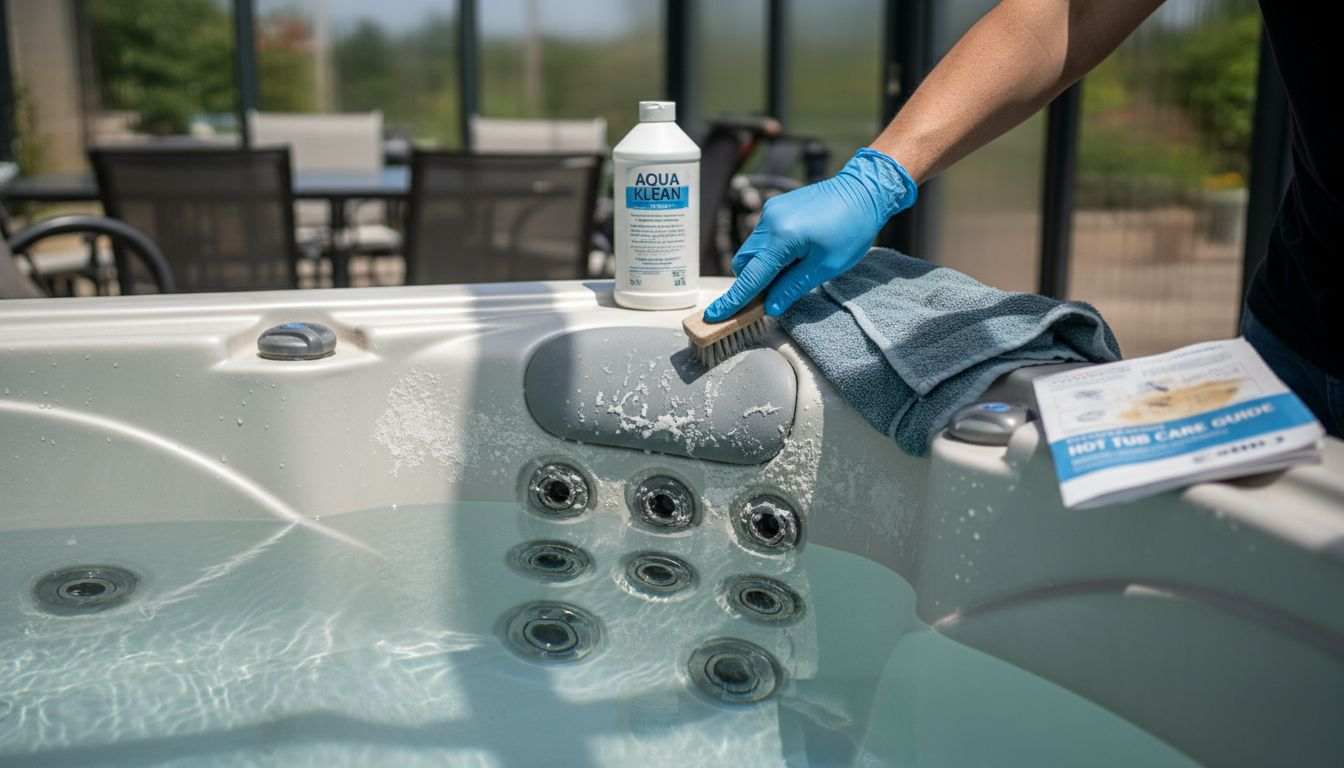
Citric acid-based descaling solutions work by creating a chemical reaction that effectively breaks the ionic bonds holding mineral deposits together. These acids penetrate the scale’s surface, causing it to soften and gradually dissolve, transforming hard, crusty buildup into a liquid solution that can be easily flushed from the system. The process is essentially a controlled chemical breakdown that transforms solid mineral deposits into a manageable liquid state.
The chemical interaction is particularly complex, involving several key steps. Initially, the acid molecules attack the crystalline structure of mineral deposits, breaking their molecular bonds. Plant-derived descaling agents often contain organic acids that perform this function with minimal environmental impact. These acids create a chelation process, where mineral ions are effectively isolated and prevented from redepositing, ensuring a thorough and efficient cleaning mechanism.
Different types of descalers employ unique chemical strategies. Some use strong mineral acids like phosphoric or hydrochloric acid for intense scale removal, while others use gentler organic compounds that provide effective cleaning with reduced potential for equipment damage. The choice depends on the specific mineral composition and the sensitivity of the hot tub’s internal components.
Expert Maintenance Tip: Always perform a complete system flush after descaling to remove any remaining dissolved mineral particles and prevent potential redeposition in your hot tub’s plumbing system.
Using Descalers Safely In UK Spas
Using descalers in hot tubs requires careful attention to safety protocols and manufacturer guidelines. Proper maintenance procedures are crucial to prevent potential health risks and ensure optimal spa performance, particularly in preventing bacterial growth and equipment damage.
Safety begins with carefully reading and following the specific instructions provided by both the descaler manufacturer and your hot tub’s manufacturer. Different spa systems may have unique sensitivities, and using an inappropriate descaling product could potentially damage internal components or compromise the system’s integrity. Always wear protective gloves and eye protection when handling chemical descalers, and ensure the area is well-ventilated during the treatment process.
Health and safety regulations emphasize the importance of thorough system maintenance to control infectious agents and prevent potential health hazards. This involves not just applying the descaler, but also understanding the correct dilution ratios, application techniques, and post-treatment flushing procedures. Avoid mixing different chemical products, as this can create dangerous chemical reactions that might damage your hot tub or pose health risks.
Professional-grade descalers often require specific handling techniques. Some products necessitate gradual application, while others might need complete system drainage before treatment. Temperature considerations are also critical - most descalers work most effectively at specific water temperatures, and applying them outside these parameters can reduce their efficacy or potentially harm your spa’s internal systems.
Expert Safety Tip: Always perform a comprehensive system flush with clean water after descaling to remove any residual chemical traces and prevent potential contamination of your hot tub’s water system.
Risks And Common Mistakes
Descaling hot tubs involves several potential risks that can compromise both equipment functionality and user safety. Improper maintenance practices can lead to serious health complications, with Legionella bacteria representing a particularly dangerous threat to spa users.
One of the most critical mistakes hot tub owners make is using inappropriate or incompatible descaling products. Different spa systems have unique material compositions, and applying an overly aggressive chemical can cause permanent damage to seals, gaskets, and internal plumbing components. Some descalers contain highly acidic compounds that can corrode metal fixtures or degrade synthetic materials, leading to expensive repairs and potential system failure.
Spa-pool system maintenance requires meticulous attention to prevent bacterial growth and potential infectious outbreaks. Common errors include insufficient rinsing after descaling, which can leave harmful chemical residues that interact negatively with subsequent water treatments. Owners frequently underestimate the importance of complete system flushing, potentially creating environments conducive to microbial proliferation.
Additional risks emerge from improper dilution and application techniques. Concentrated descaling solutions can cause chemical burns if mishandled, and mixing different chemical products can trigger dangerous reactions. Inadequate protective equipment during descaling - such as neglecting to wear gloves or eye protection - exposes users to potential chemical splashes and harmful fumes.
Expert Prevention Tip: Develop a comprehensive descaling log documenting each treatment’s date, product used, and specific application method to track your hot tub’s maintenance history and identify potential recurring issues.
To help prevent mistakes, here is a summary of frequent hot tub descaling errors and their typical consequences:
| Common Mistake | Likely Consequence | Prevention Measure |
|---|---|---|
| Using wrong chemical | Damages seals or internal components | Check spa and descaler compatibility |
| Insufficient flushing | Leaves harmful chemical residues | Always perform thorough flush |
| Incorrect dilution | Causes chemical burns or inefficiency | Follow manufacturer’s instructions |
| Mixing products | Hazardous chemical reactions | Never mix chemicals |
| Neglecting protective gear | Risks chemical splashes or inhalation | Wear gloves and eye protection |
Alternatives And Preventative Options
Professional hot tub maintenance guidance emphasises proactive strategies that can minimise the need for aggressive descaling treatments. Prevention begins with understanding water chemistry and implementing regular maintenance protocols that reduce mineral accumulation and potential scale formation.
Water softening represents a primary preventative approach, involving the installation of filtration systems that remove hard water minerals before they can deposit in your hot tub’s plumbing. These systems utilise ion-exchange technology to capture calcium and magnesium ions, effectively preventing scale formation at the molecular level. Some advanced systems incorporate magnetic water conditioning, which alters mineral crystal structures to prevent them from adhering to surfaces.
Spa-pool system maintenance guidelines recommend implementing a comprehensive water management strategy. This involves regular water testing, precise chemical balancing, and using specialised protective treatments that create a microscopic barrier on internal surfaces. Innovative ceramic and polymer-based protective coatings can be applied to hot tub components, creating a smooth surface that significantly reduces mineral adhesion and scale formation.
Alternative descaling methods include enzymatic treatments and natural chelating agents that offer gentler scale removal mechanisms. These biological solutions break down mineral deposits without the harsh chemical interactions associated with traditional acidic descalers. Some advanced treatments use plant-derived compounds that effectively dissolve scale while maintaining the integrity of your hot tub’s internal components.
Expert Prevention Tip: Implement a quarterly water analysis programme to track mineral content and potential scale formation, allowing you to address potential issues before they require intensive descaling treatments.
Protect Your Hot Tub with Expert Water Treatment Solutions
Mineral scale buildup can silently damage your hot tub’s performance and comfort. As the article highlights, addressing calcium and magnesium deposits is essential to maintain efficient water flow, protect internal components, and avoid costly repairs. If you want to prevent the frustration of clogged pipes and reduced heating efficiency while preserving your spa’s lifespan, using the right descaling and water treatment products is vital.
Discover ClearSpa’s range of premium water treatment essentials designed specifically for UK spas. From gentle plant-based descalers to powerful maintenance chemicals, we provide trusted solutions that safely dissolve scale and safeguard your hot tub against future buildup. Visit ClearSpa today to equip yourself with expert-grade products that keep your spa clean and efficient. Take control of your hot tub care now for a consistently relaxing experience that feels just right.
Explore our collection and learn more about effective spa maintenance with ClearSpa’s trusted solutions. Your hot tub deserves nothing less.
Frequently Asked Questions
What is a hot tub descaler and why is it important?
A hot tub descaler is a chemical treatment that removes mineral scale and calcium buildup from your spa’s internal surfaces and plumbing system, which is essential for maintaining the hot tub’s efficiency and preventing damage to components.
How often should I use a hot tub descaler?
It is recommended to use a hot tub descaler every 3-4 months to prevent significant mineral buildup and to extend the lifespan of your spa equipment.
What are the different types of hot tub descalers available?
Hot tub descalers come in various forms, including liquid descalers, powder descalers, and professional-grade products, each tailored for specific mineral buildup challenges and water hardness levels.
How do I use a hot tub descaler safely?
Always read the manufacturer’s instructions carefully, wear protective gear, ensure the area is well-ventilated, and perform a thorough system flush after descaling to remove any remaining chemicals from the hot tub’s plumbing.
Recommended
- 7 Best Practices for Hot Tubs Every UK Owner Should Know - ClearSpa™
- Complete Guide to Why Replace Spa Water - ClearSpa™
- Spa Water Replacement - Why Routine Changes Matter - ClearSpa™
- Spa Water Clarity: Key Steps for a Sparkling Hot Tub - ClearSpa™
- Making Your Bathroom Safer: Simple Tips for a Safe and Comfortable Space - Upchurch Inspection