Understanding What is Hot Tub Chemistry for Your Spa
Discover what is hot tub chemistry and why it matters for maintaining your spa's health, safety, and enjoyment with clear and comprehensive explanations.
Hot tub chemistry is the balance of four things – pH (kept between 7.2 and 7.6), total alkalinity, sanitiser concentration and calcium hardness – that keeps spa water safe, clear and comfortable. Test the water at least once a week and keep a chlorine or bromine residual in range, because just a small shift in pH can make sanitisers almost useless, even if you add the right amount.
Keeping spa water clean is not just simple maintenance: the real game is a delicate balance where every little chemical counts, and neglecting it can turn a relaxing soak into a health risk. This guide explains each parameter, how they interact, and what goes wrong when they are ignored.
Table of Contents
- What Is Hot Tub Chemistry And Its Importance?
- Key Components Of Hot Tub Water Chemistry
- Why Maintaining Balance In Hot Tub Chemistry Matters
- How Chemical Reactions Affect Your Hot Tub Experience
- Real-World Implications Of Neglecting Hot Tub Chemistry
Quick Summary
| Takeaway | Explanation |
|---|---|
| Maintain pH levels between 7.2 and 7.6 | Keeping pH balanced ensures sanitiser effectiveness, comfort, and prevents corrosion or scaling issues. |
| Regularly test water chemistry | Consistent testing helps identify chemical imbalances before they lead to health risks or equipment damage. |
| Use appropriate sanitisers like chlorine or bromine | Effective sanitisation eliminates harmful microorganisms, ensuring a safe hot tub environment for users. |
| Understanding total alkalinity is crucial | Total alkalinity stabilises pH levels, preventing fluctuations that can harm spa equipment and user experience. |
| Neglecting chemistry can lead to serious health hazards | Improperly maintained water can become breeding grounds for harmful bacteria, posing severe health risks to users. |
What is Hot Tub Chemistry and Its Importance?
Hot tub chemistry represents the intricate balance of chemical interactions that maintain water quality, safety, and optimal performance in your spa environment. Understanding these scientific principles is crucial for ensuring a clean, hygienic, and enjoyable hot tub experience.
The Science Behind Water Balance
At its core, hot tub chemistry involves managing multiple chemical parameters to create a stable aquatic ecosystem. Water balance depends on several key factors, including pH levels, alkalinity, sanitiser concentration, and mineral content. These elements interact dynamically, requiring precise measurement and adjustment to prevent potential issues like bacterial growth, equipment damage, and user discomfort.
Specifically, pH levels determine the water’s acidity or alkalinity, which directly impacts sanitiser effectiveness and user comfort. Too high or low pH can lead to corrosion, scaling, and reduced chemical performance. Maintaining a pH between 7.2 and 7.6 ensures optimal water conditions.
Chemical Interactions and Maintenance
Proper hot tub chemistry goes beyond simple water treatment. It involves understanding how different chemicals interact and affect one another. Chlorine or bromine sanitisers, for instance, work most effectively within specific pH ranges. Calcium hardness and total alkalinity also play critical roles in preventing potential water quality problems.
The complexity of these interactions means that regular testing and precise chemical adjustments are essential. Our comprehensive guide on hot tub chemistry basics provides deeper insights into maintaining the perfect chemical balance.
According to research from the University of Bath’s Department of Chemistry, understanding chemical principles is fundamental to effective water management. By approaching hot tub maintenance with scientific precision, owners can create a safe, clean, and enjoyable spa environment that protects both equipment and users.
Key Components of Hot Tub Water Chemistry
Understanding the fundamental components of hot tub water chemistry is essential for maintaining a safe, clean, and enjoyable spa environment. Each chemical parameter plays a critical role in creating balanced water conditions that protect both users and equipment.
The table below summarises the main chemical parameters involved in hot tub water chemistry, highlighting their roles and the consequences of imbalance to aid easy reference.
| Chemical Parameter | Purpose | Consequences of Imbalance |
|---|---|---|
| pH Level | Determines acidity/alkalinity, affects sanitiser performance | Corrosion, scaling, user discomfort |
| Total Alkalinity | Buffers pH, prevents sudden fluctuations | Unstable pH, possible equipment damage |
| Sanitiser Concentration | Kills bacteria and microorganisms, ensures water hygiene | Increased bacteria risk, unsafe water |
| Calcium Hardness | Manages mineral content, protects spa surfaces and equipment | Scaling (high), corrosion (low) |
Primary Chemical Parameters
Hot tub water chemistry comprises several key parameters that work together to create optimal water quality. These essential components include:
- pH Levels: Measuring water acidity or alkalinity, typically ranging between 7.2 and 7.6
- Total Alkalinity: Stabilising pH and preventing sudden chemical fluctuations
- Sanitiser Concentration: Controlling bacterial growth and ensuring water safety
- Calcium Hardness: Managing mineral content to prevent equipment damage
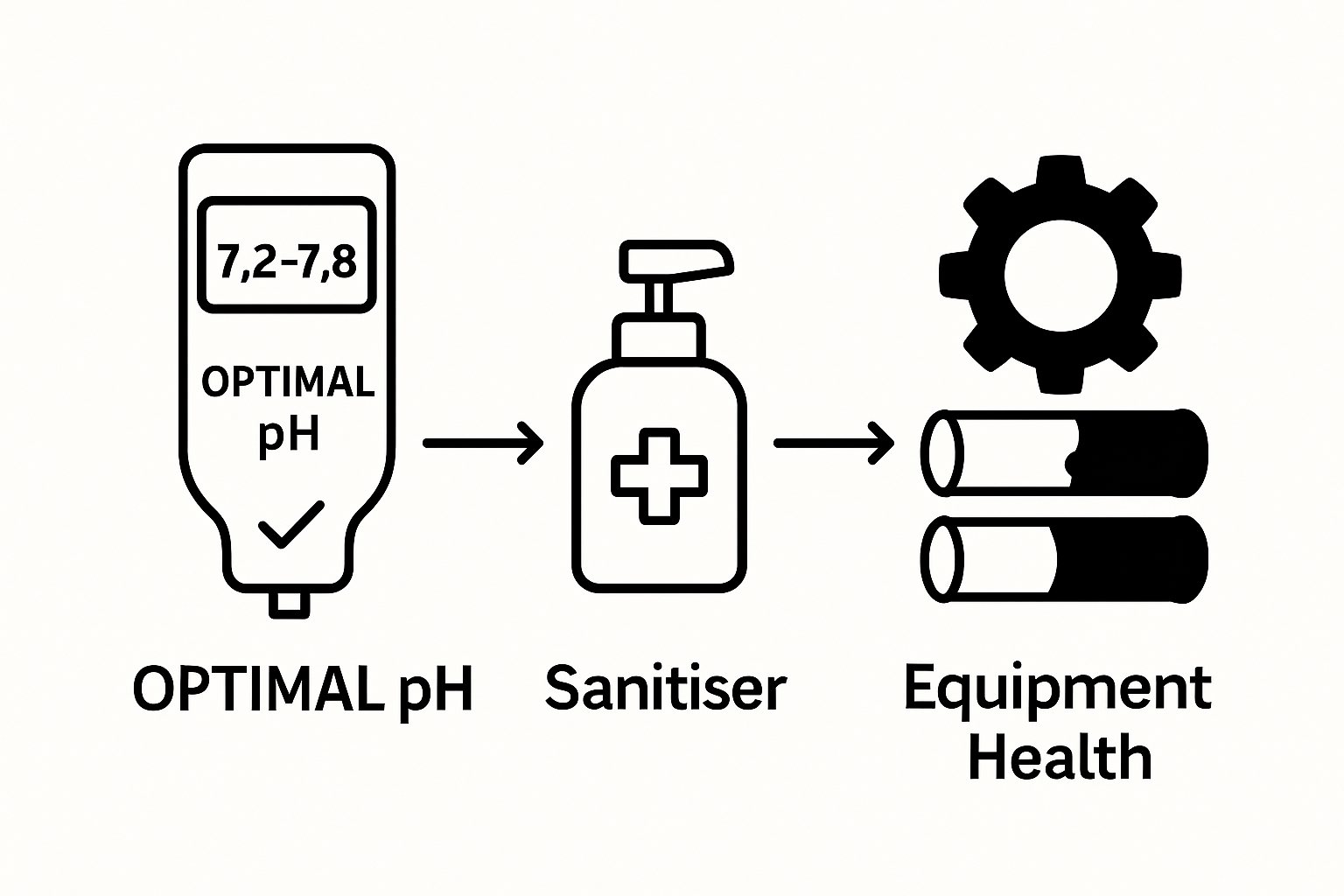
Specifically, pH levels are perhaps the most crucial parameter. They directly influence sanitiser effectiveness, user comfort, and equipment longevity. Maintaining pH within the recommended range prevents potential issues like corrosion, scaling, and reduced chemical performance.
Sanitisation and Water Treatment
Sanitisation represents the cornerstone of hot tub water chemistry. Chlorine and bromine are the primary sanitisers used to eliminate harmful bacteria, viruses, and other microorganisms. These chemicals work by oxidising contaminants, effectively neutralising potential health risks.
Our comprehensive guide on hot tub chemicals provides deeper insights into selecting and managing appropriate sanitisation methods.
According to research from the Devon and Somerset Trading Standards Service, proper water quality management requires regular testing and precise chemical adjustments. This scientific approach ensures that each chemical component remains within its optimal range, creating a safe and enjoyable hot tub experience.
Chemical Interactions and Balance
The complexity of hot tub water chemistry lies in the intricate interactions between different chemical components. Total alkalinity, for instance, acts as a buffer that helps stabilise pH levels, preventing rapid and potentially damaging fluctuations. Calcium hardness influences water’s ability to prevent equipment corrosion and maintain structural integrity.
Successful hot tub maintenance demands a holistic understanding of these chemical relationships, requiring regular monitoring, precise measurement, and strategic chemical adjustments.
Why Maintaining Balance in Hot Tub Chemistry Matters
Maintaining proper chemical balance in a hot tub is far more than a technical requirement it is a critical aspect of ensuring user safety, equipment longevity, and overall spa performance. Understanding the profound implications of chemical equilibrium helps hot tub owners make informed decisions about water management.
Health and Safety Implications
Chemical imbalance can pose significant health risks to hot tub users. Improperly treated water becomes a breeding ground for harmful microorganisms, potentially leading to skin irritations, respiratory issues, and serious bacterial infections. Legionella, a particularly dangerous bacterium, thrives in poorly maintained water environments and can cause severe pneumonia.
Key health risks associated with unbalanced hot tub chemistry include:
- Skin rashes and allergic reactions
- Respiratory complications
- Potential bacterial infections
- Eye and mucous membrane irritations
- Risk of exposure to harmful pathogens
Equipment Protection and Longevity
Beyond health concerns, chemical balance directly impacts the structural integrity of your hot tub. Uncontrolled pH levels and mineral content can cause significant damage to critical components. Corrosion and scaling represent two primary threats that emerge from chemical instability.
Our comprehensive guide on water balancing offers deeper insights into protecting your hot tub investment.
According to research from East Renfrewshire Council, continuous monitoring and precise chemical management are essential for preventing equipment deterioration and ensuring safe spa operation.
Economic and Performance Considerations
Chemical imbalance carries substantial economic implications. Neglecting proper water chemistry leads to increased maintenance costs, premature equipment replacement, and reduced overall hot tub performance. Regularly calibrated chemical levels ensure optimal sanitiser effectiveness, heating efficiency, and user comfort.
Proper maintenance not only protects your financial investment but also guarantees a consistently enjoyable and safe hot tub experience. By understanding and implementing precise chemical management, owners can extend their equipment’s lifespan and maintain a pristine spa environment.
The following table compares the common risks and impacts associated with neglecting hot tub chemistry, providing a clear overview of what is at stake in three key areas.
| Area of Impact | Example Issue | Consequence |
|---|---|---|
| Health & Safety | Bacterial proliferation | Skin irritation, respiratory issues, infection |
| Equipment Longevity | Corrosion, scaling | Premature component failure, costly repairs |
| Financial/Performance | Inefficient sanitiser, scaling | Increased maintenance costs, reduced lifespan |
How Chemical Reactions Affect Your Hot Tub Experience
Chemical reactions are the invisible yet powerful forces that fundamentally shape your hot tub experience. Understanding these intricate interactions helps spa owners optimise water quality, user comfort, and overall system performance.
The Oxidation Process
Oxidation represents a critical chemical reaction in hot tub maintenance. When sanitisers like chlorine or bromine are introduced into the water, they undergo complex oxidation processes that neutralise contaminants. Free chlorine and bromine molecules actively seek out and destroy organic matter, bacteria, and other potentially harmful microorganisms.
Key oxidation reactions involve:
- Breaking down sweat and body oils
- Eliminating microbiological contaminants
- Neutralising organic compounds
- Preventing bacterial reproduction
- Maintaining water clarity
pH Interactions and Chemical Stability
The pH level profoundly influences chemical reactions within your hot tub. At different pH ranges, sanitisers exhibit varying levels of effectiveness. Acidic environments can reduce sanitiser potency, while alkaline conditions might render them less reactive. Maintaining a balanced pH between 7.2 and 7.6 ensures optimal chemical interactions.
Our hot tub maintenance guide provides comprehensive insights into managing these delicate chemical balances.
According to research from the UKCA Chemistry and Aerosol Tutorial, understanding chemical reaction models helps predict and manage complex systemic interactions.
Mineral Reactions and Water Quality
Mineral content triggers additional chemical reactions that impact hot tub performance. Calcium hardness, for instance, influences water’s ability to interact with sanitisers and affects overall chemical stability. High mineral concentrations can lead to scaling, while low concentrations might cause water to become corrosive.
These intricate chemical reactions demonstrate that hot tub water management is a sophisticated scientific process. By comprehending and controlling these interactions, owners can create a consistently safe, clean, and enjoyable spa environment.
Real-World Implications of Neglecting Hot Tub Chemistry
Neglecting proper hot tub chemistry is not merely a technical oversight but a serious risk with potential health, financial, and structural consequences. Understanding these real-world implications helps spa owners recognise the critical importance of consistent water management.
Health Hazards and Bacterial Risks
Inadequate chemical balance transforms hot tubs from relaxation spaces into potential breeding grounds for dangerous microorganisms. Bacterial proliferation can occur rapidly in improperly maintained water, leading to severe health complications.
Potential health risks associated with poor hot tub chemistry include:
- Legionnaires’ disease transmission
- Skin infections and rashes
- Respiratory tract infections
- Urinary tract infections
- Potential exposure to harmful pathogens
These risks are particularly pronounced in warm water environments where bacteria multiply exponentially, making precise chemical management crucial for user safety.
Equipment Damage and Financial Consequences
Chemical imbalance extends beyond health risks, directly impacting your hot tub’s structural integrity and operational efficiency. Corrosion and scaling represent significant threats that can lead to expensive repairs and premature equipment failure.
Our comprehensive guide on balancing chemical levels offers practical strategies for preventing such damage.
According to research from the Health and Safety Executive, spa systems are recognized sources of infectious diseases, emphasising the critical nature of proper water chemistry management.
Long-Term Performance and Maintenance Challenges
Consistent chemical neglect leads to cumulative performance degradation. Unbalanced water chemistry accelerates wear on critical components, reduces heating efficiency, and compromises the overall hot tub experience. Pump seals, heating elements, and surface materials suffer accelerated deterioration when exposed to chemically unstable environments.
Proactive chemical management is not just a maintenance task but a comprehensive approach to preserving your hot tub’s functionality, safety, and longevity. By understanding and respecting the delicate chemical ecosystem within your spa, you protect both your health and your investment.
Take Control of Your Hot Tub Chemistry with ClearSpa Expertise
Struggling with fluctuating pH levels, unclear water, or ongoing sanitiser issues can quickly turn your hot tub from a source of relaxation into a maintenance headache. The article highlighted how imbalanced water chemistry can lead to health risks, equipment damage and constant frustration. If you want reliable solutions for perfectly balanced water every time, ClearSpa is here for you.

Unlock a spa experience that is consistently safe and crystal clear. Discover our broad collection of rigorously tested hot tub chemicals and essentials designed to make water balance simple and effective. Visit ClearSpa now and enjoy the confidence that comes from using the finest products for your hot tub. Take action today to extend the life of your equipment and elevate your comfort with every soak.
Frequently Asked Questions
What is hot tub chemistry?
Hot tub chemistry refers to the balance of chemical interactions that maintain water quality and safety in your spa environment. It involves managing pH levels, alkalinity, sanitiser concentration, and mineral content to create a clean and enjoyable hot tub experience.
Why is maintaining proper pH levels important for my hot tub?
Maintaining pH levels between 7.2 and 7.6 is crucial as it directly affects sanitiser effectiveness, user comfort, and equipment longevity. Poor pH balance can lead to corrosion, scaling, and reduced chemical performance, posing health risks to users.
How often should I test the water chemistry in my hot tub?
It is recommended to test the water chemistry at least once a week. Regular testing allows for precise adjustments to be made to maintain the proper chemical balance, ensuring a safe and comfortable hot tub experience.
What are the health risks of neglecting hot tub water chemistry?
Neglecting proper hot tub chemistry can result in significant health risks such as skin irritations, respiratory issues, and infections. Bacterial growth, including Legionella, can thrive in poorly maintained water, posing severe health hazards to users.