How to Balance Hot Tub Water for Optimal Enjoyment
Learn how to balance hot tub water naturally with this step-by-step guide, ensuring safe and enjoyable soaking in your hot tub.
Maintaining clear and healthy hot tub water never happens by chance. Every year, over 60 percent of hot tub owners encounter water quality issues simply due to imprecise chemical balance. Many people rush to toss in more chemicals whenever things look murky, thinking that will sort it all out. Yet, the real secret to hassle-free hot tub bliss is all in the careful testing and tiny adjustments most overlook. Prepare to rethink your routine.
Table of Contents
- Step 1: Gather Necessary Testing Supplies
- Step 2: Test The Water’s pH And Alkalinity Levels
- Step 3: Adjust pH Levels As Needed
- Step 4: Correct Alkalinity For Stable pH
- Step 5: Sanitize With Appropriate Chemicals
- Step 6: Retest Water For Balance Verification
Quick Summary
| Key Point | Explanation |
|---|---|
| 1. Use a reliable testing kit | Select a comprehensive water testing kit that measures pH, alkalinity, calcium hardness, and sanitiser concentrations for accurate results. |
| 2. Maintain ideal pH and alkalinity | Ensure pH levels are between 7.2 and 7.8 and total alkalinity is between 80 and 120 ppm for optimal water balance. |
| 3. Adjust pH incrementally | Use pH increasers for low levels and reducers for high levels, making small adjustments and retesting after 30 minutes. |
| 4. Regularly sanitise hot tub water | Choose between chlorine and bromine, maintaining sanitiser levels of 1-3 ppm for chlorine and 2-4 ppm for bromine. |
| 5. Retest after adjustments | Always retest water for balance after making chemical adjustments, documenting results for future reference. |
Step 1: Gather Necessary Testing Supplies
Successfully balancing hot tub water begins with proper preparation and having the right testing equipment at your disposal. This critical first step sets the foundation for maintaining pristine water quality and ensuring a safe, enjoyable spa experience.
To start your water testing journey, you will need a comprehensive water testing kit specifically designed for hot tub maintenance. Professional hot tub enthusiasts recommend selecting a kit that provides multiple parameter measurements, allowing you to assess water chemistry with precision. Look for kits that can measure pH levels, total alkalinity, calcium hardness, and sanitiser concentrations.
Your essential testing toolkit should include several key components. Here are the primary items you will need:
- Digital or liquid-based pH and alkalinity test kit
- Chlorine or bromine test strips
- Calcium hardness test strips
- Clean, dry testing containers
- Colour comparison chart
- Calibrated testing reagents with current expiration dates
When selecting your testing supplies, prioritise accuracy and reliability. Cheap, outdated testing kits can provide misleading results, potentially leading to incorrect chemical treatments. Investing in high-quality testing equipment from reputable manufacturers will save you time and prevent potential water chemistry complications.
Careful attention to your testing kit’s condition is paramount. Always store testing supplies in a cool, dry location away from direct sunlight. Check expiration dates regularly, as expired reagents can produce inaccurate readings. Replace your testing supplies annually or as recommended by the manufacturer to maintain optimal testing precision.
Before beginning your water testing process, ensure you have clean hands and follow the manufacturer’s instructions meticulously. Some kits require specific sample collection techniques or precise timing for accurate results. Take your time and approach the testing process methodically, understanding that each parameter provides crucial information about your hot tub’s water balance.
Below is a table summarising the key supplies required for balancing hot tub water, along with their purpose and important considerations.
| Item | Purpose | Important Considerations |
|---|---|---|
| Water testing kit | Measures pH, alkalinity, calcium hardness, and sanitiser levels | Ensure kit is comprehensive and not expired |
| pH and alkalinity test kit | Accurately tests pH and alkalinity | Digital or liquid-based, stored properly |
| Chlorine or bromine test strips | Checks sanitiser concentration | Use specific strips for chosen sanitiser |
| Calcium hardness test strips | Assesses calcium hardness in water | Essential for full chemical balance |
| Clean, dry testing containers | Collects representative water samples | Avoids contamination during sample collection |
| Colour comparison chart | Helps interpret test results visually | Match colours accurately for precise readings |
| Calibrated testing reagents | Provides reliable chemical testing | Use fresh reagents, replace annually |
Step 2: Test the Water’s pH and Alkalinity Levels
With your testing supplies ready, the next crucial stage in balancing hot tub water involves precisely measuring pH and alkalinity levels. These parameters are fundamental to maintaining water quality, preventing equipment damage, and ensuring a comfortable spa experience. Understanding pH and alkalinity helps you create the ideal chemical environment for your hot tub.
Begin by filling your clean testing container with water from the centre of your hot tub, approximately 30 centimetres below the water surface. This location provides the most representative sample, avoiding areas near water jets or chemical input zones. Hold the container steady and collect water at elbow depth, ensuring no surface contaminants interfere with your testing.
Using your liquid test kit or test strips, carefully follow the manufacturer’s instructions for pH and alkalinity measurements. Ideal pH levels should range between 7.2 and 7.8, which represents the perfect balance for hot tub water. Alkalinity acts as a pH buffer, and optimal total alkalinity should measure between 80 and 120 parts per million (ppm).
When interpreting test results, pay close attention to the colour comparison chart included with your testing kit. Different colours correspond to specific chemical concentrations. If your pH appears too low (acidic), the sample might display a yellowish or orange tone, indicating the need for pH increasers. Conversely, a bluish or purple colour suggests high alkalinity, requiring pH reducers to restore balance.
Be mindful of potential testing variations. Factors such as recent chemical treatments, water temperature, or residual sanitisers can momentarily influence test results. To ensure accuracy, perform the test twice and compare outcomes. Consistent readings provide the most reliable indication of your hot tub water’s current chemical state.
After completing your initial test, record the results in a dedicated maintenance log. This practice helps track water chemistry changes over time and supports more precise future treatments. By meticulously documenting each testing session, you create a valuable reference for maintaining optimal hot tub water balance.
Step 3: Adjust pH Levels as Needed
After identifying your hot tub water’s current pH status, the next critical step involves precise chemical adjustment to restore optimal balance. Maintaining the correct pH range protects your hot tub equipment, ensures user comfort, and prevents potential water chemistry complications.
When your test results indicate pH levels outside the ideal 7.2 to 7.8 range, you will need to introduce specific chemical treatments. For low pH levels (acidic water), you will require a pH increaser, while high pH levels demand a pH reducer. Our pH plus sodium carbonate solution provides an excellent option for raising pH levels gradually and safely.
To adjust pH, always follow a systematic approach. Begin by calculating your hot tub’s water volume accurately, as chemical dosages depend directly on total water quantity. Most hot tubs range between 1,000 and 1,500 litres, but precise measurement ensures accurate treatment. Carefully read your chosen chemical product’s instructions, paying close attention to recommended dosage rates and application methods.
When adding pH adjustment chemicals, work incrementally and methodically. Pour the recommended amount directly into the water near an active water jet to promote rapid and even distribution. Run the hot tub’s circulation system for approximately 15 minutes following chemical introduction, which helps distribute the treatment uniformly and prevents localised chemical concentration.
After initial treatment, wait at least 30 minutes before retesting water chemistry. This waiting period allows the chemicals sufficient time to integrate thoroughly. Retest using your liquid test kit or test strips, comparing the new results against the previous measurement.
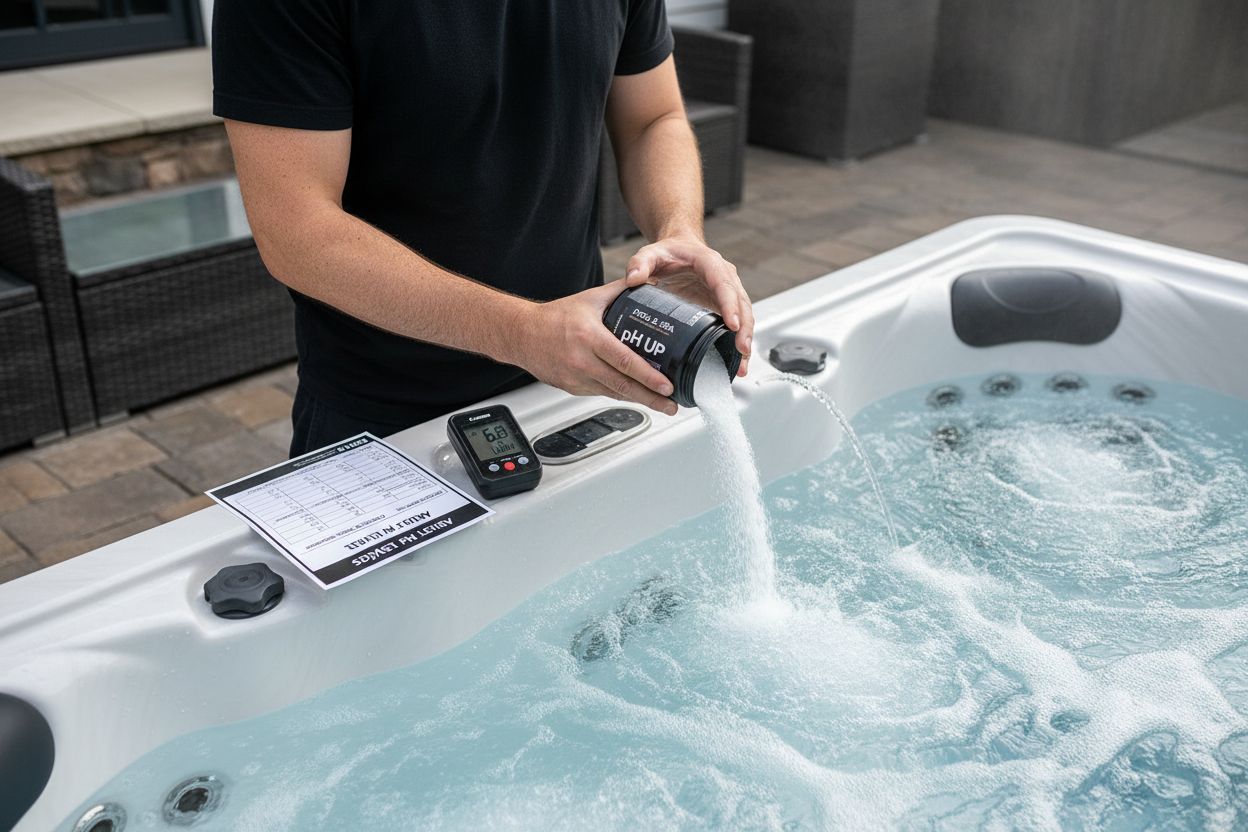 Small, controlled adjustments are always preferable to dramatic chemical interventions.
Potential challenges may arise during pH adjustment. Factors such as water temperature, existing chemical balance, and frequency of hot tub usage can influence pH stability. If you consistently struggle to maintain balanced pH levels, consider consulting a professional spa technician who can provide personalised guidance tailored to your specific hot tub configuration and water conditions.
Step 4: Correct Alkalinity for Stable pH
Total alkalinity serves as a critical buffer that stabilises pH levels in your hot tub water, preventing sudden and potentially damaging chemical fluctuations. Understanding and adjusting alkalinity is essential for maintaining a consistent and balanced water environment. Learn more about alkalinity management to protect your spa investment.
After completing your initial water testing, compare your total alkalinity measurement against the ideal range of 80 to 120 parts per million (ppm). When alkalinity falls outside this range, your hot tub water becomes vulnerable to rapid pH shifts, which can cause equipment corrosion, skin irritation, and reduced sanitiser effectiveness.
Low alkalinity requires the addition of an alkalinity increaser, typically sodium bicarbonate. When adding this chemical, work methodically and precisely. Measure the exact quantity based on your hot tub’s total water volume, and distribute the powder near an active water jet to ensure thorough and rapid mixing. Run your hot tub’s circulation system for 15 to 20 minutes following treatment, allowing the chemical to disperse evenly throughout the water.
Conversely, high alkalinity necessitates using a pH and alkalinity reducer. These products, often containing sodium bisulphate, help lower both alkalinity and pH levels simultaneously. Exercise caution during application, adding the chemical in small, controlled increments. Overdosing can create more significant water chemistry challenges that are difficult to rectify.
After introducing alkalinity adjustment chemicals, wait at least 30 minutes before retesting. This waiting period allows the chemicals sufficient time to integrate and stabilise. Your goal is to achieve a gradual, controlled adjustment rather than dramatic chemical swings. Patience and precision are key to successful water treatment.
Remember that external factors like environmental conditions, frequency of hot tub use, and the number of bathers can influence alkalinity levels. Regular monitoring and incremental adjustments will help you maintain a stable, comfortable hot tub water environment. Consistent maintenance prevents more complex water chemistry problems and extends the lifespan of your spa equipment.
Step 5: Sanitize with Appropriate Chemicals
Sanitisation represents the cornerstone of maintaining a safe and hygienic hot tub environment. After balancing pH and alkalinity, introducing the correct sanitising chemicals eliminates harmful bacteria, prevents algae growth, and ensures water remains clean and safe for users. Proper sanitisation protects both your health and your hot tub’s structural integrity.
Two primary sanitising options dominate hot tub maintenance: chlorine and bromine. Chlorine offers a cost-effective and rapid bacteria-elimination method, while bromine provides more stable performance at higher temperatures and generates less offensive odours. Your choice depends on personal preference, sensitivity, and specific hot tub usage patterns.
This table compares the two main sanitising options available for hot tubs, summarising their advantages, disadvantages, and recommended usage.
| Sanitiser Type | Main Advantages | Potential Drawbacks | Recommended Level (ppm) |
|---|---|---|---|
| Chlorine | Cost-effective, rapid bacteria elimination | Stronger odour, less effective at high temperatures | 1 - 3 |
| Bromine | More stable at higher temperatures, less odour | Typically more expensive, slower acting | 2 - 4 |
When applying sanitising chemicals, precision is paramount. Ideal sanitiser levels typically range between 1 to 3 parts per million (ppm) for chlorine and 2 to 4 ppm for bromine. Begin by measuring your hot tub’s water volume accurately to calculate the correct chemical dosage. Most sanitiser products include comprehensive dosage instructions based on water volume, so follow these guidelines meticulously.
Distribute sanitiser chemicals evenly by adding them near active water jets, which helps rapid and thorough mixing. Run your hot tub’s circulation system for 15 to 20 minutes following chemical introduction. This ensures uniform chemical dispersion and prevents localised concentration that could potentially damage equipment or create uneven sanitation.
Regular shock treatments complement routine sanitisation, helping eliminate contaminants that standard sanitising processes might miss. Perform shock treatments weekly or after heavy usage, using specifically designed oxidising agents that break down organic compounds and restore water clarity. These treatments also help reinvigorate your primary sanitiser’s effectiveness.
Monitor sanitiser levels consistently using test strips designed for chlorine or bromine measurement. Check these levels at least twice weekly, adjusting chemical quantities as needed. Remember that factors like bather load, environmental conditions, and frequency of use can rapidly deplete sanitiser concentrations. Maintaining a disciplined testing and treatment schedule ensures your hot tub remains a clean, safe, and enjoyable relaxation space.
Step 6: Retest Water for Balance Verification
After implementing chemical adjustments, the final crucial step involves comprehensive water retesting to confirm your hot tub’s chemical balance has been successfully restored. Water balancing requires meticulous verification to ensure optimal performance and user safety.
Systematic retesting is not merely a recommendation but a fundamental requirement for maintaining pristine hot tub water conditions. Utilise the same high-quality test kit employed in your initial assessment, ensuring consistent and reliable results. Wait at least 30 minutes following your previous chemical treatments before conducting this verification test, allowing sufficient time for chemicals to integrate thoroughly and stabilise.
When retesting, collect a water sample from the centre of your hot tub, approximately 30 centimetres beneath the surface. Ensure your hands are clean and free from any residual lotions or oils that could contaminate the sample. Follow the test kit’s instructions precisely, comparing the resulting colour indicators against the provided chart with meticulous attention to detail.
Check each critical parameter systematically: pH should remain between 7.2 and 7.8, total alkalinity between 80 and 120 parts per million, and sanitiser levels within the recommended range of 1 to 3 parts per million for chlorine or 2 to 4 parts per million for bromine. Small deviations are acceptable, but significant discrepancies require immediate additional chemical adjustment.
If your retest reveals persistent chemical imbalances, resist the urge to overcompensate with excessive chemical treatments. Instead, make incremental adjustments, retesting after each modest intervention. Document your findings in a dedicated maintenance log, tracking water chemistry changes over time. This systematic approach not only helps maintain optimal water conditions but also provides valuable insights into your hot tub’s unique chemical behaviour.
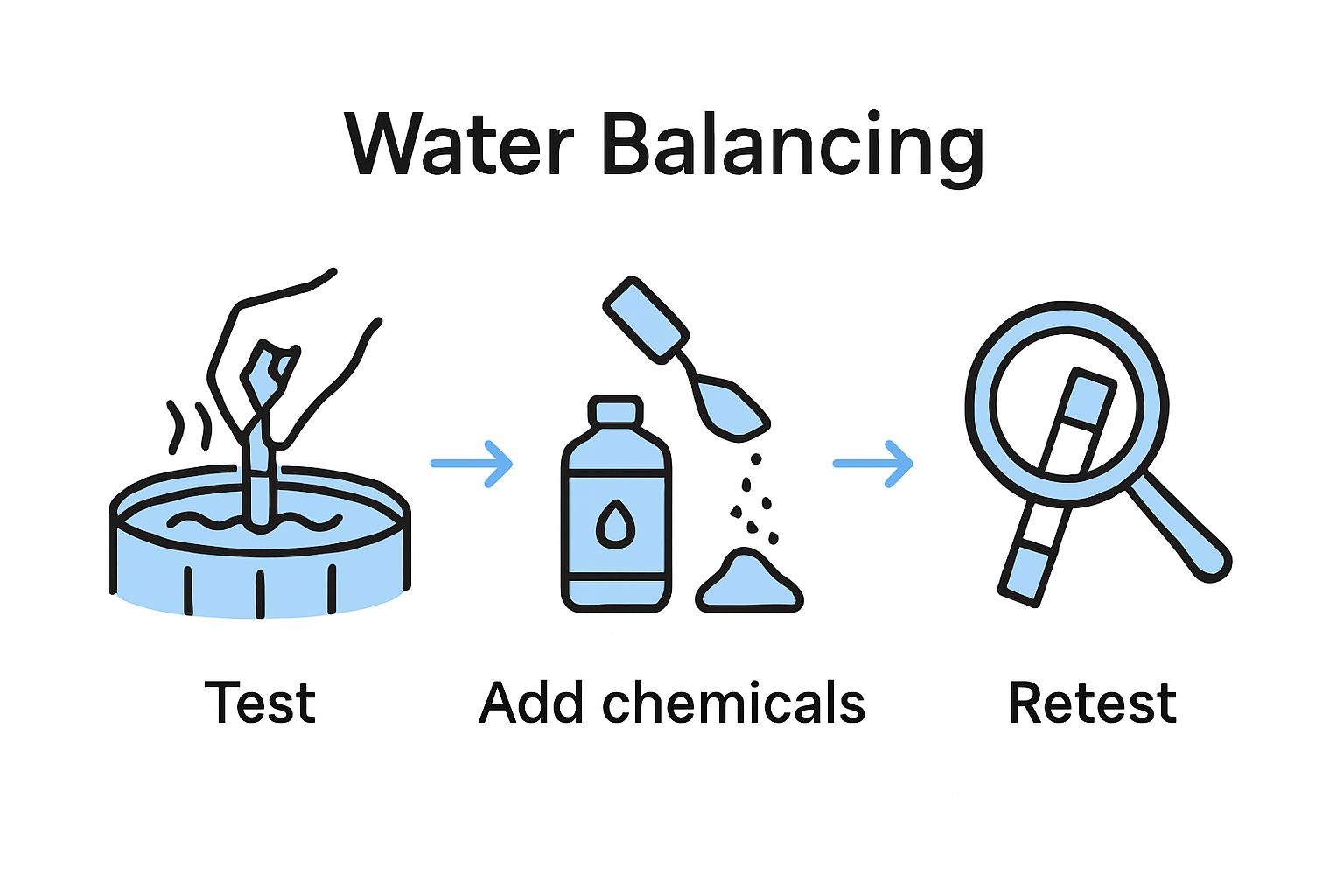
Remember that water balance is a dynamic process influenced by numerous factors including bather load, environmental conditions, and frequency of use. Consistent monitoring and patient, precise adjustments are the keys to maintaining a safe, comfortable, and enjoyable hot tub experience.
Ready for Flawless Hot Tub Water? Choose ClearSpa for Total Peace of Mind
Countless hot tub owners find water balancing daunting. From battling fluctuating pH levels to chasing stubborn cloudiness, keeping your spa inviting and hygienic can feel like a never-ending task. If you are tired of unreliable readings, ineffective chemicals, or guesswork every week, it is time to experience a simpler, more reliable solution. Visit the ClearSpa website to explore our range of premium water treatment products designed to tackle every stage discussed in this guide, from precise pH plus sodium carbonate solutions to advanced sanitising chemicals and complete testing kits.
Stop wasting time and money on inadequate supplies or short-lived fixes. Instead, trust the expertise and proven quality behind every ClearSpa product. Maintain water clarity, achieve optimal balance, and protect your investment the easy way. Take control of your hot tub’s health and transform your maintenance routine today by browsing the full selection at ClearSpa.
Frequently Asked Questions
What supplies do I need to balance hot tub water?
To balance hot tub water effectively, you’ll need a water testing kit that measures pH, alkalinity, calcium hardness, and sanitiser concentrations. Gather a digital or liquid pH and alkalinity kit, chlorine or bromine test strips, and calibrated testing reagents to start.
How do I measure pH and alkalinity levels in my hot tub?
To measure pH and alkalinity, fill a clean testing container with water from the centre of the hot tub, roughly 30 centimetres below the surface. Follow your test kit’s instructions to obtain readings, aiming for a pH range of 7.2 to 7.8 and total alkalinity between 80 to 120 parts per million (ppm).
What should I do if my pH levels are too low or too high?
If pH levels are outside the ideal range, adjust them using a pH increaser or reducer as appropriate. Pour the recommended amount of the chemical near an active water jet, run the circulation system for 15 minutes, and retest after 30 minutes to confirm the new levels.
How can I adjust the alkalinity levels in my hot tub water?
If total alkalinity falls below 80 ppm or exceeds 120 ppm, add an alkalinity increaser or reducer respectively. Always measure the chemical based on your hot tub’s water volume and distribute it near a water jet, then wait at least 30 minutes before retesting.
How often should I test my hot tub water for balance?
Test your hot tub water at least twice a week to ensure it remains balanced and safe for users. Regular testing helps you adjust pH, alkalinity, and sanitiser levels before they fluctuate significantly.
What is the best way to sanitise my hot tub water?
To sanitise hot tub water effectively, use either chlorine or bromine based on your personal preference. Maintain sanitiser levels between 1 to 3 ppm for chlorine or 2 to 4 ppm for bromine, adding chemicals near water jets and running the circulation system for 15 to 20 minutes for even distribution.