Spa Maintenance Routines - How They Protect Your Hot Tub
Spa maintenance routines ensure clean water, equipment longevity, and user health. Learn types, key tasks, risks, and product solutions for UK spas.
Over eighty percent of British hot tub owners report unexpected maintenance issues within the first year. That statistic highlights why regular spa care cannot be overlooked. Staying on top of maintenance routines plays a crucial role in protecting your investment, ensuring health, and prolonging your spa’s life. This guide breaks down exactly what effective spa maintenance means so you can keep every soak safe and worry-free.
Table of Contents
- Definition Of Spa Maintenance Routines
- Daily, Weekly, And Monthly Maintenance Types
- Essential Spa Care Steps And Chemicals
- Health, Safety, And Environmental Considerations
- Consequences Of Neglecting Regular Maintenance
Key Takeaways
| Point | Details |
|---|---|
| Importance of Regular Maintenance | Consistent spa maintenance is crucial to prevent equipment failure and ensure water quality, requiring daily, weekly, and monthly tasks. |
| Chemical Management | Proper chemical management is essential for preventing bacterial growth and maintaining safe water conditions for users. |
| Health and Environmental Considerations | Attention to health and environmental factors is vital in maintenance practices to avoid health risks and minimise ecological impact. |
| Consequences of Neglect | Failing to maintain the spa can lead to costly repairs and health hazards due to equipment degradation and bacterial proliferation. |
Definition Of Spa Maintenance Routines
Spa maintenance routines represent a systematic approach to preserving the functionality, cleanliness, and longevity of your hot tub. These essential protocols involve regular water treatment, equipment inspection, and preventative care designed to protect your investment and ensure optimal performance. Understanding these routines means recognising that a hot tub requires consistent attention beyond occasional cleaning.
A comprehensive spa maintenance routine typically involves several critical elements: water chemistry management, filter maintenance, surface cleaning, and equipment checks. Spa water maintenance steps demonstrate that regular water testing forms the cornerstone of effective hot tub care. This involves monitoring pH levels, sanitiser concentrations, and total alkalinity to prevent potential damage and maintain water quality.
The primary objectives of spa maintenance routines include preventing bacterial growth, protecting internal components from mineral buildup and corrosion, and maintaining water that is safe and comfortable for users. These routines are not merely about aesthetic cleanliness but about preserving the complex mechanical and chemical systems that enable your hot tub to function efficiently. By implementing consistent maintenance practices, you can significantly extend your spa’s operational lifespan and reduce the likelihood of costly repairs.
Pro Tip: Weekly Water Check: Dedicate 15 minutes each week to comprehensive water testing and chemical balancing to prevent potential long-term damage and maintain your hot tub’s pristine condition.
Daily, Weekly, And Monthly Maintenance Types
Spa maintenance follows a structured schedule divided into daily, weekly, and monthly tasks, each playing a crucial role in preserving your hot tub’s performance and longevity. Comprehensive maintenance routines ensure systematic care that prevents potential issues and maintains water quality throughout different intervals.
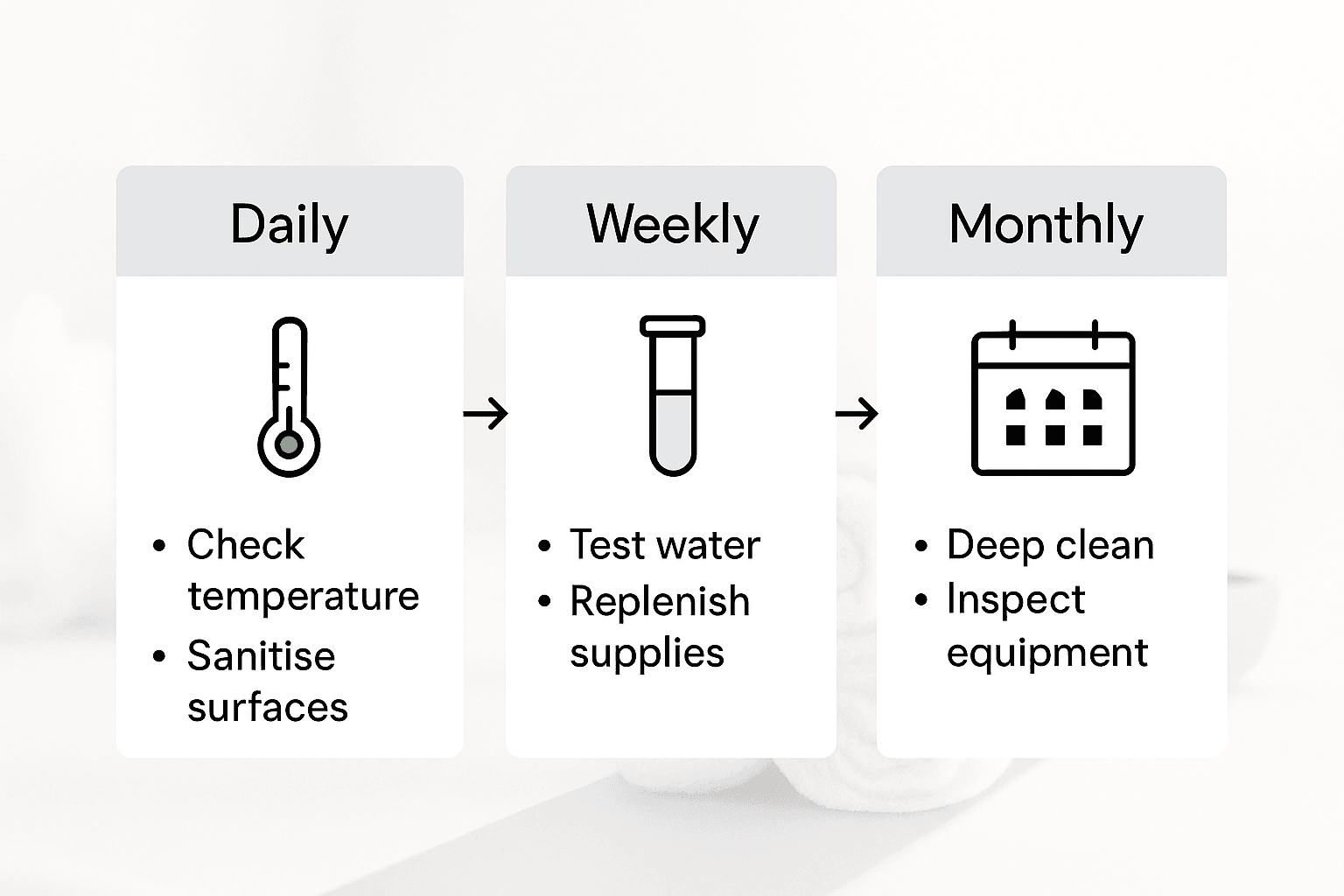
Daily maintenance represents the most frequent and critical intervention. These quick checks include verifying water temperature, inspecting the spa cover’s security, and conducting a basic visual assessment of water clarity. Operators should also test sanitiser levels and ensure the hot tub remains free from visible debris. Immediate attention to small issues prevents them from escalating into more significant problems that could compromise the entire spa system.
Weekly maintenance involves more comprehensive procedures, such as thorough water chemistry testing and balancing. This includes measuring pH levels, total alkalinity, and sanitiser concentrations with precision instruments. The process also encompasses cleaning the waterline, checking filter conditions, and adding appropriate chemical treatments to maintain optimal water quality. Monthly maintenance represents a deeper intervention, focusing on extensive equipment inspection, filter cartridge cleaning, and comprehensive system diagnostics. These monthly tasks might include examining jets for proper functionality, deep cleaning filter elements, and conducting a comprehensive assessment of the spa’s mechanical components.
Pro Tip: Maintenance Schedule Tracking: Create a dedicated maintenance log or digital calendar to systematically track and record each maintenance task, ensuring no critical checks are overlooked.
The following table highlights the differences between daily, weekly, and monthly spa maintenance activities for better scheduling:
| Frequency | Typical Tasks | Primary Purpose |
|---|---|---|
| Daily | Check water clarity, water temperature, and sanitiser level | Quick issue detection and immediate response |
| Weekly | Balance water chemistry, clean waterline, check filter condition | Prevent water imbalance and improve hygiene |
| Monthly | Deep clean filters, inspect jets, review all equipment | Ensure overall longevity and spot hidden faults |
Essential Spa Care Steps And Chemicals
Essential spa care steps revolve around maintaining precise water chemistry and implementing strategic cleaning protocols that protect both the mechanical components and water quality. Spa water balance essentials demonstrate the intricate relationship between chemical management and overall hot tub performance.
The primary chemical components critical to spa maintenance include sanitisers, pH balancers, alkalinity adjusters, and shock treatments. Chlorine and bromine remain the most common sanitisers, responsible for eliminating harmful bacteria and preventing microbial growth. pH balancers ensure water remains within the ideal 7.2 to 7.6 range, preventing potential damage to spa equipment and maintaining user comfort. Alkalinity adjusters help stabilise the water’s chemical environment, creating a buffer that prevents rapid pH fluctuations that could compromise your spa’s infrastructure.
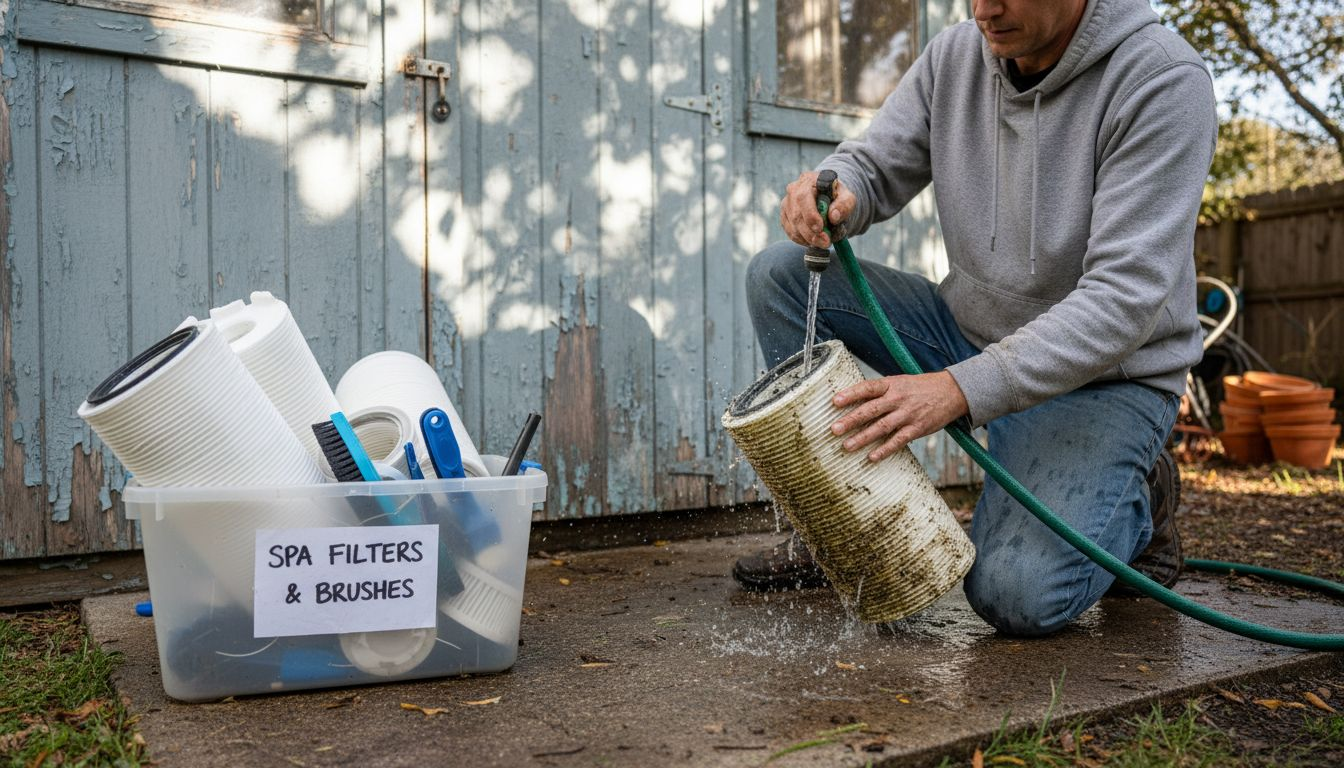
Beyond chemical management, essential spa care steps involve regular physical maintenance. This includes cleaning filter cartridges, checking jet functionality, inspecting spa surfaces for wear, and maintaining appropriate water levels. Operators must also monitor water clarity, remove debris, and ensure proper circulation to prevent potential bacterial colonisation. Comprehensive care requires a systematic approach that combines chemical precision with mechanical diligence, protecting both the aesthetic and functional aspects of your hot tub.
Pro Tip: Chemical Inventory Management: Maintain a dedicated storage area for spa chemicals, keeping them sealed, organised, and away from direct sunlight to preserve their effectiveness and prevent potential degradation.
Here is a reference table summarising essential spa chemicals and their principal functions:
| Chemical Type | Main Function | Typical Effect on Spa Water |
|---|---|---|
| Chlorine/Bromine | Disinfect and kill bacteria | Maintains safe, sanitised water |
| pH Balancer | Adjust water acidity/alkalinity | Protects equipment and user comfort |
| Alkalinity Adjuster | Stabilise pH fluctuations | Prevents rapid pH swings |
| Shock Treatment | Oxidise contaminants | Restores clarity, tackles odours |
Health, Safety, And Environmental Considerations
Spa maintenance involves more than just mechanical upkeep; it encompasses critical health, safety, and environmental considerations that protect both users and the surrounding ecosystem. Maintenance habits that enhance spa longevity highlight the importance of comprehensive care that goes beyond simple water treatment.
Health considerations are paramount in spa maintenance, focusing on preventing bacterial growth, chemical exposure, and potential waterborne illnesses. Proper sanitisation techniques, including careful chlorine or bromine management, help eliminate harmful microorganisms that could pose significant health risks. Users must be vigilant about maintaining appropriate chemical levels, wearing protective equipment when handling spa chemicals, and ensuring proper ventilation during maintenance procedures. The potential for chemical interactions demands careful attention, as improper mixing or storage can create toxic compounds that endanger human health.
Environmental considerations extend beyond the immediate spa environment, encompassing responsible chemical disposal, water conservation, and minimising ecological impact. Spa owners should implement strategies to reduce water waste, such as using cover systems to prevent evaporation and carefully managing water replacement cycles. Chemical disposal requires particular care, with strict protocols for neutralising and disposing of cleaning agents and water treatment chemicals to prevent environmental contamination. Responsible spa maintenance means considering the broader ecological implications of every maintenance decision, from chemical selection to water management.
Pro Tip: Eco-Friendly Chemical Management: Always dilute and neutralise spa chemicals before disposal, and consult local environmental guidelines to ensure safe and responsible chemical handling that protects both human health and the surrounding ecosystem.
Consequences Of Neglecting Regular Maintenance
Neglecting spa maintenance can lead to a cascade of costly and potentially irreparable damages that compromise both the functional integrity and financial investment of your hot tub. Spa water maintenance steps underscore the critical importance of consistent care to prevent systemic deterioration.
The mechanical consequences of maintenance neglect are particularly severe. Unmaintained spa equipment experiences accelerated wear, with critical components like pumps, heating elements, and jets susceptible to mineral buildup, corrosion, and premature failure. Calcium and mineral deposits can accumulate in pipes and equipment, reducing water flow efficiency and creating additional strain on the spa’s mechanical systems. This progressive degradation can transform minor maintenance issues into expensive repair or complete replacement scenarios, potentially costing hundreds or even thousands of pounds in unexpected expenditures.
Beyond mechanical deterioration, neglected spas become breeding grounds for harmful bacteria and potential health hazards. Unbalanced water chemistry creates an environment where microorganisms proliferate, increasing risks of skin infections, respiratory issues, and waterborne illnesses. The water’s chemical imbalance can also cause surface damage, leading to cracking, discolouration, and structural weakening of the spa shell. Potential health risks extend to users, with improperly maintained water potentially hosting legionella bacteria, algae growth, and other dangerous microorganisms that can cause significant health complications.
Pro Tip: Early Warning Tracking: Establish a monthly diagnostic checklist that documents your spa’s performance, chemical levels, and any subtle changes in water quality to catch potential issues before they escalate into costly repairs.
Keep Your Hot Tub Pristine with Expert Spa Maintenance Solutions
Neglecting regular spa maintenance can lead to costly repairs and health risks such as bacterial growth and chemical imbalances. The article highlights how critical it is to maintain water chemistry, clean filters, and monitor equipment to extend your hot tub’s lifespan and ensure a safe, relaxing experience. If you struggle to keep up with daily, weekly, and monthly maintenance tasks or want reliable, high-quality chemicals to balance your water perfectly ClearSpa offers the trusted solutions you need.
Explore our carefully tested range of hot tub chemicals and spa essentials at ClearSpa designed to protect your investment from mineral buildup corrosion and bacterial contamination. With ClearSpa’s premium products it is easier than ever to maintain ideal pH levels sanitiser balance and sparkling water clarity. Act now to safeguard your spa with expert water treatment solutions and ensure every soak is safe and refreshing. Visit our site today and take the first step towards effortless spa care.
Frequently Asked Questions
What are the key components of a spa maintenance routine?
A comprehensive spa maintenance routine includes regular water chemistry management, filter maintenance, surface cleaning, and routine equipment checks to ensure optimal performance and longevity of your hot tub.
How often should I check the water chemistry in my hot tub?
It’s recommended to perform water chemistry tests weekly, dedicating about 15 minutes to ensure proper balance of pH levels, total alkalinity, and sanitiser concentrations for safe and comfortable water.
What happens if I neglect spa maintenance?
Neglecting spa maintenance can lead to costly damages, including accelerated wear on mechanical components, increased risk of bacterial growth, and potential health hazards, resulting in expensive repairs and health risks for users.
What chemicals are essential for maintaining hot tub water quality?
Essential chemicals for spa maintenance include sanitisers like chlorine or bromine, pH balancers, alkalinity adjusters, and shock treatments to effectively manage water quality and protect both users and equipment.