Essential Spa Water Maintenance Steps for Crystal Clarity
Discover step-by-step spa water maintenance steps to keep your hot tub sparkling clean. Follow this easy guide for consistently clear and safe water.
Did you know that up to 80 percent of spa owners experience performance or water quality issues due to missed maintenance steps? Keeping your spa clean and safe goes far beyond simple routines. Taking the right actions helps protect your equipment, prevents bacteria, and ensures every soak feels relaxing. Simple but important practices can extend your spa’s lifespan and guard your family’s health while making maintenance less of a chore.
Table of Contents
- Step 1: Prepare Your Spa For Maintenance
- Step 2: Test Water Quality Using Recommended Kits
- Step 3: Adjust Chemical Levels For Optimal Balance
- Step 4: Clean Filters And Remove Visible Debris
- Step 5: Verify Clarity And Safety Before Use
Quick Summary
| Key Point | Explanation |
|---|---|
| 1. Shut off electricity before maintenance | Deactivate all electrical connections to ensure safety during spa maintenance. |
| 2. Test water quality weekly | Regularly check pH, sanitizer levels, and alkalinity using a trusted testing kit to prevent health risks. |
| 3. Balance chemicals for safe soaking | Adjust pH and sanitizer according to guidelines, ensuring comfortable and safe spa water. |
| 4. Clean filters thoroughly | Remove and rinse filters to maintain optimal water quality and system performance, avoiding contamination. |
| 5. Conduct final checks before use | Visually inspect water clarity and test chemical levels to ensure a safe and enjoyable spa experience. |
Step 1: Prepare your spa for maintenance
You are about to embark on a critical process that ensures your spa remains clean, safe and functioning optimally. Preparing your spa for maintenance requires careful steps to protect both the equipment and your health.
Begin by completely shutting off all electrical connections to the spa. According to the Health and Safety Executive guidance, this is paramount for preventing potential risks during maintenance work. Locate your spa’s main power supply and switch it off completely before proceeding further.
Next, drain all water from the spa system. This step is crucial not just for maintenance purposes, but also for controlling potential bacterial risks. Understanding Spa Water Care: A Comprehensive Guide recommends a thorough drainage process to eliminate any stagnant water where harmful microorganisms might develop.
While draining, inspect the interior surfaces for any signs of mineral buildup, discolouration or damage. Take this opportunity to note any areas that might require special attention during your maintenance routine.
Pro Tip: Always wear protective gloves and ensure proper ventilation during spa maintenance to protect yourself from potential chemical residues or bacterial exposure.
Once drained, allow the spa system to cool down completely. This waiting period helps prevent potential thermal shock to the equipment and ensures a safe working environment for your maintenance tasks. Your spa is now ready for the next stages of comprehensive care and cleaning.
Step 2: Test water quality using recommended kits
Testing your spa water is a critical maintenance step that helps ensure a safe and enjoyable spa experience. By using the right testing kit, you can quickly assess the water chemistry and prevent potential health risks.
According to Masters Spa guidelines, regular water testing involves checking three key parameters: pH levels, sanitizer concentration, and total alkalinity. To begin, select a reliable water testing kit that provides comprehensive measurements.
Carefully remove a test strip from its container and dip it into the spa water for the precise number of seconds indicated in the kit instructions. Hold the strip horizontally and avoid touching the reactive zones to prevent contamination. After removing the strip, compare the colour changes against the provided colour chart within the recommended timeframe.
Pro Tip: Always conduct water tests at least once a week and after each use to maintain optimal water quality and prevent potential bacterial growth.
Pay close attention to the pH levels which should typically range between 7.2 and 7.6. If the readings fall outside this range, you will need to adjust your chemical balance using appropriate pH increasers or decreasers.
Here’s a summary of essential spa water tests and their target ranges:
| Parameter | Recommended Range | Importance |
|---|---|---|
| pH | 7.2 - 7.6 | Comfort Equipment protection |
| Sanitiser (Chlorine/Bromine) | Per kit guide | Disinfects Kills bacteria |
| Total Alkalinity | 80 - 120 ppm | pH stability |
Once you have completed your water quality assessment, you are now prepared to move forward with any necessary water treatment and balancing procedures. Accurate testing is your first line of defence in maintaining a clean and safe spa environment.
Step 3: Adjust chemical levels for optimal balance
Balancing your spa water chemicals is a precise process that ensures a safe and comfortable soaking experience. With careful adjustments, you can create the perfect water environment that protects both your health and your spa equipment.
According to Masters Spa guidelines, maintaining the right chemical balance is crucial for preventing bacterial growth and preserving water clarity. Top Tips for Balancing Chemical Levels in Your Hot Tub recommends starting with pH levels, which should be carefully adjusted to sit between 7.2 and 7.6.
Begin by adding chemical balancers in small increments. If your pH is too low, use a pH increaser. For high pH levels, apply a pH reducer. Always add chemicals directly to the water while the spa jets are running to ensure thorough and even distribution.
Pro Tip: Always read the manufacturer’s instructions carefully and wear protective gloves when handling spa chemicals to prevent skin irritation.
Next, check your sanitiser levels. This might involve adding chlorine or bromine to maintain appropriate concentration. The goal is to create an environment that kills harmful bacteria without overwhelming the water with chemicals.
After making adjustments, wait at least 20 minutes before retesting to confirm the chemical levels have stabilised. Your patience during this process ensures a perfectly balanced spa water environment that is both safe and inviting.
Step 4: Clean filters and remove visible debris
Cleaning your spa filters is a critical maintenance step that ensures optimal water quality and system performance. This process helps prevent contamination and keeps your spa running smoothly.
According to Health and Safety Executive guidelines, regular filter cleaning is essential for controlling potential infectious agents and maintaining an efficient spa system. Begin by removing the filter cartridge carefully from its housing. Instant Filter Cleaner can help you streamline this process effectively.
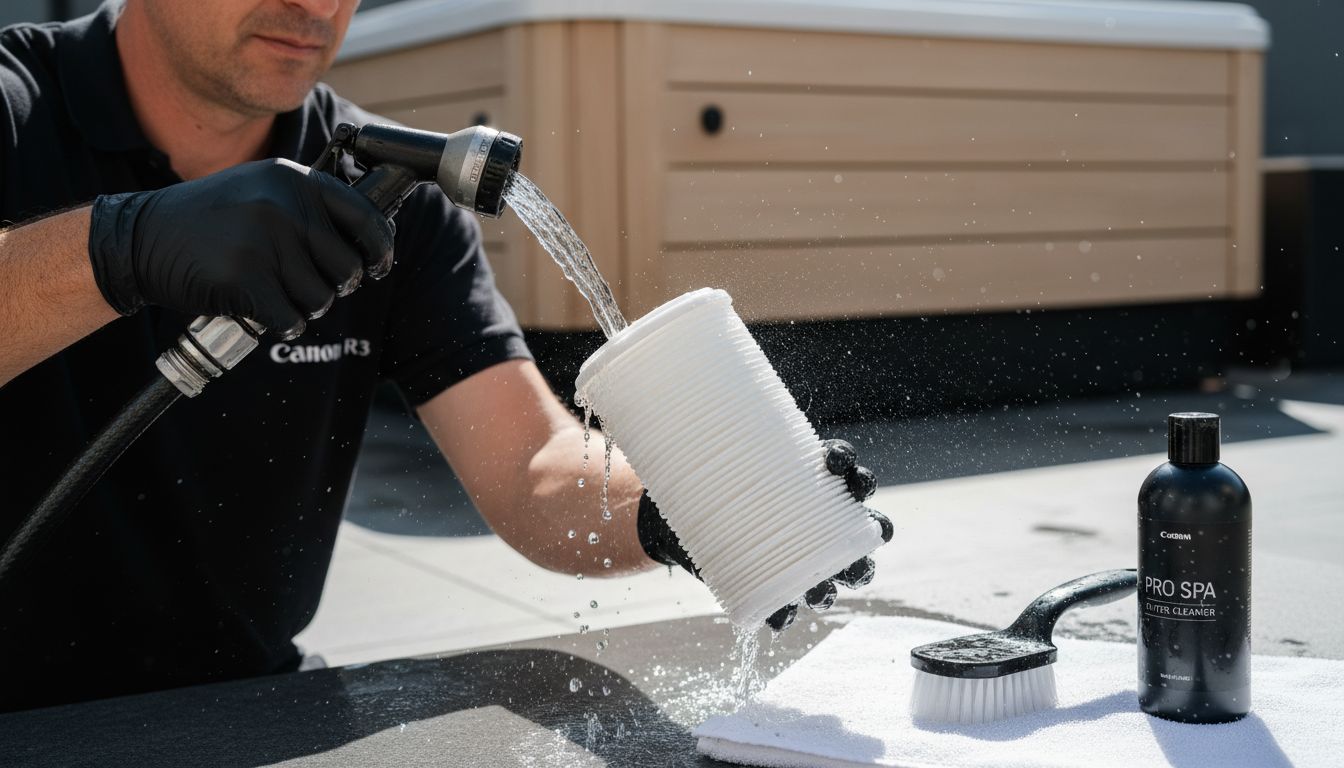
Rinse the filter thoroughly with clean water to remove loose debris. Use a soft brush to gently clean between the pleats, taking care not to damage the delicate filter material. Pay special attention to areas with visible buildup or discolouration.
Pro Tip: Always clean your filters outdoors or in a well ventilated area to avoid spreading potential contaminants inside your home.
If your filter requires deep cleaning, soak it in a specialised filter cleaning solution for the recommended duration. This helps break down stubborn oils and mineral deposits that simple rinsing cannot remove.
After cleaning, inspect the filter for any signs of wear or damage. Replace the filter if you notice tears, excessive discolouration, or reduced flexibility. A clean and intact filter is your first line of defence in maintaining pristine spa water quality.
Step 5: Verify clarity and safety before use
Before immersing yourself in your spa, a final safety and clarity check is crucial to ensure a secure and enjoyable experience. This last step transforms your maintenance efforts into a guaranteed pleasurable soak.
According to Health and Safety Executive guidelines, comprehensive verification is vital to prevent potential health risks. Ask An Expert SPA Pool Maintenance recommends a systematic approach to final inspections.
Begin by visually examining the water. It should be crystal clear with no visible cloudiness, particles, or unusual colours. Check that the water surface is smooth and free from any floating debris or film. Run your test strips one final time to confirm all chemical levels remain within their recommended ranges.
Pro Tip: If anything looks or smells unusual, do not enter the spa. Always prioritise your health and safety over convenience.
Listen to your spa equipment as you prepare. The circulation system should run smoothly without unusual grinding or rattling sounds. Ensure all jets are functioning correctly and water is circulating evenly throughout the spa.
A thorough final inspection guarantees that your meticulous maintenance has created a safe, inviting spa environment ready for relaxation. Your careful preparation ensures peace of mind with every soak.
Keep Your Spa Water Crystal Clear with ClearSpa Solutions
Maintaining the perfect spa water balance can feel like a tricky challenge. From testing pH levels and sanitiser concentration to cleaning filters and ensuring total alkalinity is right, the essential spa water maintenance steps require precision and care to protect your health and extend your spa’s life. If you worry about achieving that crystal clarity and safe soak every time, you are not alone. Achieving balanced water chemistry with the right products and easy-to-follow guidance can transform your maintenance routine from stressful to straightforward.
Take control today with ClearSpa’s trusted range of hot tub chemicals and spa essentials designed for effective water treatment and clarity. Our products are carefully developed and tested to help you balance chemical levels, clean filters, and keep your spa inviting and safe. Don’t let unclear or unsafe spa water ruin your relaxing moments. Visit ClearSpa now and discover how our solutions can make your spa maintenance easier and more reliable. Start enjoying that perfect soak with confidence by choosing ClearSpa as your maintenance partner.
Frequently Asked Questions
How do I prepare my spa for maintenance?
Start by completely shutting off all electrical connections to prevent risks during work. Then, drain all water from the spa and inspect the interior for any signs of damage or mineral buildup, ensuring the system is ready for thorough cleaning.
How often should I test my spa water quality?
Testing your spa water quality should be done at least once a week and after each use to maintain optimal clarity and safety. Use a reliable test kit to check key parameters like pH levels, sanitizer concentration, and total alkalinity.
What should I do if my pH levels are outside the recommended range?
If your pH levels are below 7.2 or above 7.6, adjust them using a pH increaser or decreaser. Always add these chemicals in small increments and while the spa jets are running for even distribution.
How can I effectively clean my spa filters?
Remove the filter cartridge and rinse it thoroughly with clean water, using a soft brush for stubborn debris. For deeper cleaning, soak it in a specialized solution as recommended, and inspect the filter for any signs of wear or damage afterwards.
What should I check during the final inspection before using my spa?
Before using your spa, ensure the water is clear and free from debris. Run test strips one last time to confirm chemical levels are within recommended ranges, and listen for any unusual sounds from the equipment to ensure everything is functioning properly.
How can I ensure my spa water remains clear and safe?
Regularly maintain an appropriate chemical balance by testing and adjusting levels as necessary. Focus on pH, sanitizer concentration, and total alkalinity to create a balanced environment that minimizes bacterial growth and ensures a safe soaking experience.