Hot Tub Cleaning Cycles: Complete Guide for UK Owners
Learn about hot tub cleaning cycles, their importance, types, maintenance routines, costs, and health benefits in this comprehensive ClearSpa UK guide.
Did you know that experts estimate well-maintained hot tubs can last up to 20 years? Yet, many UK owners overlook the power of structured cleaning cycles in protecting their spa and health. Regular maintenance does more than just keep water looking clear. It prevents bacteria from multiplying, keeps equipment running smoothly, and can save you money on repairs over time.
Table of Contents
- Defining Hot Tub Cleaning Cycles
- Types of Cleaning Cycles and Their Purposes
- How Cleaning Cycles Work in Modern Tubs
- Health, Safety, and Water Quality Benefits
- Maintenance Schedules and Cost Implications
- Common Pitfalls in Hot Tub Cleaning Routines
Key Takeaways
| Point | Details |
|---|---|
| Regular Maintenance is Crucial | Implement structured cleaning cycles to maintain water quality, prevent bacterial growth, and ensure optimal equipment performance. |
| Leverage Technology | Utilize modern self-cleaning systems to enhance efficiency, minimize manual labor, and extend your hot tub’s lifespan. |
| Avoid Common Pitfalls | Regularly test water chemistry and perform manual maintenance alongside automated systems to prevent neglect and health hazards. |
| Economic Benefits of Maintenance | Strategic maintenance planning can reduce long-term repair costs and increase overall cost-effectiveness in hot tub ownership. |
Defining Hot Tub Cleaning Cycles
A hot tub cleaning cycle represents a systematic approach to maintaining water quality and equipment functionality through regular, scheduled maintenance tasks. According to the British and Irish Spa and Hot Tub Association (BISHTA), these cycles typically encompass daily, weekly, monthly, and annual checks designed to ensure optimal performance and user safety.
The core of an effective cleaning cycle involves comprehensive water management. How to Clean Hot Tub Jets: A Step-by-Step Guide highlights that proper maintenance isn’t just about appearances - it’s critical for preventing bacterial growth and protecting your investment. Key elements of these cleaning cycles include:
- Testing water chemistry and pH levels
- Cleaning and replacing filters
- Checking and maintaining sanitiser concentrations
- Inspecting equipment for potential issues
- Draining and refilling the tub periodically
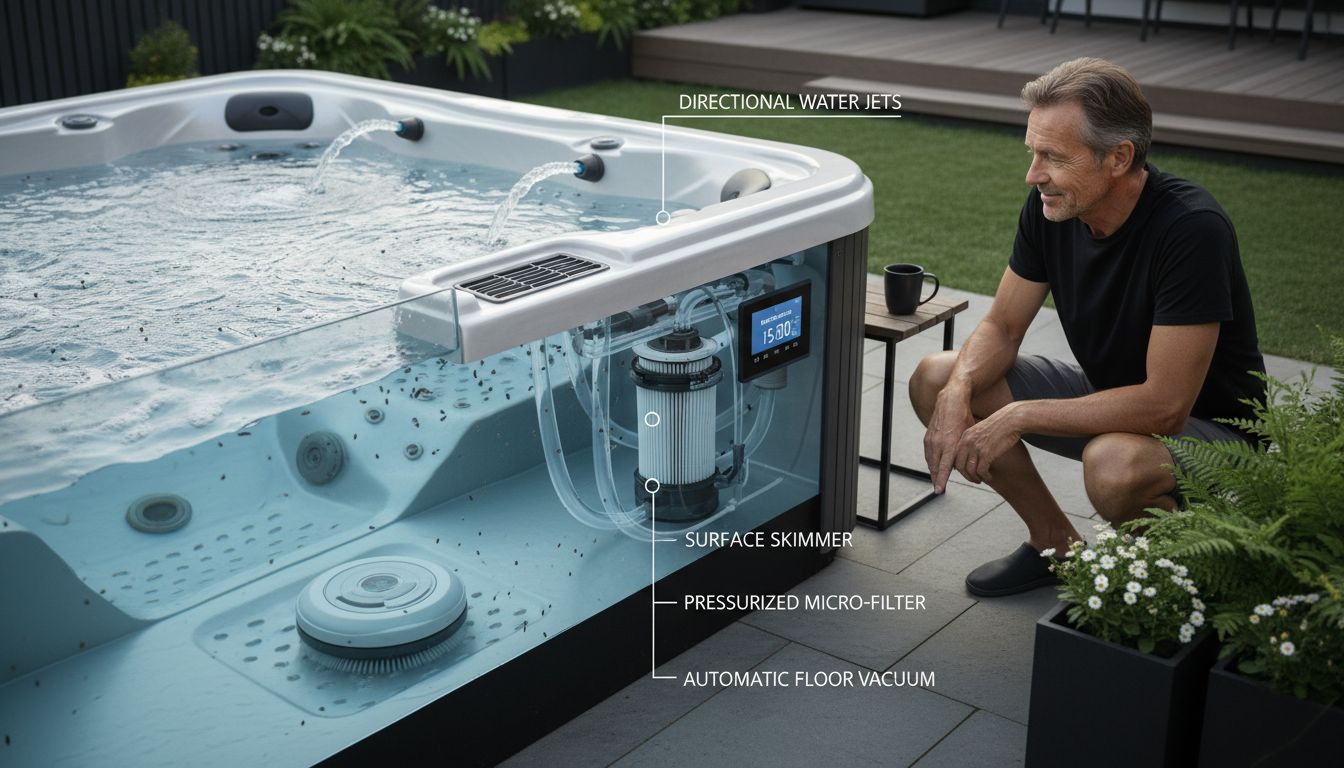
Innovative technologies like Hydropool’s self-cleaning systems demonstrate the evolution of hot tub maintenance. These advanced systems can filter 100% of water every 15 minutes, utilising features such as high-flow skimmers, pressurised micro-filtration, and dedicated floor vacuums. By understanding and implementing structured cleaning cycles, UK hot tub owners can ensure a hygienic, efficient, and enjoyable spa experience.
Types of Cleaning Cycles and Their Purposes
Hot tub cleaning cycles vary in frequency and purpose, ranging from quick daily maintenance to comprehensive annual deep cleans. According to the British and Irish Spa and Hot Tub Association (BISHTA), these cycles are strategically designed to address different aspects of hot tub care and water quality management.
The primary cleaning cycles include:
Here’s a comparison of typical hot tub cleaning cycles and their main purposes:
| Cycle Frequency | Main Tasks | Primary Purpose |
|---|---|---|
| Daily | pH testing Sanitiser check Surface skim |
Maintain water quality |
| Weekly | Filter rinse Waterline scrub Debris removal |
Deeper cleanliness and hygiene |
| Monthly | Surface clean Filter inspection Balance chemistry |
Thorough internal upkeep |
| Quarterly/Annually | Complete drain System flush Equipment check |
System renewal and longevity |
- Daily Checks: Rapid water quality assessments involving pH testing, sanitiser level verification, and surface skimming
- Weekly Maintenance: More intensive cleaning, including filter rinsing, waterline scrubbing, and detailed debris removal
- Monthly Deep Clean: Comprehensive interior surface cleaning, more thorough filter inspection, and water chemistry balancing
- Quarterly Renewal: Complete water drainage, system flushing, and thorough equipment examination
Essential Hot Tub Maintenance Checklist for 2025 Success emphasises that each cycle serves a distinct purpose in preserving your hot tub’s performance.
Advanced systems like Hydropool’s self-cleaning technology showcase how modern engineering can simplify these maintenance processes, with features such as HydroClean Filtration Jets and Pressurized Micro-Filtration that continuously manage water quality throughout different cleaning stages.
How Cleaning Cycles Work in Modern Tubs
Modern hot tub cleaning technologies represent a significant leap from traditional maintenance approaches, integrating sophisticated automated systems that dramatically reduce manual intervention. According to Hydropool’s research, contemporary self-cleaning hot tubs can filter 100% of water every 10-15 minutes, creating a continuous purification process that keeps water pristine with minimal effort.
The cleaning cycle in advanced hot tubs operates through a multi-stage filtration system:
- Surface Skimming: HydroClean Filtration Jets push debris towards dedicated skimmers
- Floating Debris Capture: High Flow Skimmer & Pre-filter traps oils and surface contaminants
- Bottom Cleaning: HydroClean Floor Vacuum removes settled particles and sediment
- Final Purification: Pressurized Micro-Filtration ensures thorough water sanitisation
Top Tips for Balancing Chemical Levels in Your Hot Tub complements these technological advances by highlighting the importance of chemical balance. These intelligent systems not only clean more efficiently but also reduce the frequency of manual maintenance, giving UK hot tub owners more time to enjoy their spa experience and less time worrying about complex cleaning routines.
Health, Safety, and Water Quality Benefits
Water quality management is far more than a routine maintenance task - it’s a critical aspect of hot tub ownership that directly impacts user health and safety. According to the British and Irish Spa and Hot Tub Association (BISHTA), adhering to a structured maintenance schedule helps prevent the growth of harmful bacteria and ensures a hygienic spa environment.
The key health benefits of consistent cleaning cycles include:
- Preventing bacterial and fungal growth
- Reducing risk of skin irritations and infections
- Maintaining balanced chemical levels
- Protecting users from waterborne pathogens
- Extending the overall lifespan of your hot tub equipment
Understanding Why Test Hot Tub Water for Health and Safety underscores the importance of regular water testing. Modern self-cleaning technologies, like those developed by Hydropool, go beyond traditional maintenance by continuously filtering water and reducing the need for excessive chemical treatments. This approach not only minimises health risks but also creates a more enjoyable and safer hot tub experience for UK owners, transforming routine maintenance into a proactive health protection strategy.
Maintenance Schedules and Cost Implications
Hot tub maintenance represents a significant ongoing investment for UK owners, with strategic planning crucial to managing both time and financial resources. According to the British and Irish Spa and Hot Tub Association (BISHTA), implementing a structured maintenance schedule can dramatically reduce long-term repair costs and extend equipment lifespan.
Typical maintenance cost considerations include:
- Chemical treatment expenses
- Filter replacement intervals
- Professional servicing requirements
- Energy efficiency impact
- Potential repair or component replacement costs
How to Clean Hot Tub Cover: Easy Step-by-Step Guide highlights the economic benefits of preventative maintenance. Modern technologies like Hydropool’s self-cleaning systems can reduce maintenance efforts by filtering water every 15 minutes, potentially saving owners hundreds of pounds annually by minimising manual intervention, reducing chemical usage, and preventing costly equipment degradation. By investing in regular maintenance and leveraging advanced cleaning technologies, UK hot tub owners can transform routine care from a financial burden into a smart, cost-effective strategy.
Common Pitfalls in Hot Tub Cleaning Routines
Hot tub maintenance can quickly become complicated, with seemingly minor oversights potentially leading to significant problems. According to the British and Irish Spa and Hot Tub Association (BISHTA), neglecting regular maintenance tasks can create serious water quality issues, equipment damage, and potential health risks for users.
The most frequent mistakes hot tub owners make include:
- Inconsistent water chemistry testing
- Ignoring filter cleaning and replacement
- Overusing or underusing chemical treatments
- Skipping regular system inspections
- Relying entirely on self-cleaning technologies without manual intervention
Why are hot tub bromine tablets so widely used? highlights the importance of proper sanitisation. Many owners mistakenly believe advanced cleaning technologies eliminate the need for manual maintenance, but Hydropool’s research demonstrates that self-cleaning systems work best when complemented by regular human oversight. By understanding and avoiding these common pitfalls, UK hot tub owners can ensure a safe, hygienic, and long-lasting spa experience.
Keep Your Hot Tub Pristine with ClearSpa Solutions
Maintaining the perfect hot tub water balance and cleanliness can be a challenge, especially when dealing with complex cleaning cycles and avoiding common pitfalls like inconsistent chemical testing or neglected filter care. This guide highlights the crucial need for regular water chemistry checks, sanitiser control, and thorough cleaning routines to protect your health and prolong your hot tub’s lifespan. With so many factors to monitor, it can feel overwhelming to keep your spa safe and enjoyable.
ClearSpa understands these challenges and offers a complete range of top-quality water treatment products designed specifically to support your hot tub’s maintenance schedule. Whether you need reliable hot tub chemicals, expert advice on balancing chemical levels, or trusted essentials to complement modern self-cleaning systems, we have the solutions to simplify your care routine. Take control of your spa experience today and explore how ClearSpa can help you maintain crystal-clear, healthy water with ease. Visit us now to transform your cleaning cycles into hassle-free upkeep.
Frequently Asked Questions
What are the main tasks involved in a daily hot tub cleaning cycle?
Daily hot tub cleaning tasks typically include testing pH levels, checking sanitiser concentrations, and skimming the surface for debris. These actions help to maintain water quality and ensure a safe spa environment.
How often should I perform a full drain and clean of my hot tub?
It’s recommended to complete a full drain and clean of your hot tub every three to four months. This deep cleaning involves flushing the system, inspecting components, and ensuring thorough hygiene for optimal performance.
What are the benefits of using a self-cleaning hot tub system?
Self-cleaning hot tub systems, like those from Hydropool, filter 100% of the water every 10-15 minutes. This technology reduces manual maintenance and ensures continuous water purification, ultimately enhancing water quality and user safety.
How can I prevent common maintenance pitfalls in my hot tub?
To avoid common maintenance pitfalls, regularly test water chemistry, clean and replace filters as needed, and conduct systematic inspections. While self-cleaning technologies assist in maintenance, human oversight is crucial for effective upkeep.