Cloudy Hot Tub Water - Causes And Quick Solutions
Cloudy hot tub water: discover top causes, health risks, maintenance tips, and safe solutions. ClearSpa expert advice for UK spa owners.
Nearly half of British hot tub owners will battle cloudy water at some point, leading to frustration and concerns about safety. For many in the United Kingdom, that milky look is more than just a nuisance. It can signal hidden problems that affect both health and equipment. Discover how understanding the science behind water clarity and using advanced maintenance routines can restore sparkle and confidence in your spa.
Table of Contents
- Cloudy Hot Tub Water Defined And Misunderstood
- Common Causes Of Cloudy Hot Tub Water
- Risks To Health And Hot Tub Performance
- Essential Maintenance For Clear Water
- Safe Products And Solutions From Clearspa
Key Takeaways
| Point | Details |
|---|---|
| Water Clarity | Cloudy hot tub water indicates chemical imbalances and potential contamination, affecting both health and spa functionality. |
| Regular Testing | Weekly testing and maintenance of chemical levels are vital to prevent cloudiness and ensure safe water quality. |
| Filtration Maintenance | Cleaning filters regularly and performing shock treatments can significantly improve water clarity and reduce bacterial growth. |
| Health Risks | Poor water quality increases the risk of health issues, such as Legionnaires’ disease, necessitating strict hygiene and maintenance protocols. |
Cloudy hot tub water defined and misunderstood
Cloudy hot tub water represents a complex water quality issue that goes far beyond simple aesthetic problems. This murky appearance signals underlying chemical imbalances and potential contamination risks that can compromise your entire spa experience. Water clarity isn’t just about visual appeal - it’s a critical indicator of your hot tub’s overall health and safety.
When water transforms from crystal clear to a milky or opaque state, multiple factors could be at play. Understanding water clarity challenges requires examining potential culprits like chemical imbalances, bacterial growth, filtration issues, and environmental contaminants. These cloudy conditions often emerge gradually, with microscopic particles accumulating and disrupting water transparency.
The science behind cloudy hot tub water involves complex interactions between dissolved minerals, organic materials, and suspended particles. Calcium hardness, total dissolved solids (TDS), pH levels, and sanitiser concentrations all contribute to water’s appearance. When these elements fall out of balance, they create an environment where particulates cluster together, reducing light transmission and creating that characteristic milky appearance.
Pro tip: Regularly test your hot tub water using digital testing strips and record results to track chemical trends and catch potential clouding issues before they become significant problems.
Common causes of cloudy hot tub water
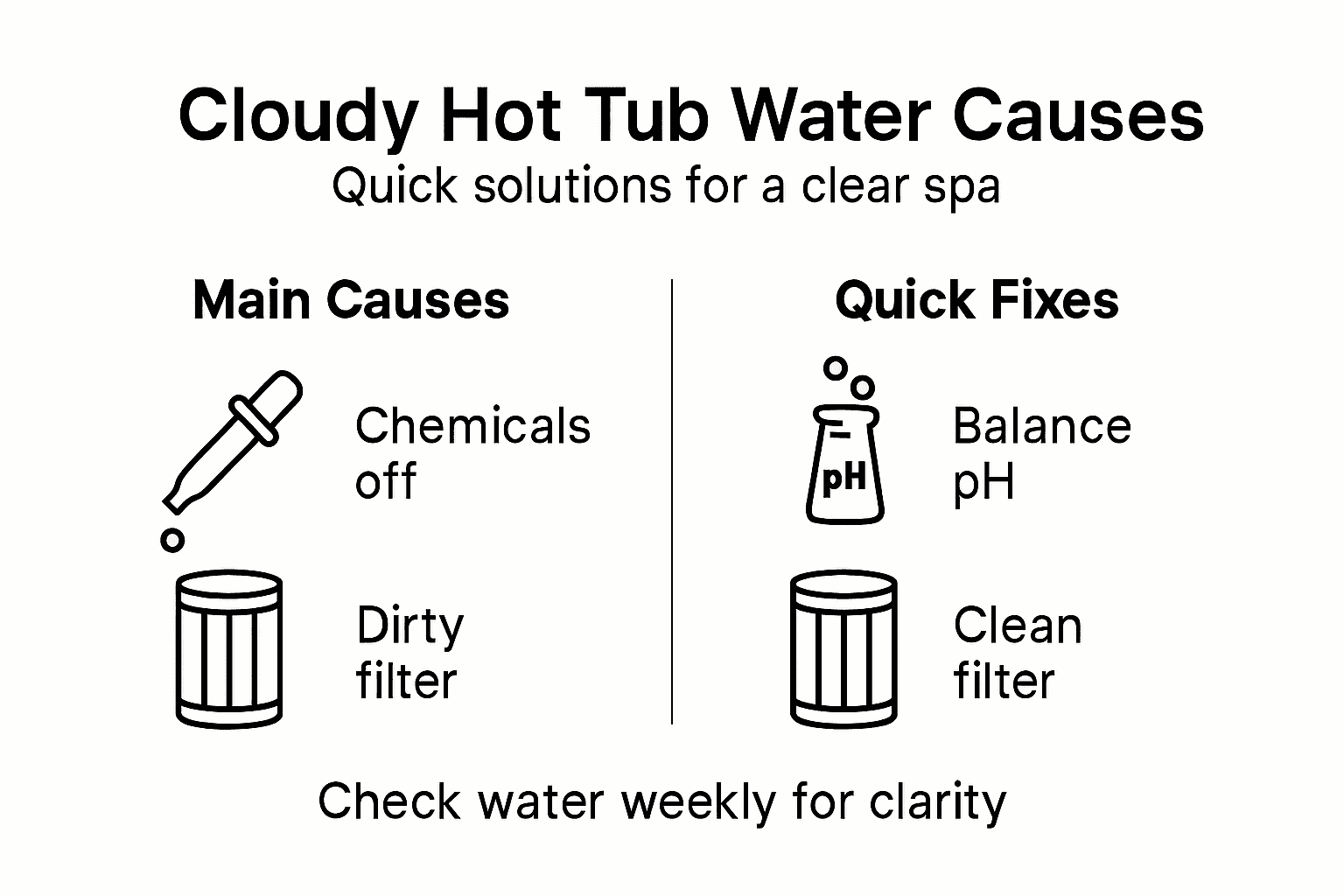
Hot tub water becomes cloudy due to a complex interplay of chemical, biological, and environmental factors that disrupt water quality. Understanding cloudy water reasons reveals several primary culprits that can transform your sparkling spa into a murky mess. These factors range from simple maintenance oversights to more intricate chemical imbalances.
The most common causes of cloudy hot tub water include problematic chemical interactions, organic contaminants, and filtration system inefficiencies. Total dissolved solids can accumulate from body oils, cosmetics, and environmental debris, creating microscopic particles that scatter light and produce a milky appearance. Additionally, improper sanitiser levels - whether too high or too low - can trigger chemical reactions that compromise water clarity and create an environment conducive to bacterial growth.

Environmental factors play a significant role in water cloudiness. Frequent usage, inadequate cleaning routines, and external contaminants like leaves, skin cells, and sunscreen introduce organic matter that disrupts water chemistry. Calcium hardness, pH levels, and alkalinity must remain in delicate balance to prevent mineral precipitation and particle suspension that lead to that characteristic cloudy appearance. Overloading your hot tub with too many users or failing to shower before entering can dramatically accelerate these clarity-reducing processes.
Here is a summary of the most influential factors contributing to cloudy hot tub water:
| Factor Type | Typical Source | Impact on Water Clarity |
|---|---|---|
| Chemical imbalance | Incorrect pH, chlorine, TDS | Cloudiness, bacteria risk |
| Organic contaminants | Body oils, cosmetics, debris | Hazy water, scum formation |
| Filtration issues | Dirty filters, poor circulation | Visible particles, dull look |
| Environmental input | Leaves, skin cells, dust | Particulate accumulation |
Pro tip: Invest in high-quality water testing strips and perform weekly comprehensive water checks to catch chemical imbalances before they transform your hot tub into a cloudy nightmare.
Risks to health and hot tub performance
Cloudy hot tub water poses significant health risks that extend far beyond mere aesthetic concerns. Hot tub safety standards emphasise the critical importance of maintaining pristine water conditions to prevent potential bacterial proliferation and associated health complications. Improperly maintained hot tubs can become breeding grounds for dangerous pathogens that compromise both user safety and equipment performance.
The most alarming health risk stems from Legionella bacteria, which thrive in warm, stagnant water environments. These microscopic organisms can cause Legionnaires’ disease, a severe form of pneumonia transmitted through contaminated water aerosols. Warm water temperatures combined with inadequate sanitisation create ideal conditions for bacterial growth, potentially exposing users to respiratory infections, skin irritations, and other serious health complications that can emerge from compromised water quality.
Beyond direct health risks, cloudy water dramatically impacts hot tub performance and longevity. Mineral buildup, organic contaminants, and chemical imbalances can cause significant damage to filtration systems, pumps, and heating elements. These issues not only reduce the efficiency of your hot tub but can lead to costly repairs and premature equipment failure. The accumulation of total dissolved solids and suspended particles can strain mechanical components, potentially voiding manufacturer warranties and creating long-term maintenance challenges.
Pro tip: Schedule monthly comprehensive water testing and maintain a detailed maintenance log to proactively identify and address potential water quality issues before they escalate into serious health or performance problems.
Essential maintenance for clear water
Maintaining crystal-clear hot tub water requires a systematic approach that combines regular testing, precise chemical management, and consistent cleaning protocols. Spa maintenance checklist provides essential guidance for hot tub owners seeking to prevent water clarity issues and maintain optimal performance. The key to success lies in understanding and implementing a comprehensive water management strategy.
A robust maintenance routine involves multiple critical steps. Water chemistry balance demands weekly testing of pH levels, sanitiser concentrations, and total alkalinity. Owners should use high-quality test strips or digital testing equipment to measure these parameters accurately. Regular shock treatments help eliminate contaminants, break down organic materials, and prevent bacterial growth. Maintaining appropriate chlorine or bromine levels is crucial, with concentration typically ranging between 1-3 parts per million to ensure effective sanitisation without causing water imbalance.
Physical maintenance is equally important in preserving water clarity. This includes cleaning filter cartridges every four to six weeks, thoroughly rinsing them to remove trapped debris and preventing particle recirculation. Regularly draining and deep cleaning the hot tub every three to four months helps remove accumulated minerals and organic contaminants that contribute to water cloudiness. Additionally, implementing strict user protocols such as showering before entering and avoiding cosmetics can significantly reduce the introduction of external contaminants that disrupt water quality.
Pro tip: Invest in a dedicated water maintenance log to track chemical levels, cleaning schedules, and filter maintenance, helping you identify patterns and proactively address potential water quality issues.
The table below compares key water testing and maintenance routines for hot tubs:
| Routine | Recommended Frequency | Primary Purpose |
|---|---|---|
| Chemical testing | Weekly | Ensure water balance |
| Filter cleaning | Every 4-6 weeks | Prevent debris buildup |
| Shock treatment | Weekly or as needed | Eliminate organic material |
| Full draining/cleaning | Every 3-4 months | Remove deep-set contaminants |
| User pre-shower | Before each use | Limit introduction of oils |
Safe products and solutions from ClearSpa
ClearSpa offers a comprehensive range of specialised water treatment solutions designed specifically for hot tub maintenance and water clarity management. Water cleaners for hot tubs represent the cornerstone of their product line, engineered to address the complex challenges of maintaining pristine spa water. These professionally formulated products tackle the root causes of water cloudiness with precision and effectiveness.
The water enhancement range includes targeted solutions for different water quality issues. Sanitiser products maintain critical bacterial control, while pH balancers ensure optimal chemical equilibrium. Specialised clarifiers work to aggregate microscopic particles, enabling filters to capture contaminants more efficiently. Each product undergoes rigorous testing to guarantee safety, compatibility with various hot tub systems, and minimal environmental impact, providing hot tub owners with reliable and scientifically developed water treatment options.
ClearSpa’s product strategy focuses on comprehensive water management rather than temporary fixes. Their disinfectant and cleaning solutions address multiple dimensions of water quality, including mineral control, organic contaminant removal, and long-term equipment protection. By combining advanced chemical formulations with user-friendly application methods, these products simplify hot tub maintenance while delivering professional-grade water clarity and hygiene standards.
Pro tip: Always purchase water treatment products designed specifically for hot tubs, as swimming pool or general-purpose chemicals can potentially damage your spa equipment and compromise water quality.
Restore Crystal Clear Water with ClearSpa Solutions
Cloudy hot tub water is more than an unsightly nuisance. It highlights critical challenges like chemical imbalance, organic contaminants, and ineffective filtration that threaten both your health and spa performance. If you are struggling with murky, milky water caused by issues such as improper pH levels or total dissolved solids buildup, ClearSpa offers scientifically crafted products to transform your experience. Our specialised range targets water clarity problems at their source, ensuring safer, clearer, and healthier hot tub water.
Take control of your hot tub maintenance today with ClearSpa’s expert water treatment range. Visit ClearSpa to discover effective water cleaners for hot tubs and maintenance tips that prevent cloudy water before it starts. Act now to protect your spa, prolong equipment life, and enjoy the ultimate relaxation in perfectly balanced, crystal-clear water.
Frequently Asked Questions
What causes cloudy hot tub water?
Cloudy hot tub water can be caused by several factors, including chemical imbalances, organic contaminants, filtration issues, and environmental debris. Typical sources of contaminants include body oils, cosmetics, dirt, and inadequate sanitiser levels.
How can I prevent cloudy water in my hot tub?
To prevent cloudy water, maintain balanced chemical levels through regular testing, perform weekly shock treatments, clean filters every 4 to 6 weeks, and regularly drain and deep clean your hot tub. Additionally, ensure users shower before entering the tub to limit the introduction of oils and debris.
Are there health risks associated with cloudy hot tub water?
Yes, cloudy hot tub water can pose significant health risks, including the growth of harmful bacteria such as Legionella, which can lead to respiratory infections and skin irritations. Maintaining clear, properly balanced water is critical for user safety.
What maintenance routine can help keep my hot tub water clear?
To maintain clear water, follow a routine that includes weekly chemical testing, regular filter cleaning every 4 to 6 weeks, shock treatments weekly, and draining the tub for deep cleaning every 3 to 4 months. Keeping a maintenance log can also help track your efforts and identify potential issues.
Recommended
- Spa Water Clarity: Key Steps for a Sparkling Hot Tub - ClearSpa™
- Understanding the Reasons for Cloudy Hot Tub Water - ClearSpa™
- Hot Tub Filter Cleaning Guide for Crystal-Clear Water - ClearSpa™
- Hot Tub Water Testing Workflow for Crystal Clear Results - ClearSpa™
- 7 Essential Garden Furniture Care Tips for UK Homes