Hot Tub Water Testing Workflow for Crystal Clear Results
Master the hot tub water testing workflow with this clear UK guide. Learn step by step how to prepare, test, adjust and maintain perfect water quality.
Over 70 percent of british hot tub owners admit they find water testing confusing or stressful. Maintaining clean and safe water is more than just a comfort issue - it is a health necessity, especially with risks like Legionella in mind. By understanding the essential steps and using the right testing supplies, you can finally take control of your hot tub’s chemical balance and enjoy peace of mind every time you step in.
Table of Contents
- Step 1: Gather Necessary Testing Supplies
- Step 2: Prepare Your Hot Tub For Sampling
- Step 3: Collect An Accurate Water Sample
- Step 4: Interpret Test Strip Or Kit Results
- Step 5: Adjust Chemicals Based On Findings
- Step 6: Re-Test To Confirm Water Balance
Quick Summary
| Key Insight | Explanation |
|---|---|
| 1. Assemble essential testing supplies | Gather tools like pH testers and TDS meters to ensure accurate water testing for your hot tub. |
| 2. Prepare hot tub for sampling | Turn off jets and clean the surface to collect a representative water sample from the correct depth. |
| 3. Accurately collect water samples | Submerge the sampling container 30 centimetres deep, avoiding surface debris for credible test results. |
| 4. Interpret test results correctly | Begin with Total Alkalinity and pH levels using the colour chart for precise readings and adjustments. |
| 5. Re-test to confirm chemical balance | After chemical adjustments, wait 20 minutes and test again to ensure parameters are within the recommended range. |
Step 1: Gather necessary testing supplies
Prepping for comprehensive hot tub water testing requires assembling the right equipment and understanding precisely what you need. According to Spatex, the Health & Safety Executive Guideline HSG282 emphasises regular water testing to control potential health risks like Legionella.
Your essential testing kit should include digital testing tools that provide accurate measurements. Hanna Instruments recommends specific electronic meters designed for hot tub maintenance. You will want to collect the following items:
- Digital pH tester
- Chlorine measurement photometer
- Total dissolved solids (TDS) meter
- Cyanuric acid test strips
- Waterproof notebook for recording results
- Clean sampling containers
- Disposable gloves
Pro tip: Always purchase fresh testing supplies and replace test strips regularly to ensure measurement accuracy. Outdated testing equipment can provide misleading results that might compromise your hot tub water quality.
With your testing supplies ready, you are now prepared to move on to the precise water sampling process that will help you maintain crystal clear and safe hot tub water.
Step 2: Prepare your hot tub for sampling
Before collecting water samples, you need to create the perfect conditions for accurate testing. According to HydroFit, daily water testing is crucial, regardless of how frequently you use your hot tub.
Start by turning off any jets or water circulation systems to allow the water to become still and settle. Remove the hot tub cover completely and ensure good lighting so you can clearly see the water condition. You want a representative sample that reflects the true water chemistry.
Carefully wipe away any surface debris or film using a clean cloth and ensure no external contaminants will interfere with your testing. When sampling, aim to collect water from about 30 centimetres below the surface and approximately 45 centimetres away from any wall or jet outlet. This location provides the most accurate representation of your hot tub’s overall water chemistry.
Pro tip: Always wash your hands thoroughly and wear clean gloves to prevent introducing additional contaminants into your water sample. Contaminated samples can lead to misleading test results and potentially incorrect chemical treatments.
With your hot tub now prepared, you are ready to move on to the precise water sampling process that will help you maintain crystal clear and safe water conditions. Learn more about water balancing techniques in our comprehensive guide on chemical levels.
Step 3: Collect an accurate water sample
Collecting a precise water sample is crucial for understanding your hot tub’s chemical balance. Hanna Instruments recommends taking a sample from the middle of the hot tub to ensure the most representative results.
Grab your clean sampling container and submerge it approximately 30 centimetres below the water surface. Hold the container horizontally and allow water to flow in slowly, avoiding any surface turbulence or debris. The goal is to capture water that represents the true chemical composition of your hot tub.
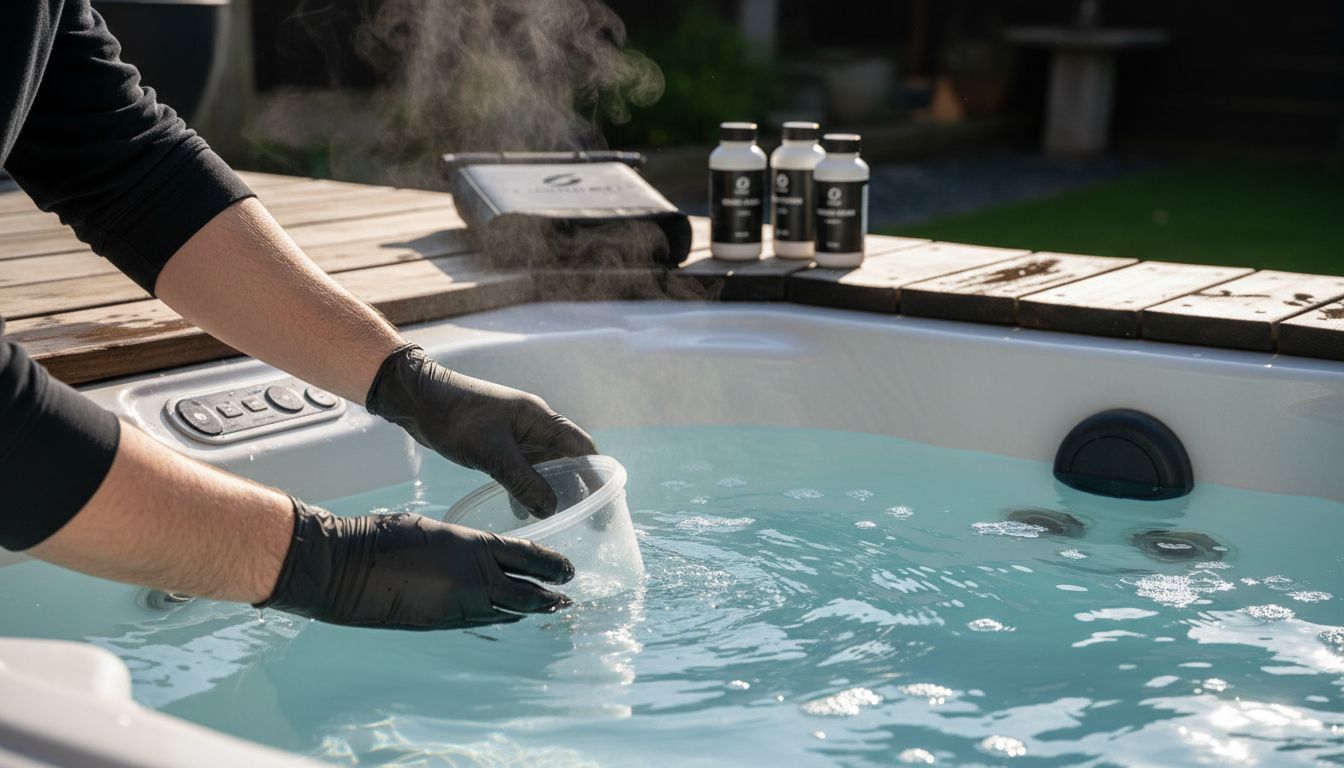
Once you have collected your sample, remove the container carefully without introducing additional contaminants. HydroFit emphasises the importance of following test strip instructions meticulously to obtain accurate readings of sanitiser, pH, and total alkalinity levels.
Pro tip: If using test strips, remove them from their container just before testing and avoid touching the reactive pad. Exposure to moisture or oils from your skin can compromise the accuracy of your results.
With your water sample collected, you are now ready to proceed to the critical stage of actual water testing and chemical analysis. Learn more about water balancing techniques in our comprehensive guide on chemical levels.
Step 4: Interpret test strip or kit results
Understanding your hot tub water chemistry requires careful and precise interpretation of test results. WhatSpa? recommends beginning with Total Alkalinity (TA) readings, as these fundamentally impact your water’s overall chemical stability.
HydroFit explains that the pH scale ranges from 0 to 14, with 7 being neutral. When comparing your test strip colours, hold the strip against the colour chart immediately after testing to ensure the most accurate reading. Look for colours that precisely match the reference chart provided with your testing kit.
Focus first on Total Alkalinity, which should ideally sit between 80 and 120 parts per million. This parameter acts as a buffer for your pH levels, preventing sudden chemical shifts. Next, examine your pH levels typical range is between 7.2 and 7.6. Any significant deviation requires immediate chemical adjustment to maintain water safety and user comfort.
Pro tip: Always use natural daylight or white background when comparing colours to avoid misinterpreting the results due to poor lighting conditions.
With your results interpreted, you are now ready to balance your hot tub water chemistry precisely. Learn more about water balancing techniques in our comprehensive guide on chemical levels.
Step 5: Adjust chemicals based on findings
HydroFit emphasises the critical importance of daily water testing and making precise chemical adjustments to maintain optimal hot tub water conditions. Your test results will guide the specific chemical corrections needed to restore balance.
If your Total Alkalinity falls below 80 parts per million, add an alkalinity increaser gradually. Pour the recommended amount directly into your hot tub water while the circulation system runs, allowing for even distribution. When pH levels drift outside the 7.2 to 7.6 range, introduce pH increasers or decreasers incrementally to bring the water back to its ideal balance.
For sanitiser levels like chlorine or bromine, add the appropriate chemicals based on your specific reading. Typically, you will want to maintain chlorine levels between 3 and 5 parts per million. Always add chemicals in small quantities, running your hot tub circulation system to ensure thorough mixing and preventing potential chemical hotspots.
Pro tip: Always add chemicals to water rather than water to chemicals, and wear protective gloves to prevent skin irritation. Wait at least 20 minutes after chemical adjustment before retesting to allow proper integration.
With your chemicals now balanced, you have successfully restored your hot tub water to its optimal condition. Learn more about water balancing techniques in our comprehensive guide on chemical levels.
Step 6: Re-test to confirm water balance
Hanna Instruments emphasises the critical importance of re-testing your hot tub water after making chemical adjustments. This verification step ensures your water parameters have returned to their optimal range and guarantees user safety.
Wait approximately 20 minutes after adding chemicals to allow complete circulation and integration. Collect a fresh water sample using the same careful technique as before. Use a clean testing strip or digital meter and compare the new readings against your previous test results. Pay close attention to Total Alkalinity, pH levels, and sanitiser concentrations to confirm they now fall within recommended parameters.
HydroFit recommends conducting daily water tests, even when the hot tub is not in use. If your re-test reveals that chemical levels remain outside the ideal range, make incremental adjustments and test again. Patience and precision are key to achieving perfectly balanced water.
Pro tip: Always document your test results and chemical adjustments in a dedicated notebook or with Water Insight & Tracking — ClearSpa's free water logging dashboard with colour-coded readings, trend charts and reorder reminders. This tracking helps you understand your hot tub’s unique chemical behaviour and simplifies future maintenance.
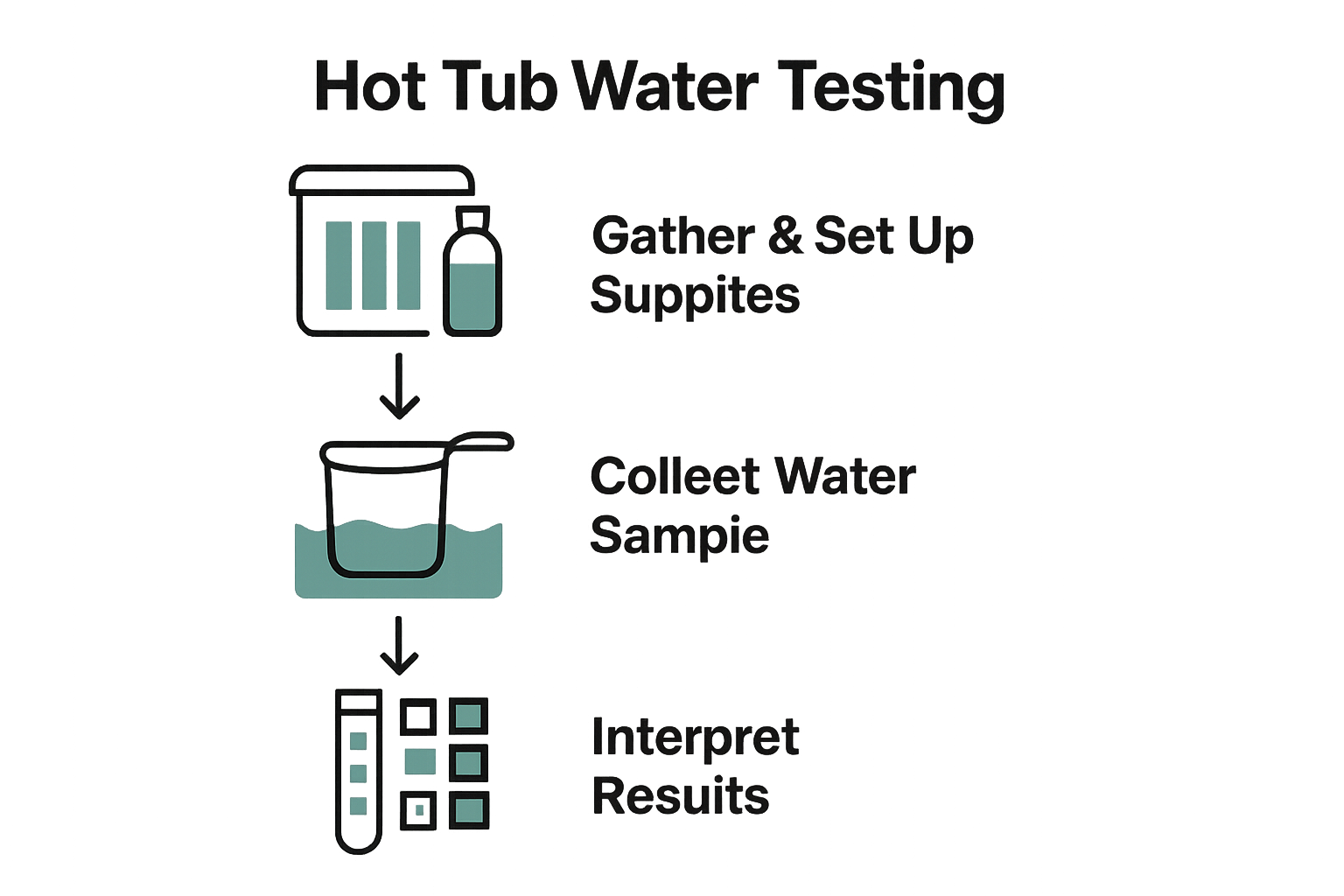
With your water chemistry now confirmed and balanced, you can confidently enjoy a safe and comfortable hot tub experience. Learn more about water balancing techniques in our comprehensive guide on chemical levels.
Keep Your Hot Tub Water Perfectly Balanced with ClearSpa
Maintaining crystal clear hot tub water is a challenge filled with technical steps like accurate water sampling, interpreting chemical levels, and precise adjustments. The article “Hot Tub Water Testing Workflow for Crystal Clear Results” highlights the critical need for reliable testing tools and effective water treatment to keep your spa safe and enjoyable. Dealing with fluctuating pH levels or inconsistent sanitiser readings can feel overwhelming, but you do not have to face this alone.
Experience peace of mind by trusting ClearSpa, a leading Spa Trade Group Brand offering a comprehensive range of top-quality hot tub chemicals and testing essentials. Designed for precise water balance and safety, our products help you manage Total Alkalinity, pH, and sanitiser levels with confidence. Start your journey to effortless water management today and ensure your hot tub always delivers a safe, relaxing experience. Discover our full range of solutions at ClearSpa, explore targeted water balancing tips with our comprehensive guide, and equip yourself with trusted tools to make testing easier at ClearSpa. Act now to transform your hot tub care routine into a simple, effective habit.
Frequently Asked Questions
How often should I conduct hot tub water testing?
Daily testing is recommended, regardless of how frequently you use your hot tub. Make it a routine to check chemical levels to ensure water safety and comfort.
What supplies do I need for accurate hot tub water testing?
To test your hot tub water accurately, gather a digital pH tester, a chlorine measurement photometer, a total dissolved solids (TDS) meter, and test strips for cyanuric acid. Collect clean sampling containers and wear disposable gloves to avoid contamination while handling samples.
How do I collect a water sample from my hot tub?
To collect an accurate water sample, turn off all jets and circulation systems, then submerge your clean sampling container about 30 centimetres below the surface. Ensure the container is horizontal and allow water to flow in steadily without causing turbulence.
What do I do if my test results show imbalanced water chemistry?
If your test results indicate imbalanced chemistry, adjust your chemicals accordingly. For example, if total alkalinity is low, add an alkalinity increaser gradually while the circulation system runs until it reaches the ideal range of 80 to 120 parts per million.
How can I ensure my test results are accurate?
To ensure accuracy, compare your test strip colours immediately against the colour chart under natural light or a white background. Avoid touching the reactive pads on the strips to prevent contamination that could lead to incorrect readings.
What should I do after adjusting the chemicals in my hot tub?
After making chemical adjustments, wait approximately 20 minutes for proper mixing, then re-test the water using the same methods. This step confirms that your water parameters are now within the safe and recommended ranges.