Understanding the Reasons for Cloudy Hot Tub Water
Discover the reasons for cloudy hot tub water and gain a comprehensive understanding of its causes and effects on your bathing experience.
Cloudy hot tub water is the sneaky culprit that can turn a relaxing soak into a headache. Most people think it just makes your spa look less inviting and a bit dingy. The real surprise is that cloudy water often signals chemical imbalance or even dangerous bacteria lurking beneath the surface, putting both your health and your hot tub at risk.
Table of Contents
- What Is Cloudy Hot Tub Water?
- Why Does Cloudy Water Matter For Your Hot Tub?
- How Cloudy Water Develops In Hot Tubs
- Key Factors Contributing To Cloudy Hot Tub Water
- The Impact Of Cloudy Water On Hot Tub Usage
Quick Summary
| Takeaway | Explanation |
|---|---|
| Cloudy water indicates underlying issues | Cloudiness often signals problems with water chemistry, filtration, or bacterial growth, necessitating immediate attention. |
| Check chemical balance regularly | Maintaining proper pH, alkalinity, and sanitiser levels prevents cloudiness and ensures safe, clear water. |
| Contaminants worsen water clarity | Oils, lotions, and other residues from users can precipitate cloudiness; regular cleaning helps mitigate this. |
| Poor water quality poses health risks | Cloudy water can harbour harmful bacteria, increasing the risk of skin infections and respiratory issues for users. |
| Monitor environmental factors closely | Usage frequency and local conditions affect water quality; proactive maintenance is key to preserving clarity and safety. |
What is Cloudy Hot Tub Water?
Cloudy hot tub water represents a common water quality issue that transforms your relaxing spa experience into a potentially frustrating and unhygienic situation. This phenomenon occurs when the water loses its characteristic crystal-clear appearance, becoming visually opaque, milky, or hazy, significantly impacting both the aesthetic appeal and functional safety of your hot tub.
Understanding Water Clarity Disruption
Clarity in hot tub water depends on multiple interconnected factors. When these balance mechanisms are disrupted, cloudiness emerges as a visible symptom of underlying chemical or environmental imbalances. The water’s appearance changes due to suspended microscopic particles that prevent light from passing through uniformly, creating a murky, uninviting environment.
According to Public Health England, improperly maintained spa pools can harbour significant health risks, making water clarity more than just a cosmetic concern. These suspended particles might include:
- Dissolved minerals
- Organic contaminants
- Body oils and lotions
- Bacteria and microorganisms
- Calcium and metal residues
Potential Health and Functional Implications
Beyond aesthetic concerns, cloudy hot tub water signals potential operational problems. The presence of suspended particles can indicate compromised water filtration, chemical imbalance, or potential bacterial growth. For those interested in more comprehensive water management strategies, read our guide on hot tub water problems.
Understanding the reasons for cloudy hot tub water requires recognising that water clarity is a complex interplay of chemical balance, filtration efficiency, and environmental factors. Identifying these underlying causes becomes crucial in restoring and maintaining your hot tub’s pristine water condition.
Why Does Cloudy Water Matter for Your Hot Tub?
Cloudy hot tub water represents far more than a mere aesthetic inconvenience. It signals potential health risks, mechanical challenges, and compromised water quality that can transform your relaxation sanctuary into a potential breeding ground for harmful microorganisms and system deterioration.
Health and Safety Implications
The presence of cloudy water indicates significant underlying problems that directly impact user safety. According to Health and Safety Executive, improperly maintained spa systems can become critical sources of dangerous bacterial proliferation. Cloudy water suggests an environment where harmful microorganisms might thrive, potentially exposing users to serious health risks such as:
- Skin infections
- Respiratory complications
- Potential bacterial transmission
- Compromised immune system challenges
- Risk of Legionella bacteria growth
Mechanical and Operational Consequences
Beyond health concerns, cloudy water represents a warning sign of potential mechanical failures within your hot tub system. Suspended particles can cause significant damage to critical components like pumps, filters, and heating elements. The accumulation of mineral deposits, organic matter, and chemical imbalances can lead to reduced equipment efficiency and potentially expensive repair requirements.
Long-Term Water Quality Management
Maintaining pristine water quality is not just about immediate appearance but about protecting your investment and ensuring ongoing enjoyment. Learn more about comprehensive hot tub water management to understand how proactive monitoring can prevent potential issues. Regular water testing, chemical balance maintenance, and understanding the reasons for cloudy hot tub water become crucial preventative strategies that safeguard both your health and your hot tub’s operational integrity.
How Cloudy Water Develops in Hot Tubs
Cloudy hot tub water emerges through a complex interaction of chemical, environmental, and biological factors that progressively compromise water clarity and quality. Understanding these intricate mechanisms helps hot tub owners identify and prevent potential water quality issues before they become significant problems.
Chemical Imbalance and Mineral Interactions
Water cloudiness often originates from chemical instability within the hot tub system. When pH levels, alkalinity, and sanitiser concentrations deviate from optimal ranges, microscopic particles begin to aggregate and suspend throughout the water. According to Health and Safety Executive, proper water management involves maintaining precise chemical equilibrium to prevent particulate formation.
Key chemical factors contributing to cloudy water include:
- Incorrect pH levels (too high or too low)
- Insufficient sanitiser concentration
- High calcium hardness
- Elevated metal content
- Unbalanced total alkalinity
Contamination and Organic Matter Accumulation
Hot tub users inadvertently introduce numerous contaminants that accelerate water cloudiness. Bodily oils, cosmetics, skin cells, and environmental debris rapidly transform water chemistry. These organic materials interact with chemical treatments, creating suspended particles that obstruct water clarity. The continuous introduction of external substances creates a dynamic environment where cloudiness can develop rapidly.
Environmental and Usage Factors
External environmental conditions significantly influence hot tub water quality. Factors such as frequent usage, inadequate filtration, and surrounding environmental conditions contribute to water deterioration. Learn more about comprehensive hot tub water management to understand the intricate balance required for maintaining pristine water conditions. Regular monitoring, proactive maintenance, and understanding these developmental mechanisms become crucial in preventing cloudy water and preserving your hot tub’s operational integrity.
Key Factors Contributing to Cloudy Hot Tub Water
Cloudy hot tub water emerges from a complex network of interconnected factors that systematically degrade water quality and clarity. Understanding these critical contributors enables hot tub owners to develop targeted strategies for maintaining pristine water conditions and preventing potential long-term system complications.
Chemical Composition and Mineral Interactions
The intricate chemical balance within hot tub water plays a pivotal role in determining water clarity. According to East Renfrewshire Council, inadequate water chemistry management can precipitate significant water quality issues. Chemical imbalances create an environment where microscopic particles aggregate, transforming clear water into a cloudy, potentially hazardous solution.
Key chemical factors that contribute to water cloudiness include:
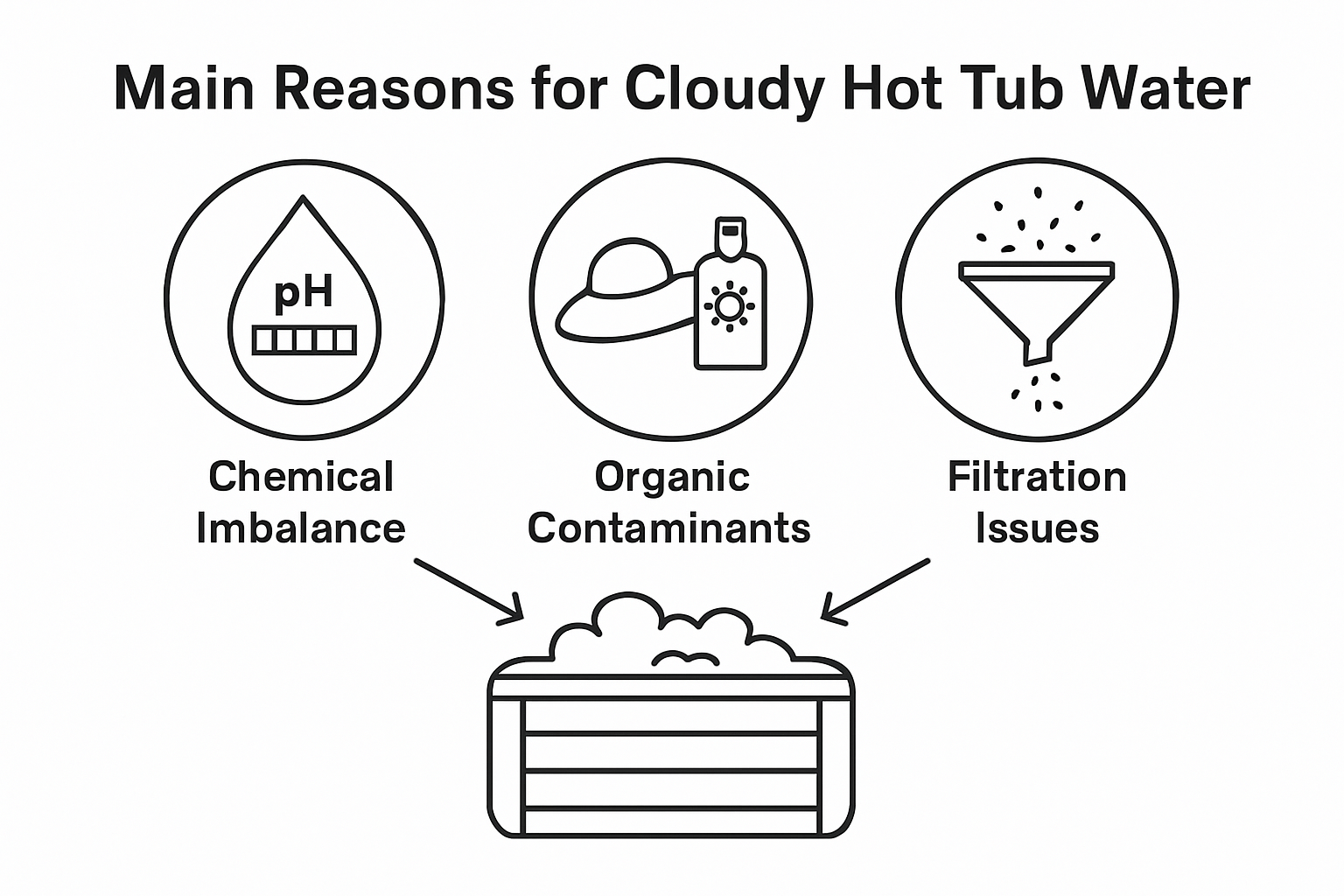
- Calcium hardness levels exceeding recommended ranges
- Unbalanced pH levels (below 7.2 or above 7.6)
- Insufficient sanitiser concentrations
- High total dissolved solids (TDS)
- Elevated metal content in water supply
Organic Contamination and User-Introduced Particles
Hot tub users themselves become significant contributors to water cloudiness. Every interaction introduces multiple contaminants that disrupt water chemistry. Personal care products, body oils, dead skin cells, and environmental debris create a complex mixture that rapidly transforms water composition. These organic materials interact with chemical treatments, generating suspended particles that compromise water transparency and potentially create breeding grounds for microorganisms.
Environmental and Operational Influences
External factors and operational practices substantially impact hot tub water quality. Frequency of use, surrounding environmental conditions, and maintenance protocols directly influence water clarity. Explore our comprehensive guide to hot tub water management to understand the nuanced strategies required for maintaining optimal water conditions. Proactive monitoring, regular filtration system maintenance, and understanding these multifaceted contributing factors become essential in preserving your hot tub’s water quality and operational integrity.
Below is a table summarising the key factors contributing to cloudy hot tub water, categorised for clearer understanding of their nature and source.
| Factor Type | Example Contributors | Description |
|---|---|---|
| Chemical Imbalance | Incorrect pH, high calcium hardness, insufficient sanitiser | Imbalances cause particles to form or remain suspended, clouding water. |
| Mineral Content and Metals | Elevated metal content, calcium, total dissolved solids (TDS) | Excess minerals react to form cloudy residues, which may damage systems. |
| Organic Contamination | Body oils, lotions, dead skin cells, cosmetics | Organics interact with chemicals, forming particles that cloud the water. |
| Environmental Debris | Dust, leaves, outdoor contaminants | External debris enters water, adding particulates and nutrients for bacteria. |
| Filtration and Operational Issues | Inadequate filtration, poor maintenance, frequent usage | Inefficiency in system increases suspended particles, reducing clarity. |

The Impact of Cloudy Water on Hot Tub Usage
Cloudy hot tub water extends far beyond an aesthetic inconvenience, representing a significant disruption to user experience and potentially compromising the entire hot tub ecosystem. Understanding these comprehensive impacts helps owners recognise the critical importance of maintaining water clarity and quality.
Health and Safety Risks
Cloudiness in hot tub water signals potential health hazards that can transform a relaxation space into a potential source of infection. According to NHS guidelines, water environments like hot tubs can become breeding grounds for dangerous bacteria when not properly maintained. The presence of suspended particles creates an ideal environment for microbial growth, potentially exposing users to serious health complications.
Key health risks associated with cloudy hot tub water include:
- Increased potential for skin infections
- Respiratory system complications
- Higher risk of bacterial transmission
- Potential exposure to Legionella bacteria
- Compromised immune system challenges
Mechanical and Performance Degradation
Cloudy water directly impacts the operational efficiency of hot tub systems. Suspended particles continuously circulate through pumps, filters, and heating elements, causing accelerated wear and potential mechanical failures. The accumulation of mineral deposits, organic matter, and chemical imbalances gradually reduces equipment performance, leading to increased maintenance costs and potentially shortened hot tub lifespan.
User Experience and Psychological Impact
Beyond technical considerations, cloudy water fundamentally alters the psychological and recreational value of hot tub usage. Explore our comprehensive guide to hot tub water management to understand how water quality influences overall enjoyment. The visual and sensory experience of a hot tub is intrinsically linked to water clarity, and cloudy water can transform a potentially rejuvenating experience into a source of discomfort and concern. Regular monitoring, proactive maintenance, and understanding these multifaceted impacts become essential in preserving both the functional integrity and pleasure derived from hot tub ownership.
The following table compares the health, mechanical, and user experience impacts of cloudy hot tub water, providing a succinct overview for hot tub owners.
| Impact Area | Main Consequences | Key Risks/Effects |
|---|---|---|
| Health | Promotes microbial/bacterial growth | Skin infections, respiratory issues, Legionella risk |
| Mechanical | Causes wear and inefficiency in pumps and heaters | Increased maintenance costs, equipment damage, shorter lifespan |
| User Experience | Diminishes enjoyment and sense of cleanliness | Psychological discomfort, reduced relaxation, reluctance to use the tub |
Restore Crystal Clear Water with ClearSpa Solutions
Struggling with persistent cloudy hot tub water can quickly turn relaxation into frustration. As highlighted in this article, chemical imbalances, organic contaminants, and poor filtration not only ruin water clarity but may also threaten your health and damage your hot tub’s essential equipment. If you are searching for an effective way to safeguard your spa from these common yet complex water problems, you are not alone. Many hot tub owners face these hidden dangers every season.

Take control today and reclaim the inviting clarity you deserve. Trust ClearSpa’s expertly crafted water treatment products to tackle cloudy water at its source and protect both your health and your investment. Visit our main site for solutions that restore balance, fight bacteria, and maintain perfect water every time. Do not wait for cloudy water to settle in - discover the difference ClearSpa can make and enjoy peace of mind with every soak.
Frequently Asked Questions
What causes cloudy hot tub water?
Cloudy hot tub water is caused by a combination of factors including chemical imbalances, organic contaminants, suspended particles, and inadequate filtration. These can stem from user introductions like body oils and cosmetics or improper water treatment.
How can I prevent cloudy water in my hot tub?
To prevent cloudy water, regularly test and balance the water chemistry, maintain proper sanitiser levels, ensure adequate filtration, and minimise the introduction of contaminants by showering before use.
What are the health risks associated with cloudy hot tub water?
Cloudy hot tub water can harbour harmful microorganisms, leading to health risks such as skin infections, respiratory complications, and exposure to bacteria like Legionella, especially in improperly maintained systems.
Is cloudy water a sign of mechanical issues in my hot tub?
Yes, cloudy water can indicate potential mechanical problems within the hot tub system, such as reduced filtration efficiency or damage to pumps and heating elements caused by suspended particles and chemical imbalances.