Spa Maintenance Checklist for Pristine Water Quality
Master your spa maintenance checklist with ClearSpa’s step-by-step process for clean, safe, and inviting hot tub water every time you relax.
Crystal clear spa water is not just a luxury, it is a sign of healthy maintenance. More than half of spa owners experience cloudy water or unwanted odors due to skipped steps or improper care. Knowing exactly how to clean, check, and balance your spa can safeguard your investment and create a safer, more enjoyable space to relax. This guide takes you through the essential steps for maintaining water purity, equipment performance, and peace of mind.
Table of Contents
- Step 1: Prepare Spa Equipment And Chemical Supplies
- Step 2: Test Water Quality With Reliable Kits
- Step 3: Balance pH, Alkalinity, And Sanitiser Levels
- Step 4: Clean Filters And Scrub Spa Surfaces
- Step 5: Verify System Performance And Water Clarity
Quick Summary
| Key Point | Explanation |
|---|---|
| 1. Gather essential spa equipment | Collect water testing kits and cleaning supplies before maintenance starts to ensure all tools are readily available. |
| 2. Test water quality regularly | Use reliable test kits to monitor pH, sanitation, and alkalinity, ensuring a safe and enjoyable spa experience. |
| 3. Maintain balanced chemical levels | Adjust pH, alkalinity, and sanitiser concentrations to keep water safe and protect spa equipment from damage. |
| 4. Clean filters and surfaces thoroughly | Regularly rinse filters and scrub surfaces with suitable cleaners to prevent contamination and maintain water clarity. |
| 5. Verify spa water clarity and system | Inspect water clarity and flow regularly to confirm effective maintenance and ensure an optimal spa environment. |
Step 1: Prepare spa equipment and chemical supplies
Preparing your spa equipment and chemical supplies is the critical first step in maintaining pristine water quality. This preparation ensures you have everything necessary for effective spa maintenance before diving into the actual cleaning process.
Begin by gathering all essential equipment and chemical supplies. According to Kittiwake Developments, comprehensive monitoring and management of fluid quality requires precise preparation. Your equipment checklist should include:
- Water testing kit
- pH balance testing strips
- Sanitising chemicals
- Cleaning gloves
- Spa surface cleaning brush
- Measuring cups for chemical dosing
- Spare filter cartridges
Arrange your chemical supplies in a cool dry location away from direct sunlight and ensure each container is tightly sealed. Check expiration dates and discard any outdated products. Remember that proper storage maintains chemical effectiveness and prevents potential contamination.
As a pro tip from professional water management experts, always read individual product instructions carefully before mixing or applying any spa chemicals. Some chemical combinations can be ineffective or potentially dangerous if not handled correctly. By taking time to prepare methodically, you set the stage for successful spa water maintenance.
Step 2: Test water quality with reliable kits
Testing your spa water quality is a crucial step in maintaining a safe and enjoyable spa experience. This process helps you identify potential chemical imbalances and prevent potential health risks before they become serious problems.
According to Content Wildlife, reliable test kits can effectively distinguish between clean and compromised water conditions. Start by selecting a comprehensive water test strips tool that measures multiple parameters such as pH levels, chlorine, bromine, and alkalinity.
When conducting your water test, follow these precise steps:
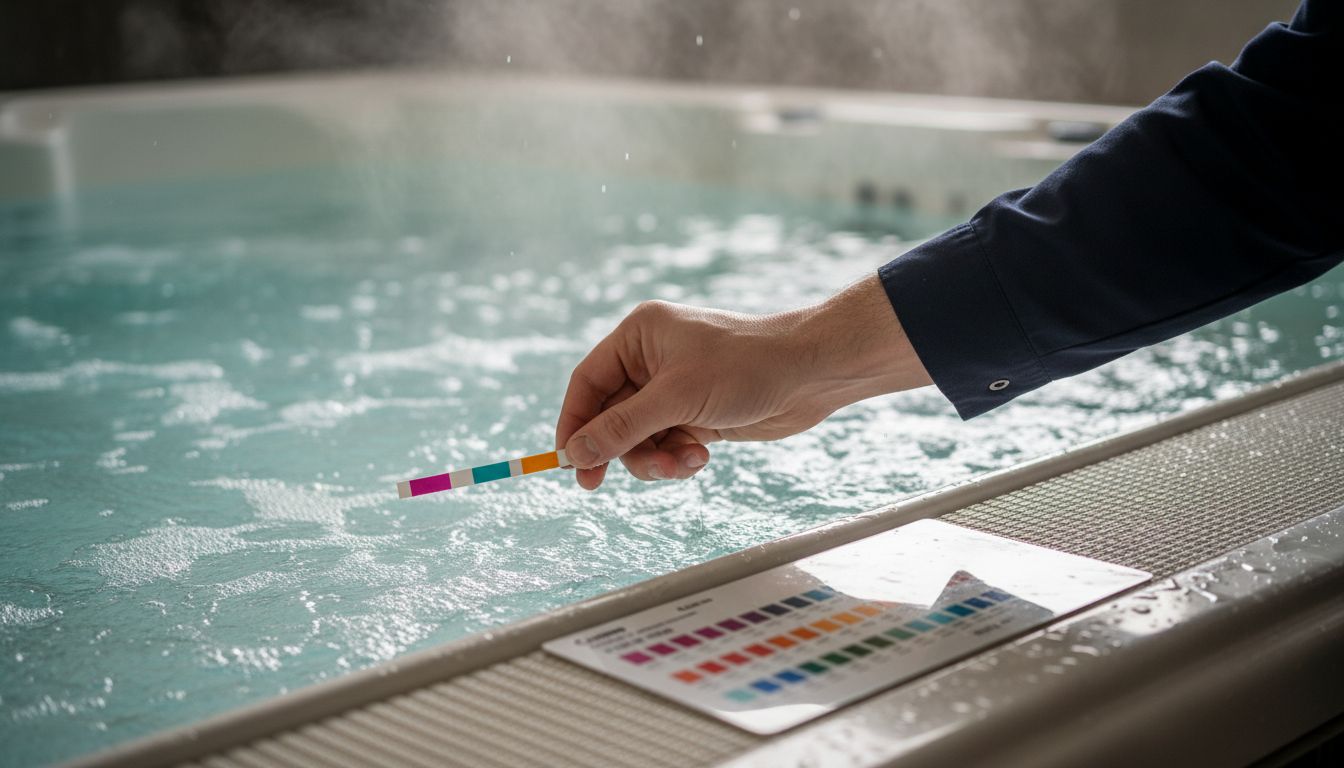
- Collect a water sample from elbow depth in your spa
- Dip the test strip into the water for the recommended duration
- Remove the strip and hold horizontally
- Compare the strip colours to the provided colour chart within the specified time frame
As highlighted by Government Assets, these low-cost testing methods can provide accurate measurements comparable to professional laboratory techniques. For the most reliable results, ensure your test strips are not expired and store them in a cool dry place away from direct sunlight.
Once you have your test results, you will be ready to make precise chemical adjustments to maintain optimal spa water quality.
Step 3: Balance pH, alkalinity, and sanitiser levels
Balancing the chemical composition of your spa water is essential for maintaining a safe and enjoyable bathing environment. This critical step ensures optimal water quality and protects both your spa equipment and your health.
According to Content Wildlife, maintaining balanced water chemistry requires careful monitoring of pH and nutrient levels. When adjusting your spa water, focus on three key parameters: pH levels, total alkalinity, and sanitiser concentration.
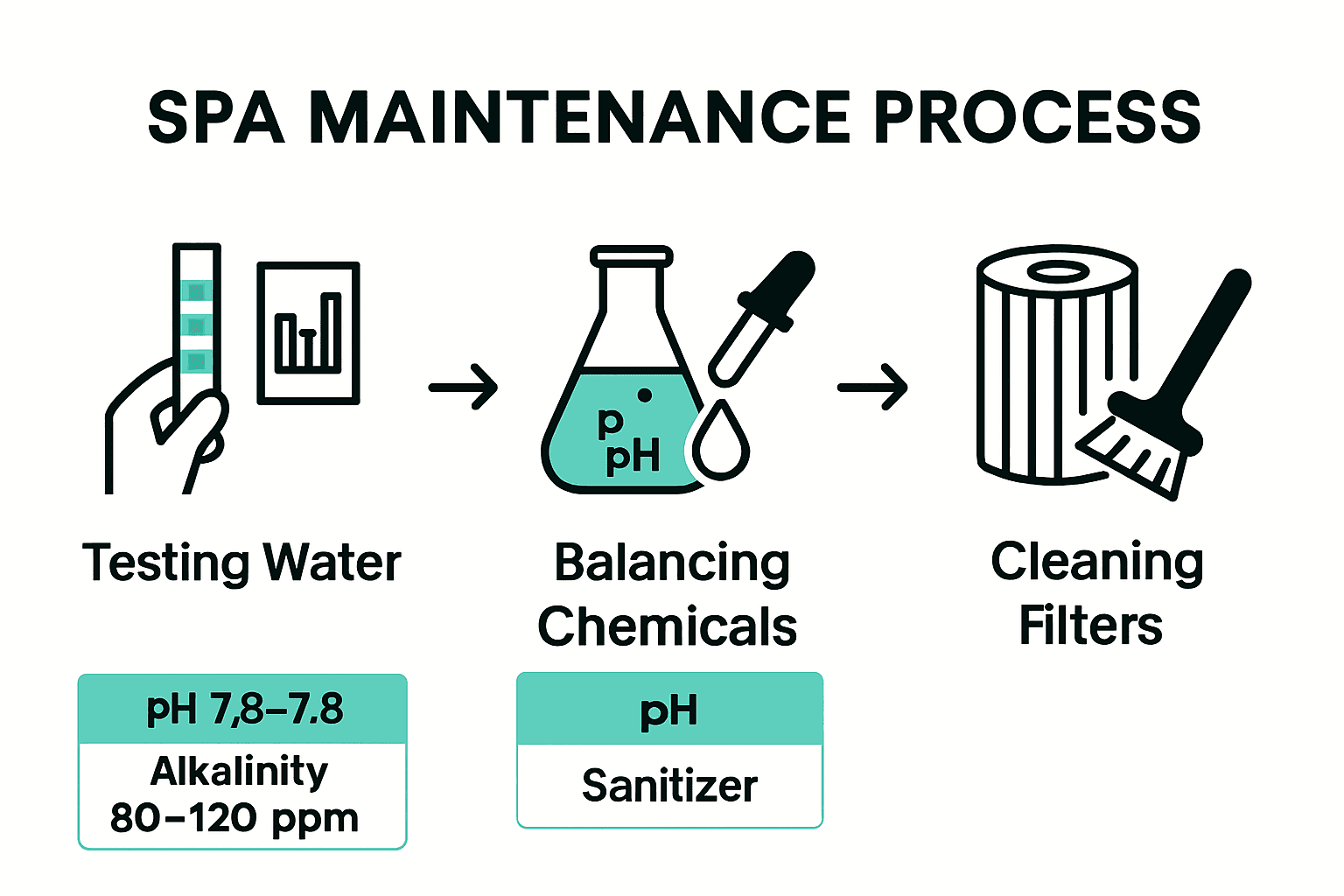
Start by addressing the pH levels. Your ideal target is between 7.2 and 7.6. If the pH is too low, add an alkalinity increaser. If it is too high, use a pH reducer. For total alkalinity, aim for a range between 80 and 120 parts per million. Our complete guide to alkalinity can help you understand these intricate balance requirements.
Next, manage your sanitiser levels by adding chlorine or bromine to eliminate bacteria and prevent contamination. The recommended sanitiser level is typically 3 parts per million for chlorine and 4 to 6 parts per million for bromine. Always add chemicals in small increments and retest to avoid overcorrection.
As a pro tip from Government Assets, use low-cost testing methods to monitor your water chemistry regularly. This approach helps maintain consistent water quality and prevents potential long-term issues with your spa system.
Step 4: Clean filters and scrub spa surfaces
Cleaning your spa filters and surfaces is a critical maintenance step that ensures optimal water quality and extends the lifespan of your spa equipment. This process removes accumulated debris, prevents bacterial growth, and keeps your spa looking and functioning at its best.
According to Kittiwake Developments, maintaining the quality of essential fluids requires systematic monitoring and cleaning. Begin by removing the spa filter and rinsing it thoroughly with clean water to eliminate loose debris. For a deeper clean, use a filter cartridge cleaner specifically designed to break down oils, lotions, and other contaminants.
When scrubbing spa surfaces, use a soft non-abrasive sponge or cloth to prevent scratching the material. Focus on waterlines, seats, and jets where grime and mineral deposits tend to accumulate. Pay special attention to areas around the jets and seating surfaces where body oils and residue can build up.
As highlighted by Coeliac UK, reliable maintenance practices are crucial for ensuring a safe and hygienic environment. Rinse all cleaning surfaces thoroughly after scrubbing to remove any chemical residue.
After cleaning, allow filters to dry completely before reinstalling to prevent potential bacterial growth. This comprehensive approach will help maintain your spa in pristine condition and ensure a safe, enjoyable experience for all users.
Step 5: Verify system performance and water clarity
Verifying your spa system performance and water clarity is the final crucial step in maintaining a pristine and safe bathing environment. This process ensures that all previous maintenance efforts have successfully created optimal water conditions.
According to Content Wildlife, assessing water quality requires comprehensive evaluation techniques. Begin by visually inspecting the water for cloudiness or discolouration. Crystal clear water should allow you to see the bottom of the spa with perfect clarity. Check for any signs of debris, unusual odours, or film on the water surface.
Utilise water clarity guidelines to benchmark your spa water conditions. Perform a final set of chemical tests to confirm that pH, alkalinity, and sanitiser levels remain within recommended ranges. Look for consistent water circulation, ensuring jets are functioning correctly and water is moving smoothly throughout the system.
As highlighted by Government Assets, low-cost testing methods can provide reliable insights into water quality. Pay special attention to any unusual changes in water appearance, flow, or chemical balance that might indicate underlying maintenance issues.
A successful verification means your spa is ready for a relaxing and safe experience. Regular monitoring will help you catch potential problems early and maintain your spa in top condition.
Keep Your Spa Water Pristine with ClearSpa Solutions
Maintaining balanced pH, sanitiser levels and spotless filters can feel overwhelming when aiming for that perfect spa experience. This article highlights common challenges like chemical imbalances and residue build-up that can spoil your relaxation time. You deserve a reliable partner to simplify these tasks and safeguard your spa’s water quality.
Discover how ClearSpa’s premium range of hot tub chemicals and cleaning products can transform your spa care routine. From expertly formulated sanitisers to effective filter cleaners, every product is designed to tackle the exact issues described. Gain peace of mind knowing your spa water is clear and safe for use.
Ready to enjoy effortless spa maintenance that keeps your water fresh and inviting? Visit ClearSpa today to explore our extensive selection of spa essentials and trusted water treatment products. Don’t wait until water clarity or chemical balance becomes a problem - take control now with ClearSpa’s proven solutions.
Frequently Asked Questions
How do I prepare my spa equipment for maintenance?
To prepare your spa equipment for maintenance, gather essential supplies like a water testing kit, pH testing strips, sanitizing chemicals, and cleaning tools. Organize these items in a cool, dry place to ensure effectiveness and safety.
What steps should I follow to test my spa water quality?
To test your spa water quality, collect a sample from elbow depth, dip a testing strip for the specified time, and compare the color to the provided chart. Ensure test strips are fresh and store them correctly to obtain accurate results.
How can I balance pH and alkalinity in my spa water?
To balance pH and alkalinity, adjust the pH to between 7.2 and 7.6 using pH increasers or reducers as needed. Aim for total alkalinity levels between 80 and 120 parts per million by adding alkalinity increasers if levels are too low.
What is the best way to clean spa filters and surfaces?
Clean spa filters by rinsing them thoroughly and using a filter cartridge cleaner for deeper cleaning. Scrub spa surfaces with a soft, non-abrasive sponge to avoid scratches, particularly around the jets and waterlines, and thoroughly rinse afterward to remove chemical residue.
How can I verify my spa system’s performance and water clarity?
To verify your spa system’s performance, visually inspect the water for clarity, ensuring it is clear enough to see the bottom. Conduct final chemical tests to confirm pH, alkalinity, and sanitizer levels are within recommended ranges to ensure a safe bathing environment.