Spa Alkalinity - Why Every UK Owner Should Check
Checking spa alkalinity is vital for UK owners: learn its role, how to test, risks of imbalance, and ways to achieve perfect hot tub water balance.
Most british hot tub owners are surprised to learn that improper alkalinity can cause nearly 70 percent of spa water problems. Getting the chemistry right is not just about keeping your hot tub looking clean; it protects your investment and ensures safer, more comfortable soaking. This guide explains why alkalinity matters, clears up the biggest myths, and shows you how to keep your spa water balanced so your system lasts longer and every soak feels perfect.
Table of Contents
- Defining Spa Alkalinity And Common Myths
- How Alkalinity Supports Water Balance
- Testing Methods For Spa Alkalinity
- Risks Of Improper Alkalinity Levels
- Fixing And Maintaining Correct Alkalinity
Key Takeaways
| Point | Details |
|---|---|
| Understanding Alkalinity | Spa alkalinity is crucial for maintaining pH stability and water quality, ideally ranging between 80-120 ppm. |
| Testing Methods | Use digital meters or liquid test kits for accurate alkalinity measurements; avoid test strips for critical water management. |
| Risks of Imbalance | Low or high alkalinity levels can lead to equipment damage and unsafe bathing conditions; regular monitoring is essential. |
| Correction Techniques | Adjust alkalinity carefully, using sodium bicarbonate to increase and sodium bisulphate or muriatic acid to decrease, while retesting frequently. |
Defining spa alkalinity and common myths
Spa alkalinity represents the water’s capacity to neutralise acids and maintain a stable pH balance in your hot tub. Understanding this critical chemical property is essential for UK hot tub owners seeking optimal water quality. Total alkalinity measurement determines how effectively your spa water resists sudden pH changes, which directly impacts water comfort and equipment longevity.
Many hot tub owners misunderstand alkalinity, believing higher numbers always indicate better water quality. This myth can lead to significant maintenance challenges. In reality, total alkalinity should typically range between 80 to 120 parts per million (ppm) for most spa environments. Levels outside this range can cause problems like scale formation, corrosion, and uncomfortable bathing experiences. The role of alkalinity extends beyond simple pH management, influencing water chemistry in complex ways.
Common misconceptions about spa alkalinity include thinking that pH and alkalinity are interchangeable. They are distinct yet interconnected measurements. pH indicates the water’s acidity or basicity, while alkalinity represents the water’s buffering capacity. UK hot tub owners should regularly test both parameters to maintain a balanced aquatic environment. Understanding these nuanced chemical interactions helps prevent potential damage to spa equipment and ensures a comfortable, safe soaking experience.
To help UK hot tub owners understand the differences between alkalinity and pH, here is a concise comparison:
| Parameter | What It Represents | Ideal Range | Main Impact on Spa |
|---|---|---|---|
| Alkalinity | Water’s acid-neutralising power | 80-120 ppm | pH stability |
| pH | Acidity or basicity of water | 7.2-7.6 | Comfort and efficacy |
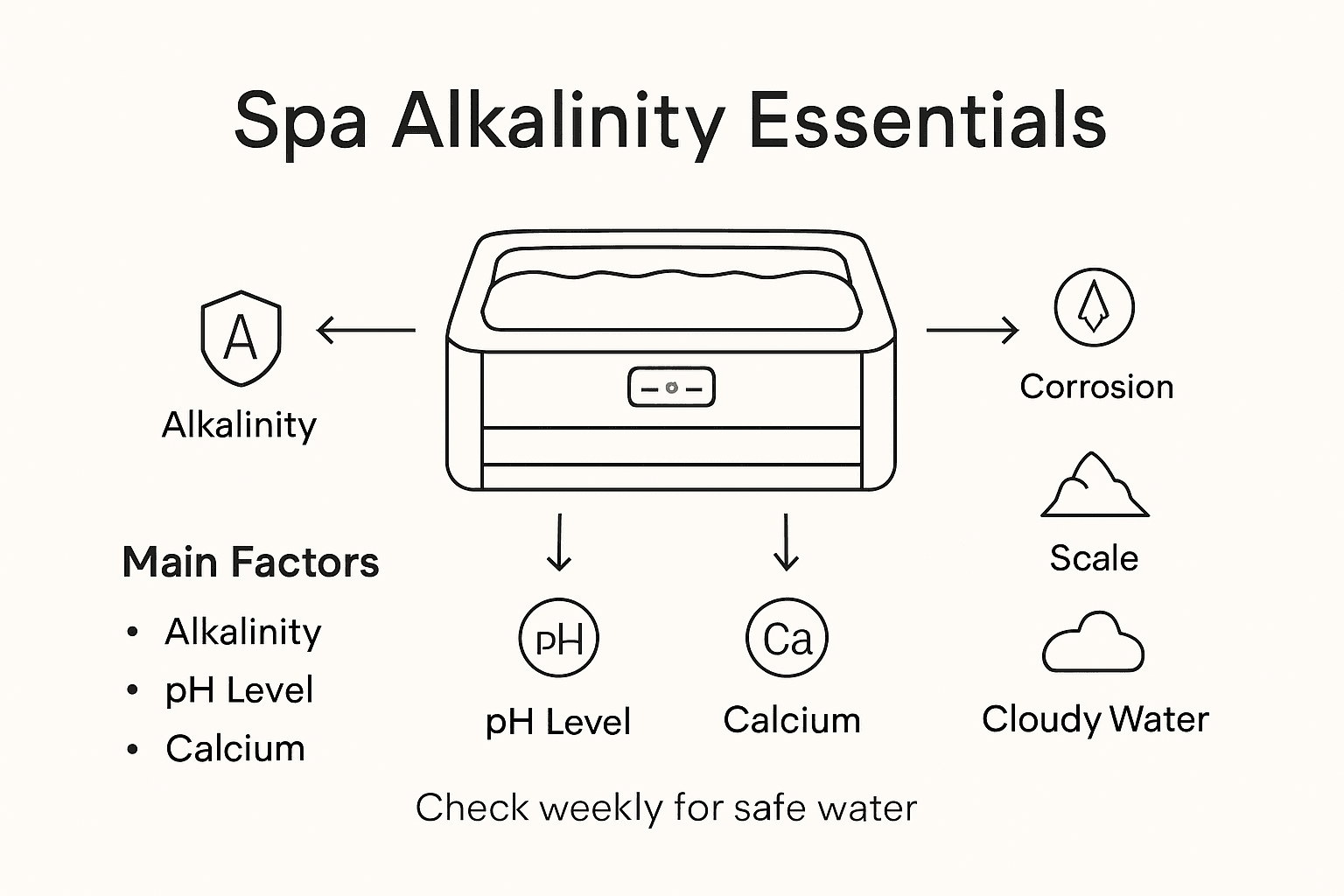
Pro Tip: Water Chemistry Check: Invest in a reliable digital water testing kit and test your spa’s alkalinity and pH levels every two weeks, recording results to track long-term water balance trends.
How alkalinity supports water balance
Maintaining water balance in your hot tub requires understanding how alkalinity acts as a fundamental stabilising agent. Alkalinity interactions with water chemistry create a protective buffer that prevents sudden changes in pH levels, which can dramatically impact water quality and equipment performance. This buffering capacity ensures that sanitising chemicals work effectively and your spa remains comfortable and safe.
The relationship between alkalinity and pH is intricate and critical. Alkalinity essentially acts as a shock absorber for your spa water, preventing rapid acid or base fluctuations that could damage equipment or create an unpleasant bathing environment. When total alkalinity is within the recommended range of 80-120 parts per million, it helps maintain a stable pH between 7.2 and 7.6, which is optimal for both human comfort and chemical efficacy.
For UK hot tub owners, understanding alkalinity’s role means recognising its impact on water treatment. When alkalinity levels drop too low, pH becomes unstable and can swing wildly, leading to potential corrosion of spa components. Conversely, excessively high alkalinity can cause scaling, reduce sanitiser effectiveness, and create cloudy water conditions. Regular testing and careful chemical management are essential to maintaining this delicate balance.
Pro Tip: Chemical Harmony: Use a reliable liquid test kit rather than test strips for more accurate alkalinity measurements, and always add chemicals in small increments while retesting to avoid overcorrection.
Testing methods for spa alkalinity
UK hot tub owners have multiple approaches to measuring total alkalinity, each with distinct advantages and limitations. Testing techniques for spa water chemistry typically involve three primary methods: digital testing meters, liquid test kits, and test strips. Digital meters provide the most precise measurements, offering electronic readings that eliminate human error and deliver instantaneous results with remarkable accuracy.
Liquid test kits represent another reliable method for assessing alkalinity levels. These kits involve adding specific chemical reagents to water samples, which then change colour to indicate alkalinity concentrations. Professional spa technicians frequently recommend liquid kits over test strips because they provide more nuanced and consistent readings. The process requires carefully following instructions, dropping precise amounts of reagent into water samples, and comparing colour changes against a standardised chart.
Test strips, while convenient and quick, remain the least accurate testing method for UK spa owners. These disposable strips are dipped directly into spa water and change colour to indicate alkalinity levels. However, factors like user interpretation, lighting conditions, and strip age can significantly impact reading accuracy. For critical water chemistry management, liquid test kits or digital meters are strongly recommended over simple test strips to ensure precise alkalinity measurements.
Here is a summary of the accuracy and ideal use for each spa water testing method:
| Method | Accuracy Level | Best Use Scenario |
|---|---|---|
| Digital Meters | Very high | Precision management, routine |
| Liquid Test Kits | High | Regular home and professional use |
| Test Strips | Moderate | Quick checks, not critical tests |
Pro Tip: Precision Monitoring: Always store your testing equipment in a cool, dry location and replace liquid reagents and test strips annually to maintain consistent and reliable water chemistry analysis.
Risks of improper alkalinity levels
Improper alkalinity levels pose significant risks to both your hot tub’s infrastructure and user experience. Comprehensive water chemistry analysis reveals that total alkalinity fluctuations can trigger a cascade of problematic consequences for UK spa owners. When alkalinity drops below 80 parts per million, the water becomes corrosive, potentially damaging expensive spa components like heating elements, pumps, and surfaces.
Low alkalinity creates particularly dangerous conditions for hot tub equipment and users. Rapid pH swings can cause metal components to corrode, leading to expensive replacements and potential system failures. Additionally, unstable water chemistry can compromise sanitiser effectiveness, creating an environment where harmful bacteria and algae might proliferate. These conditions can result in skin irritation, eye discomfort, and potentially unsafe bathing environments for spa users.
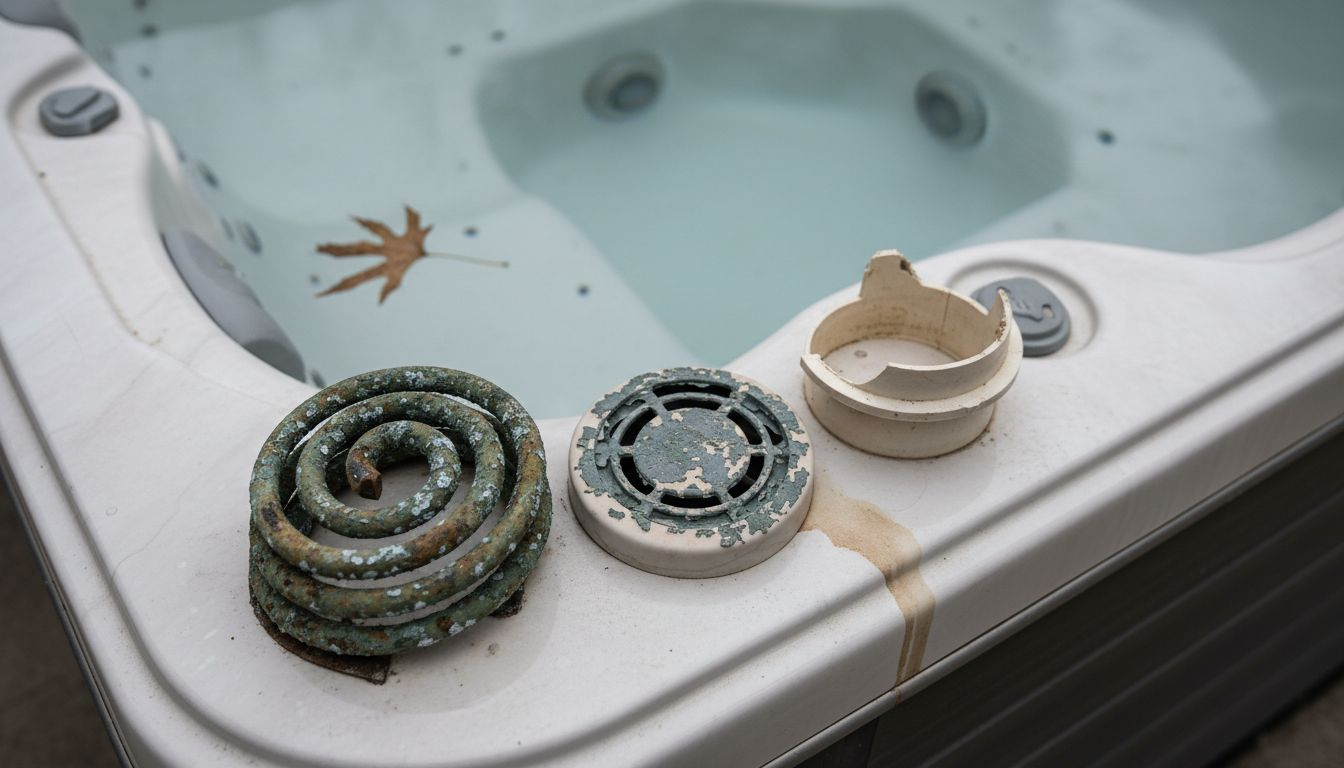
Conversely, excessively high alkalinity (above 120 parts per million) presents equally concerning challenges. High alkalinity levels can cause calcium scaling, where mineral deposits accumulate on spa surfaces and internal mechanisms. These deposits reduce heating efficiency, block water jets, and create unsightly white residue that can be challenging to remove. The buildup can also accelerate wear on pumps and filtration systems, potentially shortening your hot tub’s operational lifespan and leading to costly maintenance interventions.
Pro Tip: Chemical Balance Guard: Invest in a comprehensive water testing kit and schedule monthly professional water chemistry assessments to catch potential alkalinity issues before they escalate into expensive repair scenarios.
Fixing and maintaining correct alkalinity
Addressing alkalinity imbalances requires a methodical and precise approach for UK hot tub owners. Step-by-step alkalinity correction techniques involve carefully selecting chemical treatments and implementing incremental adjustments. Total alkalinity can be raised using sodium bicarbonate, commonly known as baking soda, which acts as a safe and effective alkalinity increaser when applied in controlled quantities.
When alkalinity levels drop below the optimal range, UK spa owners should follow a systematic process. First, conduct an accurate water test to confirm the precise alkalinity measurement. Then, calculate the required amount of sodium bicarbonate based on your hot tub’s volume. Add the chemical in small increments, mixing thoroughly and waiting 2-4 hours between applications. It’s crucial to retest after each addition to prevent overshooting the ideal 80-120 parts per million range, which could create additional water chemistry complications.
Lowering excessive alkalinity requires equally careful management. Sodium bisulphate or muriatic acid can be used to reduce alkalinity, but these chemicals demand extreme caution. Always add acid to water, never water to acid, and wear protective equipment like gloves and safety glasses. Dilute the chemical thoroughly and add in minimal quantities, retesting frequently to ensure you’re moving closer to the target range without creating dangerous pH fluctuations that could damage spa equipment.
Pro Tip: Chemical Precision: Always keep a dedicated measuring cup for spa chemicals, never use kitchen utensils, and add chemicals systematically while wearing protective clothing to ensure safe and accurate water chemistry management.
Keep Your Spa Alkalinity Balanced with Expert Support from ClearSpa
Managing spa alkalinity is a crucial step for every UK hot tub owner who wants to avoid unexpected equipment damage and uncomfortable water conditions. The article highlights common challenges such as unstable pH levels, scaling, and corrosion caused by improper alkalinity. These issues threaten both your spa’s lifespan and your bathing enjoyment. ClearSpa understands these pain points and offers a carefully selected range of high-quality water treatment products designed to help you maintain perfect alkalinity and overall water balance.
Take control of your spa’s water chemistry today with ClearSpa. Explore our extensive collection of hot tub chemicals and spa essentials formulated to stabilise alkalinity and improve water quality. Whether you need reliable alkalinity increasers or precise testing kits, we provide tools trusted by UK spa owners and professionals alike. Visit ClearSpa’s website now to find everything necessary to protect your investment and enhance your hot tub experience. Don’t wait for problems to arise - act now and enjoy balanced, crystal-clear water all year round.
Check out our products at ClearSpa and discover expert advice on water management to keep your spa inviting and safe.
Frequently Asked Questions
What is spa alkalinity?
Spa alkalinity is the water’s ability to neutralise acids and maintain a stable pH balance in your hot tub. It’s crucial for maintaining optimal water quality and comfort.
What is the ideal range for total alkalinity in a hot tub?
The ideal range for total alkalinity in a hot tub is typically between 80 to 120 parts per million (ppm). Levels outside this range can lead to water quality issues.
How does alkalinity affect pH levels in spa water?
Alkalinity acts as a buffer for pH levels, helping to stabilise them. When alkalinity is within the ideal range, it prevents rapid pH fluctuations that can cause discomfort or equipment damage.
How can I increase the alkalinity in my hot tub?
To increase alkalinity, you can use sodium bicarbonate (baking soda). Add it in small increments, mixing thoroughly, and retesting the water every few hours until you reach the desired levels.