Total Alkalinity: Complete Guide for Hot Tub Owners
Total alkalinity explained: discover its role in water balance, how to test and adjust levels, and common mistakes to avoid for UK hot tubs.
Total alkalinity is the water’s capacity to resist pH changes, and in a UK hot tub you want it between 80 and 120 ppm. Get it into that band and pH holds steady; let it drift out and you chase pH endlessly, risk corrosion when it is low, and scaling when it is high.
This guide covers what total alkalinity is, how to test it, and how to adjust it — raise it with sodium bicarbonate, lower it with an acid-based reducer — making small changes and retesting until you sit comfortably in the 80-120 ppm range. The hot tub dosing calculator works out the bicarbonate dose for your tub volume.
Table of Contents
- Total Alkalinity Defined And Its Importance
- How Total Alkalinity Affects Water Balance
- Testing Total Alkalinity In Your Hot Tub
- Adjusting Alkalinity: Methods And Products
- Common Mistakes And How To Avoid Them
Key Takeaways
| Point | Details |
|---|---|
| Total Alkalinity Definition | Total alkalinity measures a hot tub’s ability to resist pH changes and maintain stable water conditions, acting as a natural buffer. |
| Importance of Balancing | Maintaining total alkalinity between 80-120 ppm prevents pH fluctuations, protects equipment, and enhances water disinfection. |
| Testing Methods | Regular testing is crucial; options include photometers for professionals, test strips for ease, and comparator kits for DIY users. |
| Adjustment Strategies | Safely adjust total alkalinity with sodium bicarbonate to raise levels or acid-based products to lower it, making small changes and retesting frequently. |
Total Alkalinity Defined and Its Importance
Total alkalinity is a critical water chemistry measurement that represents your hot tub’s ability to resist pH changes and maintain stable water conditions. Total alkalinity specifically measures the concentration of alkaline substances like bicarbonates, carbonates, and hydroxides that act as natural pH buffers in your spa water.
According to gov.uk, total alkalinity is fundamentally “the measure of water’s capacity to neutralize acids”. This means it plays a crucial role in preventing unexpected and potentially damaging pH fluctuations that could compromise your hot tub’s performance and longevity.
The importance of maintaining proper total alkalinity cannot be overstated. When total alkalinity levels are correctly balanced, you ensure:
- Consistent and stable pH levels
- Protection against equipment corrosion
- More effective water disinfection
- Reduced risk of scaling or mineral buildup
As specified by narch.org.uk, total alkalinity is typically measured in milligrams per litre (mg/l) or parts per million (ppm). Most hot tub manufacturers recommend maintaining total alkalinity between 80-120 ppm, which provides the optimal environment for your spa’s water chemistry.
Interested in learning more about managing your hot tub’s water balance? Check out our guide on why total alkalinity matters.
How Total Alkalinity Affects Water Balance
Total alkalinity plays a pivotal role in maintaining the delicate chemical equilibrium of your hot tub’s water system. Think of it as the foundation that supports and stabilises your spa’s overall water chemistry, acting as a critical buffer against rapid and potentially damaging pH fluctuations.
According to narch.org.uk, total alkalinity significantly “influences water balance by buffering pH levels”. When total alkalinity is out of balance, you risk creating two problematic scenarios:
- Low Total Alkalinity: Creates unstable pH conditions that can quickly become acidic
- High Total Alkalinity: Leads to potential scaling and mineral buildup
Gov.uk emphasises that these imbalances can result in “corrosive water conditions or scale formation, both of which can damage equipment and affect water quality”. The consequences extend beyond simple water chemistry - they can directly impact your hot tub’s longevity and performance.
To understand these dynamics, consider how total alkalinity acts like a protective shield. When balanced between 80-120 ppm, it prevents sudden pH swings, ensures consistent water quality, and protects your hot tub’s components from potential chemical damage. For more insights into managing your spa’s water chemistry, explore our guide on high pH and alkalinity.
Testing Total Alkalinity in Your Hot Tub
Testing total alkalinity is a crucial maintenance task that ensures your hot tub remains in optimal condition. While it might seem technical, the process is straightforward and essential for preventing potential water chemistry problems before they escalate.
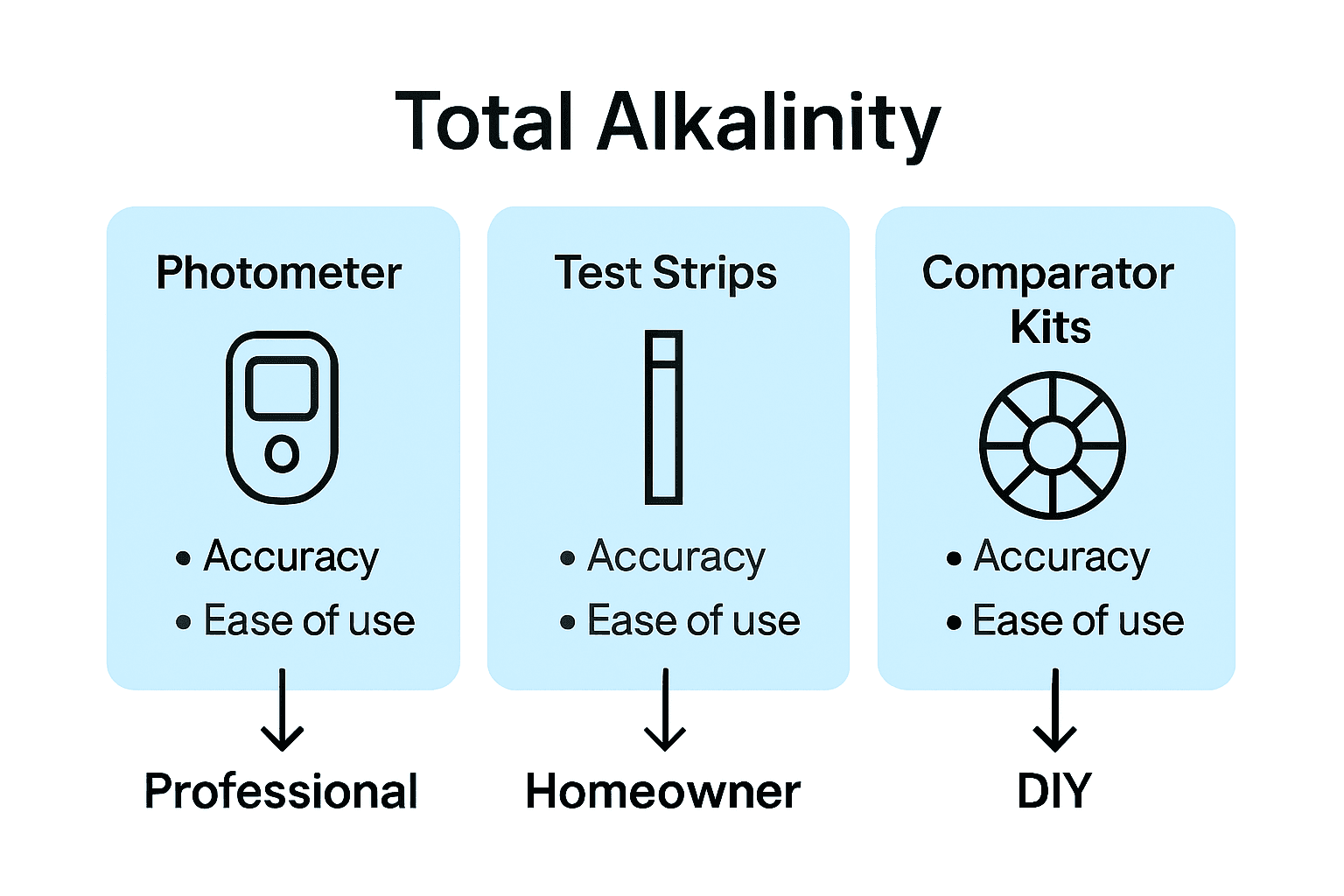
Here’s a comparison of total alkalinity testing methods for hot tubs:
| Testing Method | Accuracy | Ease of Use | Recommended For |
|---|---|---|---|
| Photometer | Very High | Moderate | Professional technicians |
| Test Strips | Moderate | Very Easy | Home spa owners |
| Comparator Kits | High | Easy | Enthusiastic DIY users |
Narch.org.uk recommends several methods for accurately measuring total alkalinity, with each approach offering different levels of precision:
- Photometer Testing: Most accurate professional method
- Test Strips: Quick and convenient
- Comparator Kits: Reliable visual testing approach
According to Gov.uk, regular testing is critical because it “helps in maintaining the appropriate balance, preventing issues like pH instability, corrosion, and scaling”. Ideally, you should test your hot tub’s total alkalinity at least once a week, or more frequently if the spa experiences heavy use.
To make testing easier, invest in a reliable testing kit and establish a consistent testing routine. By doing so, you’ll catch any potential imbalances early and maintain your hot tub’s water quality.
 Want to learn more about managing your spa’s water chemistry? Check out our guide on water balancing.
Adjusting Alkalinity: Methods and Products
Balancing your hot tub’s total alkalinity requires a strategic approach and careful selection of chemical products. Understanding the right methods and timing can make a significant difference in maintaining your spa’s water chemistry.
Narch.org.uk provides clear guidance on adjusting total alkalinity, recommending two primary methods:
- Increasing Alkalinity: Adding sodium bicarbonate
- Decreasing Alkalinity: Using acid-based products
Gov.uk emphasises that “careful monitoring and incremental adjustments are necessary” when modifying alkalinity levels. This means adding chemicals in small quantities and retesting after each adjustment to avoid overcorrection.
Making precise alkalinity adjustments requires patience and precision. Start by adding the recommended amount of water balancing chemicals, wait 2-4 hours, and then retest your water to confirm you’ve achieved the desired total alkalinity range between 80-120 ppm.
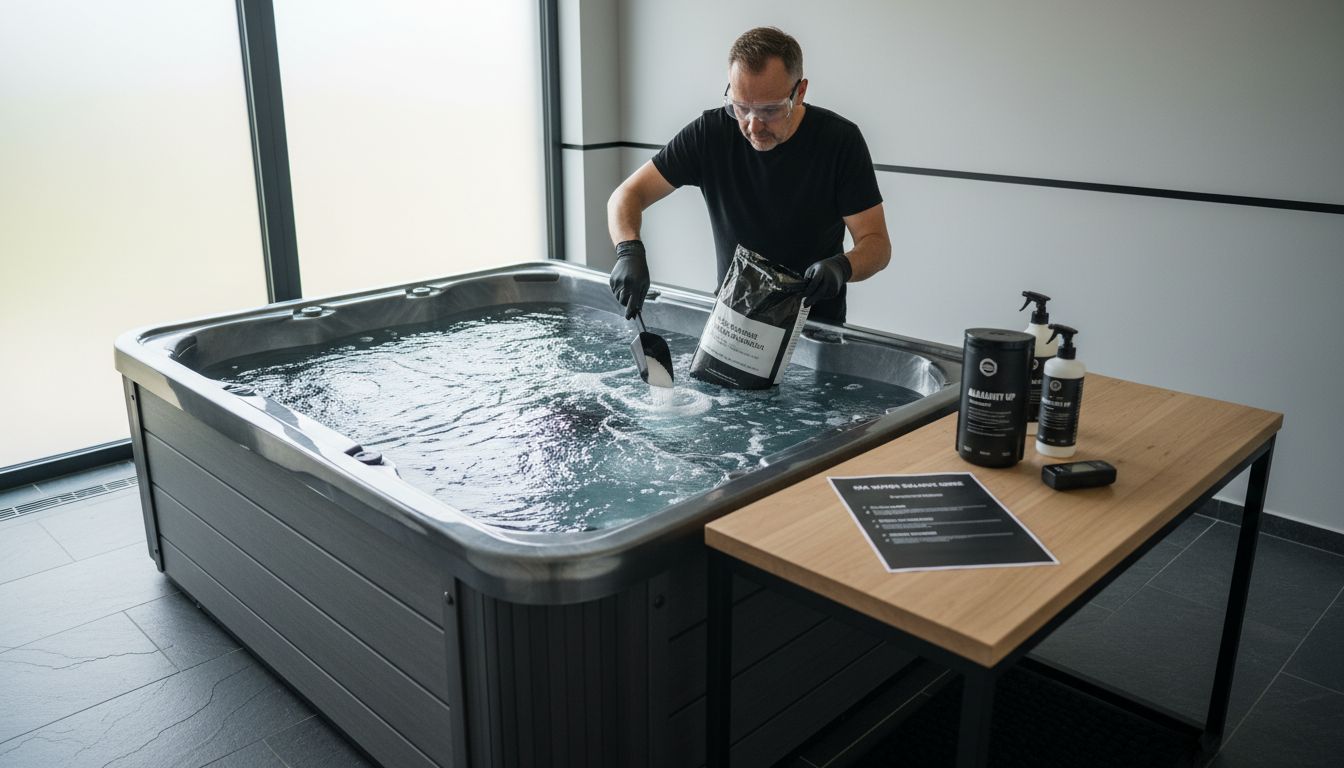 Gradual changes protect your hot tub’s delicate chemical ecosystem and prevent potential damage to its components.
Common Mistakes and How to Avoid Them
Managing your hot tub’s total alkalinity isn’t rocket science, but it does require attention to detail and a consistent approach. Even experienced hot tub owners can fall into traps that compromise their water chemistry and potentially damage their spa.
Narch.org.uk highlights several critical mistakes hot tub owners frequently make:
- Inconsistent Testing: Skipping regular water checks
- Drastic Chemical Changes: Making sudden, large-scale adjustments
- Product Misuse: Using inappropriate or incorrect chemicals
- Ignoring Manufacturer Guidelines: Disregarding specific recommendations
Gov.uk emphasises that “infrequent testing, improper chemical dosing, and ignoring manufacturer guidelines can lead to water quality issues”. The key is developing a systematic maintenance routine that prevents these common pitfalls.
To keep your hot tub in top condition, establish a weekly testing schedule, make incremental chemical adjustments, and always follow the manufacturer’s specific instructions. Want to dive deeper into maintaining your spa’s water balance? Check out our guide on water balancing.
Keep Your Hot Tub’s Total Alkalinity Perfectly Balanced with ClearSpa
Maintaining the correct total alkalinity level is essential to prevent unstable pH, equipment corrosion, and scaling issues that can spoil your hot tub experience. The precise measurement and careful adjustment of alkalinity require reliable products and expert guidance to avoid common pitfalls like drastic chemical changes or inconsistent testing. ClearSpa understands that your goal is to enjoy a clean, balanced, and refreshing spa without the stress of complicated water chemistry.
Discover our range of trusted water balancing chemicals and testing kits designed specifically for hot tubs. Start taking control of your water quality today and protect your spa investment. Visit ClearSpa now to explore how our products can help you maintain total alkalinity between 80 and 120 ppm easily. For tips and detailed advice, check out our comprehensive water balancing guide and learn why managing alkalinity correctly is the key to lasting enjoyment.
Frequently Asked Questions
What is total alkalinity in hot tubs?
Total alkalinity is a measure of the water’s ability to resist pH changes and maintain stable water conditions. It reflects the concentration of alkaline substances like bicarbonates, carbonates, and hydroxides in your hot tub water.
Why is maintaining proper total alkalinity important for my hot tub?
Maintaining proper total alkalinity ensures consistent pH levels, protects against equipment corrosion, enhances water disinfection, and reduces the risk of scaling or mineral buildup, all of which contribute to your hot tub’s performance and longevity.
How can I test total alkalinity in my hot tub?
You can test total alkalinity using various methods, including photometers for high accuracy, test strips for convenience, and comparator kits for reliable visual results. It’s recommended to test at least once a week.
What should I do if my hot tub’s total alkalinity is too high or too low?
To increase alkalinity, add sodium bicarbonate; to decrease it, use acid-based products. Make adjustments gradually and retest to avoid overcorrection, aiming for a balanced total alkalinity level between 80-120 ppm.
Recommended
- Why is Total Alkalinity so important in hot tubs or pools - ClearSpa™
- High pH and alkalinity in your hot tub - ClearSpa™
Sources and further reading
- Pool Water Treatment Advisory Group (PWTAG) - UK technical guidance on pool and spa water treatment
- ClearSpa Total Alkalinity Increaser - product label dosing instructions
This guide is written and maintained under the ClearSpa editorial policy. Dose rates and target ranges mirror the product labels current at the time of the last review.