Total Alkalinity in Hot Tubs - Why It Matters for UK Owners
Enhance Your Hot Tub water with balanced total alkalinity. Learn what it is, why 80-150 ppm matters, how to adjust levels, and avoid common issues.
Most British hot tub owners are surprised to learn that even a small shift in water chemistry can affect both comfort and costly equipment. Balancing total alkalinity is not just about numbers on a test strip. This chemical measure is the foundation for stable, safe water, and losing control can turn your relaxing soak into a source of frustration. Discover what total alkalinity really means for your British hot tub and how a few smart moves can protect your investment and skin.
Table of Contents
- What Total Alkalinity Means
- How Total Alkalinity Buffers pH
- Ideal Alkalinity Ranges UK Hot Tubs
- Balancing Low Vs High Alkalinity
- Risks Of Unbalanced Alkalinity
- Practical Alkalinity Adjustment Tips
Key Takeaways
| Point | Details |
|---|---|
| Importance of Total Alkalinity | Maintaining total alkalinity within the optimal range of 80-120 PPM is essential for stable pH levels and overall water quality in hot tubs. |
| Risks of Imbalance | Low or high total alkalinity can lead to equipment damage, skin irritation, and compromised sanitisation effectiveness, making regular testing vital. |
| Adjusting Alkalinity | Use sodium bicarbonate to raise alkalinity and acids like muriatic acid to lower it, ensuring gradual adjustments with frequent retesting to avoid overcorrection. |
| Regular Monitoring | Establish a routine to test alkalinity at least weekly and adjust levels as necessary to maintain water chemistry balance and ensure a safe bathing environment. |
What Total Alkalinity Means
Total alkalinity represents a critical water chemistry parameter that determines the stability and balance of your hot tub’s water environment. When measuring total alkalinity, we are specifically examining the concentration of alkaline substances present in the water, which includes carbonates, bicarbonates, and hydroxides. These microscopic compounds play a fundamental role in maintaining consistent pH levels and protecting your hot tub’s overall water quality.
The Centre for Municipal Aquatics and Hygiene Control defines total alkalinity as a measurement expressed in parts per million (PPM), which indicates the concentration of alkaline substances capable of neutralising acidic elements. Think of total alkalinity as a protective buffer that prevents dramatic shifts in your hot tub’s water chemistry. When these alkaline substances are present in appropriate quantities, they act like a protective shield, resisting sudden changes in acidity that could potentially damage your hot tub’s equipment or create an uncomfortable bathing experience.
Understanding total alkalinity involves recognising its relationship with pH levels. A well-maintained total alkalinity range typically sits between 80 and 120 PPM for hot tubs. When alkalinity falls outside this optimal range, you might experience several water chemistry challenges. Low alkalinity can cause pH levels to fluctuate wildly, potentially leading to corrosive water conditions that could damage heating elements, jets, and other sensitive hot tub components. Conversely, excessively high alkalinity can result in scale formation, cloudy water, and reduced effectiveness of sanitising chemicals.
Pro Tip for Hot Tub Owners: Regularly test your hot tub’s total alkalinity using a reliable test strip or digital testing kit, and aim to adjust the levels before they drift too far from the recommended range of 80-120 PPM.
How Total Alkalinity Buffers pH
The buffering mechanism of total alkalinity is a crucial water chemistry process that helps maintain stable pH levels in hot tub water. Alkaline substances work like a chemical defence system, preventing sudden and potentially harmful shifts in water acidity. Alkalinity acts as a protective buffer, neutralising acids that might otherwise cause rapid and unpredictable changes in water chemistry.
When acids are introduced into hot tub water, whether through environmental contaminants, body oils, or chemical treatments, the alkaline compounds immediately respond. These compounds absorb and neutralise the incoming acidic elements, effectively preventing significant pH fluctuations. Total alkalinity provides water with a remarkable ability to resist dramatic pH changes, which is essential for maintaining a consistent and safe water environment.
The scientific mechanism behind pH buffering is relatively straightforward. Alkaline compounds like carbonates and bicarbonates have a natural tendency to react with acids, transforming them into more stable chemical structures. This neutralisation process happens rapidly, ensuring that your hot tub’s water remains within a safe and comfortable pH range. Without adequate alkalinity, your hot tub water could become highly acidic or basic, potentially causing damage to equipment, irritating skin, and compromising the effectiveness of sanitising chemicals.
Pro Tip for Water Chemistry Management: Invest in a high-quality digital pH and alkalinity testing kit that provides precise measurements, allowing you to make informed adjustments to your hot tub’s water chemistry before imbalances become problematic.
Ideal Alkalinity Ranges UK Hot Tubs
Maintaining the correct total alkalinity range is crucial for hot tub owners across the United Kingdom. Small swimming pool guidance recommends a total alkalinity range between 75 and 200 milligrams per litre, which provides an excellent starting point for hot tub water chemistry management. While this range offers flexibility, most professional hot tub manufacturers and water treatment experts suggest a more refined target range.
Optimal alkalinity levels typically sit between 80 and 120 parts per million (PPM), a range that helps stabilise pH levels and ensures water quality and safety. This narrow band provides the perfect balance for preventing potential water chemistry issues. When total alkalinity remains within this range, your hot tub water will resist sudden pH changes, protect your equipment from corrosion or scale buildup, and create a more comfortable bathing experience.
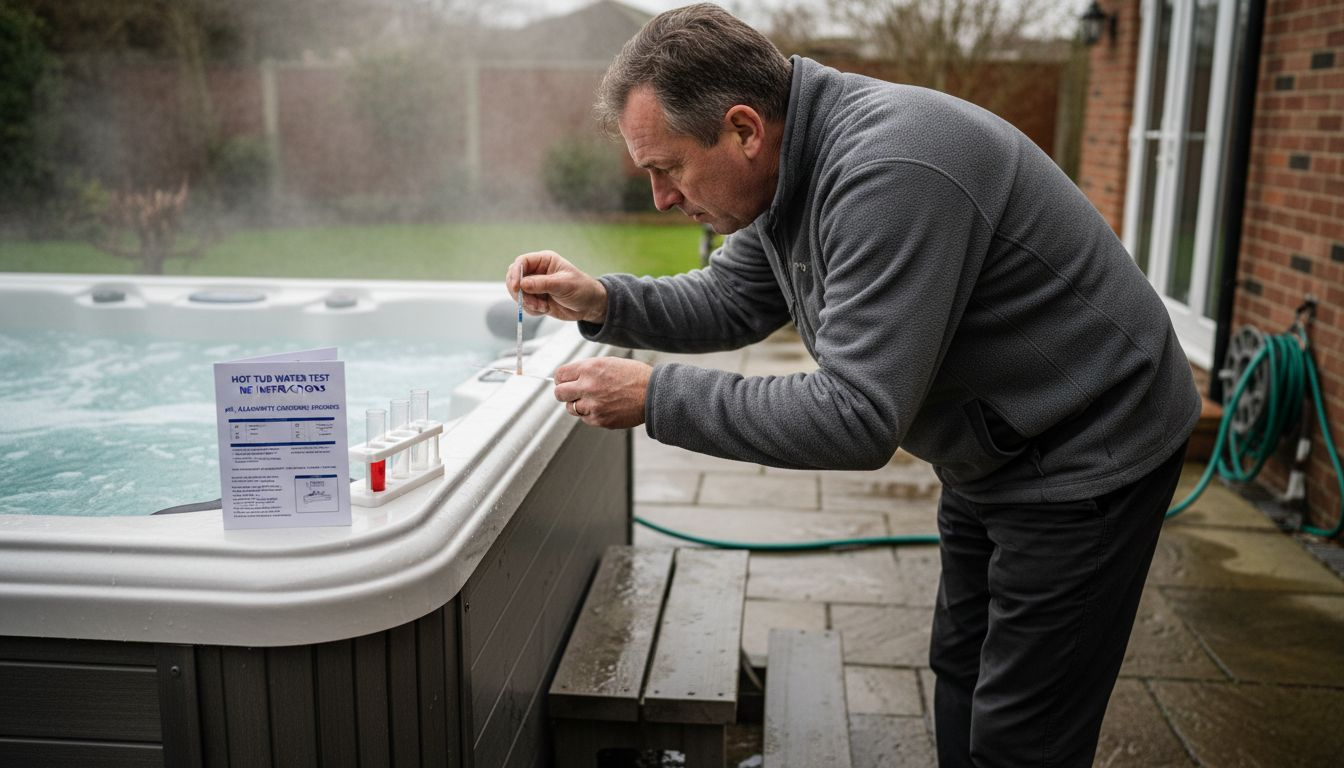
Factors that can influence your hot tub’s total alkalinity include local water hardness, frequency of use, number of bathers, and the specific chemical treatments you employ. Regular testing becomes essential, as alkalinity can fluctuate due to environmental conditions, chemical additions, and user interactions. Water sources in different regions of the United Kingdom might have varying mineral compositions, which can impact initial alkalinity levels and require more frequent monitoring.
Pro Tip for Hot Tub Maintenance: Invest in a digital testing kit that provides precise alkalinity measurements, and test your hot tub water at least once a week to ensure you maintain the ideal 80-120 PPM range, making small adjustments as needed to keep your water chemistry perfectly balanced.
Balancing Low vs High Alkalinity
Understanding the delicate balance of total alkalinity is crucial for maintaining optimal hot tub water quality. When total alkalinity deviates from the ideal range, significant water chemistry challenges can emerge. Low alkalinity and high alkalinity each present unique problems that can compromise your hot tub’s performance and potentially damage expensive equipment.
Low alkalinity creates a volatile water environment where pH levels become unpredictable and unstable. In this scenario, even minor chemical additions or environmental contaminants can cause rapid and dramatic pH fluctuations. These sudden changes can lead to corrosive water conditions that attack metal components, potentially damaging heating elements, jets, and other critical hot tub infrastructure. Bathers might also experience skin and eye irritation due to the aggressive chemical shifts.
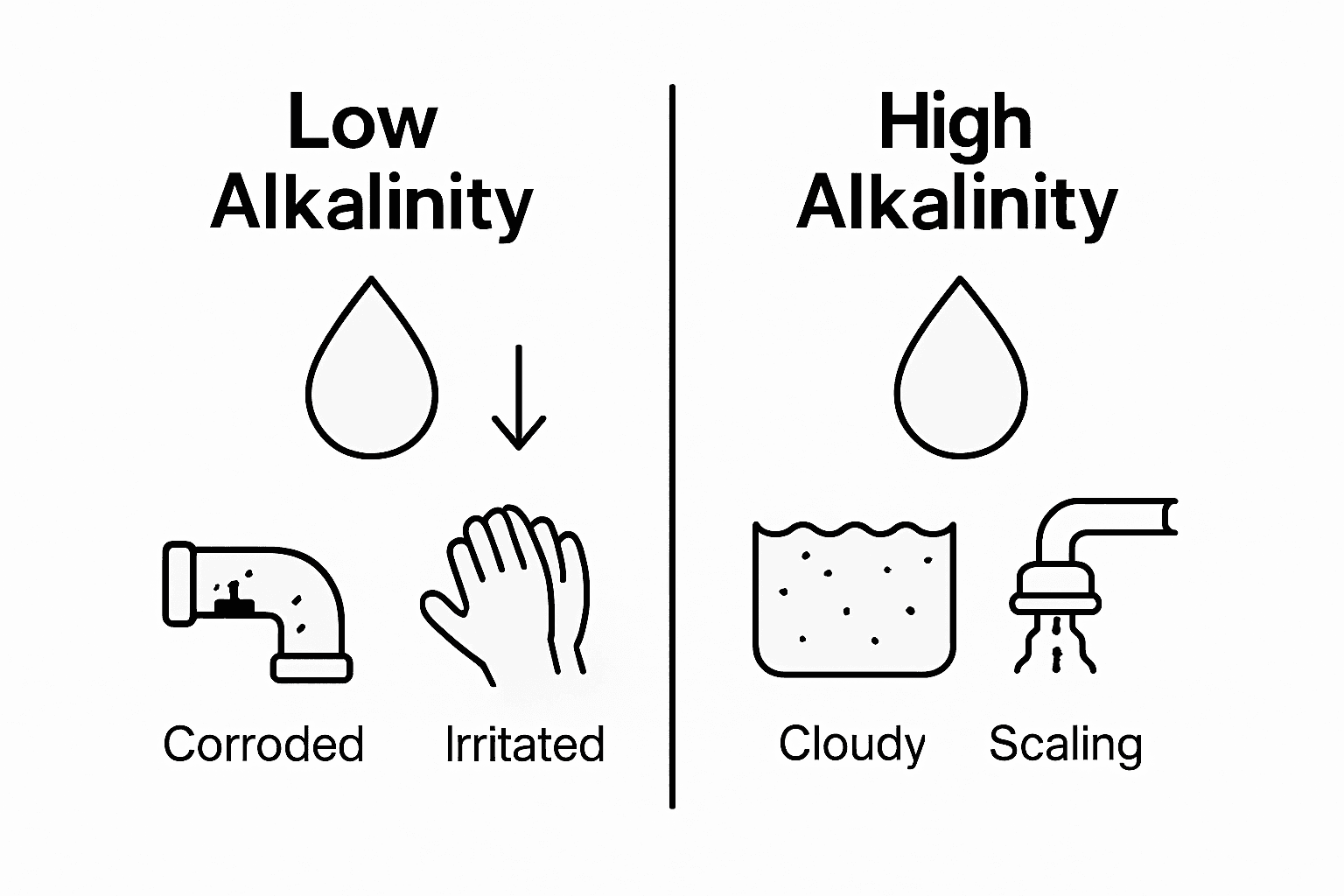
Conversely, high alkalinity presents its own set of challenges. When total alkalinity exceeds recommended levels, pH becomes extremely difficult to adjust, creating a rigid water chemistry scenario. This can result in cloudy water, scale formation on surfaces, and reduced effectiveness of sanitising chemicals. High alkalinity essentially locks the pH in place, preventing the normal chemical interactions that keep your hot tub water clean, clear, and safe. The mineral deposits can accumulate on heating elements and jets, reducing their efficiency and potentially leading to premature equipment failure.
Pro Tip for Water Chemistry Control: Regularly monitor your hot tub’s total alkalinity using reliable digital testing equipment, and be prepared to make incremental adjustments using appropriate pH increasers or decreasers to maintain the optimal 80-120 PPM range.
Here is a comparison of the effects of low versus high total alkalinity in hot tub water:
| Impact Area | Low Alkalinity Consequences | High Alkalinity Consequences |
|---|---|---|
| pH Stability | Large fluctuations, unstable pH | pH difficult to adjust, rigid water chemistry |
| Equipment Longevity | Increased corrosion risk | Scale build-up, reduced efficiency |
| Water Clarity | Possible cloudiness during rapid changes | Persistent cloudy water due to minerals |
| Chemical Effectiveness | Sanitiser effectiveness decreases | Sanitiser becomes less effective |
| User Comfort | Skin and eye irritation | Discomfort due to residue or deposits |
Risks of Unbalanced Alkalinity
Maintaining proper total alkalinity is critical for hot tub water chemistry, as unbalanced alkalinity can dramatically compromise water quality and safety. When alkalinity levels drift from the optimal range, hot tub owners face a cascade of potential problems that extend far beyond simple water chemistry complications.
Equipment Damage represents one of the most significant risks associated with alkalinity imbalance. Low alkalinity creates an acidic environment that accelerates metal corrosion, potentially destroying expensive components like heating elements, pumps, and jets. Precision-engineered hot tub equipment can suffer irreversible damage from these persistent chemical attacks. High alkalinity, conversely, promotes rapid mineral scale formation, which progressively clogs critical mechanical systems and reduces overall equipment efficiency.
The human experience of using an improperly balanced hot tub can be equally problematic. Unbalanced alkalinity can trigger skin and eye irritation, potentially transforming what should be a relaxing experience into an uncomfortable ordeal. Improper alkalinity levels compromise the effectiveness of sanitising chemicals, creating an environment where harmful bacteria and microorganisms can thrive. This not only reduces water quality but also increases potential health risks for bathers, making regular water chemistry monitoring absolutely essential.
Pro Tip for Water Safety: Invest in a comprehensive digital water testing kit that provides precise measurements of total alkalinity, and establish a consistent weekly testing routine to catch and correct any chemical imbalances before they become serious problems.
Practical Alkalinity Adjustment Tips
Adjusting total alkalinity requires a methodical and patient approach to ensure your hot tub’s water chemistry remains balanced. Total alkalinity modifications should be made gradually, using specific chemical compounds to raise or lower levels, preventing overcorrection and maintaining water stability.
Raising Alkalinity typically involves adding sodium bicarbonate, commonly known as baking soda, which incrementally increases total alkalinity. Before adding any chemicals, it’s crucial to test your current water chemistry using a reliable digital testing kit. When adding sodium bicarbonate, sprinkle the powder directly into the hot tub water while the jets are running to ensure thorough distribution. Always add the minimum recommended amount and retest after several hours, making small adjustments to avoid overshooting the ideal 80-120 PPM range.
Conversely, lowering alkalinity requires adding specific acid-based products designed for hot tub water management. Muriatic acid or sodium bisulphate are commonly used to reduce total alkalinity. These chemicals must be added with extreme caution, using precise measurements and adding them slowly while the hot tub jets circulate the water. Unlike raising alkalinity, lowering the levels requires more precision and carries a higher risk of creating significant water chemistry imbalances.
Pro Tip for Precision Adjustments: Always add chemical treatments in small increments, wait at least four to six hours between treatments, and retest your water chemistry to ensure you’re moving towards the optimal alkalinity range without creating additional complications.
Below is a summary of practical steps to adjust alkalinity effectively:
| Action | Typical Chemical Used | Safe Practice Tip | Testing Frequency |
|---|---|---|---|
| Raise Alkalinity | Sodium bicarbonate (baking soda) | Add minimum size dose, circulate with jets | Retest after 4-6 hours |
| Lower Alkalinity | Muriatic acid or sodium bisulphate | Add slowly with jets on, measure precisely | Retest after 4-6 hours |
| Monitoring | Digital or strip test kit | Test at least once a week | Weekly, or after changes |
Keep Your Hot Tub Water Perfectly Balanced with ClearSpa
Maintaining the ideal total alkalinity between 80 and 120 PPM is essential to avoid damaging equipment, cloudy water, and uncomfortable bathing experiences. The challenges of low or high alkalinity described in the article highlight the importance of effective water treatment to stabilise pH and protect your hot tub’s health. If you have ever struggled with fluctuating pH levels or scale buildup, ClearSpa offers trusted water treatment products designed specifically to help UK hot tub owners manage total alkalinity with precision.

Explore our carefully tested range of hot tub chemicals and spa essentials at ClearSpa to take control of your water chemistry today. Don’t wait until imbalance leads to costly repairs or irritation from poor water quality. Act now and maintain a safe, crystal-clear, and comfortable hot tub by visiting ClearSpa for expert solutions to your alkalinity concerns.
Frequently Asked Questions
What is total alkalinity in hot tubs?
Total alkalinity is a measurement of the concentration of alkaline substances in hot tub water, helping to stabilise pH levels and protect water quality.
Why is maintaining the correct total alkalinity important for hot tubs?
Maintaining total alkalinity within the optimal range of 80-120 PPM prevents pH fluctuations, safeguards equipment from corrosion or scaling, and ensures a comfortable bathing experience.
How can I raise total alkalinity in my hot tub?
To raise total alkalinity, you can add sodium bicarbonate (baking soda) gradually while the jets are running, ensuring even distribution. Retest the water after several hours to check levels.
What are the signs of low or high total alkalinity in hot tubs?
Low alkalinity can cause unstable pH levels leading to corrosion and irritation for bathers, while high alkalinity can result in cloudy water, scale build-up, and decreased effectiveness of sanitising chemicals.