Spa Temperature Shock - Protecting Your Comfort and Health
What spa temperature shock means, its effects on hot tub comfort and safety, prevention strategies, and common mistakes UK spa owners make.
Most british hot tub users are surprised to learn that sudden water temperature shifts can trigger complex physical reactions, not just mild discomfort. With the unpredictable climate in the United Kingdom, even a few degrees of change may dramatically impact spa safety and comfort. Understanding spa temperature shock and uncovering common myths gives hot tub owners practical strategies to maintain water quality and enjoy a more relaxing, healthier soak.
Table of Contents
- Defining Spa Temperature Shock And Key Myths
- Types Of Temperature Shock In Spas
- How Temperature Shock Affects Spa Users
- Prevention And Safer Spa Enjoyment Strategies
- Common Mistakes And Solutions For UK Owners
Key Takeaways
| Point | Details |
|---|---|
| Understanding Spa Temperature Shock | It involves complex physiological responses to rapid temperature changes, which can pose health risks, especially for vulnerable individuals. |
| Myths About Temperature Tolerance | Not everyone can tolerate the same temperature range; factors like age and health significantly impact individual responses. |
| Importance of Gradual Acclimatisation | Allow at least 5-10 minutes for your body to adjust before fully entering a hot tub to prevent sudden health risks. |
| Regular Maintenance and Monitoring | Regularly test water chemical levels and maintain consistent temperatures to ensure safety and comfort in spa use. |
Defining Spa Temperature Shock and Key Myths
Spa temperature shock represents a physiological response that occurs when your body experiences sudden, significant changes in water temperature. This phenomenon is particularly relevant for hot tub users in the United Kingdom, where precise water management is crucial for safety and comfort. Spa temperature variations can create unexpected physical reactions that potentially compromise user wellbeing.
Contrary to popular misconceptions, spa temperature shock is not simply about feeling uncomfortably warm or cold. It involves complex physiological mechanisms where rapid temperature transitions can trigger cardiovascular and nervous system responses. Most UK hot tub owners mistakenly believe that their bodies can instantly adapt to temperature changes, but scientific evidence suggests otherwise. The human body requires gradual acclimatisation to prevent potential health risks such as sudden blood pressure fluctuations, thermal stress, and increased heart rate.
Key myths surrounding spa temperature shock include the dangerous assumption that all individuals can tolerate identical temperature ranges. In reality, factors like age, physical fitness, underlying health conditions, and individual thermal sensitivity significantly influence how one experiences temperature transitions. Older adults and individuals with cardiovascular conditions are particularly vulnerable to rapid thermal shifts, making careful temperature management essential. Understanding these nuanced responses helps hot tub owners create safer, more comfortable aquatic experiences.
Expert Tip: Always allow your body at least 5-10 minutes to gradually adjust when entering a hot tub, and monitor your comfort levels carefully during temperature transitions.
Types of Temperature Shock in Spas
Temperature shock in spas manifests through several distinct physiological and chemical responses that can impact both user experience and water quality. The primary types of temperature shock encompass bodily thermal response, water chemistry disruption, and mechanical system stress. Comprehensive shock treatments reveal the complexity of managing these intricate interactions within hot tub environments.
Physiological temperature shock involves the body’s immediate reaction to sudden thermal transitions. This can be categorised into two primary mechanisms: external thermal shock, where skin and surface tissues experience rapid temperature changes, and internal thermal shock, which affects deeper physiological systems like cardiovascular and nervous networks. Individuals with different physical conditions experience these transitions uniquely, with older adults and those with pre-existing health conditions being more susceptible to dramatic thermal variations.
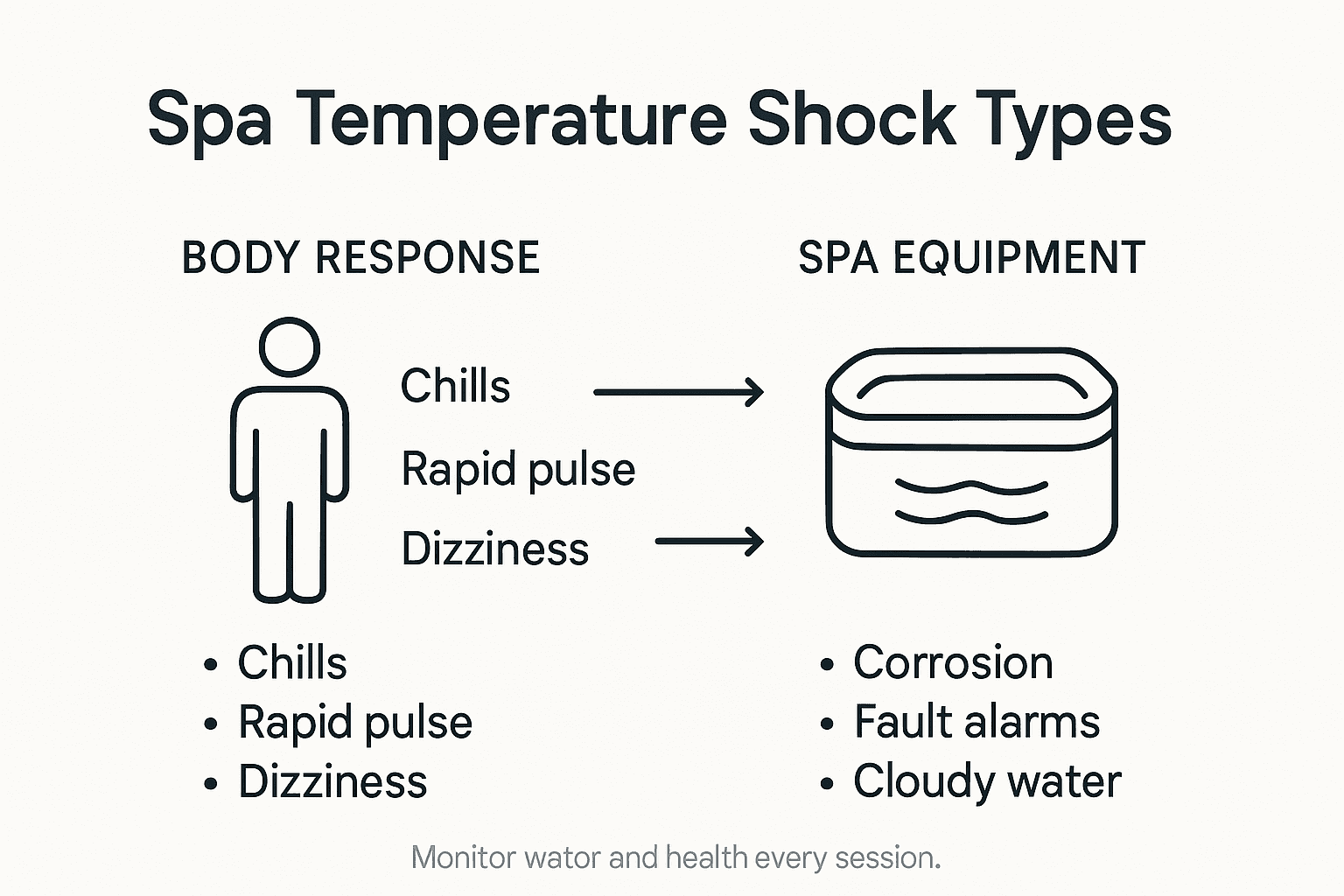
Chemical temperature shock represents another critical dimension, specifically related to water treatment and sanitisation processes. When hot tub water experiences significant temperature fluctuations, the effectiveness of chemical treatments can be dramatically altered. Chlorine and bromine-based sanitisers become less stable, potentially creating environments where bacterial growth can proliferate. This type of shock requires precise management to maintain optimal water quality and prevent potential health risks associated with inadequate chemical balance.
Pro Tip: Invest in a high-quality digital thermometer with rapid response times to monitor and manage spa water temperature transitions accurately and safely.
Below is a summary of the main types of temperature shock in spas and their effects on users and equipment:
| Type of Shock | Main Trigger | Impact on Users | Impact on Equipment |
|---|---|---|---|
| Physiological | Rapid change in water temperature | Dizziness, increased heart rate | Minimal direct impact |
| Chemical | Sudden water temperature fluctuation | Increased bacterial growth risk | Sanitiser effectiveness drops |
| Mechanical | Abrupt heating or cooling cycles | None directly | Greater wear and tear |
How Temperature Shock Affects Spa Users
Temperature shock presents significant physiological challenges for spa users, particularly those with underlying health conditions. Medical research on thermal risks reveals the complex interactions between human physiology and sudden thermal transitions. The human body experiences multiple cascading responses when exposed to rapid temperature changes, which can range from mild discomfort to potentially life-threatening scenarios.
The cardiovascular system experiences the most immediate and profound impacts during temperature shock. Sudden thermal transitions can trigger rapid heart rate fluctuations, blood pressure changes, and potential syncope, especially in vulnerable populations such as elderly individuals or those with pre-existing cardiac conditions. When body temperature regulation mechanisms become overwhelmed, users may experience dizziness, nausea, and in extreme cases, loss of consciousness. These responses are not merely uncomfortable but can represent genuine health risks that demand careful management and awareness.

Critical physiological mechanisms become disrupted during temperature shock, with potential long-term health implications. The body’s thermoregulatory systems can become stressed, leading to potential immune response suppression and increased susceptibility to thermal-related health complications. Plumbing and health professionals emphasise the importance of understanding these risks, particularly for individuals with compromised health or limited thermal adaptation capabilities. Different demographic groups experience these thermal transitions uniquely, with age, fitness level, and individual health status playing significant roles in determining potential adverse reactions.
Pro Tip: Always conduct a gradual temperature acclimation by entering spa water incrementally and monitoring your body’s immediate physiological responses.
Prevention and Safer Spa Enjoyment Strategies
Safe spa enjoyment requires a comprehensive approach to temperature management and user protection. UK government guidelines for spa safety provide critical insights into minimising thermal and health risks associated with hot tub use. These strategies encompass a multifaceted approach that addresses physiological, hygienic, and environmental considerations to ensure optimal user comfort and wellbeing.
Effective prevention begins with understanding individual thermal tolerance and implementing gradual temperature adaptation techniques. Users should approach spa entry methodically, allowing their body to adjust incrementally to water temperature. This involves entering the spa slowly, starting with feet and lower legs, and progressively immersing deeper while monitoring physiological responses. Particular attention must be paid to vulnerable populations, including elderly individuals, those with cardiovascular conditions, and people with reduced thermal regulation capabilities. Temperature monitoring becomes crucial, with recommended spa water temperatures typically ranging between 36-38 degrees Celsius to minimise shock risks.
Comprehensive spa safety extends beyond temperature management to include rigorous water quality maintenance and personal health precautions. Users should conduct thorough pre-entry health assessments, considering factors such as current medical conditions, medication interactions, and individual thermal sensitivity. Hydration plays a critical role in thermal regulation, with experts recommending increased water intake before and during spa use to support the body’s temperature adaptation mechanisms. Additionally, limiting continuous spa sessions to 15-20 minutes helps prevent potential thermal stress and allows for necessary physiological recovery periods.
Pro Tip: Always keep a digital thermometer and water bottle nearby during spa sessions, and listen to your body’s signals of thermal discomfort.
Here is a comparison of recommended prevention strategies and the benefits each provides for safer spa use:
| Strategy | How It Works | Main Benefit |
|---|---|---|
| Gradual spa entry | Stepwise immersion for body acclimation | Reduces thermal shock risk |
| Constant temperature monitoring | Use digital thermometer frequently | Prevents unsafe conditions |
| Hydration before/during spa | Increased water intake | Supports thermal regulation |
| Routine water testing | Test chemical balance regularly | Ensures water safety |
Common Mistakes and Solutions for UK Owners
UK hot tub owners frequently encounter temperature-related challenges that can compromise both equipment performance and user safety. Comprehensive maintenance guides reveal a series of recurring mistakes that can lead to temperature shock and potential health risks. Understanding these common pitfalls is crucial for maintaining a safe and enjoyable spa experience.
One of the most prevalent errors involves inconsistent temperature management and abrupt thermal transitions. Many owners mistakenly adjust spa temperatures too rapidly, causing significant stress to both the equipment and the user’s physiological systems. This can lead to increased energy consumption, potential mechanical strain on heating elements, and heightened risk of thermal shock. Recommended practices include implementing gradual temperature changes, maintaining a consistent baseline temperature between 36-38 degrees Celsius, and using programmable heating controls that allow for smooth, incremental adjustments.
Chemical balance and water quality represent another critical area where UK spa owners frequently make detrimental mistakes. Improper sanitisation and irregular chemical treatments can exacerbate temperature shock risks by creating environments prone to bacterial growth and unpredictable water chemistry. Owners should develop a rigorous maintenance routine that includes regular water testing, precise chemical balancing, and systematic cleaning protocols. This approach not only mitigates temperature-related risks but also ensures a hygienic and safe spa environment that protects both user health and equipment longevity.
Pro Tip: Invest in a digital spa maintenance log to track temperature changes, chemical levels, and cleaning schedules, helping you maintain consistent and safe hot tub conditions.
Protect Your Health and Comfort with ClearSpa Solutions
Sudden changes in water temperature can cause serious spa temperature shock affecting both your comfort and wellbeing. If you want to avoid rapid thermal transitions, dizziness, and chemical imbalances in your hot tub, reliable water treatment is essential. ClearSpa offers a trusted range of spa essentials and hot tub chemicals designed to help you maintain consistent water temperature and chemical balance safely and effectively.
Discover how ClearSpa’s expertly formulated products can support your spa’s water chemistry and temperature stability. Take control today by visiting ClearSpa and explore our selection which helps you prevent temperature shock, enhance your hot tub experience and protect your health. Don’t wait until discomfort strikes - act now to enjoy safer, more relaxing spa sessions.
Learn more about our water treatment products and experience peace of mind with every soak.
Frequently Asked Questions
What is spa temperature shock?
Spa temperature shock refers to the body’s physiological response to sudden and significant changes in water temperature, which can affect user comfort and health.
How can I prevent temperature shock while using my hot tub?
To prevent temperature shock, gradually acclimatise your body by entering the spa slowly and monitoring your comfort levels. Maintain a consistent water temperature between 36-38 degrees Celsius and ensure proper hydration.
What are the health risks associated with temperature shock in spas?
Temperature shock can lead to dizziness, increased heart rate, and blood pressure fluctuations. It poses particular risks to vulnerable populations, such as the elderly or those with cardiovascular conditions.
How does water chemistry change during temperature fluctuations in a hot tub?
Rapid temperature changes can alter the effectiveness of sanitising chemicals like chlorine and bromine, potentially creating an environment conducive to bacterial growth. Regular water testing and chemical balancing are essential to maintain safe water quality.