Shock Treatment for Hot Tubs - Why It Matters
Shock treatment for hot tubs explained: learn what it is, types available, how to apply safely, and key risks and benefits for water clarity.
Every british hot tub owner wants crystal-clear water, but many are surprised to learn that a single session can introduce up to 100 million bacteria into the tub. Maintaining that sparkling water goes far beyond simply adding chemicals. Shock treatment is not just about cleanliness, it protects you and your equipment from real health risks that lurk below the surface. Discover why proper shock treatment matters and how it can make all the difference for your hot tub experience.
Table of Contents
- What Is Shock Treatment For Hot Tubs?
- Different Types Of Shock Treatments Explained
- How Shock Treatment Cleans And Sanitises Water
- Risks And Safety Measures For Shock Use
- Benefits Versus Alternatives For Water Maintenance
Key Takeaways
| Point | Details |
|---|---|
| Importance of Shock Treatment | Shock treatment is crucial for maintaining hot tub water quality, effectively eliminating harmful contaminants that standard sanitisation cannot address. |
| Types of Shock Treatments | There are two main types: chlorine-based and non-chlorine shock treatments, each serving specific water maintenance needs. |
| Risks and Safety Measures | Proper handling and safety protocols are essential when using shock treatments to prevent chemical hazards and ensure user safety. |
| Advantages Over Alternatives | Shock treatment offers superior sanitisation compared to traditional methods, providing comprehensive cleaning and preventing microbial growth effectively. |
What Is Shock Treatment for Hot Tubs?
Shock treatment represents a critical maintenance process designed to eliminate harmful bacteria, contaminants, and organic compounds from hot tub water. By temporarily raising chlorine levels to an extremely high concentration, hot tub owners can effectively sanitise their water and prevent potential health risks. The process works by oxidising unwanted substances, thereby restoring water clarity and ensuring a safe bathing environment.
The primary purpose of shock treatment is to address issues that standard sanitisation cannot resolve. When bacteria like Legionella proliferate in hot tub systems, traditional chemical treatments might prove insufficient. Shock treatments provide an aggressive cleaning mechanism that breaks down accumulated organic matter, eliminates microbial contaminants, and resets water chemistry to optimal levels. The Chartered Institute of Plumbing and Heating Engineering emphasises that meticulous maintenance prevents bacterial growth and ensures safe hot tub operation.
Typical shock treatments involve adding a concentrated chlorine or non-chlorine shock product directly into the hot tub water. These treatments typically occur weekly or bi-weekly, depending on usage frequency and water conditions. Key indicators that a hot tub requires shock treatment include:
- Cloudy or discoloured water
- Strong chlorine or chemical odours
- Visible biofilm or scum lines
- Reduced water clarity
- Persistent foam or residue
Ultimately, shock treatment is not just a cleaning procedure but a crucial preventative health measure that protects both the hot tub equipment and its users from potential waterborne health hazards.
Different Types of Shock Treatments Explained
Hot tub shock treatments are categorised into two primary types: chlorine-based and non-chlorine treatments, each serving distinct purposes in water maintenance. Effective chemical treatments play a crucial role in controlling microbial growth and maintaining water quality, with owners selecting specific shock treatments based on their unique hot tub requirements and water conditions.
Chlorine-based shock treatments involve adding high concentrations of chlorine to the water, providing an aggressive sanitisation method that eliminates bacteria, algae, and organic contaminants. These treatments are particularly robust, capable of breaking down complex organic compounds and resetting water chemistry. Non-chlorine shock treatments, by contrast, utilise oxygen-based compounds that oxidise contaminants without introducing additional chlorine, making them ideal for sensitive skin or those preferring milder chemical approaches.
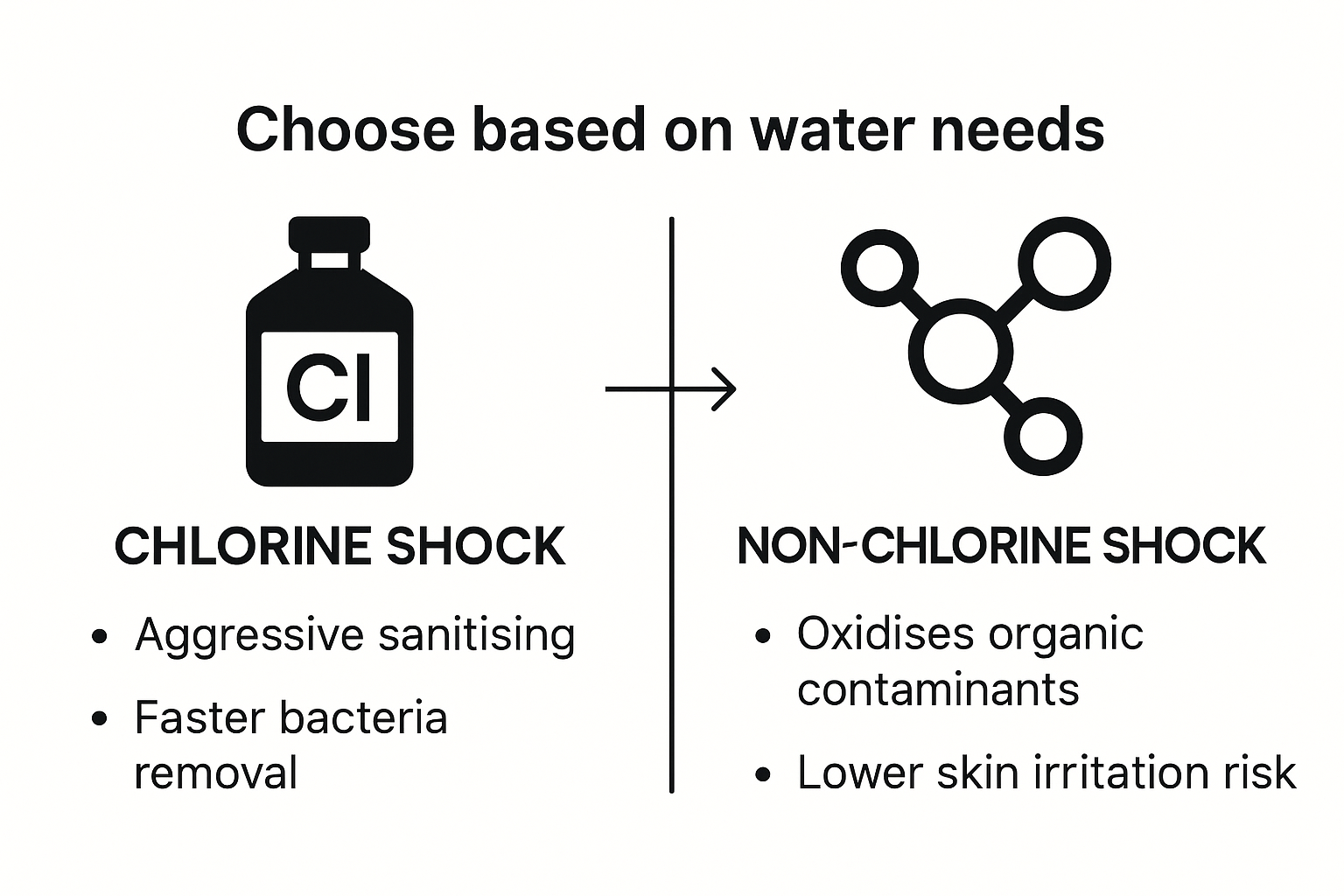
The Chartered Institute of Plumbing and Heating Engineering emphasises that no universal shock treatment exists, and maintenance strategies must be tailored to specific hot tub systems. Different shock treatments offer unique advantages:
Chlorine Shock Treatments:
- Maximum bacterial elimination
- Most cost-effective option
- Strongest oxidation power
- Ideal for high-traffic hot tubs
Non-Chlorine Shock Treatments:
- Gentler on equipment and skin
- Faster water recovery time
- Less chemical odour
- Suitable for sensitive users
Ultimately, selecting the appropriate shock treatment depends on factors including hot tub usage, water quality, user sensitivity, and manufacturer recommendations. Regular, thoughtful application ensures a clean, safe, and enjoyable hot tub experience.
How Shock Treatment Cleans and Sanitises Water
Shock treatment functions as a powerful sanitisation process that systematically eliminates harmful microorganisms and organic contaminants from hot tub water. Effective disinfection strategies involve introducing high concentrations of oxidising agents that break down microscopic debris, neutralise bacteria, and reset water chemistry to pristine conditions.
The cleaning mechanism operates through an advanced oxidation process that targets multiple contamination sources simultaneously. When shock treatment is applied, the powerful chemical compounds penetrate biofilms, destroy bacterial cell structures, and neutralise organic matter that standard filtration might miss. Precise water maintenance protocols emphasise the importance of comprehensive water treatment beyond simple surface cleaning.

The sanitisation process involves several critical steps:
Oxidation Mechanism:
- Breaks down complex organic compounds
- Eliminates microscopic contaminants
- Disrupts bacterial cell membranes
- Neutralises ammonia and nitrogen compounds
Contamination Removal Process:
- Targets invisible microorganisms
- Removes body oils and skin residues
- Destroys algae and bacterial colonies
- Prevents biofilm development
Ultimately, shock treatment represents a sophisticated water purification technique that goes far beyond traditional cleaning methods, ensuring hot tub water remains crystal clear, safe, and free from potentially harmful microbial populations.
Risks and Safety Measures for Shock Use
Comprehensive risk assessment is fundamental when handling hot tub shock treatments, as improper chemical management can pose significant health and safety challenges. Chemical shock treatments involve powerful oxidising agents that require careful handling, precise measurement, and strict adherence to safety protocols to prevent potential harm to users and equipment.
The primary risks associated with shock treatments stem from chemical concentration, potential skin irritation, and incorrect application. Precise water maintenance protocols emphasise the critical importance of understanding chemical interactions and following manufacturer guidelines to mitigate potential dangers. Users must be aware of the specific risks that can arise from mishandling chemical shock treatments.
Key safety measures for shock treatment include:
Personal Protection Measures:
- Wear protective gloves
- Use safety goggles
- Work in well-ventilated areas
- Avoid direct skin contact with chemicals
Chemical Handling Precautions:
- Always add chemicals to water, never water to chemicals
- Measure precise chemical quantities
- Store chemicals in locked, cool locations
- Keep chemicals away from children and pets
- Use dedicated measuring tools
Ultimately, responsible shock treatment requires a comprehensive understanding of chemical properties, potential risks, and meticulous safety procedures to ensure a safe and effective hot tub maintenance experience.
Benefits Versus Alternatives for Water Maintenance
Comprehensive water maintenance strategies reveal that shock treatment offers distinct advantages over alternative water management approaches for hot tubs. While traditional methods like routine filtration and standard chemical treatments provide basic cleaning, shock treatments represent a more intensive and thorough sanitisation technique that addresses multiple water quality challenges simultaneously.
Alternative water maintenance methods each carry unique limitations that shock treatment effectively overcomes. Standard chlorination provides basic bacterial control but struggles to break down complex organic compounds, whereas shock treatments penetrate deeper into biofilms and neutralise microscopic contaminants. Precise maintenance protocols emphasise the importance of comprehensive water treatment that goes beyond surface-level cleaning.
Key comparative advantages of shock treatment include:
Shock Treatment Benefits:
- Complete elimination of organic contaminants
- Rapid water chemistry reset
- Comprehensive microbial destruction
- Long-lasting water clarity
- Prevents biofilm development
Alternative Method Limitations:
- Partial cleaning effectiveness
- Slower contaminant removal
- Limited bacterial control
- Inconsistent water quality
- Higher potential for residual contamination
Ultimately, shock treatment represents a sophisticated water maintenance approach that provides superior sanitisation, ensuring hot tub water remains pristine, safe, and free from potentially harmful microorganisms.
Keep Your Hot Tub Crystal Clear with Expert Shock Treatment Solutions
Maintaining safe, sparkling hot tub water is essential to avoid bacteria build-up, cloudy water, and unwanted odours as explained in the article. Shock treatment plays a vital role in breaking down organic contaminants and resetting water chemistry. However, sourcing the right products and knowing how to use them safely can be challenging for any hot tub owner. At ClearSpa, we understand these concerns and offer a diverse range of high-quality hot tub chemicals specifically designed to help you perform effective shock treatments with confidence and ease.
Discover trusted solutions that protect your hot tub equipment and ensure a safe, enjoyable experience every time. Shop our complete collection of water treatment products at ClearSpa and learn how our expert recommendations can simplify your maintenance routine. Don’t wait for cloudy water or strong chemical smells to take over - take action now with ClearSpa’s premium products and support.
Frequently Asked Questions
What is shock treatment for hot tubs?
Shock treatment is a maintenance process that involves adding high concentrations of chlorine or non-chlorine products to hot tub water. This process effectively eliminates harmful bacteria and contaminants, restores water clarity, and ensures a safe bathing environment.
How often should I perform shock treatment on my hot tub?
Shock treatment should generally be performed weekly or bi-weekly, depending on how frequently the hot tub is used and the water conditions. Regular monitoring of water clarity and chemical levels can help determine the ideal frequency.
What are the signs that my hot tub needs shock treatment?
Indicators that your hot tub may require shock treatment include cloudy or discoloured water, strong chlorine odours, visible scum lines, reduced water clarity, and persistent foam or residue.
What is the difference between chlorine and non-chlorine shock treatments?
Chlorine shock treatments involve adding high concentrations of chlorine to eliminate bacteria and contaminants, while non-chlorine treatments use oxygen-based compounds to oxidise impurities without introducing additional chlorine. Non-chlorine options are gentler on sensitive skin and hot tub equipment.