Hot Tub Care Essentials - Maintenance for Beginners
Hot tub care for beginners in the UK. Learn water testing, chemical balancing, and cleaning routines for a safer, more enjoyable spa experience.
Most British hot tub owners are surprised to learn that poorly maintained water can harbor up to 100 times more bacteria than a public swimming pool. Owning a hot tub is about more than relaxing after a long day. It means managing a unique system that needs regular attention to stay clean and inviting. This guide explains which simple steps matter most for beginners, helping you safeguard your investment and enjoy crystal-clear water every time you use your spa.
Table of Contents
- Understanding Hot Tub Care Basics
- Essential Hot Tub Chemicals and Treatments
- Setting Up an Effective Cleaning Routine
- Balancing Water Quality and Testing Tips
- Common Hot Tub Care Mistakes to Avoid
Key Takeaways
| Point | Details |
|---|---|
| Consistent Maintenance is Crucial | Regular care, including water testing and chemical balancing, is essential for optimal hot tub performance. |
| Chemical Management Prevents Issues | Proper use of sanitisers like chlorine and bromine is key to maintaining safe water conditions. |
| Create a Structured Cleaning Routine | Establish a detailed cleaning calendar to ensure thorough maintenance and extend your hot tub’s lifespan. |
| Monitor Water Quality Regularly | Test water parameters frequently to avoid chemical imbalances that can harm health and equipment. |
Understanding Hot Tub Care Basics
Hot tubs represent more than just a luxury relaxation space - they are sophisticated water management systems requiring consistent care and attention. These complex hydrotherapy environments involve intricate plumbing systems, water circulation mechanisms, and precise temperature controls that demand strategic maintenance for optimal performance.
At their core, hot tubs are designed to provide therapeutic experiences through powerful water jets and carefully regulated temperatures. Understanding their fundamental components is critical for new owners. The primary elements include water filtration systems, heating units, jet mechanisms, and electrical connections that work harmoniously to create a safe, enjoyable bathing environment. Electrical safety is particularly crucial, given the inherent risks of electrical components immersed in water.
Maintaining a hot tub involves several key practices that protect both the equipment and the users. Regular water testing, chemical balancing, filter cleaning, and monitoring electrical connections are fundamental. British hot tub owners must pay special attention to water chemistry, ensuring proper pH levels, sanitiser concentrations, and total alkalinity to prevent bacterial growth and equipment degradation. Hot Tub Maintenance Practices for UK Owners recommend quarterly deep cleaning and monthly water quality assessments.
Pro tip: Invest in a reliable water testing kit and establish a consistent maintenance schedule to prevent costly repairs and ensure a safe, enjoyable hot tub experience.
Essential Hot Tub Chemicals and Treatments
Chemical treatment is the cornerstone of maintaining a safe and hygienic hot tub environment. Proper chemical management prevents bacterial growth and ensures water remains clean and safe for users. Hot tub water can quickly become a breeding ground for harmful microorganisms like Pseudomonas aeruginosa if not carefully treated, making regular and strategic chemical maintenance absolutely critical.
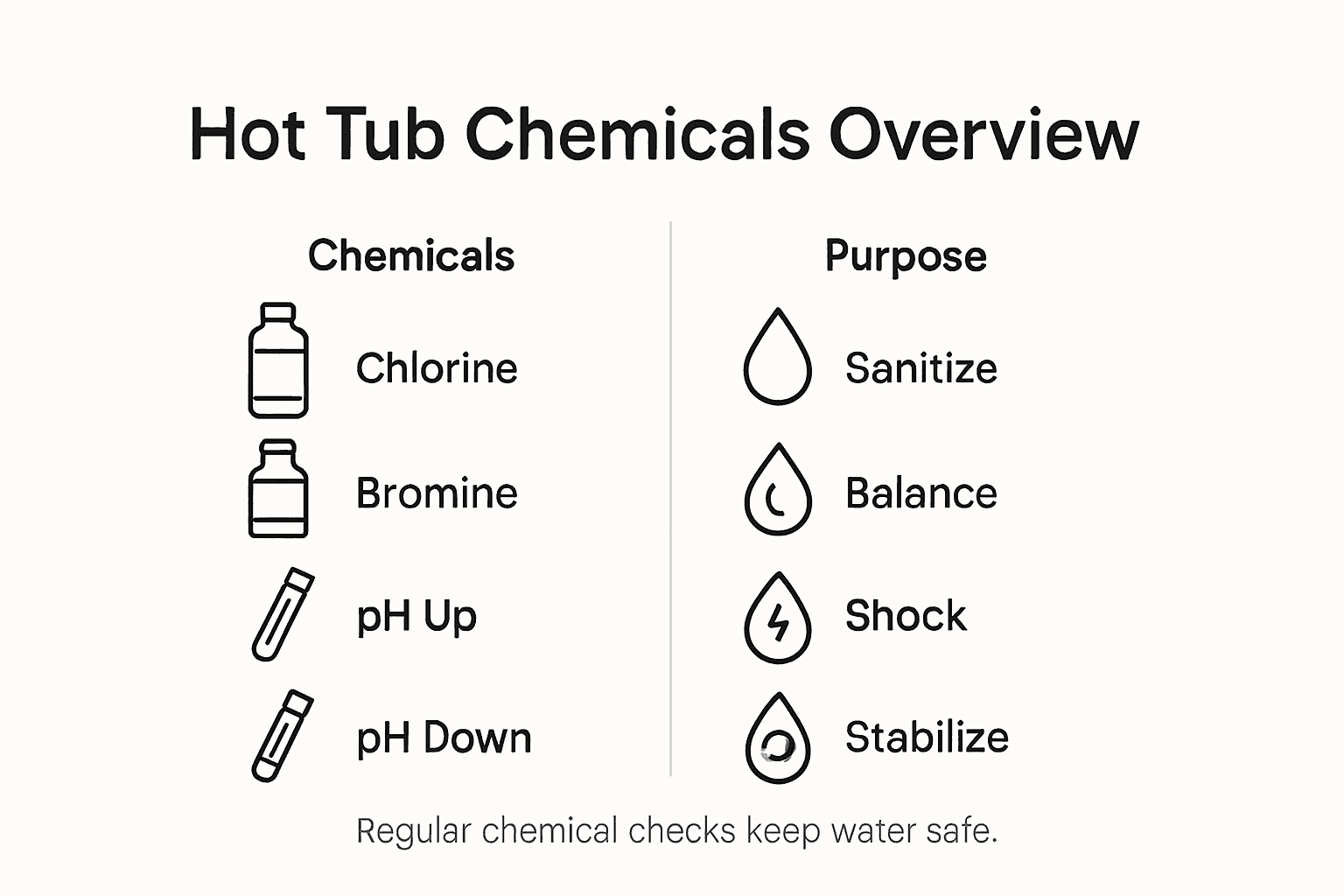
The primary chemicals used in hot tub maintenance include sanitisers, pH balancers, and shock treatments. Chlorine and bromine are the most common sanitisers, with each offering unique benefits. Chlorine works quickly to kill bacteria, while bromine remains effective at higher temperatures and is gentler on skin. Understanding hot tub chemistry basics involves maintaining a delicate balance of these chemicals to prevent potential health risks and equipment damage.
Here’s a comparison of the most common hot tub sanitisers and their unique properties:
| Sanitiser Type | Effectiveness | Skin Sensitivity | Temperature Stability |
|---|---|---|---|
| Chlorine | Rapid bacterial kill | Can be irritating to some | Less effective at high heat |
| Bromine | Steady bacterial control | Gentler on skin | Remains active at higher temperatures |
Environmental considerations are equally important when selecting hot tub chemicals. International guidelines, such as the OSPAR List of Chemicals for Priority Action, emphasise the need for environmentally responsible chemical treatments that minimise ecological impact while ensuring effective water sanitation. Hot tub owners should carefully select chemicals that provide thorough sanitisation without introducing harmful substances into the water system.
Pro tip: Keep a detailed log of your chemical treatments and water test results to track your hot tub’s chemical balance and identify any potential issues before they become serious problems.
Setting Up an Effective Cleaning Routine
Hot tub maintenance requires a systematic and thorough cleaning routine that goes beyond simple surface cleaning. Effective cleaning protocols involve regular filtration, water circulation, and periodic draining to prevent bacterial contamination, ensuring a safe and hygienic environment for users. The frequency and intensity of cleaning depend on several factors, including usage frequency, number of users, and environmental conditions.
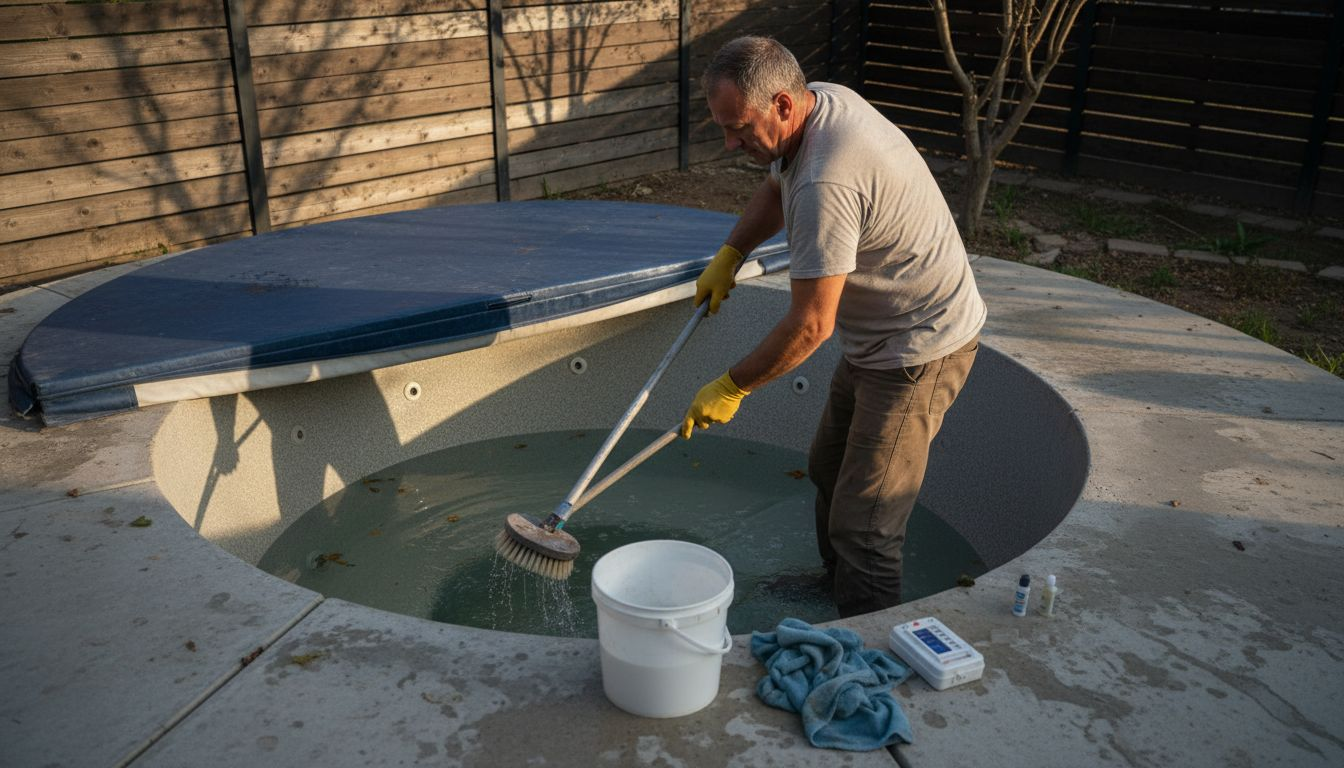
A comprehensive cleaning routine should be structured around multiple key stages. First, skim the water surface daily to remove debris such as leaves, insects, and other floating particles. Weekly tasks should include checking and cleaning filters, testing water chemistry, and wiping down the tub’s interior surfaces. Monthly maintenance requires more intensive actions like deep cleaning filter cartridges, checking equipment functionality, and potentially replacing worn components. Consistent cleaning helps prevent serious health risks like spa pool folliculitis, which can arise from poorly maintained water systems.
Professional hot tub owners recommend creating a structured maintenance calendar that breaks down cleaning tasks by frequency. This might include daily quick checks, weekly thorough cleanings, monthly comprehensive maintenance, and quarterly deep-cleaning sessions. Pay special attention to often-overlooked areas like jet nozzles, filter compartments, and water lines, where bacteria and biofilm can accumulate unnoticed. Regular inspection and proactive maintenance can significantly extend your hot tub’s lifespan and ensure a consistently safe bathing experience.
Pro tip: Create a laminated cleaning checklist and mount it near your hot tub to track maintenance tasks and ensure no critical steps are missed during your routine.
Balancing Water Quality and Testing Tips
Maintaining optimal water quality in a hot tub requires a systematic approach to chemical balance and regular testing. Spa water balancing is a critical process that goes beyond simple chemical addition, involving precise measurement and careful adjustment of multiple water parameters to ensure a safe and enjoyable experience.
The primary parameters to monitor include pH levels, total alkalinity, calcium hardness, and sanitiser concentration. Most hot tub owners should test their water at least twice weekly, using reliable test strips or digital testing kits. pH levels should ideally remain between 7.2 and 7.6, while total alkalinity should range from 80 to 120 parts per million. Calcium hardness is crucial in preventing equipment damage and should typically be maintained between 150 and 250 parts per million. Hot tub water testing requires a methodical workflow to achieve consistently crystal-clear results.
Below is a summary of recommended hot tub water parameters for British owners:
| Parameter | Ideal Range | Main Purpose | Risks if Unbalanced |
|---|---|---|---|
| pH Level | 7.2 - 7.6 | Comfort and chemical effectiveness | Skin irritation, poor sanitiser function |
| Total Alkalinity | 80 - 120 ppm | Buffer pH changes | Unstable pH, damage to surfaces |
| Calcium Hardness | 150 - 250 ppm | Prevent scale and corrosion | Scaling or equipment corrosion |
| Sanitiser Level | Manufacturer’s guide | Maintain hygiene | Bacterial growth, user health risks |
Understanding the interconnected nature of water chemistry is key to successful hot tub maintenance. When one parameter falls out of balance, it can quickly impact other aspects of water quality. Factors like user frequency, environmental conditions, and water source can all influence chemical balance. Regular testing allows hot tub owners to make incremental adjustments, preventing major chemical imbalances that could potentially damage equipment or compromise user safety.
Pro tip: Invest in a digital water testing kit with colour-coded results and keep a dedicated log to track your hot tub’s chemical changes over time.
Common Hot Tub Care Mistakes to Avoid
Water sanitation represents the most critical aspect of hot tub maintenance, with many owners unknowingly making mistakes that compromise their spa’s safety and performance. Neglecting proper water treatment can lead to serious health risks like hot tub folliculitis, a bacterial skin infection that thrives in poorly maintained water environments.
One of the most frequent errors is inconsistent chemical management. Many hot tub owners either under-dose or over-dose chemicals, creating conditions that either fail to kill harmful bacteria or damage the tub’s internal components. Improper maintenance of water circulation and filtration systems significantly increases infection risks, making it crucial to develop a systematic approach to water treatment. Common pitfalls include ignoring water chemistry readings, failing to replace filters regularly, and neglecting to clean filter compartments thoroughly.
Another critical mistake is inadequate water testing and record-keeping. Hot tub owners should establish a rigorous testing routine, using reliable digital testing kits and maintaining a detailed log of chemical levels and adjustments. Understanding comprehensive hot tub maintenance practices helps prevent long-term damage to both the equipment and user health. Environmental factors like temperature, frequency of use, and number of users can dramatically impact water quality, requiring constant vigilance and proactive maintenance.
Pro tip: Create a laminated maintenance checklist and place it near your hot tub to track chemical levels, filter changes, and cleaning schedules systematically.
Elevate Your Hot Tub Care with ClearSpa Solutions
The challenge of maintaining perfectly balanced water chemistry and a hygienic environment in your hot tub is a common concern for many owners. This article highlights key pain points such as consistent chemical management, regular water testing, and avoiding common sanitation mistakes that can compromise both your enjoyment and safety. By understanding terms like pH balance, sanitiser concentration, and water filtration routines you can transform your maintenance efforts from a chore into a confident, rewarding process.
Take control of your hot tub care today by choosing ClearSpa’s premium range of carefully formulated hot tub chemicals and maintenance products. Our solutions are developed with expert water treatment knowledge to help you sustain crystal-clear water and protect your equipment long term. Visit ClearSpa to explore trusted products tailored to your needs and implement the effective maintenance routines described. Start now and enjoy a safer healthier spa experience every time you step in.
Frequently Asked Questions
What are the essential chemicals needed for hot tub maintenance?
The primary chemicals for hot tub maintenance include sanitisers like chlorine and bromine, pH balancers, and shock treatments. These chemicals help prevent bacterial growth and ensure the water remains safe and clean for users.
How often should I test the water in my hot tub?
It’s recommended to test your hot tub water at least twice a week using reliable test strips or digital testing kits. Regular testing helps maintain the proper balance of pH levels, sanitiser concentration, and other critical water parameters.
What common mistakes should I avoid in hot tub care?
Common mistakes in hot tub care include inconsistent chemical management, inadequate water testing, and neglecting filter maintenance. These missteps can compromise water quality and pose health risks to users.
How can I establish an effective cleaning routine for my hot tub?
An effective cleaning routine should include daily skimming for debris, weekly filter cleaning and water chemistry checks, and monthly intensive maintenance tasks, such as deep cleaning filter cartridges and inspecting equipment for functionality.