Understanding Hot Tub Chemistry Basics for Relaxation
Explore hot tub chemistry basics for better maintenance and enjoyment. Understand key concepts for safe and soothing experiences.
Hot tubs might look like a simple treat but what keeps that water safe is pure science. Some hot tub owners will be shocked to learn that unbalanced water can cause bacteria to grow up to 400 times faster in warm environments. Surprisingly, the real challenge is not just about adding chemicals. The twist is that every adjustment you make changes the whole system and even a small mistake can disrupt the entire spa experience.
Table of Contents
- What Is Hot Tub Chemistry And Why Does It Matter?
- The Key Elements Of Hot Tub Water Balance
- Understanding Ph, Alkalinity, And Sanitisation
- Common Issues And Solutions In Hot Tub Chemistry
- The Role Of Regular Testing And Maintenance
Quick Summary
| Takeaway | Explanation |
|---|---|
| Maintain balanced pH levels | Keep pH between 7.2 and 7.6 to ensure sanitiser effectiveness and user comfort. |
| Regularly test water chemistry | Check chemical parameters at least twice a week to quickly identify and correct issues. |
| Ensure total alkalinity balance | Maintain alkalinity between 80-120 parts per million to stabilise water and prevent pH fluctuations. |
| Use effective sanitisation methods | Regularly apply chlorine or bromine to eliminate harmful bacteria and microorganisms. |
| Perform consistent maintenance checks | Regularly clean filters, inspect jets, and conduct equipment checks to enhance water quality and longevity. |
What is Hot Tub Chemistry and Why Does It Matter?
Hot tub chemistry represents the critical balance of chemical components that transform ordinary water into a safe, hygienic, and enjoyable spa experience. Understanding these chemical interactions is fundamental to maintaining water quality, protecting your investment, and ensuring a relaxing environment.
The Science Behind Water Balance
At its core, hot tub chemistry involves managing multiple interconnected parameters that determine water safety and comfort. Water is not just a passive substance but an active medium where chemical reactions continuously occur. Key factors like pH levels, alkalinity, sanitiser concentration, and mineral content all play crucial roles in creating optimal water conditions. Keep our hot tub water chemistry reference to hand for every target range on one page.
The primary goal of hot tub chemistry is to create an environment that is:
- Safe for human contact
- Resistant to bacterial growth
- Non corrosive to equipment
- Comfortable for users
Maintaining this delicate balance requires understanding how different chemical components interact. Learn more about hot tub water management to protect your spa investment and ensure a consistently enjoyable experience.
Why Chemical Balance Matters
Improper hot tub chemistry can lead to significant problems. Unbalanced water creates an environment conducive to harmful bacteria, potential skin irritations, and accelerated equipment deterioration. According to research from the University of Bath, water chemistry is not just about adding chemicals but understanding their complex interactions.
Precise chemical management prevents issues like scale buildup, equipment damage, and potential health risks.
The following table summarises the core chemical parameters in hot tub water chemistry, specifying their purpose, ideal range, and significance.
| Parameter | Ideal Range | Purpose | Significance |
|---|---|---|---|
| pH | 7.2 - 7.6 | Measures water acidity/alkalinity | Ensures user comfort and sanitiser efficacy |
| Total Alkalinity | 80 - 120 ppm | Buffers and stabilises pH | Prevents rapid pH fluctuations |
| Sanitiser (Chlorine/Bromine) | As per manufacturer instructions | Eliminates bacteria and microorganisms | Maintains hygienic spa conditions |
| Calcium Hardness | As recommended (varies) | Prevents water from becoming corrosive or scale-forming | Protects equipment and surfaces |
| Total Dissolved Solids | As recommended (varies) | Monitors accumulation of dissolved substances | Ensures water remains clear and healthy |
The Key Elements of Hot Tub Water Balance
Hot tub water balance involves a complex interplay of chemical parameters that must be precisely managed to ensure optimal water quality, user safety, and equipment longevity. Mastering these fundamental elements requires understanding their individual roles and interconnected relationships.
Core Chemical Parameters
Effective hot tub water management revolves around three primary chemical components: pH levels, total alkalinity, and sanitiser concentration. pH levels determine the water’s acidity or alkalinity, which directly impacts water comfort and equipment protection. Total alkalinity acts as a buffer, stabilising pH and preventing rapid fluctuations. Learn more about water balancing techniques to maintain consistent water quality.
The ideal chemical balance encompasses several critical aspects:
- Maintaining pH between 7.2 and 7.6
- Keeping total alkalinity within 80-120 parts per million
- Ensuring consistent sanitiser levels
- Monitoring calcium hardness
- Controlling total dissolved solids
Chemical Interactions and Impact
Chemical components in hot tubs do not exist in isolation but interact dynamically. According to the Health and Safety Executive, understanding these interactions is crucial for preventing bacterial growth and potential health risks. For instance, improper pH levels can render sanitisers less effective, creating an environment where harmful microorganisms can proliferate.
Precise chemical management requires regular testing, careful adjustment, and a comprehensive understanding of how each component influences water quality. Neglecting these interactions can lead to equipment damage, user discomfort, and potential health hazards.
Understanding pH, Alkalinity, and Sanitisation
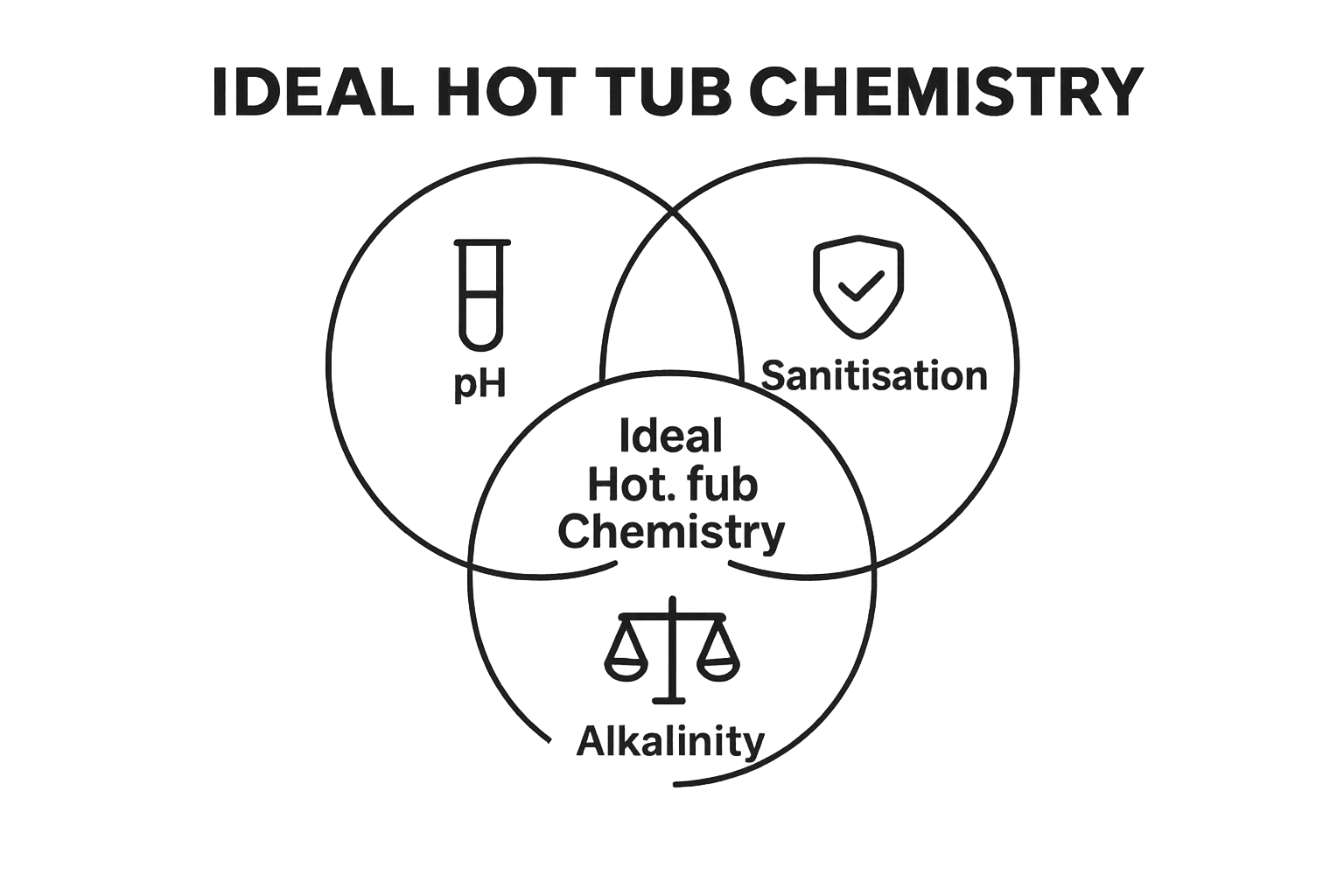
The triumvirate of hot tub water chemistry hinges on understanding pH, alkalinity, and sanitisation. These interconnected elements form the foundation of water quality management, protecting both users and equipment from potential chemical imbalances and health risks.
The pH Balancing Act
pH represents the measure of water’s acidity or alkalinity, ranging from 0 to 14. A neutral pH is 7, with values below indicating acidity and above signalling alkalinity. In hot tubs, maintaining pH between 7.2 and 7.6 is crucial. Explore our comprehensive pH management guide to understand its critical role in water chemistry.
Important pH characteristics include:
- Directly impacts sanitiser effectiveness
- Influences user comfort and skin sensitivity
- Affects equipment and surface corrosion potential
- Determines water clarity and aesthetic quality
Alkalinity as a Chemical Buffer
Total alkalinity acts as a chemical stabiliser, preventing rapid pH fluctuations. Think of it as a protective shield that maintains water balance. According to East Renfrewshire Council’s water safety guidelines, maintaining alkalinity between 80-120 parts per million ensures consistent water quality and prevents potential health risks.
Sanitisation Fundamentals
Sanitisation represents the final critical component of hot tub water management. Chlorine and bromine are the primary sanitising agents, eliminating harmful bacteria and microorganisms. Effective sanitisation requires carefully balanced pH and alkalinity levels to maximise their protective capabilities.
The interplay between these three elements creates a robust water chemistry system that protects user health, maintains equipment integrity, and ensures an enjoyable hot tub experience.
Common Issues and Solutions in Hot Tub Chemistry
Hot tub water chemistry is a delicate ecosystem where minor imbalances can trigger significant problems. Understanding these potential challenges and their solutions is crucial for maintaining a safe, comfortable, and hygienic hot tub environment.
Identifying Water Chemistry Problems
Water chemistry issues manifest through various observable symptoms, which serve as critical warning signals. Recognising these indicators early prevents more severe complications.
This table outlines common hot tub water chemistry problems, their visible signs, likely root causes, and recommended corrective actions based on the article content.
| Issue | Warning Sign | Likely Cause | Recommended Action |
|---|---|---|---|
| Cloudy or discoloured water | Water appears unclear or murky | Unbalanced pH or sanitiser | Test and adjust chemical levels |
| Unusual odours | Strong or unpleasant smell | Inadequate sanitisation | Shock treat with chlorine/bromine |
| Skin irritation | Discomfort after hot tub use | High/low pH or chemicals | Balance pH and sanitiser |
| Scale formation | White deposits on surfaces | High calcium hardness/pH | Adjust hardness and pH |
| Metal corrosion | Rust or pitting on metal parts | Acidic water (low pH) | Increase pH and monitor alkalinity |
Common water chemistry warning signs include:
- Cloudy or discoloured water
- Unusual odours
- Skin irritation after hot tub use
- Scale formation on surfaces
- Corrosion of metal components
Root Causes and Preventative Strategies
Most hot tub chemistry problems stem from three primary factors: improper pH levels, inadequate sanitisation, and unbalanced total alkalinity. According to the Health and Safety Executive, maintaining rigorous water quality standards is essential for preventing potential health risks associated with bacterial growth.
Corrective Interventions
Addressing hot tub chemistry issues requires a systematic approach. Testing water parameters regularly, using appropriate chemical treatments, and understanding the interconnected nature of water chemistry components are fundamental. Precise chemical adjustments, such as adding pH increasers or reducers, sanitiser shock treatments, and alkalinity stabilisers, can rapidly restore water balance and prevent long-term equipment damage.
The Role of Regular Testing and Maintenance
Regular testing and maintenance represent the cornerstone of effective hot tub water management. These proactive practices transform chemical management from a reactive challenge into a systematic, controlled process that ensures user safety, equipment longevity, and consistent water quality.
Understanding Testing Fundamentals
Water testing is not merely a recommendation but a critical responsibility. By regularly examining water chemistry parameters, hot tub owners can detect potential issues before they escalate into significant problems. Discover our comprehensive water testing guide to develop a robust monitoring strategy.
Key testing parameters include:
- Free chlorine or bromine levels
- pH balance
- Total alkalinity
- Calcium hardness
- Total dissolved solids
Frequency and Methodology of Testing
According to the Health and Safety Executive, testing frequency should be determined by a comprehensive risk assessment. Professional recommendations suggest testing water chemistry at least twice weekly for residential hot tubs and daily for commercial or frequently used installations.
Maintenance Beyond Chemical Balance
Effective hot tub maintenance extends beyond chemical testing.
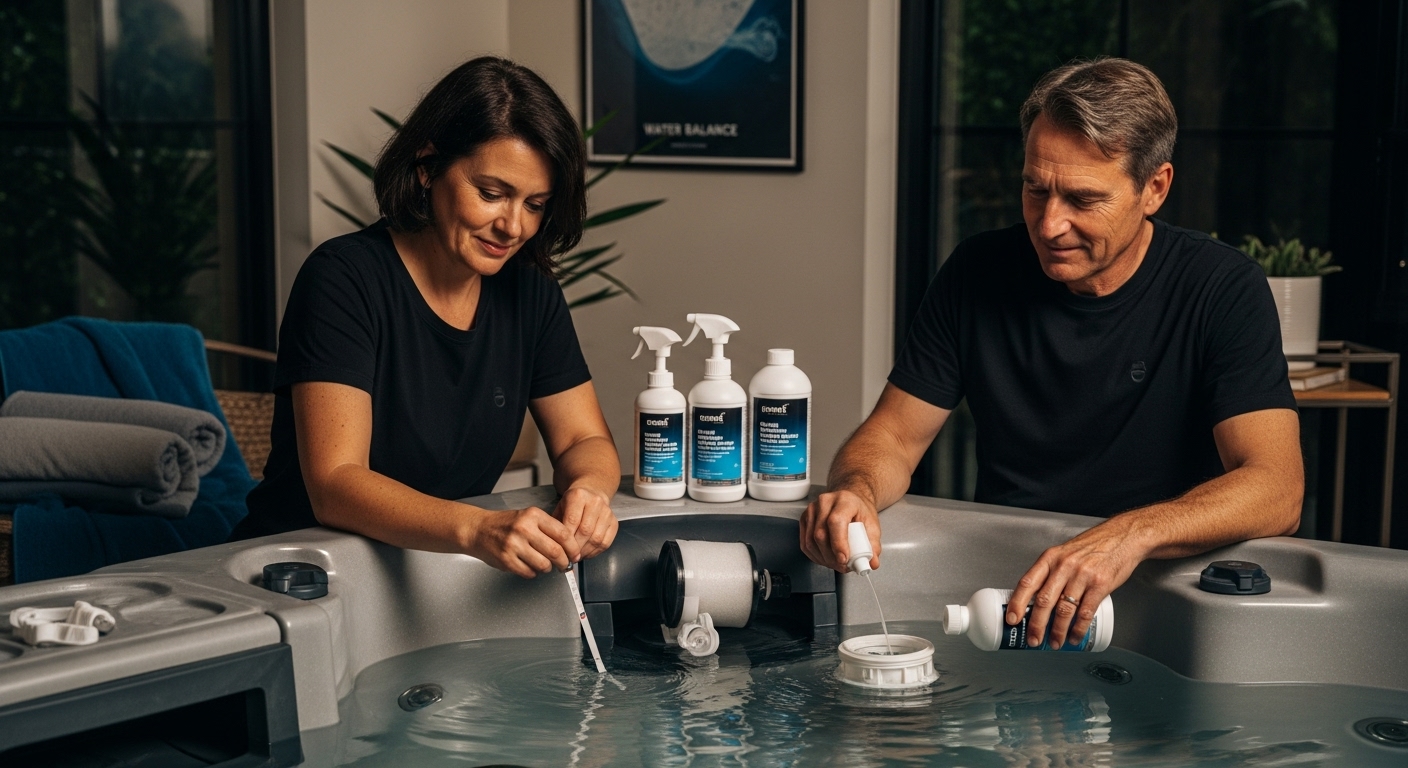 Physical inspection of filters, jets, and surfaces plays a crucial role in preventing potential issues. Regular cleaning, filter replacement, and equipment checks complement chemical management, creating a holistic approach to hot tub care. Implementing a consistent maintenance routine protects your investment and ensures a safe, enjoyable spa experience.
Take Charge of Your Hot Tub Chemistry with ClearSpa Expertise
Struggling to maintain that comforting balance in your hot tub water can feel overwhelming. This article highlighted how incorrect pH, unstable alkalinity, and inconsistent sanitisation often lead to skin irritation, unpleasant water, and even costly equipment damage. Achieving that perfect water chemistry is not guesswork. It is about using trusted methods together with proven solutions.

Let ClearSpa make your spa maintenance effortless. We offer meticulously tested hot tub chemicals and essentials designed to protect both your water quality and your investment. Whether you need to correct your pH, stabilise alkalinity, or keep bacteria in check, you will find a complete range of expertly crafted products. Discover everything for exceptional hot tubs and pools now at clearspa.com and start enjoying water that looks and feels just right from your very next dip.
Frequently Asked Questions
What are the essential components of hot tub chemistry?
The essential components of hot tub chemistry include pH levels, total alkalinity, sanitiser concentration, calcium hardness, and total dissolved solids. Balancing these elements is crucial for maintaining water quality and user safety.
How can I maintain the right pH level in my hot tub?
To maintain the right pH level in your hot tub, regularly test the water using a pH testing kit. The ideal pH range is between 7.2 and 7.6. You can adjust the pH by adding pH increasers or reducers as needed.
Why is regular testing of hot tub water chemistry important?
Regular testing of hot tub water chemistry is important because it allows owners to detect issues before they escalate, ensuring safe and comfortable water conditions. Testing at least twice weekly is recommended for residential hot tubs.
What problems can arise from unbalanced hot tub chemistry?
Unbalanced hot tub chemistry can lead to a range of issues, including cloudy water, skin irritation, scale formation, corrosion of metal components, and ineffective sanitisation, which can pose health risks to users.