Complete Guide to Why Balance Spa Water
Why balance spa water? This comprehensive guide covers water chemistry basics, health risks, equipment protection, and practical balancing steps.
Did you know that over 60 percent of spa water issues trace back to improper chemical balance? A well-maintained spa is more than just warm bubbles and relaxation. Getting your water chemistry right protects your health, helps your equipment last longer, and stops unexpected problems like scaling and irritation. Knowing what balanced spa water means can make every soak safer and more enjoyable for you and your guests.
Table of Contents
- Defining Balanced Spa Water And Its Importance
- Essential Elements Of Spa Water Chemistry
- Common Problems From Imbalanced Spa Water
- Health And Safety Impacts For Users
- Protecting Spa Equipment And Longevity
- Steps To Test And Balance Spa Water
Key Takeaways
| Point | Details |
|---|---|
| Balanced spa water is essential | Proper management of water chemistry ensures users’ safety and equipment longevity. |
| Key chemical parameters must be monitored | pH, total alkalinity, total dissolved solids, water temperature, and calcium hardness are critical for maintaining water quality. |
| Imbalance leads to serious issues | Neglecting water balance can cause scaling, corrosion, ineffective disinfection, and health risks for users. |
| Regular testing is crucial | Consistently monitor and adjust spa water conditions to prevent equipment damage and ensure a safe bathing environment. |
Defining Balanced Spa Water and Its Importance
Balanced spa water isn’t just a technical requirement - it’s the foundation of a safe and enjoyable hot tub experience. According to research from the Health and Safety Executive HSG282, achieving proper water balance involves maintaining precise levels of critical chemical and physical parameters that protect both your spa equipment and your health.
At its core, balanced spa water means carefully regulating key factors including pH levels, total alkalinity, total dissolved solids, water temperature, and calcium hardness. These interconnected elements work together to create an environment that prevents potential problems like scaling, corrosion, and ineffective disinfection. When these parameters are not properly managed, spa owners risk significant damage to their equipment and potential health risks for users.
The importance of water balance extends beyond mere maintenance. Proper chemical equilibrium ensures that disinfectants like chlorine or bromine can effectively neutralise harmful microorganisms. A well-balanced spa prevents mineral buildup that could damage pumps and heating elements, while also protecting users from potential skin irritation or more serious waterborne health issues. For those looking to dive deeper into understanding water chemistry, our Understanding Water Balancing article provides comprehensive insights into this critical aspect of spa maintenance.
Essential Elements of Spa Water Chemistry
Understanding spa water chemistry requires a comprehensive approach to managing several critical components. According to research from the Health and Safety Executive HSG282, spa water chemistry is a delicate balance involving multiple interconnected factors that directly impact water quality, equipment performance, and user safety.
The essential elements of spa water chemistry include five key parameters:
- pH Levels: Indicates water acidity or alkalinity, typically recommended between 7.2 and 7.8
- Total Alkalinity: Stabilises pH and prevents rapid chemical fluctuations
- Total Dissolved Solids: Measures mineral content and overall water composition
- Water Temperature: Critical factor affecting chemical reactions and bacterial growth
- Calcium Hardness: Determines potential for scale formation or equipment corrosion
These elements work synergistically to create a balanced aquatic environment. Government research from the UK Management of Spa Pools emphasises that proper management prevents scaling, corrosion, and ensures effective disinfection. For spa owners seeking deeper insights into chemical interactions, our Spa Chemicals Explained guide provides comprehensive information on maintaining optimal water chemistry.
Here’s a summary of the essential elements of spa water chemistry:
| Parameter | Ideal Range | Main Function |
|---|---|---|
| pH Level | 7.2 - 7.8 | Controls acidity and alkalinity |
| Total Alkalinity | 80 - 120 ppm | Stabilises pH |
| Total Dissolved Solids | Manufacturer advised | Indicates mineral & solute content |
| Water Temperature | 36°C - 40°C (typical) | Affects chemical reactions |
| Calcium Hardness | 150 - 250 ppm | Prevents scale & corrosion |
Common Problems from Imbalanced Spa Water
Imbalanced spa water can create a cascade of problems that compromise both equipment performance and user safety. According to research from the Health and Safety Executive HSG282, neglecting proper water chemistry monitoring can lead to significant and costly complications for spa owners.
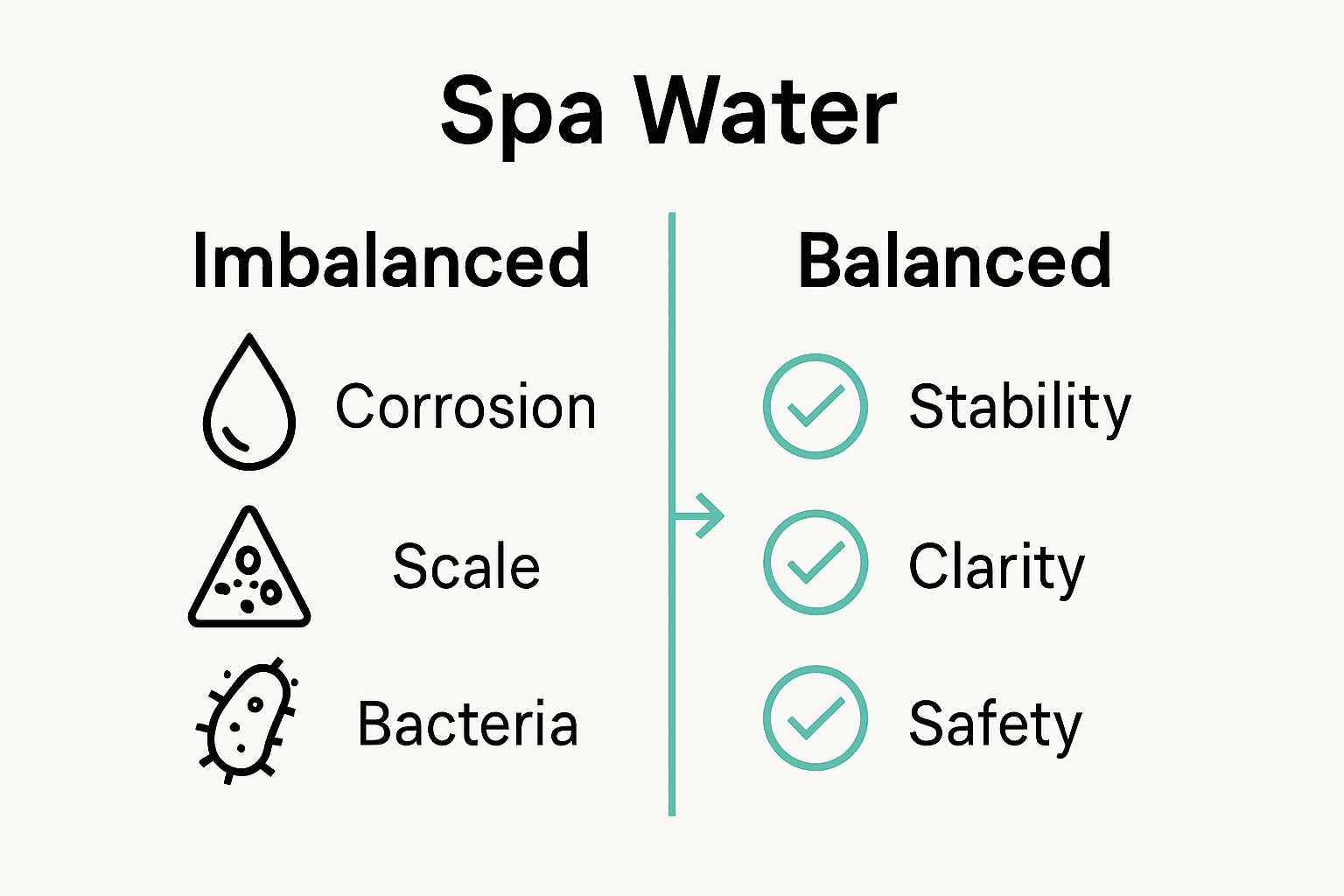
Key Problems Caused by Imbalanced Spa Water:
- Scaling: Mineral buildup that clogs pipes and damages heating elements
- Corrosion: Deterioration of spa components and equipment
- Ineffective Disinfection: Reduced ability to neutralise harmful bacteria
- Chemical Instability: Rapid pH fluctuations that damage surfaces
- User Health Risks: Potential skin irritation and increased infection chances
Government research on spa pool management Management of Spa Pools emphasises that these issues stem directly from poor water chemistry control. For spa owners looking to understand and prevent these problems, our Ask An Expert - SPA Pool Maintenance guide offers professional insights into maintaining optimal water conditions and preventing potential equipment damage.
Health and Safety Impacts for Users
The potential health risks associated with imbalanced spa water extend far beyond mere equipment maintenance. According to the Health and Safety Executive HSG282, improper water chemistry can create an environment where dangerous microorganisms thrive, posing serious health risks to unsuspecting spa users.
Primary Health Risks of Imbalanced Spa Water:
- Bacterial Infections: Uncontrolled microbial growth can lead to skin and respiratory infections
- Skin Irritation: Extreme pH levels can cause rashes, dermatitis, and allergic reactions
- Respiratory Issues: Contaminated water can produce harmful aerosols that cause breathing problems
- Chemical Burns: Incorrect chemical concentrations may cause chemical irritation to skin and eyes
- Compromised Immune Response: Repeated exposure to unbalanced water can weaken the body’s natural defences
Government research on spa pool management Management of Spa Pools emphasises that consistent water chemistry monitoring is the first line of defence against these potential health hazards. For spa owners seeking comprehensive guidance on maintaining a safe bathing environment, our Understanding the Role of Spa Balancing Chemicals guide provides expert insights into protecting user health.
Protecting Spa Equipment and Longevity
Proper water chemistry is the foundation of spa equipment preservation and long-term performance. According to the Health and Safety Executive HSG282, maintaining balanced water is not just about cleanliness, but about preventing destructive chemical interactions that can rapidly degrade expensive spa components.
Critical Equipment Protection Strategies:
- Prevent Scaling: Mineral buildup that clogs pipes and reduces equipment efficiency
- Avoid Corrosion: Chemical imbalances that deteriorate metal components
- Protect Heating Elements: Maintain optimal water chemistry to prevent premature failure
- Preserve Pump Mechanisms: Balanced water reduces unnecessary mechanical stress
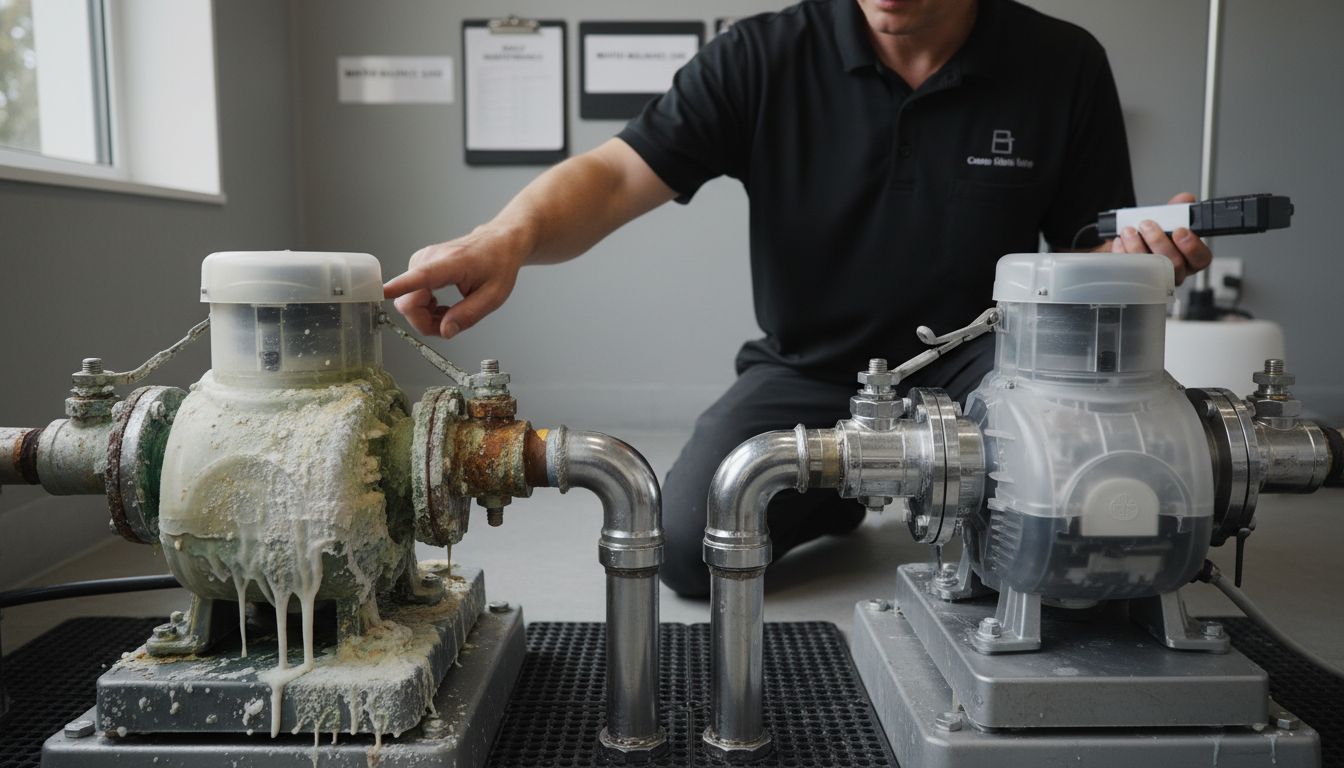
- Extend Seal and Gasket Lifespan: Consistent water chemistry prevents material degradation
Government research on spa pool management Management of Spa Pools emphasises that consistent water chemistry monitoring is crucial for equipment longevity. Spa owners seeking comprehensive guidance can explore our Understanding Spa Water Care: A Comprehensive Guide to learn more about protecting their investment through proper maintenance.
Steps to Test and Balance Spa Water
Maintaining optimal spa water chemistry requires a systematic approach to testing and adjustment. According to the Health and Safety Executive HSG282, regular monitoring of water parameters is crucial for preventing potential health and equipment risks.
Comprehensive Spa Water Testing Process:
- Gather Testing Equipment: Use reliable water test strips to measure key chemical parameters
- Check pH Levels: Aim for a range between 7.2 and 7.8
- Measure Total Alkalinity: Ideal range between 80-120 parts per million
- Assess Calcium Hardness: Target 150-250 parts per million
- Evaluate Total Dissolved Solids: Keep within manufacturer recommended levels
Government research on spa pool management Management of Spa Pools emphasises that consistent testing and chemical adjustment are essential for maintaining balanced water. For spa owners seeking deeper insights into water chemistry, our Why is Total Alkalinity so important guide provides crucial information for effective water management.
Keep Your Spa Water Perfectly Balanced for Ultimate Enjoyment
Maintaining balanced spa water requires precise control over key elements like pH, total alkalinity, and calcium hardness as highlighted in the guide. When these factors are neglected, problems such as scaling, corrosion, ineffective disinfection, and health risks can quickly arise. You want a consistently safe and inviting spa environment without the stress of guesswork or costly repairs.
ClearSpa offers a trusted range of hot tub chemicals and water treatment solutions carefully designed to help you tackle these exact challenges. By using our products, you can keep your water chemistry stable and your equipment protected so every soak is relaxing and worry free.
Take charge of your spa care today with expert guidance in our Ask An Expert - SPA Pool Maintenance plus premium items from our ClearSpa website. Discover why thousands trust our brand to safeguard their spa investment and health.

Don’t let imbalanced water spoil your relaxation. Visit ClearSpa now and browse our selection of tailored spa care products to restore balance and enjoyment to your hot tub experience.
Frequently Asked Questions
What is balanced spa water?
Balanced spa water refers to the optimal levels of pH, total alkalinity, total dissolved solids, water temperature, and calcium hardness required for safe and enjoyable hot tub use. Maintaining this balance protects both the equipment and the health of users.
Why is it important to maintain balanced spa water?
Maintaining balanced spa water is crucial because it prevents issues like scaling, corrosion, and ineffective disinfection. Proper water balance ensures disinfectants work effectively, protecting users from health risks and preserving the spa equipment’s longevity.
How often should I test my spa water for balance?
It is recommended to test your spa water at least once a week. Regular monitoring allows you to address any imbalances before they lead to significant problems, ensuring both user safety and equipment protection.
What are the common problems caused by imbalanced spa water?
Common issues from imbalanced spa water include scaling, corrosion of components, ineffective disinfection, chemical instability leading to rapid pH fluctuations, and increased health risks for users such as skin irritation and infections.