Understanding What is Water Clarity and Its Importance
Discover what is water clarity, why it matters, and how it affects aquatic ecosystems, health, and recreational activities in our comprehensive guide.
Water clarity is the transparency of water — how far light can travel through it — and it reflects purity and quality, determined by the amount of suspended particles and dissolved substances the water contains. It is measured with techniques such as the Secchi disk method, turbidity units and light-transmission readings. Clarity matters well beyond appearances: over 90 percent of English bathing waters now meet quality standards, showing how closely clarity links with safety and wellness, and even the smallest particles can shift ecosystem balance and human health. Understanding what makes water crystal-clear or murky is vital for anyone who depends on water every day.
Table of Contents
- Defining Water Clarity: Key Concepts And Measurements
- The Importance Of Water Clarity For Ecosystems And Health
- Factors Affecting Water Clarity: Understanding The Dynamics
- Practical Implications Of Water Clarity In Daily Life
- Monitoring And Assessing Water Clarity: Techniques And Tools
Quick Summary
| Takeaway | Explanation |
|---|---|
| Water clarity indicates environmental health. | Clear water reveals key information about aquatic ecosystems and their functioning, serving as a critical ecological indicator. |
| Measurement techniques are essential for assessment. | Methods like the Secchi Disk and turbidity units provide accurate quantification of water clarity and assist environmental monitoring. |
| Turbidity affects ecosystems and human health. | Cloudy water disrupts biological processes and can conceal harmful microorganisms, posing risks to both aquatic life and human safety. |
| Natural and human factors influence clarity. | Seasonal changes, pollution from industries, and urban development can significantly alter water transparency, affecting ecosystems. |
| Continuous monitoring supports proactive management. | Ongoing assessments using advanced tools like spectrophotometers help detect changes in water clarity and facilitate early intervention. |
Defining Water Clarity: Key Concepts and Measurements
Water clarity represents the transparency and visual condition of water, indicating its purity and quality through the amount of suspended particles and dissolved substances. Water quality monitoring strategies emphasise understanding these fundamental characteristics to assess environmental and functional conditions.
Understanding Water Transparency
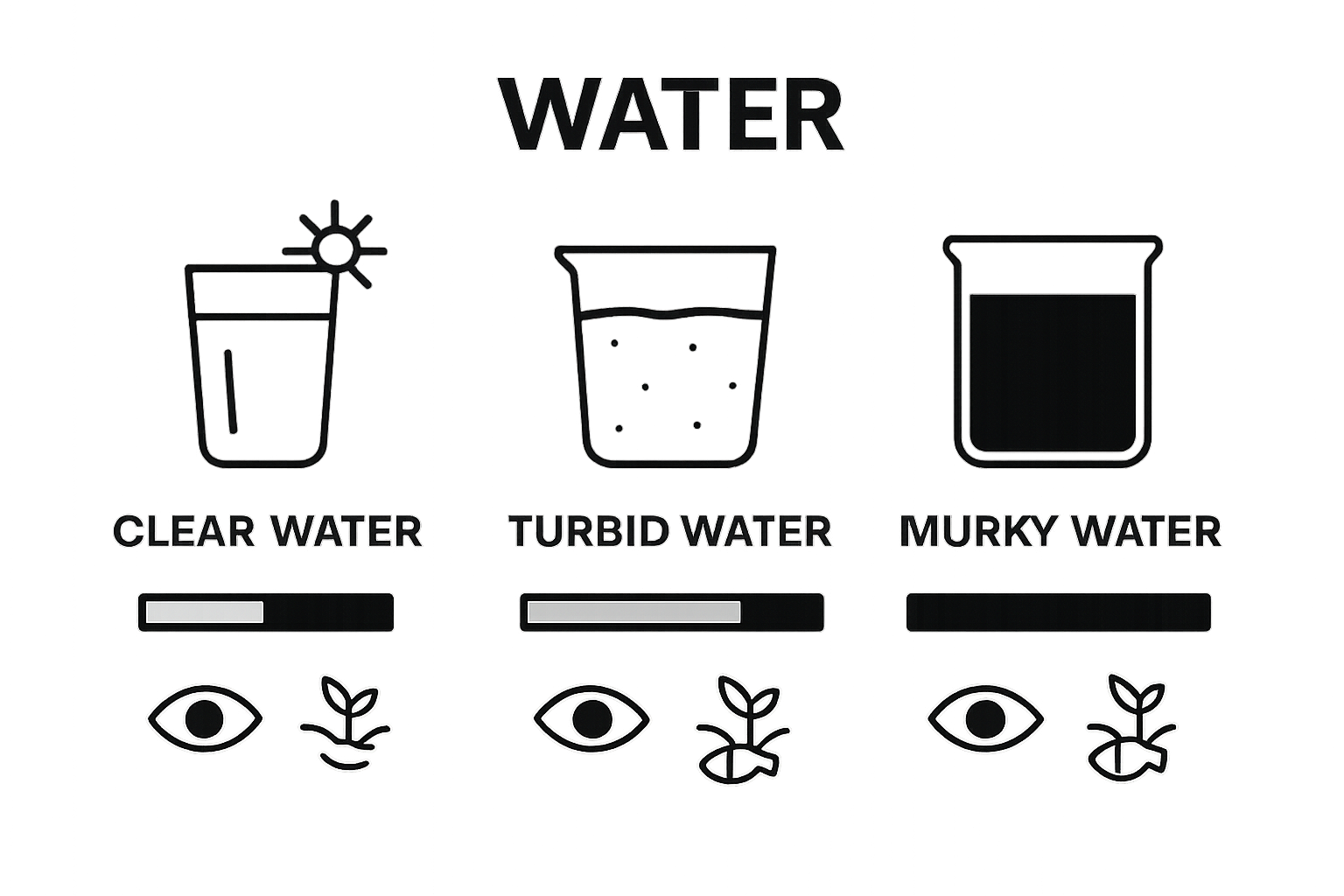
Water clarity is fundamentally about how light passes through water, which directly relates to its optical properties. The clearer the water, the more light can penetrate its depth, revealing underlying surfaces and creating better visibility. When water contains numerous suspended particles such as sediment, algae, or microscopic organisms, its transparency reduces, making it appear cloudy or turbid.
Measurement Techniques
Professional water quality experts utilise several precise measurement techniques to quantify water clarity:
- Secchi Disk Method: A simple yet effective technique measuring water transparency by lowering a standardised black and white disk into water and recording the depth at which it becomes invisible.
- Turbidity Units: Scientific instruments measure suspended particles using standardised turbidity units, providing quantitative assessments of water clarity.
- Light Transmission Measurements: Advanced optical sensors calculate the percentage of light passing through water, offering detailed transparency evaluations.
For those interested in more technical aspects of water management, our comprehensive spa water care guide provides additional insights into maintaining optimal water conditions.
This table provides an overview of the primary methods for measuring water clarity mentioned in the article, highlighting their key features and typical applications for readers seeking a comparative understanding.
| Measurement Method | Description | Typical Application |
|---|---|---|
| Secchi Disk Method | Disc lowered into water to record disappearance depth | Field measurements, basic surveys |
| Turbidity Units (Instruments) | Scientific devices measuring suspended particles in units | Environmental monitoring |
| Light Transmission Measurements | Optical sensors assessing light passage through water | Advanced technical evaluations |
Understanding water clarity goes beyond visual aesthetics, representing a critical indicator of water health, ecosystem balance, and potential environmental or functional challenges.
The Importance of Water Clarity for Ecosystems and Health
Research from the Wildlife Trusts reveals that water clarity plays a crucial role in maintaining ecological balance and protecting human health. Water transparency directly impacts biological systems, environmental sustainability, and potential risks to living organisms.
Ecological Impact of Water Clarity
Water clarity determines the fundamental health of aquatic ecosystems. Clear water allows sunlight to penetrate deeper, supporting photosynthesis for underwater plants and algae. When water becomes turbid or clouded, it disrupts critical ecological processes. Suspended particles block light, reduce oxygen levels, and create challenging conditions for marine life. This reduction in transparency can lead to decreased biodiversity, impaired reproduction cycles for aquatic species, and significant shifts in ecosystem dynamics.
Health and Environmental Risks
Compromised water clarity presents multiple risks to human and animal health:
- Biological Contamination: Reduced transparency can hide harmful microorganisms and pathogens.
- Chemical Pollution: Suspended particles often carry toxins and heavy metals.
- Reproductive Challenges: Murky water disrupts breeding patterns for aquatic species.
If you want to understand more about maintaining water quality, read our guide on spa balancing chemicals for practical insights into water management.
Water clarity serves as a critical environmental indicator, offering profound insights into the complex interactions between human activities, natural systems, and overall ecological health. By monitoring and protecting water transparency, we safeguard not just aquatic environments, but the broader interconnected ecosystems that depend on clean, clear water.
Factors Affecting Water Clarity: Understanding the Dynamics
Water quality monitoring approaches reveal the complex interplay of environmental and human factors that influence water transparency. Water clarity is not a static condition but a dynamic system responsive to multiple interconnected variables.
Natural Environmental Influences
Natural ecosystems contain intrinsic mechanisms that significantly impact water clarity. Seasonal changes, geological composition, and biological activity continuously modify water transparency. Rainfall patterns wash sediments into water bodies, algal bloom cycles create temporary turbidity, and organic matter decomposition introduces suspended particles. These natural processes demonstrate water clarity as a constantly shifting environmental parameter.
Human and Anthropogenic Factors
Human activities substantially contribute to water clarity disruption. Industrial discharge, agricultural runoff, urban development, and waste management practices introduce contaminants that compromise water transparency:
- Industrial Pollution: Chemical residues and heavy metals reduce water clarity
- Agricultural Runoff: Pesticides and fertiliser sediments increase turbidity
- Urban Waste: Microplastics and organic pollutants diminish water transparency
For those interested in managing water quality in controlled environments, our guide on cloudy hot tub water offers practical insights into maintaining optimal water conditions.
Understanding these dynamic factors requires comprehensive monitoring and proactive environmental management strategies.
The following table summarises the main natural and human factors affecting water clarity, as discussed in the article, allowing for a quick side-by-side comparison of their sources and typical impacts.
| Factor Type | Example Source | Impact on Water Clarity |
|---|---|---|
| Natural | Seasonal rainfall | Washes sediments into water bodies |
| Natural | Algal bloom cycles | Causes temporary increases in turbidity |
| Natural | Organic matter decomposition | Introduces suspended particles |
| Human (Anthropogenic) | Industrial pollution | Adds chemical residues and heavy metals |
| Human (Anthropogenic) | Agricultural runoff | Increases turbidity with fertiliser and pesticides |
| Human (Anthropogenic) | Urban waste | Introduces microplastics and organic pollutants |
| Water clarity serves as a critical indicator of ecosystem health, reflecting the delicate balance between natural processes and human interactions. |
Practical Implications of Water Clarity in Daily Life
Research from the Environment Agency demonstrates how water clarity impacts multiple aspects of everyday human experiences, extending far beyond environmental considerations. Understanding water transparency becomes crucial in various personal and professional contexts.
Health and Personal Wellness
Water clarity directly influences personal health and safety. Transparent water enables visual inspection for potential contaminants, helping individuals make informed decisions about water consumption and recreational activities. Swimming, drinking, and cooking all require clear water to minimise health risks. Murky water can obscure dangerous bacteria, chemical pollutants, or physical debris that might cause significant health complications.
Recreational and Professional Applications
Water clarity plays a vital role in numerous activities and industries:
- Aquaculture: Clear water supports healthy fish breeding and growth
- Swimming and Water Sports: Visibility and safety depend on water transparency
- Agriculture: Water clarity impacts irrigation effectiveness and crop health
- Tourism: Clear waters attract visitors and support local economies
If you are interested in maintaining optimal water conditions in specific environments, check out our guide on understanding cloudy hot tub water for practical maintenance insights.
Beyond immediate visual appeal, water clarity serves as a critical indicator of environmental health, personal safety, and potential risks in our daily interactions with water systems. Monitoring and maintaining water transparency is not just an environmental concern, but a fundamental aspect of responsible living.
Monitoring and Assessing Water Clarity: Techniques and Tools
Guidance from the Environment Agency highlights the sophisticated approaches used to evaluate water transparency and quality. Modern monitoring techniques combine scientific precision with advanced technological capabilities to provide comprehensive water clarity assessments.
Scientific Measurement Instruments
Professional water quality experts employ a range of specialised instruments to quantify water clarity. Spectrophotometers measure light absorption and transmission through water samples, providing precise numerical data about suspended particles. Turbidimeters specifically assess the cloudy or murky characteristics of water by measuring the scattered light from suspended materials. These scientific tools enable researchers to detect minute changes in water transparency that might be invisible to the human eye.

Comprehensive Monitoring Strategies
Effective water clarity assessment requires multifaceted monitoring approaches:
- Continuous Monitoring: Real-time sensors tracking water transparency changes
- Laboratory Analysis: Detailed scientific examination of water samples
- Field Sampling: Direct collection and immediate on-site assessments
- Satellite and Remote Sensing: Large-scale environmental monitoring techniques
If you are interested in understanding how to maintain water quality in specific environments, explore our guide on testing hot tub chemicals for practical insights into water management.
These monitoring techniques not only provide scientific data but also serve as critical early warning systems for environmental changes, potential contamination, and ecosystem health. By continuously tracking water clarity, scientists and environmental managers can proactively address water quality challenges before they become significant environmental or public health issues.
Take Control of Your Water Clarity Today with ClearSpa
Worried about cloudy water and uncertain water quality in your hot tub or pool? This article highlights the importance of water clarity, the risks of hidden contaminants, and how murky water can spoil your experience as well as threaten health and wellbeing. You deserve confidence in every soak and splash - and with the right water care solutions, you can achieve crystal-clear results every day.

Let ClearSpa help you transform your water with scientifically tested products and expert advice, designed to address the pain points discussed in the article. Visit ClearSpa for a full range of proven water treatment products and discover step-by-step guides such as our spa water care guide and tips for understanding reasons for cloudy hot tub water. Act now and ensure your water is inviting and safe for every use.
Frequently Asked Questions
What is water clarity?
Water clarity refers to the transparency of water, indicating its purity and quality based on the amount of suspended particles and dissolved substances.
How is water clarity measured?
Water clarity is measured using various techniques, including the Secchi disk method, turbidity units, and light transmission measurements, which assess the amount of light passing through the water.
Why is water clarity important for ecosystems?
Water clarity is crucial for ecosystems as it allows sunlight to penetrate deeper, which supports photosynthesis for underwater plants and maintains the overall health and balance of aquatic systems.
What are the main factors affecting water clarity?
Water clarity is influenced by natural environmental factors such as seasonal changes and biological activity, as well as human activities like agricultural runoff and industrial pollution that introduce contaminants.