What Does a Pool Filter Do for Water Clarity
What does a pool filter do? Discover its vital role in removing debris, types of filters, how it works, and maintenance tips for crystal-clear UK pools.
Cloudy, uninviting water can quickly spoil the enjoyment of any British hot tub, leaving many homeowners frustrated by unclear water and lingering odours. Keeping your water sparkling is not just about adding chemicals. The heart of effective water management lies in the pool filter’s ability to remove both visible debris and invisible waste. Understanding how different filter types work and knowing the best maintenance approaches helps ensure your hot tub remains safe, clear, and ready to enjoy every day.
Table of Contents
- Defining A Pool Filter And Its Purpose
- Types Of Pool Filters For Homeowners
- How Pool Filters Maintain Water Clarity
- Key Maintenance For Efficient Filtration
- Common Issues And Risks To Avoid
Key Takeaways
| Point | Details |
|---|---|
| Importance of Pool Filters | A pool filter is essential for maintaining water clarity and sanitation, using mechanical and biological filtration to remove visible and invisible contaminants. |
| Types of Filters | Different filter types (Sand, Cartridge, Diatomaceous Earth, Biological) vary in maintenance needs and effectiveness, so choose one that fits your pool size and usage. |
| Regular Maintenance | Consistent cleaning and monitoring of filter pressure are crucial to preventing clogs and maintaining optimal performance. |
| Common Issues | Avoid undersized filters and neglecting chemical balance to prevent algae blooms and water quality issues that complicate maintenance. |
Defining a Pool Filter and Its Purpose
A pool filter is the workhorse of any swimming pool or hot tub, doing far more than simply straining out leaves and debris. Think of it as your water’s sanitation team, working continuously to maintain the clarity and safety that keep your hot tub inviting and hygienic. The primary job is to remove visible contaminants alongside invisible enemies that compromise water quality. Without a functioning filter, your water would become murky within days, harbouring bacteria and developing unpleasant odours that make your hot tub completely unusable.
Filters accomplish this through two distinct mechanisms. Mechanical filtration traps physical particles like dirt, leaves, and algae by forcing water through a fine medium such as sand, cartridge, or diatomaceous earth. These solid materials get caught in the filter medium whilst clean water passes through the other side. Biological filtration, by contrast, enlists helpful bacteria to break down harmful compounds. These beneficial microorganisms convert toxic waste products like ammonia, which accumulates from organic matter decomposition, into less harmful substances. The combination of these two approaches means your filter handles both what you can see (cloudy water, visible debris) and what you cannot (dissolved waste, bacterial growth). This two pronged approach is why proper filter maintenance matters so much for keeping your water crystal clear and safe.
The effectiveness of your filter depends entirely on selecting the right type for your specific situation. A filter designed for a 10,000-litre pool will struggle with a 50,000-litre installation, just as a small cartridge filter would be overwhelmed by a commercial hot tub facility. According to guidance from pool plant operators, your filter choice should account for water volume, the type of aquatic life present, and available space. UK homeowners often underestimate how critical this decision is. Choosing incorrectly means investing in equipment that either fails to keep pace with contamination (leaving you with murky water regardless of maintenance) or costs far more to operate than necessary. The filter also works hand in hand with your chemical treatment system. It removes the physical mess so your chlorine or other disinfectants can focus on eliminating microorganisms rather than struggling through cloudy water that shields pathogens from chemical action.
Pro tip: Check your filter’s pressure gauge weekly and clean it when the reading rises 0.5 bar above the baseline, as this maximises circulation efficiency and prevents the cloudy water problems that develop when filters become clogged.
Types of Pool Filters for Homeowners
Not all filters work the same way, and choosing the wrong type for your hot tub is like buying a bicycle when you need a car. The filter category you select determines how effectively your water stays clear, how often you’ll perform maintenance, and ultimately how much you’ll spend keeping your system running smoothly. The main filtration types fall into distinct categories, each with different strengths depending on your pool size, water volume, and maintenance tolerance. Understanding these differences helps you make an informed decision rather than defaulting to whatever your local supplier recommends.
Sand filters represent the most common choice for UK homeowners with larger installations. These work by pushing water through layers of specially graded sand that traps particles as water passes through. The sand gradually accumulates debris until pressure builds and backwashing becomes necessary, typically every 4-8 weeks depending on usage. Sand filters are affordable upfront and relatively forgiving, but they require regular backwashing and occasional sand replacement every 5-7 years. Cartridge filters offer a middle ground, using replaceable pleated cartridges that collect debris on their surface. They handle finer particles than sand filters, requiring less frequent cleaning (perhaps monthly instead of every few weeks), and they backwash more efficiently since cartridges don’t compact like sand. However, cartridges eventually wear out and need replacing, which becomes an ongoing expense. Diatomaceous earth (DE) filters represent the premium option, employing a fine powder made from fossilised algae to achieve exceptional filtration precision. DE filters provide the finest filtration available but demand the most maintenance and cost significantly more both initially and to operate.
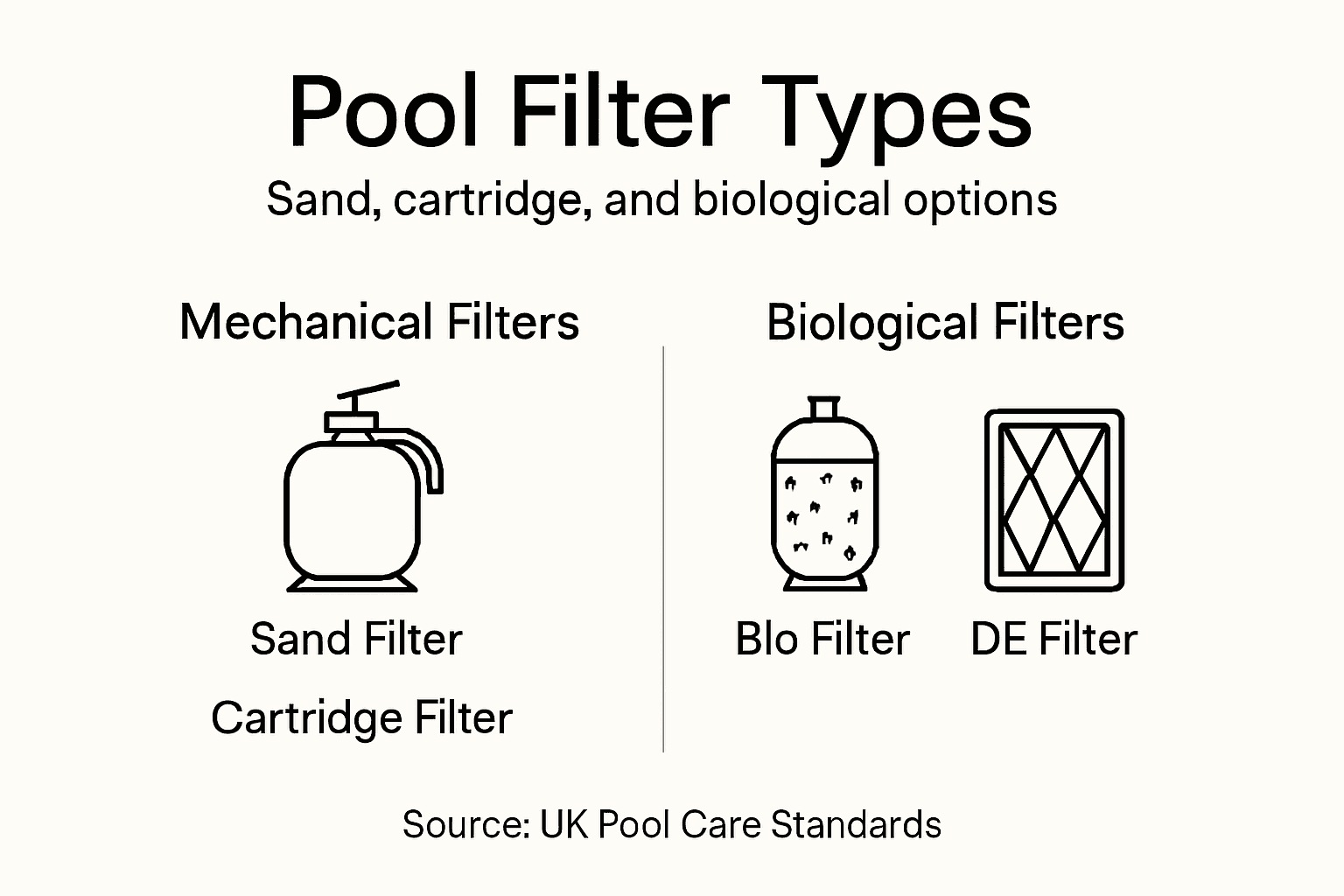
Beyond these mechanical approaches, biological filters work using a completely different principle. Rather than physically straining particles, biological filters host colonies of beneficial bacteria that break down organic waste and convert toxic compounds like ammonia into less harmful substances. Many UK hot tub owners find biological filters particularly valuable because they reduce the chemical load needed to maintain water quality. These filters work best alongside mechanical filtration, handling the dissolved waste that mechanical systems miss. The choice between these types ultimately comes down to your specific situation. A small residential hot tub may thrive with a cartridge filter, whilst a larger pool installation or commercial-style facility demands either sand or DE filtration. What type of pool filter works best depends on your water volume, how heavily you use your system, and how hands-on you want to be with maintenance routines.
Pro tip: If you’re unsure which filter type suits your setup, measure your pool volume in litres and check the manufacturer’s recommended flow rate, then select a filter rated for at least 1.5 times your pool volume per hour to ensure adequate circulation without constant maintenance strain.
Here is a side-by-side comparison of pool filter types commonly used by UK homeowners:
| Filter Type | Filtration Precision | Maintenance Frequency | Typical Lifespan |
|---|---|---|---|
| Sand | Medium (20-40 microns) | Backwash every 4-8 weeks | Sand replaced every 5-7 years |
| Cartridge | Fine (10-20 microns) | Rinse monthly, replace 1-2 years | Cartridge lasts 1-2 years |
| Diatomaceous Earth | Ultra-fine (2-5 microns) | Backwash and re-coat monthly | Powder added per use |
| Biological | Dissolved compounds only | Media refresh annually; constant bacteria care | Media can last several years if kept active |
How Pool Filters Maintain Water Clarity
Your filter works like an invisible cleaning crew, running 24/7 to remove everything that makes water look uninviting. The moment you stop circulating water through your filter, cloudiness begins developing within hours as suspended particles accumulate and light gets scattered instead of passing straight through. A properly functioning filter tackles this problem through continuous action, keeping water crystal clear by removing particles so fine you cannot see them individually. The clarity you see looking at your hot tub reflects the efficiency of filtration happening beneath the surface, filtering millions of particles daily.
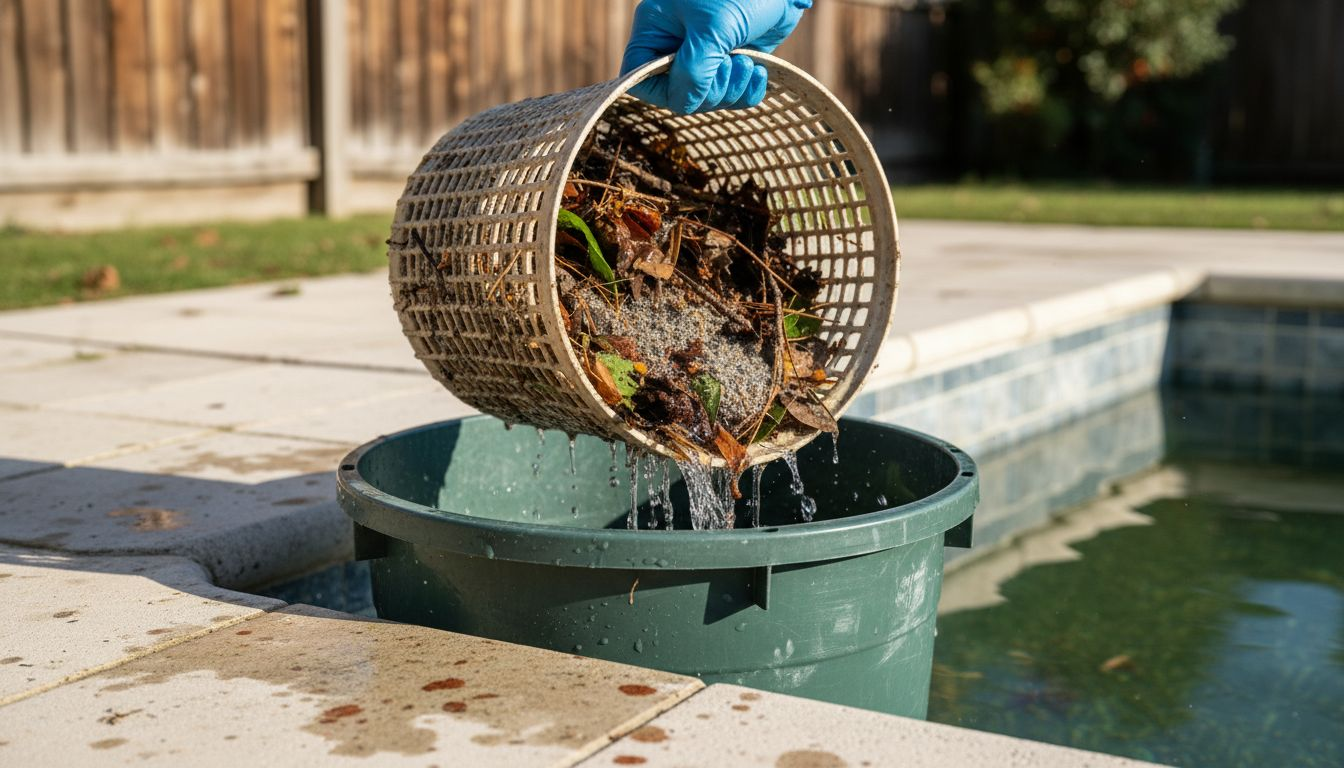
The mechanical phase of filtration is what most people picture when they think of filter action. Water gets forced through filter media such as sand, cartridge pleats, or diatomaceous earth, and these materials act like a sieve catching particles of varying sizes. Think of sand filter media as thousands of tiny barriers stacked together. A grain of sand might be 0.5 millimetres across, but water flowing through contains particles far smaller that still get trapped as they navigate between grains. Cartridge filters work similarly but with pleated fabric that dramatically increases surface area, allowing finer particles to be captured. This mechanical removal directly prevents cloudiness caused by suspended solids like algae cells, dirt, and organic debris. However, mechanical filtration alone cannot maintain crystal clear water because it does not address dissolved contaminants like ammonia, which pass straight through the filter media unaffected.
This is where biological filtration completes the clarity picture. Beneficial bacteria colonies establish themselves on your filter media, consuming ammonia and breaking down organic waste into harmless compounds. These microorganisms work silently but continuously, preventing the toxic buildup that leads to algae blooms and murky water. Ammonia accumulates from fish waste, decaying organic matter, and other sources, and whilst your chlorine or other disinfectants help manage it, biological filtration reduces the chemical burden significantly. The bacteria essentially pre-process the water before chemicals even have a chance to act. This two phase approach means your filter handles both visible problems (cloudy water from particles) and invisible ones (chemical imbalances from dissolved waste). When you understand why pool water turns cloudy, you recognise that a properly maintained filter prevents nearly every cause before it develops. Maintaining consistent water circulation is equally critical because stagnant water supports algae growth regardless of filter quality. Your pump must run long enough daily to circulate the entire pool volume at least once, and many professionals recommend at least twice daily circulation during summer months when algae growth accelerates.
Pro tip: Keep a turbidity test kit handy and check your water clarity weekly, as declining visibility often signals filter clogging before pressure gauges register problems, allowing you to clean your filter before cloudiness becomes visible to swimmers.
Key Maintenance for Efficient Filtration
A filter that never gets cleaned is like a sponge you never rinse. Eventually it becomes so saturated with debris that water cannot flow through properly, and your filter does the opposite of what you want. Regular maintenance separates systems that deliver crystal clear water from those that gradually fail. The good news is that most maintenance tasks require minimal effort and only a few hours of your time each month. Neglecting these routines costs far more in emergency repairs, replacement parts, and weeks of struggling with cloudy water than spending time on prevention.
The cornerstone of filter maintenance is regular cleaning or backwashing. As your filter traps particles, pressure builds inside the tank, and efficiency drops measurably. For sand and diatomaceous earth filters, backwashing reverses water flow to dislodge trapped debris and flush it out through a waste line. Cartridge filters cannot be backwashed the same way, so you remove the cartridge and rinse it with a hose or soak it in cleaner. Most homeowners should backwash sand filters every 4-8 weeks during regular use, though frequency depends on how heavily you use your pool and how much debris falls in. Cartridge filters typically need rinsing monthly. Regular filter cleaning prevents the pressure build-up that reduces water circulation and allows contaminants to slip past the media unfiltered. Some signs your filter needs cleaning before your usual schedule include reduced water pressure at the return jets, slower than normal circulation, and visible pressure gauge readings rising above normal baseline levels. Do not ignore these signals because once pressure gets too high, you risk damage to the filter tank or pump.
Beyond cleaning, maintaining biological populations deserves special attention if your system includes biological filtration. Beneficial bacteria take weeks to establish themselves on filter media, and if you turn off your system for extended periods (more than a few days), these colonies can die, requiring you to essentially restart the biological process from scratch. This is why running your filter regularly matters so much. If you must shut down your system for maintenance, do so for the absolute minimum time necessary. Chemical balance also influences filter efficiency dramatically. Testing and adjusting pH, alkalinity, and chlorine levels keeps biological bacteria thriving and prevents chemical imbalances that either inhibit bacterial colonies or create conditions where algae blooms flourish. Most pool professionals recommend testing water at least weekly, with twice weekly testing during summer months. Finally, monitor and replace worn components before they fail. Cartridges typically last 1-2 years before fibres deteriorate beyond effective cleaning, sand loses grading after 5-7 years, and DE powder gets consumed with each backwash cycle. Replacing these components proactively costs far less than waiting for filter failure to force an emergency replacement whilst your water deteriorates.
Pro tip: Set calendar reminders for monthly filter inspections and quarterly deep cleans rather than waiting for pressure readings to spike, as this prevents the seasonal emergencies that catch homeowners off guard when they finally notice cloudy water.
Common Issues and Risks to Avoid
Most filter failures do not happen overnight. They develop gradually through a series of small mistakes that compound over time, and by the time you notice a problem, it has often become expensive to fix. Understanding what typically goes wrong helps you spot trouble early and take corrective action before your water becomes unusable. The most common issues fall into three categories: poor equipment choices, maintenance neglect, and operational hazards that compromise both water quality and your safety.
Undersized or incorrectly matched filters represent the biggest mistake UK homeowners make when setting up their systems. You cannot fix a filter that was never adequate for your pool volume in the first place. An undersized filter cannot circulate water quickly enough to keep pace with contamination, leaving you perpetually struggling with cloudy water despite running the system constantly. Similarly, choosing the wrong filter type for your situation creates ongoing problems. A biological filter works brilliantly for established systems with stable bacterial populations but becomes useless if you shut the system down during winter, because beneficial bacteria in biological filters cannot survive extended shutdowns beyond 24 hours without oxygen and nutrients. This is why some homeowners abandon biological filters entirely and switch to mechanical filtration, wasting their initial investment. The solution is simple: determine your pool volume accurately, calculate the required circulation rate for your situation, and select filter equipment rated for 1.5 times your calculated need to provide safety margin for debris-heavy periods.
Chemical imbalances and poor maintenance create the second major category of problems. Algae blooms develop rapidly when filtration capacity proves inadequate combined with chemical imbalances like low chlorine or improper pH. Once algae takes hold, it can take weeks to clear even with aggressive treatment. Many UK homeowners delay water testing, assuming their system handles everything automatically. It does not. Skipping weekly water tests means you miss early warning signs like pH drift or rising ammonia levels until visible problems emerge. Algae blooms are far more costly and time consuming to resolve than the 10 minutes it takes for weekly testing. Additionally, never turn off your filter system for extended periods unless necessary for maintenance. Running it continuously maintains both mechanical efficiency and beneficial bacterial populations if your system includes biological filtration.
Operational hazards and electrical safety issues represent serious risks that require professional attention. Faulty electrical equipment, improper pump installation, or damaged wiring creates shock hazards and fire risks that can injure you or damage your property. Do not attempt to install or repair electrical components yourself. Hire a qualified electrician for any electrical work, and have your system inspected annually by someone competent to identify potential hazards. Additionally, inadequate filtration combined with poor maintenance creates conditions where harmful microorganisms thrive, posing health risks to anyone using the pool or hot tub. This is not just about comfort; it is about safety.
Below are common filter issues, their causes, and suggested solutions:
| Issue | Likely Cause | Suggested Solution |
|---|---|---|
| Cloudy water persists | Undersized or clogged filter | Upgrade filter or clean media |
| Algae growth after shutdown | Biological bacteria die-off | Maintain minimum run times |
| Reduced water flow | Blocked or deteriorated filter | Clean or replace filter component |
| Strong odours or eye irritation | Imbalanced chemicals, poor filtration | Test water, restore filter & balance |
Pro tip: Document your filter specifications (model, rated capacity, media type) and maintenance schedule in writing, then photograph your pressure gauge baseline reading when the system is clean so you can recognise when pressure rises above normal and prioritise cleaning before performance crashes.
Keep Your Pool Water Crystal Clear With ClearSpa Solutions
Maintaining perfect water clarity in your pool or hot tub means overcoming common challenges like clogged filters and chemical imbalances. As the article explains, understanding how your pool filter works and consistently performing proper maintenance are crucial to prevent cloudy water and harmful bacteria growth. If you want to take control of your pool’s water quality and avoid costly issues, it is vital to choose the right filtration system and complement it with high-quality water treatment products designed specifically for your needs.
Boost your pool care routine today with ClearSpa. Our carefully crafted range of hot tub chemicals and spa essentials supports both mechanical and biological filtration for clearer, healthier water. Start with the right products that enhance your filter’s performance and simplify maintenance. Don’t wait until cloudiness appears or filter pressure spikes. Explore our trusted water treatment solutions now at https://clearspa.com to enjoy sparkling water all season long.
Frequently Asked Questions
What is the main purpose of a pool filter?
A pool filter maintains water clarity by continuously removing visible contaminants like leaves and dirt, as well as invisible particles and bacteria that compromise water quality.
How do pool filters improve water clarity?
Pool filters improve water clarity through mechanical filtration, which traps physical particles, and biological filtration, which utilises beneficial bacteria to break down harmful waste. Together, they help keep the water clear and safe.
What are the different types of pool filters?
The main types of pool filters are sand filters, cartridge filters, diatomaceous earth (DE) filters, and biological filters. Each has different filtration precision, maintenance requirements, and durability suited for various pool sizes and usage levels.
Why is regular maintenance essential for pool filters?
Regular maintenance ensures optimal filtration efficiency. Neglecting it can lead to clogged filters, reduced water circulation, and increased chemical imbalances, resulting in cloudy water and potential water quality issues.