What Type of Pool Filter is Best for Your Needs?
Discover what type of pool filter is best for your pool. Understand the types, their benefits, and how they work for optimal pool maintenance.
Pool filters might seem like simple gadgets for catching leaves and dirt, but their job is far bigger than most people realise. Modern systems quietly protect every swimmer because they do more than just strain out bits and pieces. Surprisingly, some pool filters can trap particles as tiny as 2 microns, which is nearly 50 times smaller than a grain of sand. Most people focus on clear water, not knowing it is the hidden science inside these filters that keeps swimming pools truly safe for everyone.
Table of Contents
- Understanding Pool Filters: The Basics Explained
- The Importance Of Choosing The Right Pool Filter
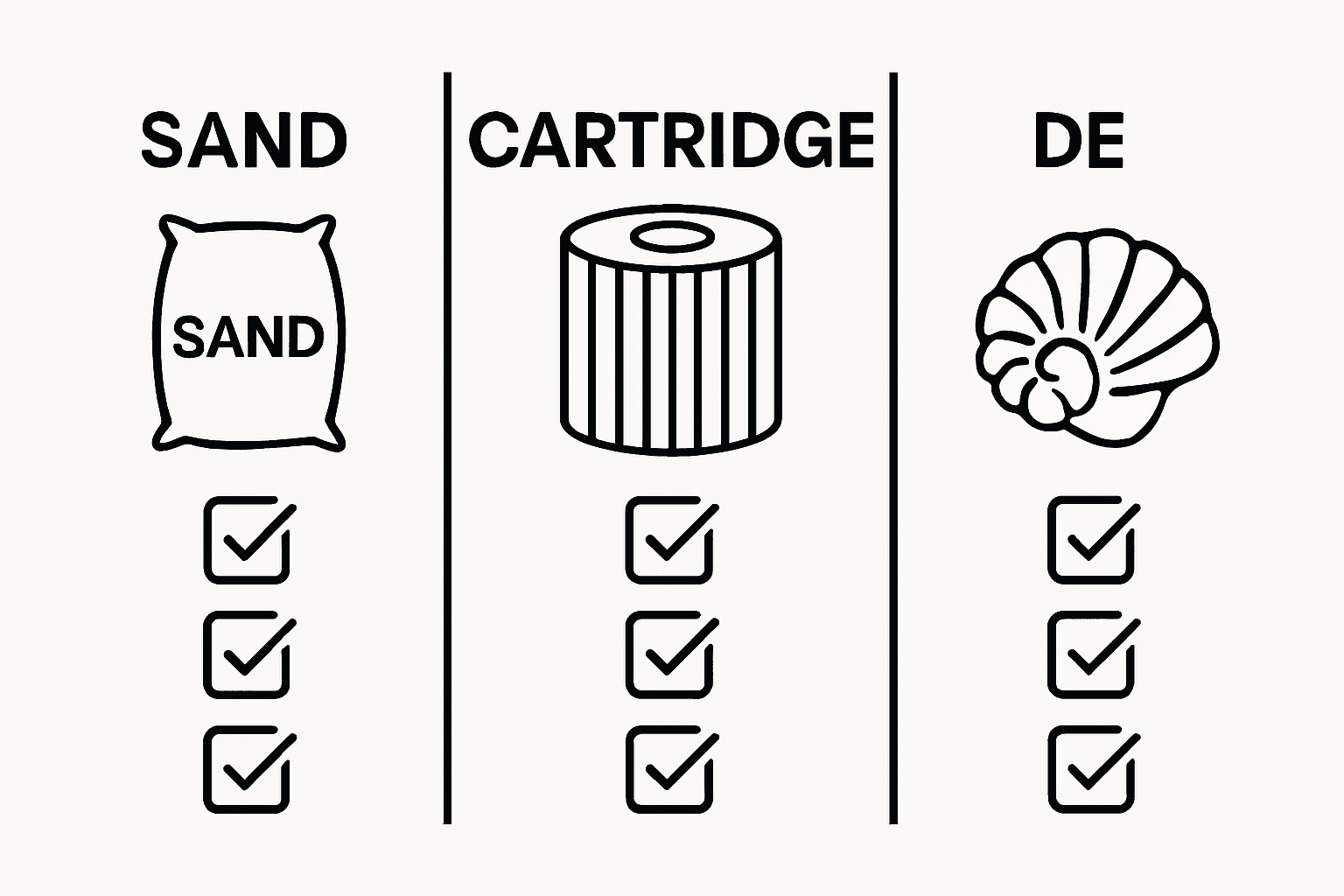
- How Different Pool Filters Work: Sand, Cartridge, And Diatomaceous Earth
- Key Factors To Consider When Selecting A Pool Filter
- Real-World Applications: Matching Filters To Pool Types
Quick Summary
| Takeaway | Explanation |
|---|---|
| Pool filters maintain water quality. | Filters remove debris, bacteria, and microscopic particles, ensuring a safe and clear swimming environment. |
| Choose the right filter for your needs. | Different filters work better for varying pool sizes and usage. Selecting the correct one impacts efficiency and maintenance. |
| Different filtration technologies have unique benefits. | Sand, cartridge, and diatomaceous earth filters offer varying levels of filtration precision and maintenance requirements. |
| Proper maintenance is crucial for efficiency. | Consistent care and attention to your filter system significantly extend its effectiveness and lifespan. |
| Filter selection impacts long-term costs. | Choosing the right filter can reduce energy consumption and chemical use, leading to lower overall pool maintenance expenses. |
Understanding Pool Filters: The Basics Explained
Pool filters are critical components in maintaining clean and safe swimming environments. They function as the primary defence against contaminants, removing debris, dirt, and microscopic particles that could compromise water quality and swimmer health. Learn more about water management to complement your filtration strategy.
What Exactly is a Pool Filter?
At its core, a pool filter is a sophisticated mechanical system designed to purify water by trapping unwanted materials. Unlike simple strainers, modern pool filters operate through complex filtration mechanisms that capture particles ranging from large leaves to minuscule microorganisms. These systems work continuously, circulating water through different filtering media to ensure optimal cleanliness.
How Pool Filters Protect Water Quality
Pool filters perform multiple critical functions beyond mere particle removal. They prevent bacterial growth, reduce potential health risks, and maintain water clarity. The filtration process involves several key stages:
- Mechanical removal of visible debris
- Trapping microscopic contaminants
- Preventing algae and bacteria proliferation
- Maintaining overall water chemistry balance
Understanding the nuanced role of pool filters helps swimmers appreciate the sophisticated technology working silently to protect their aquatic environment. By selecting the right filter and maintaining it properly, you ensure a safe, hygienic swimming experience.
Types of Filtration Technologies
While pool filters might seem straightforward, they represent advanced engineering solutions. Different filtration technologies employ unique approaches to water purification, each with specific strengths and limitations. The most common types include sand, cartridge, and diatomaceous earth filters, each capturing contaminants through distinct mechanical processes and offering varying levels of filtration precision.
The Importance of Choosing the Right Pool Filter
Selecting the appropriate pool filter is not merely a technical decision but a critical investment in your swimming environment’s long-term health and performance. Explore our water chemistry solutions to complement your filtration strategy and ensure optimal water quality.
Why Filter Selection Matters
The right pool filter significantly impacts water clarity, hygiene, and overall maintenance costs. Each filtration system processes water differently, affecting debris removal efficiency, energy consumption, and the frequency of required cleaning. A well-chosen filter reduces strain on your pool equipment, minimises chemical usage, and provides a more enjoyable swimming experience.
Performance Considerations
Filtration performance depends on several key factors that swimmers and pool owners must carefully evaluate:
- Particle capture size and precision
- Flow rate and system compatibility
- Maintenance complexity and frequency
- Initial investment versus long-term operational expenses
- Environmental impact and water conservation
Long-Term Pool Health Implications
Beyond immediate water quality, your filter choice influences broader pool ecosystem dynamics. An inappropriate filter can lead to increased bacterial growth, reduced equipment lifespan, and higher maintenance expenses. Professional pool managers understand that filtration is not just about removing visible debris but creating a comprehensive water management strategy that protects both swimmers and pool infrastructure.
The following table compares the three main types of pool filter technologies discussed in the article, highlighting their key features and practical considerations.
| Filter Type | Particle Capture Size | Maintenance Required | Water/Energy Usage | Typical Applications |
|---|---|---|---|---|
| Sand Filter | 20-40 microns | Periodic backwashing | Moderate | Residential, commercial pools |
| Cartridge Filter | 10-15 microns | Cartridge replacement | Low | Residential pools, compact spaces |
| Diatomaceous Earth (DE) | 2-5 microns | DE powder & grid cleaning | Moderate-High | High-clarity, specialist pools |
How Different Pool Filters Work: Sand, Cartridge, and Diatomaceous Earth
Pool filtration technologies represent sophisticated engineering solutions designed to maintain water quality through unique mechanical processes. Explore our filter maintenance products to support your chosen filtration system’s optimal performance.
Sand Filtration: The Traditional Approach
Sand filters operate on a straightforward yet effective principle of mechanical water purification. Water is pushed through a bed of specially graded sand, which captures particles and debris as small as 20-40 microns. These filters require periodic backwashing to clean the sand medium, where water flow is reversed to flush out accumulated contaminants. Sand filters are renowned for their durability and relatively low maintenance requirements, making them a popular choice for residential and commercial swimming pools.
Cartridge Filters: Precision and Efficiency
Cartridge filters represent a more advanced filtration technology, utilising replaceable paper or fabric elements to trap microscopic particles. These filters can capture debris as small as 10-15 microns, offering superior water clarity compared to traditional sand systems. Key advantages include:
- Lower water and energy consumption
- More compact design
- Easier maintenance
- Higher filtration precision
- Reduced chemical usage
Diatomaceous Earth: The Microscopic Filtration Marvel
Diatomaceous earth (DE) filters provide the most advanced filtration mechanism among pool filter technologies. Composed of fossilised algae skeletons, DE filters can capture particles as minute as 2-5 microns, delivering exceptional water clarity. This filtration method involves coating a grid with fine DE powder, which acts as an extraordinarily precise molecular sieve. While offering the highest level of filtration, DE filters require more complex maintenance and are typically more expensive to operate, making them suitable for swimmers demanding exceptional water quality.
Key Factors to Consider When Selecting a Pool Filter
Choosing the optimal pool filter requires careful evaluation of multiple performance parameters and practical considerations. Discover our filter maintenance solutions to support your filtration system’s ongoing efficiency and performance.
Pool Size and Volume Compatibility
The fundamental starting point for filter selection is understanding your pool’s specific characteristics. Pool volume directly influences filtration requirements, determining the necessary flow rate, pump compatibility, and filter media capacity. Smaller residential pools demand different filtration strategies compared to larger commercial or public swimming facilities. Professionals recommend selecting a filter capable of processing the entire pool volume within 6-8 hours, ensuring comprehensive water circulation and thorough contaminant removal.
Performance and Efficiency Metrics
Beyond basic compatibility, swimmers must consider nuanced performance indicators that distinguish superior filtration systems. Critical evaluation criteria include:
- Micron rating and particle capture precision
- Energy consumption levels
- Maintenance frequency and complexity
- Initial equipment investment
- Long-term operational expenses
- Environmental sustainability
Maintenance and Operational Considerations
The most sophisticated filter becomes ineffective without proper maintenance and understanding of its operational dynamics. Each filtration technology presents unique maintenance challenges, from periodic backwashing for sand filters to cartridge replacement for membrane-based systems. Recognising your willingness and capacity for ongoing maintenance is crucial in selecting a filter that balances performance with practical usability. Professional pool managers emphasise that consistent, appropriate maintenance ultimately determines a filtration system’s effectiveness and longevity.
This table summarises essential factors to consider when selecting a pool filter, supporting readers in comparing options based on pool needs and operational preferences.
| Factor | Sand Filter | Cartridge Filter | Diatomaceous Earth (DE) |
|---|---|---|---|
| Filtration Precision | Moderate | High | Very High |
| Maintenance Frequency | Low-Moderate | Moderate | High |
| Operational Cost | Low | Moderate | High |
| Ease of Use | Moderate | High | Low |
| Environmental Impact | Moderate | Low | Moderate-High |
Real-World Applications: Matching Filters to Pool Types
Pool filtration strategies are not universal but must be carefully tailored to specific swimming environments and usage patterns. Check our comprehensive water treatment solutions to complement your filtration approach.
Residential Swimming Pool Considerations
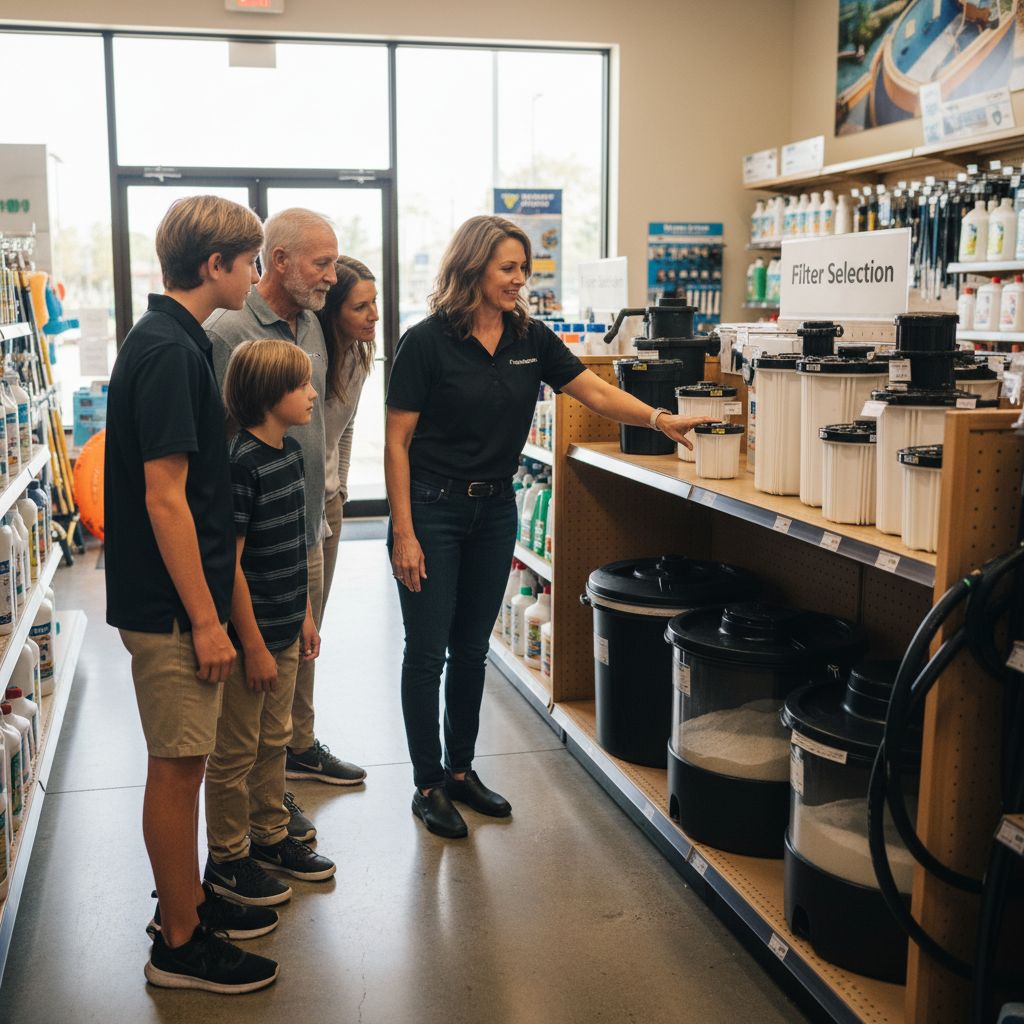
Homeowners face unique filtration challenges that demand nuanced equipment selection. Residential pools typically require filters balancing performance, maintenance simplicity, and cost-effectiveness. Smaller pool volumes and intermittent usage patterns favour cartridge filters, which offer superior particle capture without complex backwashing procedures. Factors such as local environmental conditions, frequency of pool usage, and surrounding landscape significantly influence filter selection.
Commercial and Public Pool Requirements
Large-scale aquatic facilities demand robust filtration systems capable of managing high-traffic environments and stringent hygiene standards. Commercial pools often utilise multiple filtration technologies to ensure comprehensive water treatment. Key considerations include:
- Continuous water circulation
- High-volume particle removal
- Rapid filtration recovery rates
- Compliance with health and safety regulations
- Minimal operational interruptions
Specialised Pool Environment Strategies
Certain swimming environments present exceptional filtration challenges that require sophisticated approaches. Outdoor pools exposed to significant environmental debris, indoor facilities with controlled conditions, and specialist pools like hydrotherapy centres each demand unique filtration strategies. Professional pool managers recognise that filter selection is not merely a technical decision but a comprehensive water management solution that protects swimmer health and infrastructure longevity.
Find Your Perfect Pool Filter Solution With ClearSpa
Choosing the best pool filter can feel overwhelming when your goal is crystal clear water and effortless maintenance. If you are struggling with confusing options like sand, cartridge, or diatomaceous earth filters, you are not alone. This article has shown that the wrong filter leads to cloudy water, high chemical use, and frequent repairs. Let ClearSpa help you make the right choice for lasting pool health and hassle-free enjoyment.
Make pool care simple and reliable. Visit ClearSpa for expertly crafted pool chemicals, tested filter cleaners, and proven maintenance tips designed for every type of filtration system. Discover our solutions for filter maintenance or learn how our water management advice fits into your filter strategy. Act now to protect your water quality with the support of trusted professionals.
Frequently Asked Questions
What are the different types of pool filters and how do they work?
Pool filters primarily fall into three categories: sand filters, cartridge filters, and diatomaceous earth (DE) filters. Sand filters use a bed of sand to capture debris, cartridge filters employ replaceable elements for higher precision, and DE filters use fossilized algae to filter out the finest particles, offering the highest clarity.
How do I choose the right pool filter for my pool size?
To select the appropriate pool filter, you need to consider your pool’s volume. A filter should ideally be able to process the entire volume of water in 6-8 hours. For larger pools, a filter with a higher flow rate is essential for effective water circulation and contaminant removal.
What maintenance is required for different types of pool filters?
Maintenance varies by filter type. Sand filters require periodic backwashing to clean the sand medium. Cartridge filters necessitate changing the filter elements, while DE filters demand proper management of DE powder and grid cleaning. Understanding your filter’s specific maintenance needs is vital for optimal performance.
How do pool filters affect water quality and swimmer health?
The right pool filter significantly enhances water quality by trapping debris, reducing bacteria and algae growth, and maintaining water clarity. A well-functioning filter is critical for ensuring a safe and hygienic swimming environment, ultimately contributing to swimmer health and comfort.