Why Pool Water Turns Cloudy: Complete Guide
Pool water turns cloudy when suspended particles scatter light - most often low free chlorine, poor filtration or imbalanced chemistry. Causes and fixes.
Pool water turns cloudy when suspended particles scatter light – a condition called turbidity – and the usual culprits are low free chlorine, inadequate filtration or imbalanced water chemistry. Cloudiness comes in three types – bacteriological, mechanical and chemical – so the fix is to test and correct chlorine and pH, check the filtration system is circulating properly and remove contamination, rather than simply adding more chlorine.
Over 60 percent of pool owners encounter cloudy water at some point, often assuming it’s just a minor annoyance. The truth is, cloudy pool water signals deeper problems that go beyond simple chemical fixes. When water turns hazy and uninviting, it may indicate filtration issues, hidden bacteria, or unsafe chemical levels that threaten both comfort and safety. Understanding what causes this murkiness - and why quick fixes rarely work - sets the stage for clearer, safer, and more enjoyable swimming conditions.
Table of Contents
- Defining Cloudy Pool Water And Common Misconceptions
- Major Causes Of Cloudy Pool Water
- Distinguishing Types Of Pool Cloudiness
- Effective Prevention And Treatment Methods
- Common Mistakes And How To Avoid Them
Key Takeaways
| Point | Details |
|---|---|
| Understanding Cloudiness | Cloudy pool water, or turbidity, is a sign of potential issues beyond aesthetics, including filtration failures and water imbalances. |
| Common Causes | Key factors leading to cloudiness include low chlorine levels, inadequate filtration, and environmental contamination. |
| Pool Maintenance Strategies | Effective maintenance includes regular testing of chemical levels, filtration system upkeep, and proactive contamination prevention. |
| Avoiding Mistakes | Common pitfalls include neglecting chemical management and filtration maintenance, which can exacerbate cloudiness issues. |
Defining Cloudy Pool Water and Common Misconceptions
Pool water cloudiness is far more complex than most people realize. According to pwtag, cloudy pool water is technically defined as turbidity - a condition where suspended particles scatter light, creating a hazy, opaque appearance that transforms crystal-clear water into a murky, uninviting environment.
Contrary to popular belief, cloudy water isn’t just an aesthetic problem. Hayward Pool highlights that cloudiness can signal serious underlying issues beyond simple chemical imbalances. These potential problems include:
- Insufficient filtration systems
- Environmental contaminant accumulation
- Mechanical equipment malfunctions
- Bacterial or algal growth
- Imbalanced water chemistry
One significant misconception many pool owners harbour is the belief that simply adding more chlorine will instantly resolve cloudy water conditions. This approach oversimplifies a nuanced problem. Professional pool maintenance requires understanding the root causes and implementing targeted solutions. Water clarity demands a holistic approach that considers filtration efficiency, chemical balance, and regular maintenance protocols.
For those seeking to understand water management more deeply, our guide on water clarity provides comprehensive insights into maintaining pristine pool conditions.
Major Causes of Cloudy Pool Water
Pool water cloudiness isn’t a random occurrence but a complex interaction of multiple factors. PWTAG reveals that the primary culprits include low free chlorine levels, malfunctioning circulation systems, and imbalanced water chemistry that compromise overall pool health.
According to Hayward Pool, the most significant causes of cloudy pool water can be categorised into several critical areas:
- Under-chlorination: Allows harmful bacteria and microorganisms to multiply rapidly
- Over-chlorination: Creates chemical reactions with organic matter
- Inadequate filtration: Prevents efficient removal of suspended particles
- Algae proliferation: Develops quickly with insufficient water treatment
- Environmental contamination: Introduces debris and particulate matter
Understanding these causes requires recognising the delicate balance of pool maintenance. Chemical levels, filtration efficiency, and environmental factors all play intricate roles in water clarity. High pH levels, for instance, can dramatically reduce chlorine’s effectiveness, creating a breeding ground for potential water quality issues.
For pool owners seeking deeper insights into maintaining pristine water conditions, our guide on pool water treatment tips offers comprehensive strategies for crystal-clear water management.
Distinguishing Types of Pool Cloudiness
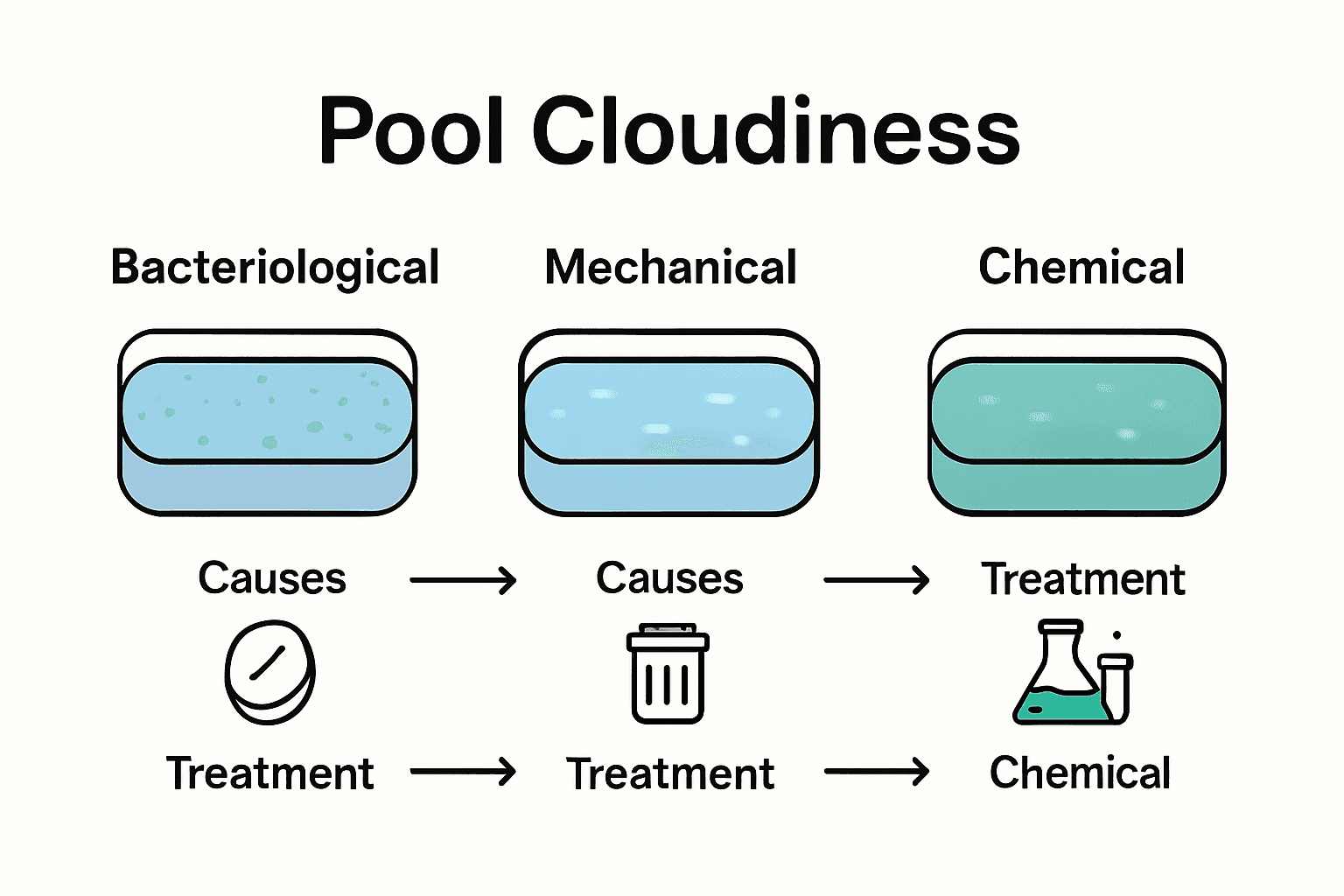
Pool water cloudiness isn’t a uniform phenomenon but a nuanced condition with distinct variations. PWTAG provides a critical framework for understanding these variations, categorizing pool cloudiness into three primary types: bacteriological, mechanical, and chemical.
According to Hayward Pool, each type of cloudiness presents unique characteristics and challenges:
- Bacteriological Cloudiness
- Caused by low chlorine levels
- Indicates potential microbial growth
- Typically appears milky or hazy
- Requires immediate disinfection
- Mechanical Cloudiness
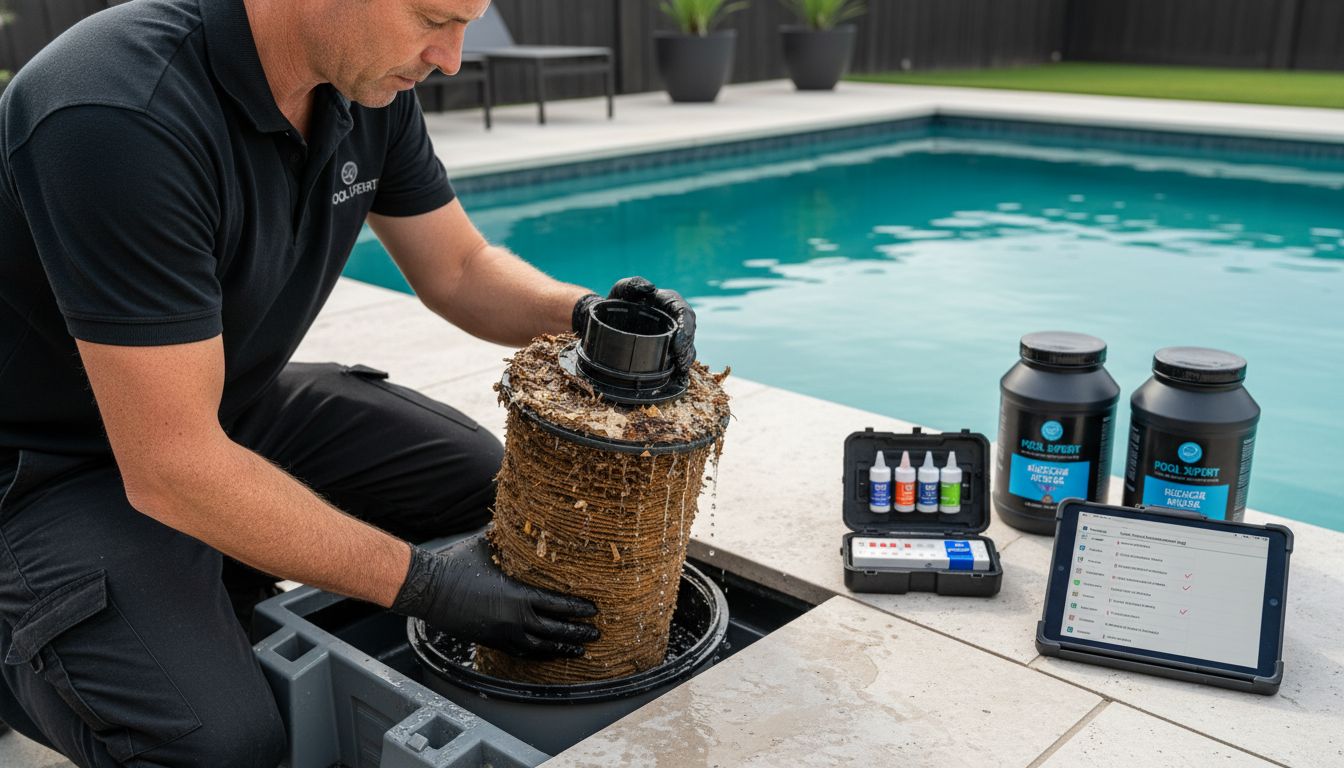
- Results from inadequate filtration
- Often linked to pump or circulation system failures
- Characterized by persistent particulate suspension
- Demands equipment inspection and potential repair
- Chemical Cloudiness
- Stems from improper pH or chemical imbalances
- Can cause scale formation
- Appears as a dull, opaque appearance
- Requires precise chemical rebalancing
Recognising these distinct types is crucial for targeted pool maintenance. Each variation demands a specific approach, making accurate identification the first step towards restoring crystal-clear water.
Pool owners seeking more detailed insights into filtration systems might find our guide on pool filter types particularly helpful in understanding water clarity solutions.
Effective Prevention and Treatment Methods
PWTAG emphasises that preventing cloudy pool water requires a strategic, multi-dimensional approach. Water chemistry management stands as the cornerstone of maintaining crystal-clear pool conditions, with precise attention to chlorine levels, pH balance, and filtration efficiency.
According to Hayward Pool, effective prevention involves several critical strategies:
-
Regular Water Testing
-
Maintain chlorine levels between 1-3 mg/l
-
Check pH balance consistently
-
Monitor total alkalinity
-
Inspect chemical composition weekly
-
Filtration System Maintenance
-
Clean filters regularly
-
Ensure proper circulation
-
Replace filter media as recommended
-
Check pump and circulation equipment
-
Proactive Contamination Prevention
-
Remove debris immediately
-
Use pool covers when not in use
-
Shower before entering pool
-
Limit organic material introduction
Successful pool maintenance demands consistent, systematic approach. Chemical balance, filtration efficiency, and contamination control work synergistically to prevent cloudiness. Pool owners must view water management as an ongoing process, not a one-time task.
For comprehensive insights into maintaining pristine water conditions, our chlorine management guide provides additional expert strategies for pool water clarity.
Common Mistakes and How to Avoid Them
PWTAG highlights that pool maintenance mistakes are often the root cause of persistent water quality issues. These errors typically stem from inconsistent testing, neglectful chemical management, and overlooking critical filtration system maintenance.
According to Hayward Pool, pool owners frequently fall into several problematic patterns:
- Chemical Mismanagement
- Over-chlorinating the pool
- Inconsistent chemical testing
- Improper chemical storage
- Neglecting pH balance
- Filtration System Errors
- Infrequent filter cleaning
- Ignoring equipment maintenance
- Delaying filter media replacement
- Overlooking circulation system checks
- Contamination Negligence
- Allowing debris to accumulate
- Skipping pre-swim hygiene protocols
- Not using pool covers
- Introducing excessive organic materials
Successful pool maintenance requires a proactive, systematic approach. Each mistake represents a potential pathway to water cloudiness, making consistent monitoring and immediate intervention crucial. Pool owners must develop a disciplined routine that addresses chemical balance, filtration efficiency, and contamination prevention.
For pool owners seeking to enhance their water management skills, our guide on pool water treatment tips offers comprehensive strategies to avoid common pitfalls and maintain pristine water conditions.
Keep Your Pool Water Crystal Clear with ClearSpa Solutions
Struggling with cloudy pool water can feel frustrating and overwhelming, especially when issues like low chlorine levels, inadequate filtration, or chemical imbalances keep coming up. You deserve a sparkling, inviting pool that refreshes you, not causes anxiety. At ClearSpa, we understand these challenges and offer a trusted selection of premium water treatment products designed to restore and maintain your pool’s perfect balance.
Take control of your pool’s clarity today by exploring our expertly formulated pool chemicals and spa essentials. With ClearSpa, you are equipped to tackle bacteriological, mechanical, and chemical cloudiness effectively. Visit us now at ClearSpa to discover how our products can transform your pool maintenance routine and keep your water flawlessly clear all season long.
Frequently Asked Questions
What causes cloudy pool water?
Cloudy pool water can be caused by several factors including low free chlorine levels, inadequate filtration, environmental contaminants, bacterial or algal growth, and chemical imbalances in the water.
How can I effectively prevent cloudy water in my pool?
To prevent cloudy pool water, regularly test and maintain proper chlorine levels, ensure proper filtration system maintenance, remove debris promptly, and implement pre-swim hygiene protocols like showering before entering the pool.
What are the different types of pool water cloudiness?
There are three main types of pool water cloudiness: bacteriological, mechanical, and chemical. Each type requires a specific approach to identify and treat the underlying cause effectively.
What mistakes should I avoid that could lead to cloudy pool water?
Common mistakes include inconsistent chemical testing, neglecting pH balance, improper filtration system maintenance, and allowing debris to accumulate. It’s crucial to develop a systematic routine for monitoring pool conditions.