The Essential Guide to Spa Water Balance Role
Master spa water balance with this comprehensive guide. Learn balance basics, common issues, UK regulations, and expert tips for crystal-clear results.
Did you know that over 60 percent of hot tub problems stem from poor water balance? Clear, comfortable spa water is not just about looks. It protects expensive equipment, prevents skin irritation, and keeps every soak safe and enjoyable. With the right knowledge, you can keep your spa running smoothly, avoid costly repairs, and enjoy a relaxing retreat at home every time you step in.
Key Takeaways
| Point | Details |
|---|---|
| Water Balance Importance | Maintaining pH, total alkalinity, and calcium hardness is essential for a safe and efficient spa experience. |
| Core Chemical Components | Regularly monitor pH levels, alkalinity, calcium hardness, sanitisers, and total dissolved solids to ensure optimal spa performance. |
| Common Water Imbalances | Address high pH, low alkalinity, sanitiser imbalance, and calcium buildup to prevent damage and enhance user comfort. |
| Preventive Water Management | Implement routine testing, regular shock treatments, and thorough filter maintenance to avoid water quality issues. |
Table of Contents
- Defining Spa Water Balance And Its Importance
- Key Components Of Spa Water Chemistry
- Common Water Imbalances And Problems
- UK Standards And Best Practices For Spas
- Preventing Issues With Proper Water Balance
Defining Spa Water Balance and Its Importance
Spa water balance is a precision science that ensures your hot tub remains a safe, comfortable, and efficient relaxation space. At its core, water balance involves maintaining three critical parameters: pH levels, total alkalinity, and calcium hardness. These interconnected factors determine the overall quality and health of your spa water.
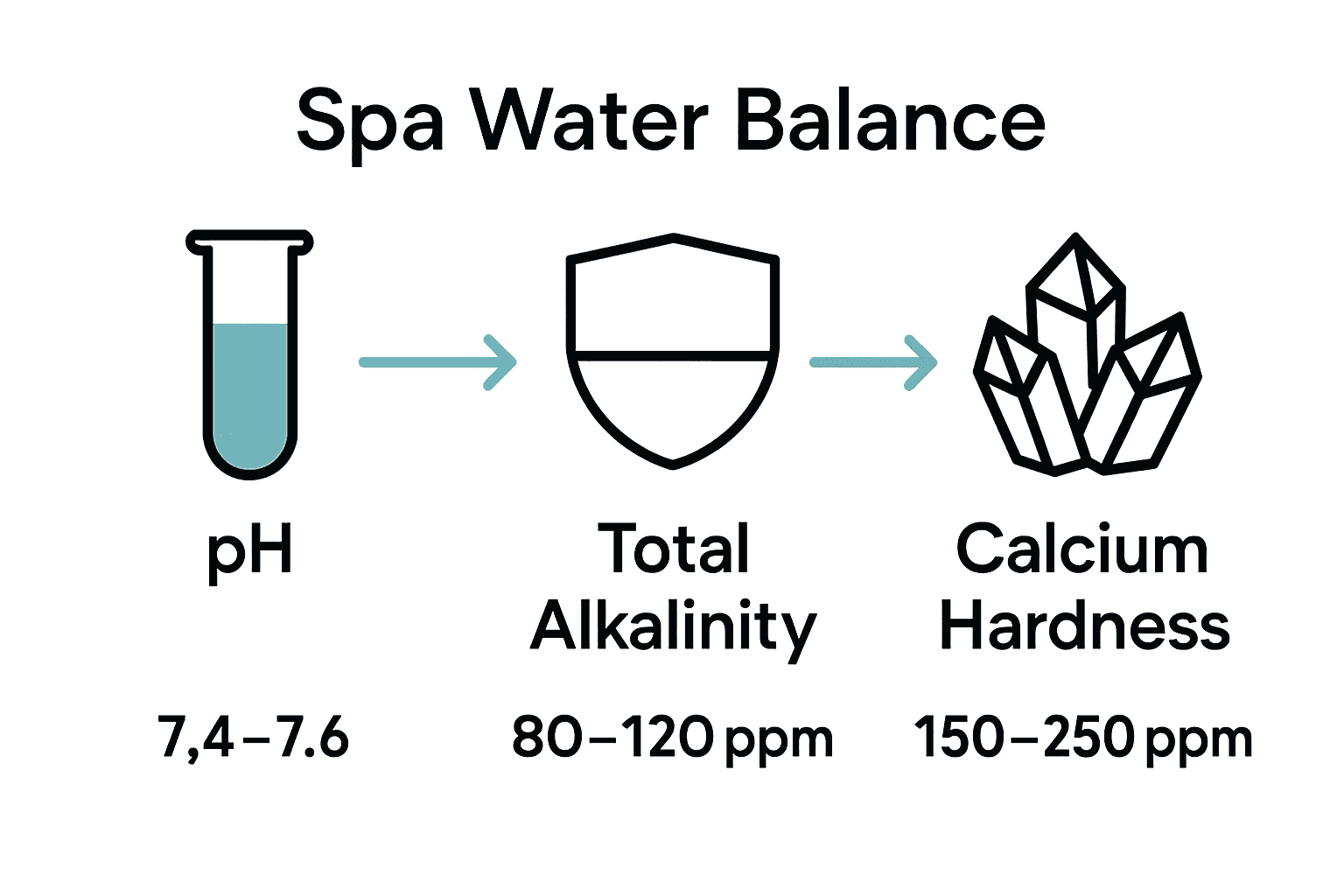
According to research from water treatment experts, proper water balance is more than just maintaining clear water - it’s about protecting your spa’s equipment and ensuring an optimal user experience. Unbalanced water can lead to serious issues like equipment corrosion, scaling, and reduced performance. As experts at Understanding the Role of Spa Balancing Chemicals explain, maintaining these parameters helps:
- Prevent mineral buildup on surfaces
- Protect expensive spa equipment from damage
- Ensure consistent water chemistry
- Maximise the effectiveness of sanitising chemicals
The consequences of neglecting water balance extend beyond mere aesthetics. Improperly balanced water can strain heating elements, reduce filtration system efficiency, and create an uncomfortable environment for spa users. By understanding and actively managing these key parameters, you can transform your spa maintenance from a chore into a precise, rewarding process that guarantees long-lasting enjoyment and performance.
Key Components of Spa Water Chemistry
Spa water chemistry is a complex ecosystem of interconnected chemical parameters that work together to maintain water quality, safety, and user comfort. At the heart of this system are five critical chemical components that demand precise monitoring and management to ensure optimal spa performance.
According to water treatment research, the core chemical components include pH levels, total alkalinity, calcium hardness, and total dissolved solids (TDS). For UK spa owners, Understanding Hot Tub Chemistry Basics highlights additional crucial elements like sanitisers. These key components work in harmony to prevent potential water quality issues:
- pH Levels: Indicates water acidity or alkalinity, typically targeted between 7.2 and 7.8
- Total Alkalinity: Stabilises pH and prevents rapid chemical fluctuations
- Calcium Hardness: Protects equipment from potential mineral damage
- Sanitisers: Eliminate bacteria and contaminants (chlorine or bromine)
- Total Dissolved Solids: Measure overall water mineral content
Proper management of these components ensures not just crystal-clear water, but also protects your spa equipment, maintains user comfort, and extends the longevity of your hot tub investment. Regular testing and balanced chemical interactions are the keys to a pristine, enjoyable spa experience.
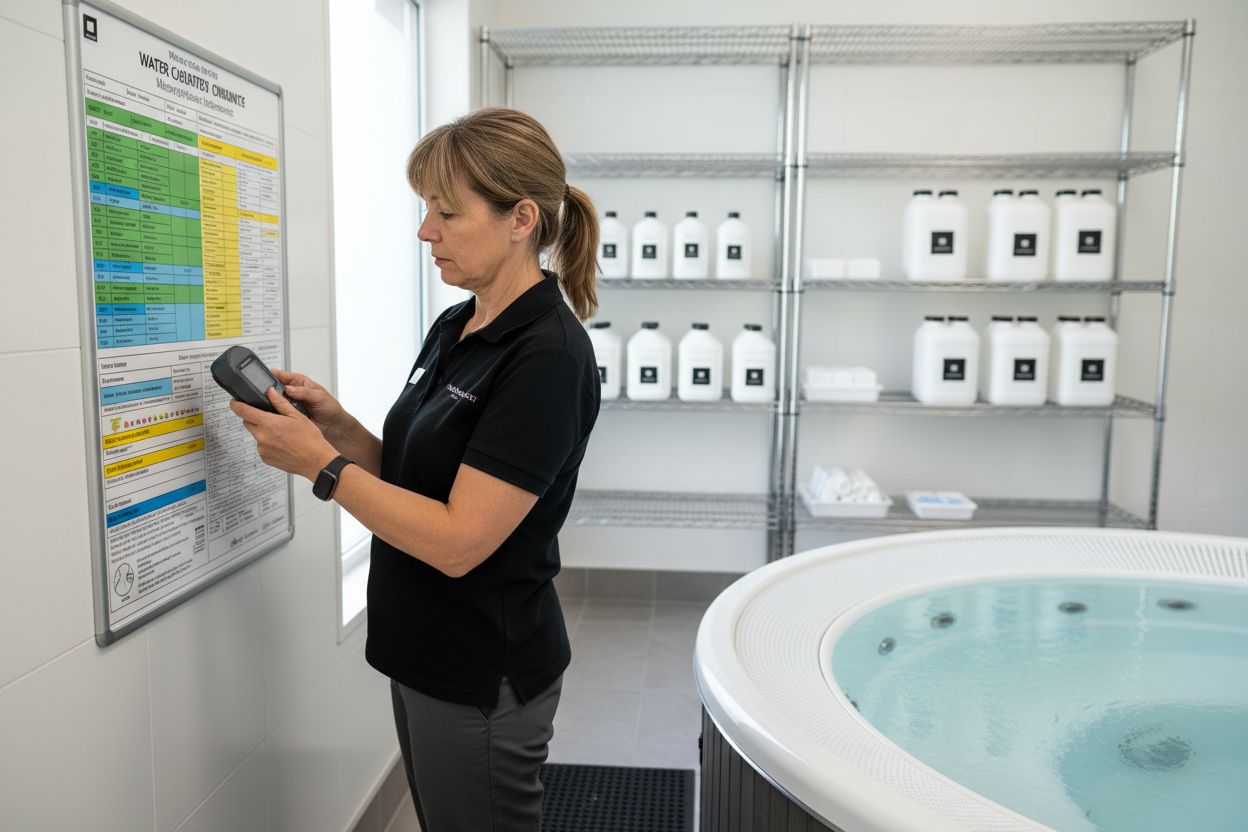
Here’s a summary of the core spa water chemistry components and their roles:
| Parameter | Recommended Range | Main Function |
|---|---|---|
| pH Levels | 7.2-7.8 | Controls acidity/alkalinity |
| Total Alkalinity | 80-120 mg/l (typical) | Stabilises pH fluctuations |
| Calcium Hardness | 100-250 mg/l (typical) | Prevents corrosion and scaling |
| Sanitisers | Chlorine: 3-5 mg/l Bromine: 4-6 mg/l |
Destroys bacteria and contaminants |
| Total Dissolved Solids | Under 1500 mg/l | Indicates overall mineral content |
Common Water Imbalances and Problems
Spa water chemistry can quickly become problematic when key chemical parameters fall out of balance, creating a cascade of potential issues that compromise both water quality and user experience. Water imbalances are more than just a nuisance - they can cause significant damage to your spa’s equipment and create an uncomfortable environment for users.
According to research from UK hot tub experts, the most common water imbalances manifest through several telltale signs. Top Tips for Balancing Chemical Levels in Your Hot Tub highlights the primary issues spa owners encounter:
- High pH Levels: Causes cloudy water, skin irritation, and reduced sanitiser effectiveness
- Low Alkalinity: Leads to rapid pH fluctuations and potential equipment corrosion
- Calcium Buildup: Results in scale formation, clogged filters, and heating inefficiency
- Sanitiser Imbalance: Creates unpleasant odours and increases bacterial growth
- Total Dissolved Solids: Accumulation can cause water cloudiness and reduced chemical performance
Addressing these imbalances requires proactive management. Regular water testing, precise chemical adjustments, and understanding the interconnected nature of spa water chemistry are crucial. By maintaining a consistent monitoring routine, you can prevent most common water issues, protect your spa investment, and ensure a safe, enjoyable spa experience.
UK Standards and Best Practices for Spas
Maintaining a spa in the United Kingdom requires adherence to specific health and safety standards that ensure water quality, user safety, and optimal performance. These standards are not just recommendations, but critical guidelines that protect both spa owners and users from potential health risks and equipment damage.
According to Health and Safety Executive (HSE) guidelines, Understanding Spa Water Care highlights the precise parameters spa owners must maintain:
- pH Levels: Must be maintained between 7.0-7.6
- Chlorine Concentration: 3-5 mg/l for free chlorine
- Bromine Concentration: 4-6 mg/l as an alternative sanitiser
- Combined Chlorine: Must remain under 1 mg/l
- Testing Frequency:
- Chemical testing: Twice daily for home spas
- Microbiological testing: Monthly
- Legionella risk assessment: Quarterly
These rigorous standards demonstrate the UK’s commitment to maintaining high-quality spa environments. By following these guidelines, spa owners can ensure a safe, hygienic, and enjoyable experience while protecting their investment and the health of spa users.
Preventing Issues With Proper Water Balance
Maintaining a healthy spa environment requires a proactive and systematic approach to water management. Prevention is always more cost-effective and efficient than addressing complex water chemistry problems after they’ve developed, making regular maintenance a critical aspect of spa ownership.
According to hot tub maintenance experts, Understanding Water Balancing recommends a comprehensive preventive strategy that encompasses multiple key actions:
- Water Testing: Conduct chemical tests 2-3 times weekly
- Shock Treatment: Perform weekly oxidising shock treatments
- Filtration: Maintain regular filtration cycles
- Water Replacement: Drain and refill spa every 3-4 months
- Filter Maintenance:
- Weekly filter rinsing
- Monthly deep cleaning
- Regular biofilm removal
Additional preventive measures include using pre-filters to control scale buildup, maintaining proper jet and circulation system performance, and employing specialised chemical products tailored to your specific water conditions. By implementing these systematic approaches, spa owners can significantly reduce the risk of water quality issues and extend the lifespan of their spa equipment.
Take Control of Your Spa Water Chemistry with ClearSpa
If you feel overwhelmed by complex spa water balancing, you are not alone. Many spa owners struggle with maintaining the right pH levels, total alkalinity, and calcium hardness, leading to cloudy water, equipment corrosion, and an uncomfortable spa experience. The article highlighted how vital it is to prevent mineral build-up, protect your spa equipment, and ensure consistent water clarity. What if you could easily tackle these challenges and enjoy peace of mind every time you use your hot tub?
Elevate your water management by exploring the expertly crafted solutions at ClearSpa. Our rigorously tested spa chemicals and hot tub essentials are designed to make water balancing simple and reliable. Take the guesswork out of your spa routine and achieve long-lasting comfort by choosing trusted products now. Do not wait for problems to arise - visit ClearSpa to find the perfect tools for a safe, enjoyable spa environment.
Frequently Asked Questions
What is spa water balance, and why is it important?
Spa water balance refers to maintaining critical parameters like pH levels, total alkalinity, and calcium hardness. It’s important because it ensures safe and comfortable water, protects spa equipment, and maximizes sanitizing chemical effectiveness.
How can I test the water balance in my spa?
You can test the water balance by using test strips or liquid test kits to measure pH levels, total alkalinity, and calcium hardness. It’s recommended to test the water 2-3 times weekly for optimal results.
What are the consequences of unbalanced spa water?
Unbalanced spa water can lead to cloudy water, equipment corrosion, scaling, and reduced effectiveness of sanitizers, creating an uncomfortable experience for users and potentially damaging your spa.
How often should I adjust my spa water chemicals?
You should adjust your spa water chemicals based on your test results. Regular testing (2-3 times a week) allows you to make necessary adjustments promptly, along with weekly shock treatments to keep water quality optimal.