Role of Spa Water Balance: Complete Owner’s Guide
Explore the vital role of spa water balance. This complete guide covers pH, alkalinity, sanitiser types, health impacts, and common water mistakes.
Did you know that poor water balance in spas has been linked to outbreaks of Legionnaires’ disease? Keeping your hot tub water in check is about more than just soothing soaks. Neglected chemical levels can cause health risks, skin irritation, and costly equipment repairs. By paying attention to the key factors behind safe and balanced spa water, you help ensure every spa session is safe, clean, and worry-free.
Key Takeaways
| Point | Details |
|---|---|
| Importance of Water Balance | Maintaining proper spa water balance is essential for safety, comfort, and hygiene, preventing health risks like Legionnaires’ disease. |
| Key Chemical Parameters | pH (7.2-7.6), total alkalinity (80-120 ppm), and calcium hardness (200-400 ppm) are crucial for optimal water quality. |
| Sanitiser Selection | Choose between chlorine for cost-effectiveness or bromine for stability and skin comfort; both require careful management based on water chemistry. |
| Common Maintenance Mistakes | Neglecting comprehensive testing and overcompensating with chemicals can disrupt water balance and increase health risks; a methodical approach is crucial. |
Table of Contents
- Defining Spa Water Balance And Its Importance
- Key Elements: Ph, Alkalinity, And Hardness
- Types Of Sanitisers And Their Effects
- Health Impacts Of Poor Water Balance
- Common Mistakes And How To Avoid Them
Defining Spa Water Balance and Its Importance
Understanding spa water balance is crucial for maintaining a safe, comfortable, and hygienic hot tub experience. At its core, water balance refers to maintaining precise chemical parameters that ensure optimal water quality and user safety. According to Understanding Spa Water Care: A Comprehensive Guide, achieving the right chemical equilibrium prevents multiple potential issues.
The critical parameters for proper spa water balance include:
- pH levels between 7.2 and 7.6
- Total alkalinity of 80-120 parts per million (ppm)
- Calcium hardness ranging from 200-400 ppm
As research from the NHS indicates, poor water balance isn’t just about comfort - it can pose serious health risks. Improperly managed spa water can contribute to the growth and aerosolisation of dangerous pathogens like Legionella, which can cause severe respiratory infections such as Legionnaires’ disease. This underscores why meticulous water management isn’t just a recommendation - it’s a necessity.
Most spa owners don’t realise that improper pH levels, rather than insufficient sanitiser, often cause user discomfort. Maintaining the right chemical balance protects your spa equipment, ensures user comfort, and prevents potential health hazards. By understanding and consistently managing your spa’s water chemistry, you create a safe, enjoyable environment for relaxation and wellness.
Key Elements: pH, Alkalinity, and Hardness
Maintaining proper spa water chemistry requires a delicate balance of three critical parameters: pH, total alkalinity, and calcium hardness. According to research on swimming pool sanitation, these elements work together to ensure water quality, bather comfort, and equipment protection. Understanding how these elements interact is crucial for any spa owner.
First, pH levels are the cornerstone of water balance. The ideal range sits between 7.2 and 7.6, which ensures optimal sanitiser effectiveness and user comfort. When tracking pH variations in your hot tub, you’re essentially monitoring the water’s acidity or alkalinity. Too low or too high can cause equipment damage and user discomfort.
Next, total alkalinity acts as a pH buffer, helping stabilise the water’s chemical environment. The recommended range of 80-120 parts per million (ppm) prevents rapid pH fluctuations. As experts explain why total alkalinity is so important, maintaining this parameter helps protect your spa’s surfaces and equipment from potential damage.
Lastly, calcium hardness plays a significant role in water quality. With an ideal range of 200-400 ppm, this parameter is particularly crucial in areas with hard water. In the UK, where drinking water often exceeds 200 ppm of calcium carbonate, managing water hardness becomes essential to prevent scale buildup and maintain crystal-clear water. By monitoring and adjusting these three key elements, you’ll ensure a safe, comfortable, and long-lasting spa experience.
Types of Sanitisers and Their Effects
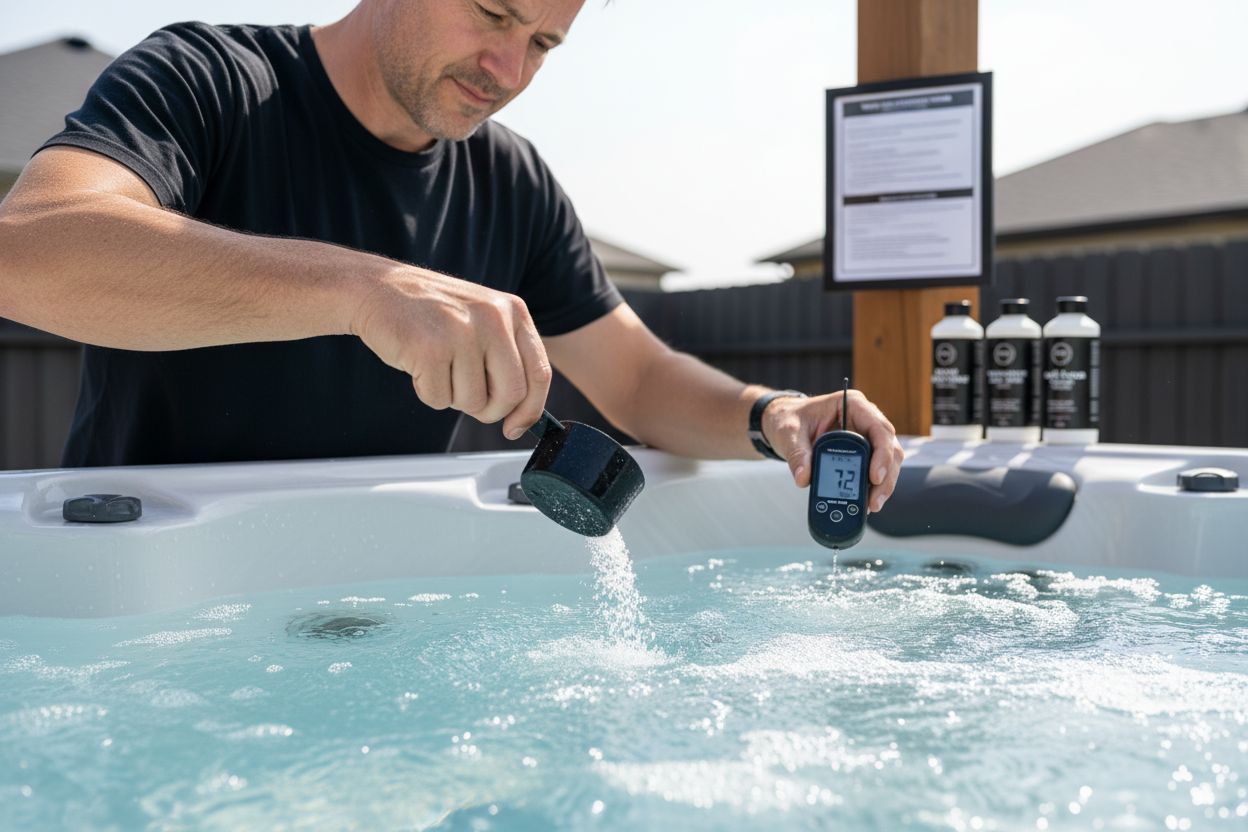
Spa sanitisers are the frontline defence against harmful bacteria, viruses, and other microorganisms that can compromise water quality and user health. According to research on swimming pool sanitation, effective spa disinfection depends on routine monitoring of sanitiser levels and understanding how different chemical treatments interact with water chemistry.
Two primary sanitisers dominate the spa market: chlorine and bromine. Chlorine tablets remain popular as a biocide due to their effectiveness and affordability. Chlorine works quickly to eliminate contaminants, with optimal performance occurring when pH levels are carefully balanced. Interestingly, research indicates that human tear pH (around 7.4) influences the ideal spa water pH, helping minimise user irritation while maximising sanitiser efficiency.
Bromine offers an alternative for spa owners, particularly those with sensitive skin. It remains active at higher temperatures and pH levels compared to chlorine, making it more stable in hot tub environments. Unlike chlorine, bromine continues to sanitise effectively even after neutralising contaminants, providing longer-lasting protection. However, it tends to be more expensive and may require more careful management.
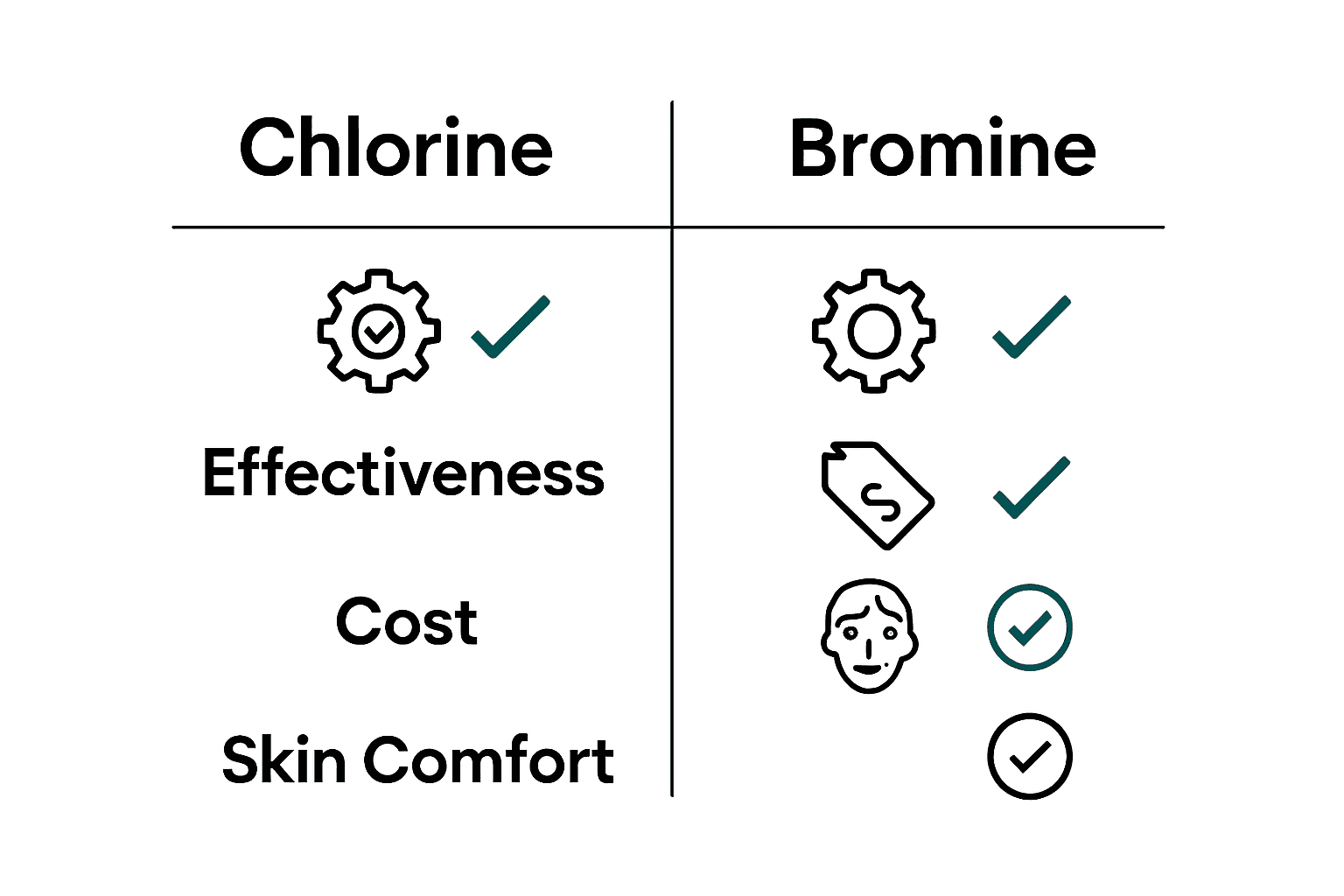
Here’s a comparison of key spa sanitisers and their characteristics:
| Sanitiser Type | Effectiveness | Stability in Heat | Skin Comfort | Cost |
|---|---|---|---|---|
| Chlorine | High | Moderate | May irritate | Low |
| Bromine | High | High | Gentler | High |
When selecting a sanitiser, spa owners must consider factors beyond basic disinfection. The chosen treatment should integrate seamlessly with your water’s existing chemical balance, provide consistent protection, and ensure user comfort. Regular testing, proper chemical management, and understanding the unique characteristics of each sanitiser type will help you maintain a safe, enjoyable spa experience.
Health Impacts of Poor Water Balance
Water chemistry imbalance in spas can pose significant health risks that extend far beyond simple discomfort. According to the NHS, improperly maintained spa water creates an ideal environment for dangerous pathogens like Legionella to multiply and spread through aerosolised water droplets, potentially causing severe respiratory infections.
The most immediate health concerns stem from improper chemical balance. Tracking water quality indicators reveals that incorrect pH levels can trigger a range of uncomfortable and potentially harmful conditions. Skin irritation, eye inflammation, and increased susceptibility to infections become real risks when sanitiser effectiveness is compromised.
Beyond surface-level irritations, poorly balanced spa water can create more insidious health threats. Legionnaires’ disease, a potentially fatal form of pneumonia, can develop from inhaling contaminated water aerosols. The bacteria thrive in warm, stagnant water with inadequate chemical treatment, making regular maintenance not just a comfort issue, but a critical health protection strategy.
Protecting yourself requires consistent monitoring and proactive management. Regular water testing, maintaining proper chemical levels, and understanding the delicate balance of spa water chemistry are essential. By dedicating time to water quality management, you’re not just ensuring a pleasant spa experience - you’re safeguarding your health and the well-being of everyone who uses the spa.
Common Mistakes and How to Avoid Them
Spa water maintenance is a delicate science where seemingly minor oversights can lead to significant problems. Research on swimming pool sanitation reveals that spa owners frequently make critical errors that compromise water quality, user comfort, and equipment longevity.
One of the most common mistakes is neglecting comprehensive water testing. Many owners focus solely on sanitiser levels, ignoring the nuanced balance of other chemical parameters. This approach can lead to ineffective disinfection, skin irritation, and potential health risks. Regular testing should include pH, total alkalinity, calcium hardness, and sanitiser levels to ensure a holistic approach to water management.
Another critical error is overcompensating with chemicals. Owners often add excessive sanitiser or pH adjusters, believing more is better. However, this approach can create a chemical imbalance that actually reduces sanitiser effectiveness and increases the risk of user discomfort. The key is precision - adding chemicals in measured amounts and allowing sufficient time between treatments to observe their impact.
To avoid these pitfalls, develop a consistent maintenance routine. Invest in a reliable water testing kit, keep detailed records of your chemical adjustments, and learn to make incremental changes. Remember that spa water chemistry is a dynamic system requiring patience and careful observation. By approaching maintenance as a methodical process rather than a series of quick fixes, you’ll protect your spa, your health, and your investment.
Transform Your Spa Water Balance With ClearSpa Expertise
Are you struggling to keep your spa water perfectly balanced? Chemical confusion and unpredictable test results can turn relaxation into frustration. As outlined in our guide, managing pH, alkalinity and hardness can feel overwhelming. Poor water balance not only risks your comfort but also invites costly equipment damage and potential health hazards.
Take control with trusted solutions from ClearSpa. Discover our meticulously tested hot tub chemicals and spa essentials designed for accurate, hassle-free water treatment. Whether you want to prevent skin irritation, safeguard your equipment or simply enjoy sparkling clear water, our products offer reliable results every time. Visit ClearSpa’s range of water treatment products and start your journey to effortless spa maintenance today. Your peace of mind and comfort begin right here. Act now and upgrade your spa experience with proven solutions from ClearSpa.
Frequently Asked Questions
What is spa water balance and why is it important?
Spa water balance refers to maintaining precise chemical parameters needed for optimal water quality, ensuring user comfort and safety. Proper balance prevents issues like skin irritation and the growth of harmful pathogens.
What are the key parameters for maintaining spa water balance?
The critical parameters include pH levels (ideally between 7.2 and 7.6), total alkalinity (80-120 parts per million), and calcium hardness (200-400 parts per million). Monitoring these levels ensures a safe and enjoyable spa experience.
How do chlorine and bromine differ as spa sanitisers?
Chlorine is effective and affordable, working quickly to eliminate contaminants, but can irritate skin. Bromine offers greater stability at higher temperatures and is gentler on skin, though it is typically more expensive.
What are the health risks associated with poor spa water balance?
Poor spa water balance can lead to skin irritation, eye inflammation, and increase susceptibility to infections. It can also allow harmful pathogens like Legionella to thrive, posing serious health risks like Legionnaires’ disease.