Hot Tub Water Problems - Impact on Safety and Comfort
Hot tub water problems affect clarity, hygiene, and comfort. Learn about cloudy or green water, chemical solutions, and simple maintenance for UK spa owners.
Cloudy water and stubborn odours can quickly turn a relaxing soak into a worry for UK hot tub owners. Beyond looks, unresolved water quality issues allow harmful bacteria like Legionella to thrive in the warm environment, increasing health risks for you and your guests. Tackling the root causes with focused chemical solutions gives you confidence that your spa stays clear, safe, and genuinely soothing every time you use it.
Table of Contents
- What Hot Tub Water Problems Mean
- Types Of Common Water Issues Explained
- Key Causes Of Water Quality Problems
- Chemical Solutions For Safe Spa Water
- How To Prevent Future Water Problems
Key Takeaways
| Point | Details |
|---|---|
| Health Risks | Poor water quality can lead to bacterial growth and serious infections, making regular maintenance essential for safety. |
| Chemical Balance | Maintaining proper levels of sanitiser, pH, and alkalinity is crucial to prevent water problems and ensure effective disinfection. |
| Regular Testing | Conduct water tests at least twice a week to catch imbalances early and adjust chemicals promptly. |
| Preventative Maintenance | Establish a consistent maintenance schedule, including filter cleaning and water replacement, to enhance enjoyment and reduce issues. |
What Hot Tub Water Problems Mean
Water problems in your hot tub aren’t just about clarity or aesthetics. They represent a real threat to both your health and the comfort of anyone using your spa. When we talk about hot tub water problems, we’re referring to any situation where the water fails to meet safety and hygiene standards due to chemical imbalance, contamination, or deterioration. These problems create an environment where harmful microorganisms can thrive, transforming what should be a relaxing escape into a potential health hazard.
The most serious concern involves bacterial growth. Hot tubs operate at elevated temperatures, typically between 37 and 40 degrees Celsius, which creates ideal conditions for pathogenic bacteria such as Legionella to flourish. Legionella bacteria exposure can cause serious infections through inhalation of contaminated aerosol particles, leading to conditions like Legionnaires’ disease. Beyond bacteria, unbalanced water chemistry allows viruses to survive longer and skin irritants to accumulate. You might notice red eyes, skin irritation, or respiratory discomfort after using your hot tub. These symptoms signal that your water’s chemical balance has shifted, often due to insufficient sanitiser levels, improper pH balance, or inadequate filtration. The stakes are particularly high in shared accommodation settings where guests have varying health conditions and immune system strengths.
Water problems extend beyond invisible threats. Cloudy or discoloured water, foul odours, algae growth, and visible debris all indicate underlying chemical issues. A decline in water quality can increase risks from bacteria, viruses, and irritant chemicals, compromising both user safety and enjoyment. Some problems develop gradually. Calcium buildup from hard water accumulates in your pipes and heating elements, reducing efficiency. Other problems strike suddenly, like an algae bloom following poor maintenance or a chemical miscalculation. Understanding that these problems signal a breakdown in your water management system is the first step toward prevention. Rather than waiting for visible signs of trouble, successful hot tub owners treat water maintenance as an ongoing responsibility with regular testing and adjustments.
Pro tip: Test your water chemistry at least twice weekly using reliable test kits or test strips, checking chlorine or bromine levels, pH, and alkalinity. Catching imbalances early prevents dangerous conditions from developing.
Types Of Common Water Issues Explained
Your hot tub can develop several different water problems, each requiring a slightly different approach to fix. Understanding which issue you’re facing helps you respond with the right solution. The most common problems fall into four main categories: bacterial contamination, chemical imbalances, physical contaminants, and biofilm formation. Each type behaves differently and demands specific attention to restore your water to safe, comfortable conditions.
Bacterial contamination poses the greatest health risk. The two primary culprits are Legionella and Pseudomonas aeruginosa. Legionella thrives in warm water and causes serious respiratory infections when you inhale contaminated aerosol particles. Pseudomonas aeruginosa causes painful ear and skin infections, often appearing as red, itchy patches. You typically cannot see these bacteria with the naked eye, which is why chemical testing matters so much. Chemical imbalances occur when your sanitiser levels drop too low, your pH drifts out of range, or your alkalinity fluctuates. Low chlorine or bromine means bacteria can multiply unchecked. High pH reduces your sanitiser’s effectiveness by up to 50 percent, whilst low pH causes water to become corrosive and irritating to eyes and skin. Biofilm formation and physical contaminants represent problems you can actually see developing. Biofilm is a sticky, slimy layer of bacteria that clings to your pipes, jets, and filter. It looks unpleasant and harbours pathogens even when your water chemistry appears balanced.
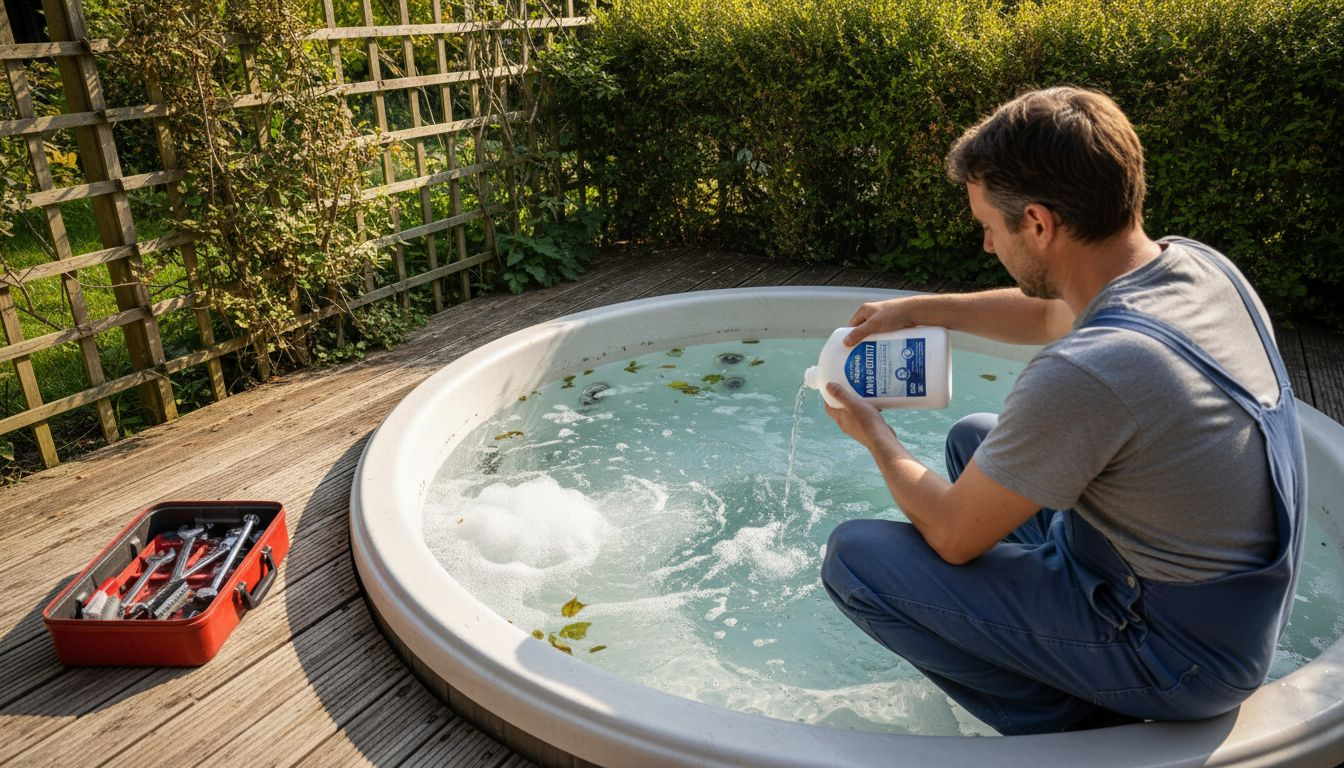
Physical contaminants include debris like leaves, dirt, sunscreen residue, and dead skin cells. Cloudiness develops when microscopic particles suspend in your water, typically signalling insufficient filtration or chemical imbalance. Discolouration, whether green, brown, or yellow, indicates algae growth or metal oxidation. A strong chemical smell often means chlorine is working overtime to handle organic contamination, not that your water is clean. This is actually a warning sign that something is overwhelming your system.
Each problem demands prompt action. Bacterial issues require shock treatment and increased sanitiser levels. Chemical imbalances need adjustment using pH increasers, pH decreasers, or alkalinity boosters. Biofilm requires deep cleaning with appropriate treatment products. Physical contaminants need thorough filtration and vacuuming. The key is identifying what you’re dealing with through regular water testing so you can treat it appropriately before it worsens.
Here is a summary table outlining the most common hot tub water issues and their typical symptoms:
| Issue Type | Typical Symptoms | Main Underlying Cause |
|---|---|---|
| Bacterial Contamination | Itchy skin, rashes, or ear infections | Low sanitiser levels |
| Chemical Imbalance | Red eyes, skin irritation, odours | Incorrect pH or alkalinity |
| Physical Contaminants | Cloudy water, visible debris | Poor filtration or hygiene |
| Biofilm Formation | Slimy surfaces, persistent cloudiness | Infrequent deep cleans |
Pro tip: Keep a maintenance log noting water test results, chemical additions, and any visible changes, helping you spot patterns and identify problems before they become serious.
Key Causes Of Water Quality Problems
Water quality problems don’t appear from nowhere. They develop because specific conditions allow them to flourish. Most issues trace back to a handful of root causes, and understanding these helps you prevent problems before they start. The main culprits are insufficient maintenance routines, inadequate disinfection, poor water circulation, and the accumulation of organic matter. These factors work together to create an environment where bacteria thrive and chemical balance deteriorates.
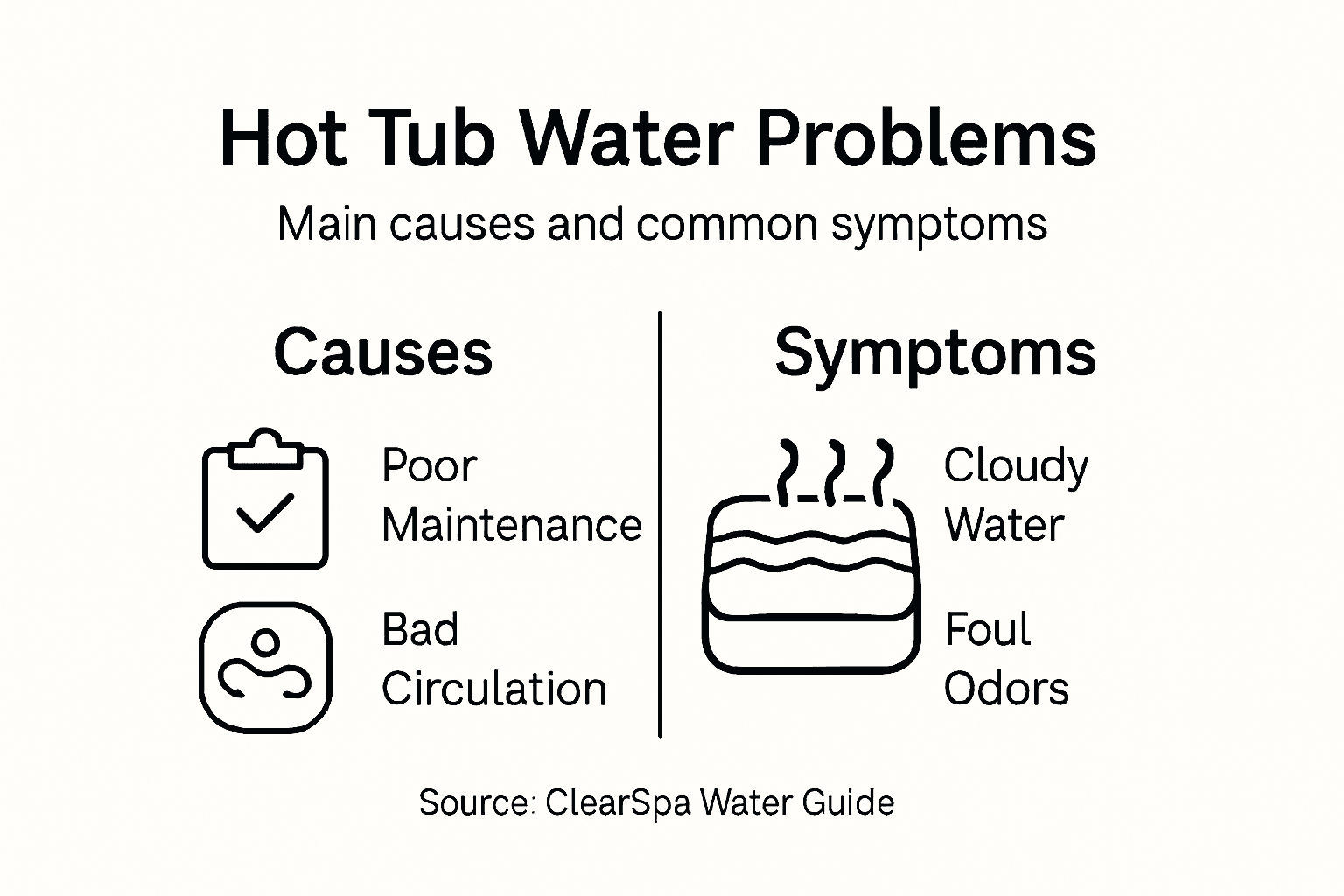
Insufficient maintenance is the leading cause of water problems. Many hot tub owners assume that once they’ve treated the water with chemicals, the job is complete. In reality, consistent testing and adjustment are essential. If you skip regular water tests or fail to clean your filter properly, contaminants build up faster than your sanitiser can handle them. Inadequate disinfection happens when chlorine or bromine levels fall too low, either through chemical depletion or user error in dosing. The problem worsens during periods of heavy use, when more bathers introduce body oils, sweat, and bacteria. High bathing loads combined with warm water temperatures make it extremely difficult to maintain adequate disinfectant levels and stable pH. A single day with ten people using your hot tub can dramatically increase organic load, consuming your sanitiser faster than normal.
Poor water circulation is another significant problem that many owners overlook. If water doesn’t move through your filtration system regularly, stagnant areas develop where bacteria can multiply freely. Dead legs in your plumbing are particularly problematic. These are sections of pipe where water sits motionless, creating ideal conditions for biofilm formation and microbial growth. Infrequent water changes compound these issues. Some owners change their water only once or twice yearly, but this is far too infrequent for intensive use. The longer water sits in your tub, the more organic matter accumulates from bathers. Sweat, sunscreen, cosmetics, and body oils all combine to overwhelm your chemical system. After weeks or months, even perfect chemistry management becomes nearly impossible because the sheer volume of contamination exceeds what disinfectants can manage.
The interaction between these causes is crucial. One problem rarely operates in isolation. Poor circulation prevents your filter from removing physical contaminants effectively. Inadequate disinfection allows bacteria to proliferate despite circulation. Insufficient maintenance means you don’t catch these issues developing. Together, they create a cascade of problems that accelerate water deterioration.
Pro tip: Establish a weekly maintenance schedule that includes testing water chemistry twice weekly, cleaning your filter monthly, and draining and refilling your hot tub every three to four months, preventing multiple problems from developing simultaneously.
Chemical Solutions For Safe Spa Water
Fixing water problems requires understanding which chemicals do what and how they work together. Your hot tub’s safety depends on maintaining three critical chemical balances: disinfection, pH control, and oxidation. These aren’t independent concerns but interconnected systems that must work in harmony. When one falls out of balance, the others suffer, and your water quality deteriorates rapidly.
Disinfection is your first line of defence against bacteria and viruses. Chlorine and bromine are the two main sanitisers used in hot tubs. Chlorine works faster and costs less, making it popular with owners who prioritise budget. Bromine is gentler on skin and eyes, particularly valuable if you or your guests have sensitive skin. Both compounds kill pathogens by oxidising their cell walls, essentially destroying them at a molecular level. You must maintain chlorine levels between 1.0 and 3.0 mg/L or bromine levels between 2.0 and 4.0 mg/L for effective protection. Below these levels, bacteria can multiply faster than your sanitiser can control them. Above these levels, you risk chemical irritation and corrosive damage to your equipment. Maintaining appropriate disinfectant levels through regular monitoring and careful dosing is absolutely essential for pathogen control.
pH control determines how effectively your disinfectant actually works. Your target pH range is 7.2 to 7.8. This narrow window is crucial because pH directly affects disinfectant activity. At pH 8.0, your chlorine is only about 25 percent as effective as it is at pH 7.2. If your pH drifts above 7.8, you’ll need far more sanitiser to achieve the same protection, wasting chemicals and increasing costs. If pH drops below 7.2, the water becomes corrosive to your equipment and irritating to skin. You adjust pH using pH increasers (typically sodium carbonate) when levels drop, or pH decreasers (typically sodium bisulphate) when levels climb too high. Chemical balancing with oxidiser boosters tackles organic contamination that accumulates from bathers. These products contain non-chlorine oxidisers that destroy organic matter without consuming your main disinfectant, keeping your water clearer and your sanitiser reserves stronger.
The relationship between these chemicals is what separates successful hot tub maintenance from constant frustration. Low disinfectant combined with high pH means bacteria thrive despite chemical treatment. High disinfectant combined with low pH means equipment corrosion and user irritation. The key is regular testing. Test your water at least twice weekly, adjusting one chemical at a time, and waiting 24 hours before testing again. This prevents over correction and maintains stable conditions.
The table below compares the roles of key chemicals in hot tub maintenance:
| Chemical | Core Function | Ideal Range (mg/L) | Impact if Out of Range |
|---|---|---|---|
| Chlorine | Sanitises water | 1.0-3.0 | Bacteria thrive or irritation |
| Bromine | Gentler sanitiser | 2.0-4.0 | Poor disinfection or irritation |
| pH Adjusters | Balance acidity | pH 7.2-7.8 | Ineffective sanitation/corrosion |
| Oxidiser/Booster | Breaks down organics | As instructed | Cloudy, odorous water |
Pro tip: Invest in a quality test kit with separate reagents for chlorine, pH, and alkalinity rather than relying on test strips alone, as liquid test kits provide more accurate readings for precise chemical dosing.
How To Prevent Future Water Problems
Prevention is infinitely easier than fixing water problems once they’ve developed. The difference between owners who struggle constantly with their hot tubs and those who enjoy trouble-free relaxation comes down to one thing: consistent preventative maintenance. This doesn’t require expensive equipment or specialist knowledge. It requires discipline, a realistic maintenance schedule, and a commitment to treating water management seriously from the start.
Start with a comprehensive risk assessment specific to your hot tub setup and usage patterns. How many people use your spa weekly? Do users shower beforehand? Are there health vulnerabilities among regular bathers? Your assessment informs your maintenance intensity. A family of four using their hot tub twice weekly needs less rigorous protocols than a holiday let hosting ten guests daily. Prevention through strict adherence to maintenance schedules, regular water testing, and prompt water replacement ensures you catch problems before they become serious. Establish a testing routine and stick to it religiously. Test twice weekly minimum, recording results in a maintenance log. Test pH, disinfectant levels, and alkalinity. These three measurements reveal 90 percent of developing problems. When you notice a value drifting out of range, adjust immediately rather than waiting for the next scheduled test. Clean your filter monthly, or more frequently if you use your tub heavily. A clogged filter reduces water circulation dramatically, creating ideal conditions for bacterial growth and biofilm formation.
Automatic dosing equipment provides consistent chemical treatment without relying on manual calculations. These systems monitor your water continuously and add chemicals as needed, preventing the spikes and dips that occur with hand dosing. They’re more expensive upfront but reduce chemical waste, minimise user error, and provide superior water stability. Beyond automation, implementing effective cleaning protocols, maintaining detailed records, and controlling user access ensures hygienic use and sustainable water quality. Establish simple rules: shower before entering, avoid using hot tubs whilst ill, and limit session duration during heavy use periods. Keep your maintenance log detailed, recording test results, chemical additions, filter cleaning dates, and any visible issues. This history becomes invaluable for identifying patterns. If problems repeatedly occur on weekends, you know heavy usage is your challenge. If problems emerge gradually through the week, your maintenance intervals need adjusting. Replace your water every three to four months, or sooner if usage is intensive. No amount of chemical management can fully compensate for water that’s been recycled too long.
Pro tip: Set phone reminders for your twice-weekly testing schedule and monthly filter cleaning rather than relying on memory, ensuring you never skip maintenance steps that form the foundation of problem prevention.
Maintain Safer, Cleaner Hot Tub Water with ClearSpa
Hot tub water problems such as bacterial contamination, chemical imbalances, and biofilm formation can put your health and comfort at risk. The article highlights key challenges including low sanitiser levels and unstable pH that encourage harmful bacteria like Legionella to thrive. If you want to avoid itchy skin, cloudy water, and irritating odours, it is vital to take control of your hot tub’s water chemistry and sanitation. ClearSpa offers a carefully curated range of hot tub chemicals and water treatment products designed to keep your spa water balanced and hygienic.
Enhance your spa experience by choosing high-quality sanitisers, pH adjusters, and oxidiser boosters from ClearSpa. Our products are tested to help you maintain the perfect chemical balance that prevents bacteria growth and biofilm buildup. Don’t wait until visible issues appear or discomfort starts. Visit ClearSpa now to find reliable water treatment solutions and protect your hot tub users from avoidable health risks and irritation. Take the first step towards consistently safe and comfortable spa water today.
Frequently Asked Questions
What are the common water problems in hot tubs?
Common water problems in hot tubs include bacterial contamination, chemical imbalances, physical contaminants, and biofilm formation. Each issue can affect water quality and user safety.
How do chemical imbalances affect my hot tub?
Chemical imbalances can lead to symptoms such as red eyes, skin irritation, and unpleasant odours. Low sanitiser levels or improper pH can allow harmful bacteria to thrive, making the water unsafe for use.
How can I prevent bacterial contamination in my hot tub?
To prevent bacterial contamination, maintain consistent water testing and sanitisation routines. Regularly check and adjust the levels of chlorine or bromine, and ensure proper filtration and water circulation.
What should I do if my hot tub water is cloudy?
Cloudy water indicates potential physical contaminants or chemical imbalances. You should test the water, adjust the chemical levels, and ensure effective filtration. A thorough cleaning or shock treatment may also be necessary.