Spa Care Basics - How to Maintain Pristine Water
Beginner's spa care made simple: learn essential water treatment, chemical balance, maintenance routines, and key mistakes to avoid for lasting clarity.
More than half of British hot tub owners underestimate the health risks linked to improper spa care. Owning a spa in the United Kingdom means more than simply topping up water or adding a splash of chemicals. Misunderstandings about maintenance can quickly lead to issues many overlook, from bacterial outbreaks to costly equipment failure. This guide uncovers the truth about spa upkeep, tackles popular myths, and explains the key steps every British homeowner needs for safe, stress-free relaxation.
Table of Contents
- What Spa Care Involves and Common Myths
- Types of Spa Water Treatments Explained
- Essential Steps for Chemical Balance
- Routine Maintenance for Spa Longevity
- Common Spa Care Mistakes to Avoid
Key Takeaways
| Point | Details |
|---|---|
| Importance of Spa Maintenance | Regular and systematic maintenance is essential to ensure a safe and hygienic spa environment, including rigorous water testing and chemical balancing. |
| Myths About Spa Care | Common misconceptions, such as believing fresh water eliminates bacterial risks, can lead to unsafe conditions and inadequate care. |
| Chemical Balance Management | Precise chemical management is critical, with specific parameters for pH, sanitiser concentration, and total alkalinity requiring regular monitoring. |
| Routine Maintenance Practices | Implementing weekly checklists and monthly deep cleans helps prolong spa life and prevent health risks, emphasizing the necessity of consistent attention. |
What Spa Care Involves and Common Myths
Spa maintenance involves far more than casual water top-ups and occasional cleaning. Health risks associated with improper spa management can be significant, requiring systematic and scientific approaches to water treatment and hygiene.
Contrary to popular belief, domestic hot tubs are not low-maintenance recreational equipment. The Chartered Institute of Plumbing and Heating Engineering emphasises that spas demand consistent, meticulous care to prevent potential health hazards. Bacterial growth, particularly Legionella, represents a serious concern that cannot be overlooked. Regular water testing, chemical balancing, and thorough cleaning are non-negotiable aspects of responsible spa ownership.
Common myths about spa maintenance often lead owners astray. Many incorrectly assume that:
- Filling the spa with fresh water eliminates all bacterial risks
- Chlorine alone provides complete protection against waterborne pathogens
- Infrequent cleaning is acceptable for occasional use
- Water that looks clean is necessarily safe
In reality, professional spa care requires understanding complex water chemistry principles. Proper maintenance involves:
- Weekly water quality testing
- Precise chemical balancing
- Regular filter cleaning and replacement
- Thorough surface sanitisation
- Monitoring total dissolved solids (TDS)
By dispelling myths and adopting a systematic approach, spa owners can ensure a safe, hygienic, and enjoyable experience.
Types of Spa Water Treatments Explained
Spa water treatments represent a critical aspect of maintaining a safe and hygienic aquatic environment. Continuous chemical dosing systems are essential for controlling infectious agents and preventing potential health risks associated with stagnant water.
Primary water treatment methods focus on two fundamental approaches: chemical disinfection and physical filtration. Chemical treatments typically involve using chlorine or bromine as primary disinfectants, which work to neutralise harmful microorganisms. East Renfrewshire Council highlights that these chemical treatments must maintain consistent residual levels to effectively inhibit bacterial growth.
The most common spa water treatment techniques include:
-
Chlorine Treatment
- Most widely used disinfection method
- Rapidly kills bacteria and viruses
- Requires careful pH balancing
-
Bromine Treatment
- More stable at higher temperatures
- Less irritating to skin and eyes
- Effective across wider pH ranges
-
Oxidation Treatments
- Shock treatments to eliminate contaminants
- Helps reset water chemistry
- Typically used weekly or bi-weekly
Alternative treatment technologies like ultraviolet light, hydrogen peroxide, and ozone systems exist, but experts caution that these methods are insufficient without complementary chemical disinfection. Effective spa maintenance demands a multifaceted approach that combines different treatment strategies to ensure water remains pristine and safe.
Regular testing, precise chemical management, and understanding the interactions between various treatment methods are key to maintaining a healthy spa environment. Spa owners must remain vigilant and proactive in their water care routine.
Essential Steps for Chemical Balance
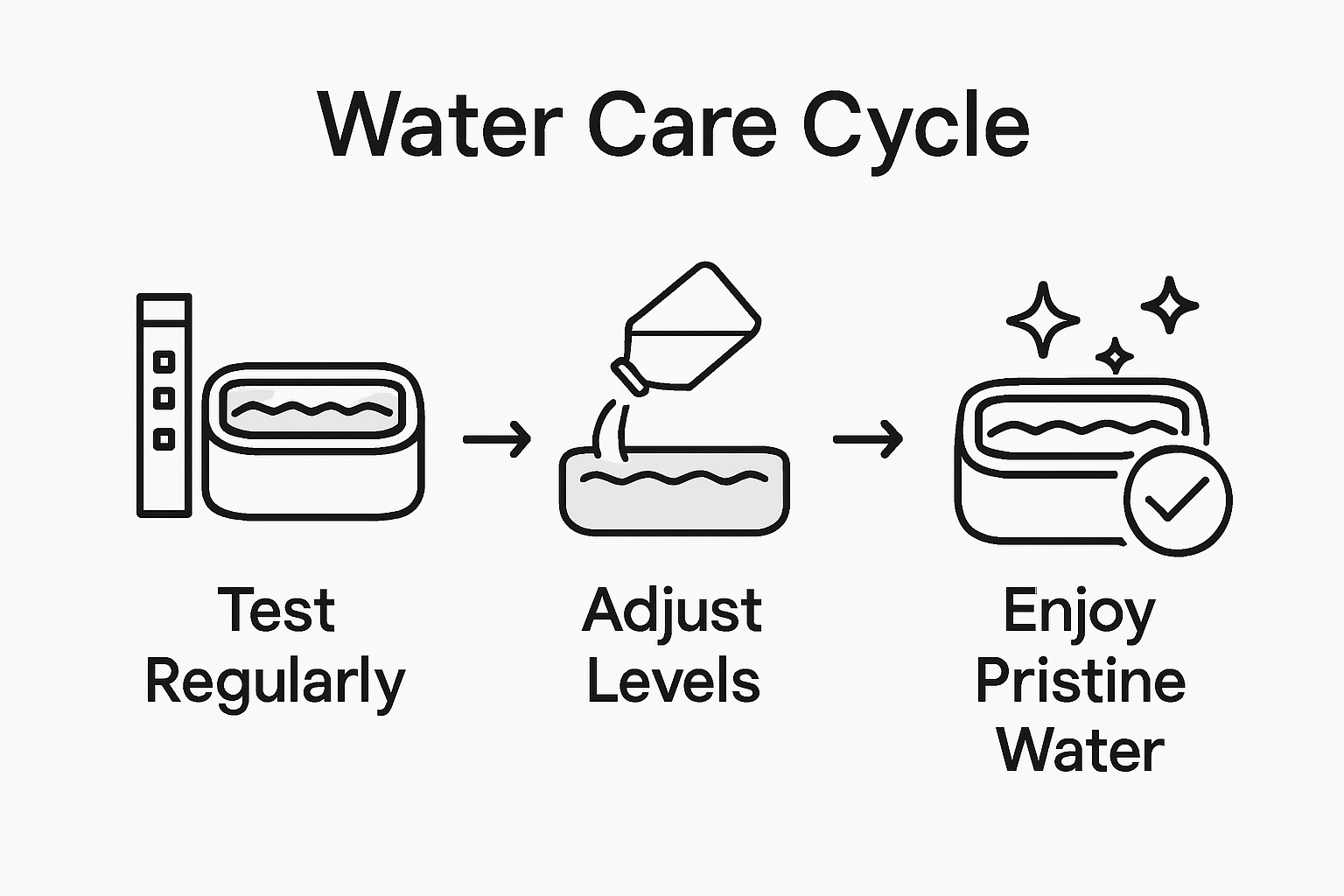
Maintaining precise chemical balance is fundamental to creating a safe and hygienic spa environment. Proper water chemistry prevents bacterial growth, protects spa equipment, and ensures user safety.
The Chartered Institute of Plumbing and Heating Engineering emphasises that chemical management requires systematic approach and consistent monitoring. Specific parameters must be carefully controlled to prevent potential health risks. Successful spa water maintenance involves understanding and implementing several critical chemical balance steps:
-
pH Level Regulation
- Ideal range: 7.0 to 7.6
- Prevents equipment corrosion
- Optimises disinfectant effectiveness
-
Sanitiser Concentration
- Chlorine: 3-5 mg/L
- Bromine: 4-6 mg/L
- Kills harmful bacteria and viruses
-
Total Alkalinity Management
- Recommended range: 80-120 ppm
- Stabilises pH levels
- Prevents water chemistry fluctuations
-
Calcium Hardness Control
- Ideal range: 150-250 ppm
- Prevents equipment scaling
- Protects spa surfaces
Regular testing using reliable test strips or digital testing kits is crucial. Spa owners should measure chemical levels at least twice weekly, making incremental adjustments to maintain optimal water conditions. Neglecting these parameters can lead to potential health hazards and accelerated equipment deterioration.
Understanding water chemistry is not just about numbers; it’s about creating a safe, comfortable environment for spa enjoyment. Consistent care and attention to chemical balance will ensure your spa remains a pristine and inviting retreat.
Routine Maintenance for Spa Longevity
Comprehensive routine maintenance is fundamental to preserving spa functionality and preventing potential health risks. Proper care extends equipment lifespan and ensures a safe, enjoyable bathing experience.
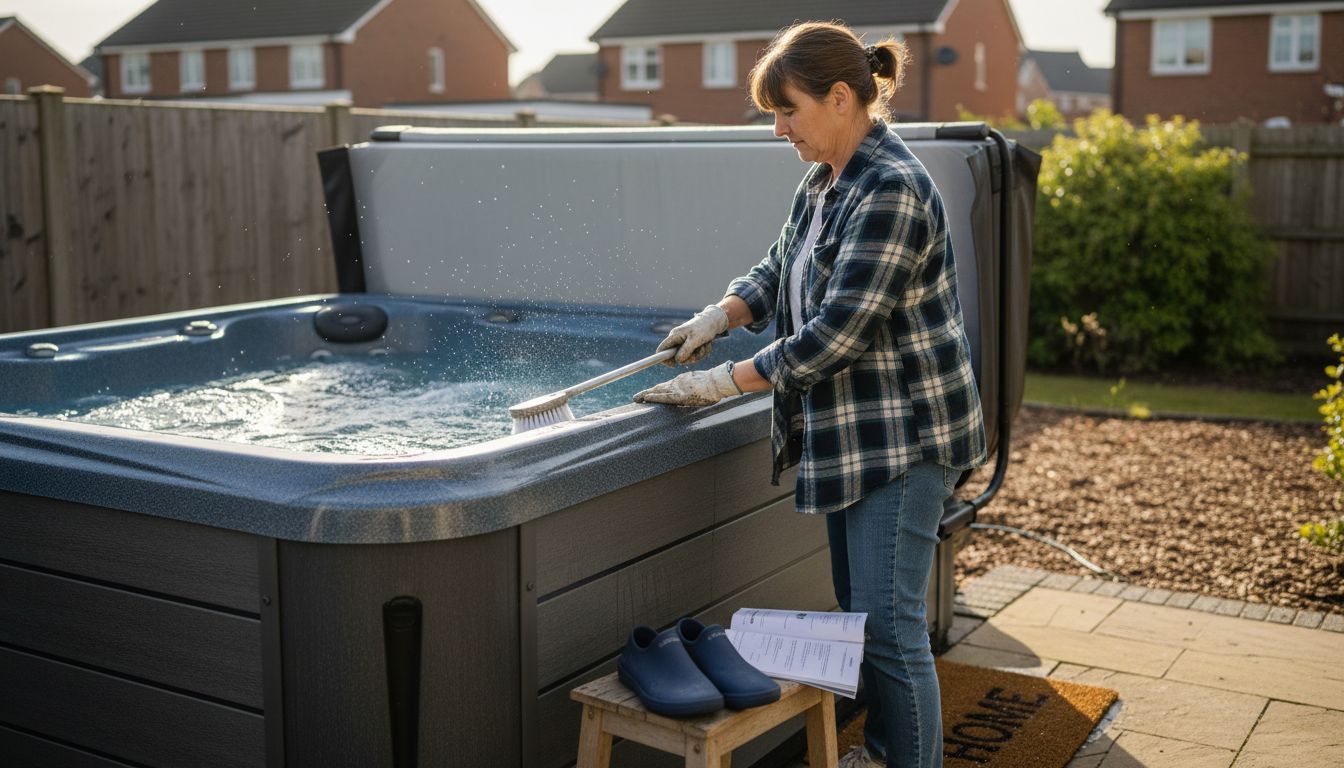
The Health and Safety Executive emphasises that systematic maintenance involves more than occasional surface cleaning. Regular inspection, deep cleaning, and adherence to manufacturer guidelines are critical components of responsible spa ownership. Effective maintenance comprises several interconnected strategies designed to protect both the equipment and users.
Key routine maintenance tasks include:
-
Weekly Maintenance Checklist
- Test water chemistry
- Clean and inspect filters
- Check water levels
- Wipe surface areas
- Inspect equipment for wear
-
Monthly Deep Cleaning
- Drain and thoroughly clean spa
- Inspect jets and plumbing
- Replace filters if necessary
- Check electrical connections
- Lubricate moving components
-
Seasonal Equipment Assessment
- Comprehensive system inspection
- Professional technical evaluation
- Replace worn components
- Update water treatment protocols
Proper maintenance requires understanding your specific spa model’s unique requirements. Manufacturer instructions provide tailored guidance for optimal care, considering factors like usage frequency, water hardness, and environmental conditions.
Consistent, proactive maintenance is an investment in your spa’s performance and longevity. By dedicating time to routine care, you’ll prevent costly repairs, maintain water quality, and ensure a safe, relaxing spa experience for years to come.
Common Spa Care Mistakes to Avoid
Overlooking routine maintenance can compromise spa safety and functionality in ways many owners do not anticipate. Understanding common pitfalls is crucial for preventing potential health risks and expensive equipment damage.
The Health and Safety Executive warns that water management mistakes often stem from misconceptions about spa care complexity. Most spa owners unwittingly create conditions that promote bacterial growth and system deterioration through seemingly innocent practices.
Most critical spa care mistakes include:
-
Inconsistent Chemical Management
- Irregular testing
- Incorrect chemical dosages
- Neglecting pH balance
- Using expired chemicals
-
Poor Filtration Practices
- Infrequent filter cleaning
- Not replacing filters on schedule
- Ignoring filter condition
- Running spa with compromised filtration
-
Water Circulation Neglect
- Insufficient water movement
- Blocked jets
- Irregular pump maintenance
- Overlooking circulation system health
-
Contamination Risks
- Entering spa without showering
- Using spa with open wounds
- Allowing pets near water
- Ignoring personal hygiene
Frequent and thorough maintenance prevents most spa-related issues. While these tasks might seem overwhelming, they become straightforward with consistent practice and basic understanding of spa water chemistry.
Remember: your spa is an investment in relaxation and wellness. Treating it with informed, systematic care ensures its longevity and your continued enjoyment.
Maintain Pristine Spa Water with Expert Support from ClearSpa
Proper spa care demands precise chemical balance, consistent water testing, and effective treatment strategies to prevent harmful bacteria and ensure safe enjoyment. If you have struggled with managing pH levels, sanitizer concentration or filter maintenance, ClearSpa offers the trusted solutions to simplify your spa routine and protect your investment.
Discover our carefully tested range of hot tub chemicals and water treatment products designed to help you maintain optimal water quality, combat bacterial growth, and extend your spa’s lifespan. Take control of your spa care today by visiting ClearSpa’s comprehensive product selection. Begin your journey to effortless spa maintenance and enjoy a hygienic, refreshing soak without the worry.
Frequently Asked Questions
How often should I test the water in my spa?
You should test the water at least twice a week to ensure proper chemical balance and to maintain a safe and hygienic environment.
What are the ideal pH levels for spa water?
The ideal pH range for spa water is between 7.0 and 7.6 to prevent equipment corrosion and optimise disinfectant effectiveness.
What types of chemical treatments can I use for my spa?
Common chemical treatments for spas include chlorine, bromine, and oxidation treatments. Each method has its unique benefits; for example, bromine is more stable at higher temperatures compared to chlorine.
What are the most common mistakes to avoid in spa care?
Common mistakes include inconsistent chemical management, poor filtration practices, neglecting water circulation, and allowing contamination risks like entering the spa without showering.