Hot Tub Chemical Dosing Guide for Crystal Clear Water
Discover our hot tub chemical dosing guide for UK homes. Learn the exact steps to balance, dose and test your spa water safely with ClearSpa solutions.
Most british hot tub owners are surprised to learn that poor chemical preparation is a common cause of cloudy or unsafe water. With over 2 million hot tubs in use across the United Kingdom, keeping your spa water balanced is about more than comfort - it protects your health and your equipment. By following proven steps, you gain peace of mind knowing each soak is safe, clean, and enjoyable for everyone.
Table of Contents
- Step 1: Prepare Your Hot Tub For Chemical Dosing
- Step 2: Test Your Water With Accurate Kits
- Step 3: Calculate And Measure The Right Chemical Dosage
- Step 4: Add Chemicals Safely To The Hot Tub
- Step 5: Verify Chemical Balance For Safe Soaking
Quick Summary
| Key Insight | Explanation |
|---|---|
| 1. Clean and maintain your hot tub | Begin by thoroughly cleaning the hot tub shell and inspecting the filtration system to ensure effective chemical distribution. |
| 2. Test water regularly and accurately | Use a high-quality testing kit to check pH, alkalinity, sanitiser levels, and calcium hardness for safe usage. |
| 3. Measure chemical dosages precisely | Calculate and use the correct quantities of chemicals to maintain balanced water quality and prevent issues. |
| 4. Add chemicals correctly and safely | Always add chemicals to water, not the other way around, and use protective gear to ensure safety during handling. |
| 5. Verify chemical balance before use | Regularly check that key chemical parameters are within ideal ranges to ensure a safe and pleasant soaking experience. |
Step 1: Prepare your hot tub for chemical dosing
Preparing your hot tub for chemical treatment is a crucial first step in achieving crystal clear water. This initial process sets the foundation for effective water management and ensures your spa remains hygienic and enjoyable.
Begin by thoroughly cleaning your hot tub shell and removing any debris or residue. Drain the existing water completely and rinse the interior surface with a specialised spa cleaner. Proper preparation is essential for effective chemical distribution and will help prevent potential issues with water chemistry. Inspect your filtration system to confirm it is fully operational, as this plays a critical role in evenly dispersing chemicals throughout the water.
Once you have cleaned the hot tub, refill it with fresh water up to the recommended level. Use a garden hose with a clean attachment and ensure the water temperature is appropriate for chemical treatment. This preparation stage is fundamental in creating an optimal environment for precise chemical dosing and maintaining excellent water quality.
Pro tip: Always use a pre-filter attachment on your garden hose when filling your hot tub to remove potential contaminants and sediment that could interfere with water chemistry.
Step 2: Test your water with accurate kits
Testing your hot tub water is a critical step in maintaining optimal water chemistry and ensuring a safe, enjoyable spa experience. By using precise testing methods, you can quickly identify and address any chemical imbalances before they become problematic.
Select a high-quality water testing kit that provides comprehensive analysis of key chemical parameters. Hot tub water testing requires a systematic workflow to ensure accurate results. Most professional testing kits include strips or digital testers that measure essential factors like pH levels, total alkalinity, sanitiser concentration, and calcium hardness. Carefully follow the manufacturer instructions, dipping the test strip into the water and comparing the colour changes against the provided reference chart.
When conducting your water test, ensure you collect a sample from elbow depth in the centre of the hot tub, away from water inlets or skimmer areas. Hold the test strip steady for the precise time recommended in the kit instructions, typically between 10 to 15 seconds. Record your results and compare them against the ideal chemical ranges for hot tub water to determine what adjustments might be necessary.
Pro tip: Always keep your testing strips in a cool, dry place and check their expiry date to guarantee the most accurate water chemistry assessment.
The following table compares testing methods for hot tub water:
| Testing Method | Accuracy | Ease of Use | Cost |
|---|---|---|---|
| Test Strips | Moderate | Very easy | Low |
| Liquid Reagents | High | Requires mixing | Moderate |
| Digital Testers | Very high | Simple, fast | Higher, upfront cost |
Step 3: Calculate and measure the right chemical dosage
Accurately measuring and calculating chemical dosages is essential for maintaining balanced and healthy hot tub water. Understanding the precise quantities needed will help you prevent potential water quality issues and ensure a safe, enjoyable spa experience.
Chemical dosing rates vary depending on your hot tub size and usage, so it is crucial to calculate quantities carefully. For a typical 4-person spa, you will need approximately 1 to 2 teaspoons of chlorine daily, with roughly 1 teaspoon of pH adjuster to modify pH levels by 0.2 units. Always dissolve granular chemicals completely before introducing them to your hot tub water, and use measuring tools specifically designed for spa chemical applications to ensure accuracy. The easiest way to get this right is the ClearSpa dosing calculator, which works out each dose from your water volume in litres.
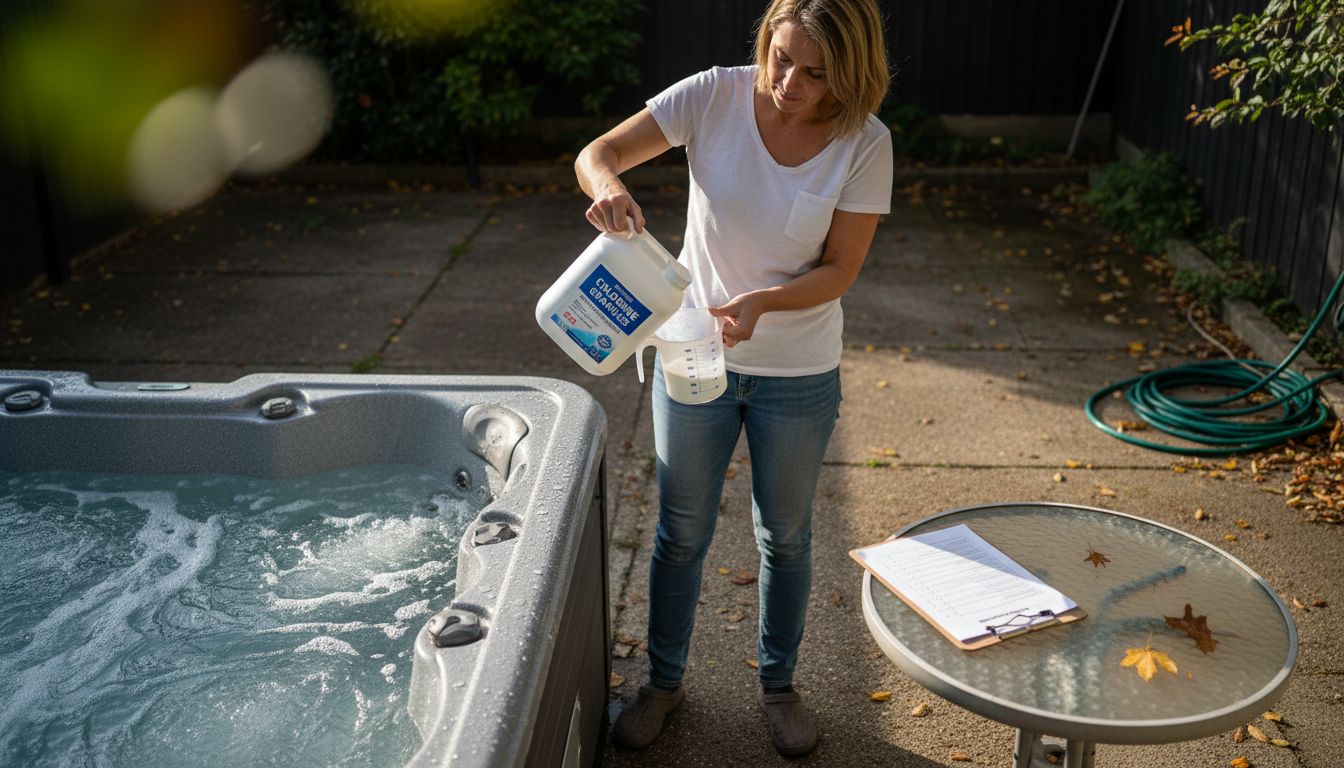
When adding chemicals, work methodically and systematically. Start by turning on your hot tub jets to help distribute the chemicals evenly throughout the water. Measure each chemical precisely using dedicated measuring spoons, and add them slowly while the jets are running. Pour chemicals near the water inlets to promote thorough mixing, and avoid adding multiple chemical products simultaneously to prevent potential adverse reactions.
Pro tip: Keep a dedicated log of your chemical additions and water test results to track your hot tub maintenance routine and identify any recurring patterns in water chemistry.
Step 4: Add chemicals safely to the hot tub
Adding chemicals to your hot tub requires careful attention to safety protocols and precise application techniques. Understanding the correct procedure will help you maintain water quality while protecting yourself from potential chemical hazards.
Always add chemicals to water rather than water to chemicals to prevent dangerous splashing and potential chemical reactions. Understanding hot tub chemical safety protocols is crucial for protecting your health and equipment. Wear protective gear including chemical resistant gloves and safety goggles before handling any spa chemicals. Ensure you are working in a well ventilated area with good lighting, and keep chemical containers sealed and stored in a cool dry location away from direct sunlight.
When introducing chemicals to your hot tub, pour them slowly and systematically near the water inlets with the jets running to promote even distribution. Measure each chemical precisely using dedicated measuring tools, and never mix different chemical products directly. Wait at least 20 minutes between adding different types of chemicals, and always run the circulation system to help integrate the treatment throughout the water volume. Allow the chemicals to circulate completely before entering the hot tub.
Pro tip: Keep a dedicated chemical safety station with protective equipment, measuring tools, and an emergency eyewash station nearby when handling hot tub chemicals.
Step 5: Verify chemical balance for safe soaking
Verifying your hot tub’s chemical balance is a critical step in ensuring a safe and comfortable soaking experience. Understanding how to accurately assess your water chemistry will help prevent potential health risks and protect your hot tub equipment.
Regularly testing and adjusting your hot tub’s chemical levels helps maintain a safe environment and prevents issues like skin irritation and equipment damage. Complete spa water balance requires understanding multiple chemical parameters including pH, total alkalinity, and sanitiser levels. Use your test strips to check these key indicators, comparing the colour changes against the reference chart provided with your testing kit. Ideal ranges typically include a pH between 7.2 and 7.6, total alkalinity between 80 and 120 parts per million, and sanitiser levels appropriate for your specific hot tub type.
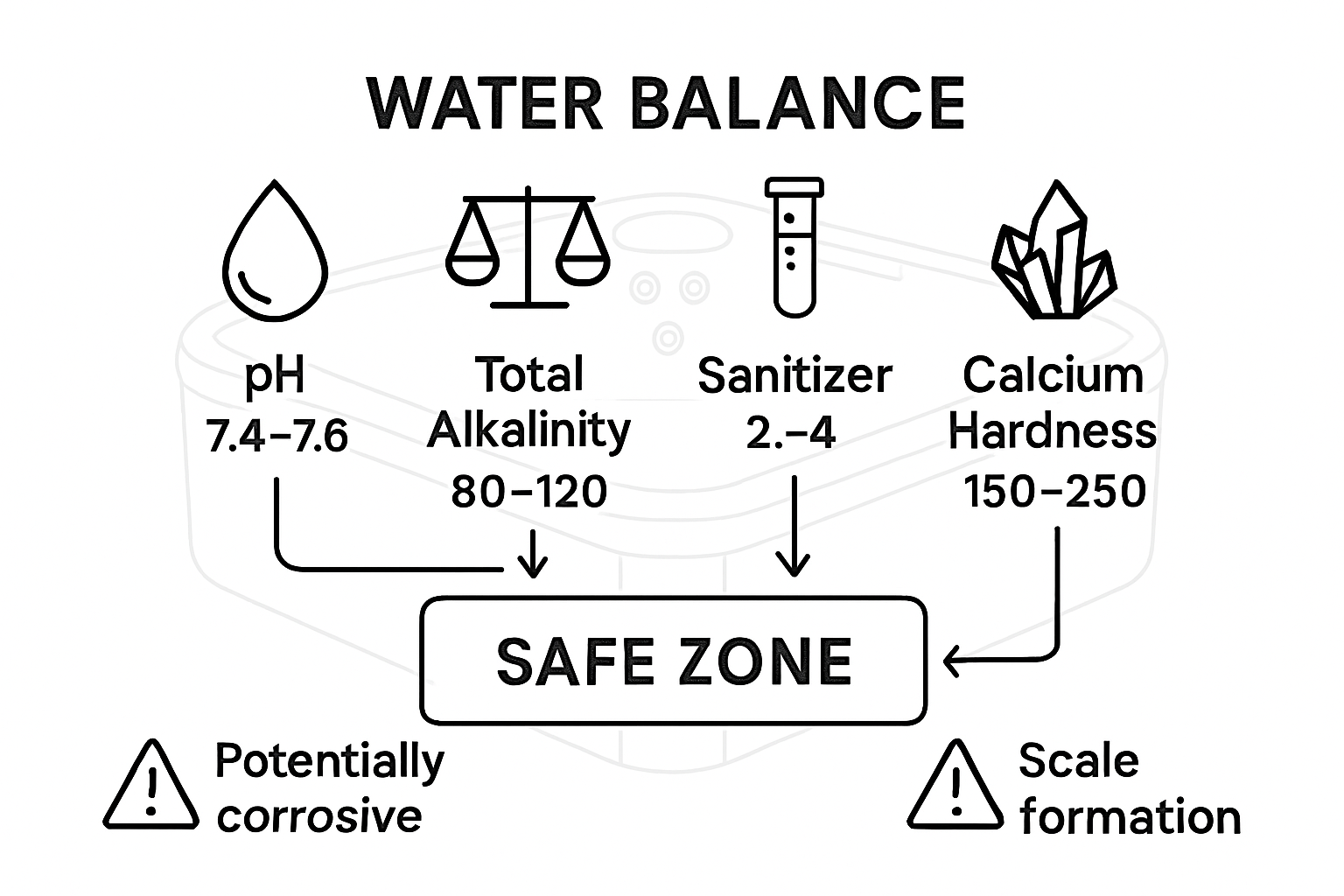
Here is a summary of key hot tub water parameters and their importance:
| Parameter | Ideal Range | Purpose | Effects if Incorrect |
|---|---|---|---|
| pH | 7.2 - 7.6 | Maintains comfort, protects equipment | Skin irritation, corrosion |
| Total Alkalinity | 80 - 120 ppm | Buffers pH fluctuations | Unstable pH, cloudiness |
| Sanitiser (Chlorine) | 3 - 5 ppm | Disinfects water | Poor hygiene, odour, algae |
| Calcium Hardness | 100 - 250 ppm | Prevents scale/corrosion | Scaling or equipment damage |
If your chemical readings fall outside recommended ranges, make incremental adjustments using appropriate chemical treatments. Add pH increasers or reducers carefully, following manufacturer instructions, and retest the water after each adjustment. Allow sufficient time for chemicals to circulate fully before retesting, and never enter the hot tub until chemical levels have stabilised and returned to safe parameters.
Pro tip: Create a water testing log to track your chemical levels over time, which can help you identify patterns and predict when adjustments might be needed.
Achieve Crystal Clear Water with Expert Chemical Solutions
Maintaining the perfect balance of hot tub chemicals can be challenging but is essential to avoid issues such as cloudy water, skin irritation, and damage to your hot tub equipment. This guide highlights the importance of precise chemical dosing, accurate water testing, and safe handling practices to ensure a safe and enjoyable soak every time. If you struggle with managing pH, total alkalinity, or sanitiser levels, ClearSpa offers expert solutions tailored to your needs.
Enhance your water management routine with ClearSpa’s premium range of tested and trusted hot tub chemicals and spa essentials. Our products are designed to simplify dosing calculations and promote even chemical distribution for optimal water quality. Visit ClearSpa today to explore products that make maintaining your hot tub easier and more reliable. Start now and ensure every soak is crystal clear and worry free by following the best water chemistry practices outlined in this Hot Tub Chemical Dosing Guide. Take control of your hot tub care with ClearSpa’s high quality solutions.
Frequently Asked Questions
How do I prepare my hot tub for chemical dosing?
To prepare your hot tub for chemical dosing, start by cleaning the shell and draining the existing water. Ensure to rinse the interior with a specialised spa cleaner before refilling it with fresh water up to the recommended level.
What is the best method to test my hot tub water?
The best method to test your hot tub water is to use a high-quality water testing kit that measures pH, total alkalinity, sanitiser concentration, and calcium hardness. Dip the test strip into the water at elbow depth and compare the colours with the reference chart provided in the kit.
How do I measure the right chemical dosage for my hot tub?
To measure the right chemical dosage, calculate the required quantities based on your hot tub size; for instance, a typical 4-person spa needs 1 to 2 teaspoons of chlorine daily. Use dedicated measuring tools for accuracy and add the chemicals while the jets are running to promote even distribution.
What safety precautions should I take when adding chemicals to my hot tub?
When adding chemicals to your hot tub, always pour them into water rather than the other way around to prevent splashing. Wear protective gloves and goggles, and ensure that the area is well-ventilated during the process.
How can I verify my hot tub’s chemical balance after dosing?
To verify your hot tub’s chemical balance, test the water regularly using your testing kit to check pH, total alkalinity, and sanitiser levels. Ensure that these parameters fall within the ideal ranges before using the hot tub for a safe soaking experience.
What should I do if my hot tub’s chemical levels are outside the ideal range?
If your hot tub’s chemical levels are outside the ideal range, make incremental adjustments using the appropriate chemical treatments. After each addition, retest the water to ensure stability and do not enter the hot tub until the levels have returned to safe parameters.