Chemical Dosing Rate: Complete Hot Tub Guide UK
Chemical dosing rate explained for UK hot tub owners - discover types, calculation methods, safety guidelines, and common dosing mistakes in this comprehensive guide.
Did you know that incorrect chemical dosing causes more than 40 percent of all hot tub maintenance issues? Getting the right balance of chemicals not only protects your spa equipment from damage but also keeps your water safe for every soak. Clear guidelines help you avoid hidden dangers, prevent costly repairs, and enjoy peace of mind while relaxing in clean, sparkling water.
Table of Contents
- What Is Chemical Dosing Rate? Key Principles
- Types Of Chemical Dosing Systems For Spas
- How To Calculate Dosing Rates Accurately
- Safety Guidelines And Legal Requirements UK
- Common Mistakes When Dosing Spa Chemicals
Key Takeaways
| Point | Details |
|---|---|
| Chemical Dosing Rates are Crucial | Maintaining the correct chemical dosing rate is vital for ensuring water quality and safety in hot tubs, preventing health risks and equipment damage. |
| Types of Dosing Systems | Various chemical dosing systems, including manual, floating dispensers, and automated solutions, offer different levels of control and convenience for hot tub owners. |
| Accurate Calculation is Essential | Accurate calculation of dosing rates requires knowledge of water volume, chemistry parameters, and appropriate chemical selection to maintain optimal conditions. |
| Avoid Common Mistakes | Common errors in chemical dosing, such as over-sanitising and neglecting water tests, can undermine safety and damage equipment, highlighting the need for education and diligence. |
What Is Chemical Dosing Rate? Key Principles
Chemical dosing rate represents the precise measurement of sanitising chemicals required to maintain water quality and safety in hot tubs. Chemical dosing is a critical process that ensures your spa water remains clean, balanced, and free from harmful microorganisms. According to hygiene4less, maintaining appropriate chemical dosing rates is essential to prevent potential damage to hot tub equipment while protecting user health.
The fundamental goal of chemical dosing is achieving a delicate balance between sanitisation and equipment preservation. Too little chemical treatment can result in bacterial proliferation, creating potential health risks. Conversely, over-sanitisation can cause significant damage to hot tub components, leading to expensive repairs and shortened equipment lifespan. This precision requires understanding several key factors:
- Water volume of the hot tub
- Frequency of use
- Number of users
- Environmental conditions
- Specific manufacturer recommendations
Understanding chemical dosing rates involves recognising that each hot tub is unique and requires a tailored approach. Professional spa maintenance professionals typically recommend regular water testing and incremental chemical adjustments. By monitoring pH levels, sanitiser concentration, and overall water chemistry, hot tub owners can maintain an optimal balance that protects both their equipment and the users’ wellbeing. Precision is paramount in this delicate chemical management process.
Types Of Chemical Dosing Systems For Spas
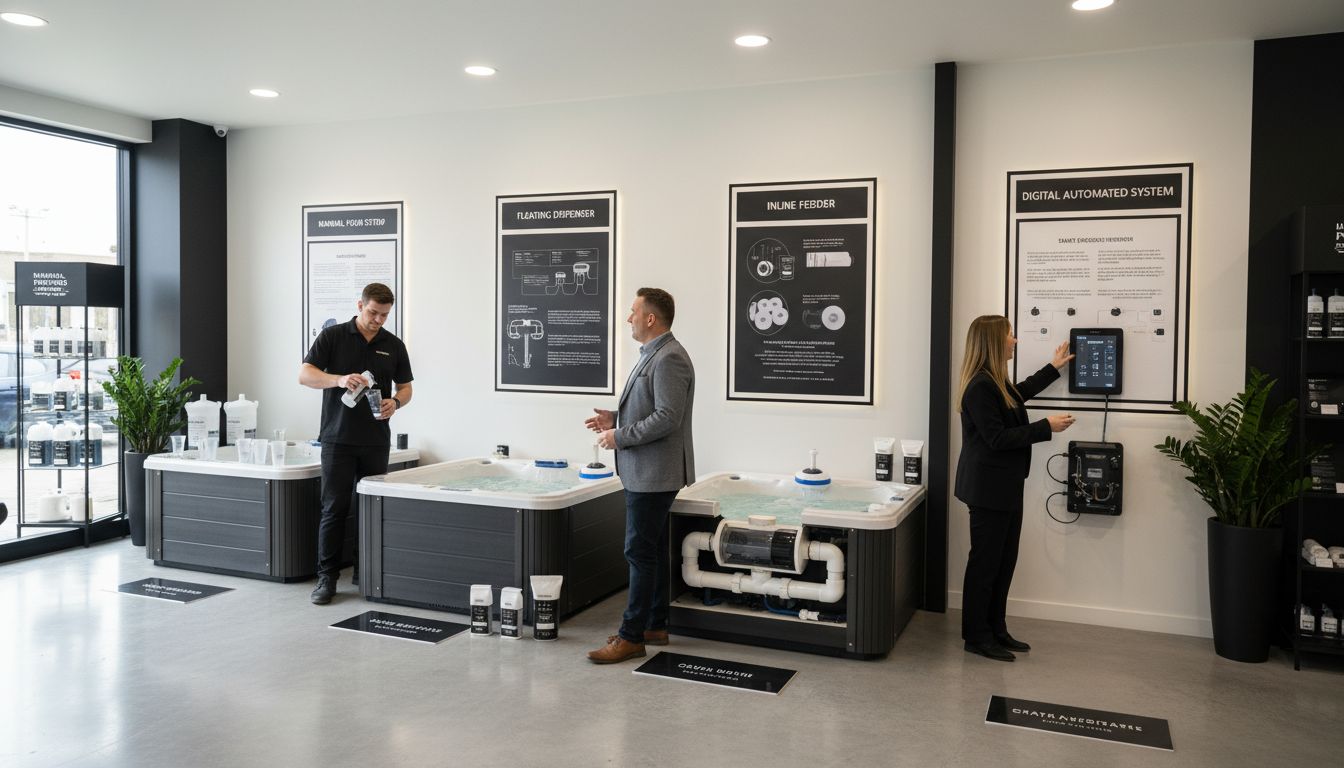
Hot tub owners have several chemical dosing systems available to maintain water quality and safety. These systems range from manual methods to sophisticated automated solutions, each designed to ensure precise chemical treatment. According to hydro-x, solid chemical dosing systems represent an innovative approach that offers compact and efficient water treatment with reduced storage requirements.
The primary types of chemical dosing systems include:
Here’s a comparison of common hot tub chemical dosing systems:
| Dosing System Type | How It Works | Advantages | Key Considerations |
|---|---|---|---|
| Manual Dosing | Owner adds chemicals directly to water | Simple Low cost |
Risk of inaccurate dosing |
| Floating Dispenser | Slowly releases chemicals as it floats in water | Easy to use Low maintenance |
Less control over dosing rate |
| Inline Feeder | Integrated with plumbing for controlled release | Consistent dosing Efficient |
Installation required |
| Solid Chemical System | Compact unit dissolves chemical blocks | Safe handling Space-saving |
Block type must match water needs |
| Digital Automated System | Sensors and pumps automate chemical adjustment | High precision Minimal effort |
Higher initial cost |
- Manual Dosing: Involves direct chemical addition by the hot tub owner
- Floating Chemical Dispensers: Passive systems that release chemicals gradually
- Inline Chemical Feeders: Integrated systems connected directly to hot tub plumbing
- Solid Chemical Dosing Systems: Compact units using dissolvable chemical blocks
- Digital Automated Dosing Systems: Advanced technology with precise chemical monitoring
Solid chemical dosing systems stand out as a particularly sophisticated option. These systems use specially designed chemical blocks that dissolve systematically, providing several significant advantages. They minimise health and safety risks associated with liquid chemical handling, require less storage space, and offer more controlled chemical release. For hot tub owners seeking a streamlined, efficient approach to water maintenance, explore our guide on spa chemicals to understand which system might best suit your specific needs.
Choosing the right chemical dosing system depends on multiple factors including hot tub size, frequency of use, and personal preference. Professional spa maintenance experts recommend evaluating your specific requirements, understanding each system’s pros and cons, and selecting a solution that provides consistent, reliable water treatment with minimal effort.
How To Calculate Dosing Rates Accurately
Accurately calculating chemical dosing rates is crucial for maintaining optimal hot tub water quality and safety. The process requires precise measurement and understanding of your specific spa’s characteristics. According to hygiene4less, calculating dosing rates involves determining your spa’s water volume and the desired chemical concentration, with specific guidelines for different sanitising agents.
The fundamental steps for calculating dosing rates include:
- Measure total water volume precisely
- Determine current water chemistry parameters
- Select appropriate sanitising chemical
- Calculate required chemical quantity
- Test and adjust incrementally
Taking chlorine as an example, hygiene4less indicates that 1.7g of NaDCC tablets will release 1 part per million (ppm) of chlorine in 1,000 litres of water. Similarly, poolmarket notes that bromine granules require maintaining pH levels between 7.2 and 7.6, with 2g of granules needed to increase bromine levels by 1mg/l in a 1,000-litre spa.
Professional spa maintenance experts recommend using digital testing strips and maintaining a consistent testing schedule. These tools help you track chemical levels accurately and make informed adjustments. For a more comprehensive understanding of water chemistry management, explore our spa chemicals guide to ensure you’re applying the most effective dosing strategies for your specific hot tub setup.
Safety Guidelines And Legal Requirements UK
Chemical safety in hot tubs is a critical concern with specific legal frameworks governing their use in the United Kingdom. The regulatory landscape ensures that hot tub owners understand their responsibilities in maintaining safe water conditions. According to hydrospas, the Health and Safety Executive’s HSG282 guidelines provide comprehensive standards for controlling risks in spa pools, with a strong emphasis on proper chemical management and user protection.
Key safety requirements for UK hot tub owners include:
- Maintaining correct disinfectant levels
- Conducting regular water quality testing
- Using approved chemical dosing systems
- Keeping detailed maintenance records
- Ensuring chemical storage meets safety regulations
- Implementing proper risk assessment procedures
The HSG282 guidelines specifically recommend automatic chemical dosing systems as a preferred method for maintaining consistent water quality. These systems help prevent human error and ensure more precise chemical management. Professional spa maintenance requires a systematic approach that goes beyond simple chemical addition, involving comprehensive understanding of water chemistry, potential contamination risks, and user health protection.
While legal requirements provide a framework, responsible hot tub ownership demands proactive safety measures. This means not just meeting minimum standards, but exceeding them through regular maintenance, professional water testing, and continuous education about proper chemical handling. Explore our spa chemicals guide to gain deeper insights into maintaining a safe and compliant hot tub environment that protects both equipment and users.
Common Mistakes When Dosing Spa Chemicals
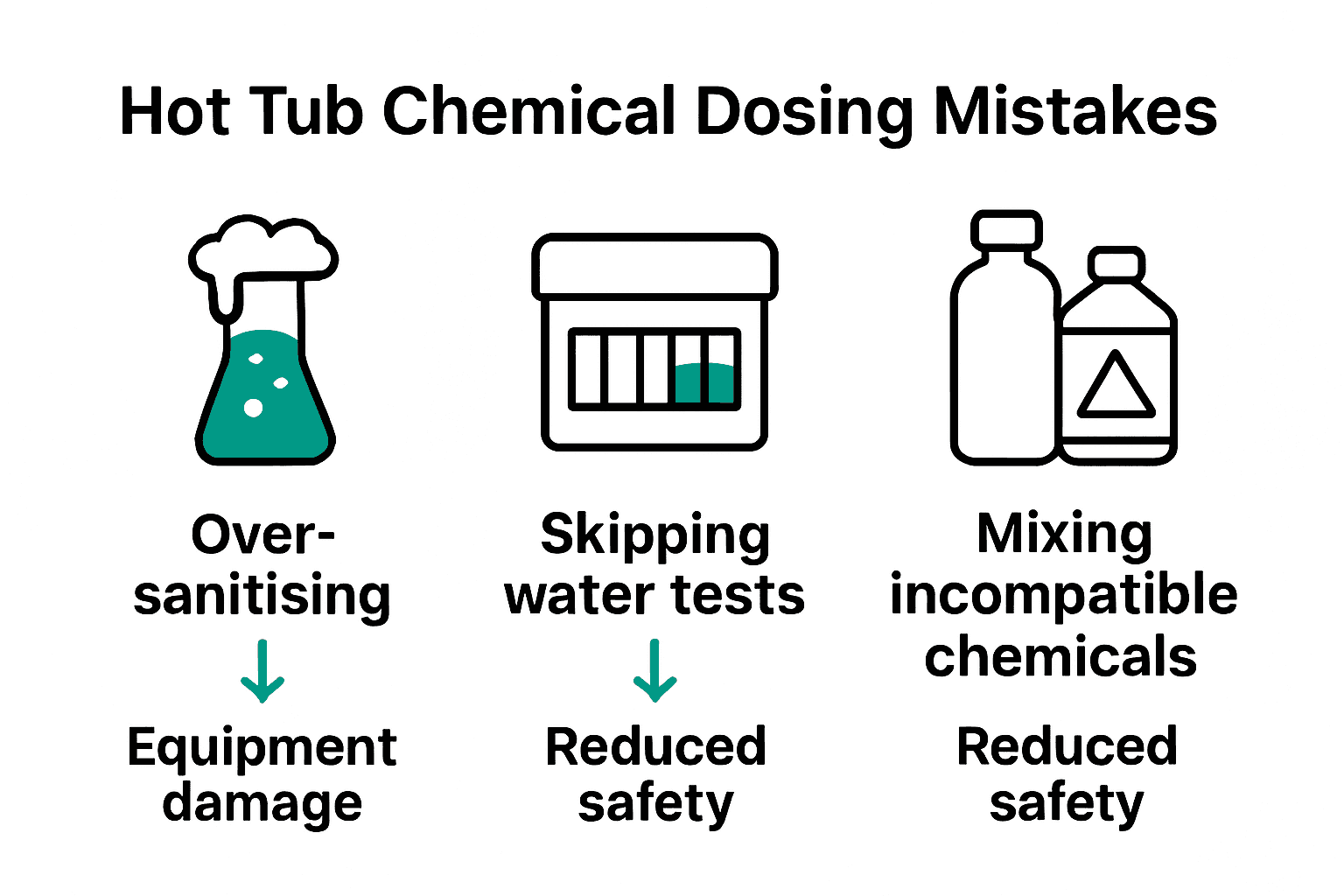
Managing chemical dosing in hot tubs requires precision and careful attention to detail. According to ukhottubs, many hot tub owners make critical errors that can compromise water quality and potentially damage expensive equipment. The most common mistakes often stem from a lack of understanding about proper chemical management and water chemistry.
Key mistakes hot tub owners frequently make include:
- Over-sanitising water
- Neglecting regular water testing
- Ignoring pH balance
- Using incorrect dosing methods
- Failing to clean chemical dispensers
- Mixing incompatible chemicals
- Not following manufacturer guidelines
As darlly highlights, using inappropriate chemical dosing systems can result in inadequate sanitation, potentially creating health risks. Over-sanitisation is particularly problematic, as ukhottubs notes that excessive chemicals can damage not just water quality, but also hot tub covers and internal components. Professional spa maintenance requires a nuanced approach that balances precise chemical levels with regular monitoring.
To avoid these pitfalls, consistent education and careful attention are crucial. Learn more about maintaining safe spa water in our expert maintenance guide, which provides comprehensive insights into preventing common chemical dosing errors and ensuring your hot tub remains a safe, enjoyable environment.
Take Control of Your Hot Tub Water Quality with ClearSpa
Maintaining the precise chemical dosing rate in your hot tub can feel like a daunting challenge. Ensuring the right balance to keep your spa water safe and your equipment protected is essential to enjoying your relaxation time without worry. Common issues such as over-sanitising, inaccurate dosing, and improper chemical handling can cause frustration and may even damage your hot tub. At ClearSpa, we understand these challenges and offer a wide range of carefully tested hot tub chemicals and water treatment solutions designed to simplify your maintenance routine and protect your investment.
Discover how our premium products and expert advice can help you master water chemistry with confidence. Don’t wait for costly repairs or compromised health risks. Visit ClearSpa today to explore our complete selection of spa essentials. For a deeper understanding of chemical management and safety, check out our spa chemicals guide and expert maintenance tips. Take the first step toward perfect water balance and enjoy your hot tub worry-free now.
Frequently Asked Questions
What is the chemical dosing rate for hot tubs?
Chemical dosing rate is the specific measurement of sanitizing chemicals required to maintain water quality and safety in hot tubs, ensuring a balance between sanitation and equipment preservation.
How do I calculate the chemical dosing rates for my hot tub?
To calculate chemical dosing rates, measure the total water volume, determine current water chemistry parameters, select the appropriate sanitizer, calculate the required chemical quantity, and test and adjust incrementally.
What are the different types of chemical dosing systems available for hot tubs?
Hot tub owners can choose from several dosing systems: manual dosing, floating dispensers, inline feeders, solid chemical systems, and digital automated systems. Each has its own advantages and considerations.
What common mistakes should I avoid when dosing spa chemicals?
Common mistakes include over-sanitizing, neglecting regular water testing, ignoring pH balance, using incorrect dosing methods, failing to clean chemical dispensers, mixing incompatible chemicals, and not following manufacturer guidelines.