Understanding Hot Tub Chemical Safety Tips for Users
Explore hot tub chemical safety tips for safe enjoyment. Understand why safety matters and how to properly manage chemicals in your hot tub.
Hot tub chemicals might seem like just another household chore, but the story runs much deeper. Believe it or not, the average spa holds less than 1,500 litres of water yet requires monitoring of up to four different chemicals daily. Most people worry about dirt or leaves in their hot tubs, but what can really ruin both your health and your equipment is something you can’t even see. Understanding how these chemicals work and interact is the hidden key to a safe and relaxing soak every time.
Table of Contents
- What Are Hot Tub Chemicals And Their Roles?
- Why Hot Tub Chemical Safety Is Important
- How Hot Tub Chemicals Interact With Water
- Key Safety Measures For Hot Tub Chemical Use
- Understanding Chemical Balancing And Testing
Quick Summary
| Takeaway | Explanation |
|---|---|
| Regular testing is essential. | Daily and weekly checks prevent chemical imbalances and ensure safety in hot tub water. |
| Understand chemical roles. | Know the functions of sanitisers, pH balancers, and shock treatments to maintain water quality. |
| Use personal protective equipment. | Always wear gloves and goggles when handling hot tub chemicals to prevent health risks. |
| Store chemicals safely. | Keep chemicals in their original containers in a secure, cool, and dry location to avoid hazards. |
| Maintain balanced water parameters. | Ideal pH (7.2-7.6) and alkalinity (80-120 ppm) promote safety and protect equipment. |
What are Hot Tub Chemicals and Their Roles?
Hot tub chemicals are specialised compounds designed to maintain water quality, hygiene, and safety in spa and hot tub environments. Unlike standard swimming pool treatments, hot tub chemicals must address unique challenges presented by smaller water volumes, higher temperatures, and more concentrated bather interactions.
Understanding Chemical Composition
Chemical treatments for hot tubs primarily serve three critical functions: sanitisation, water balance, and prevention of potential microbial growth. These chemicals work together to create a safe, comfortable bathing experience while protecting both the equipment and the users.
Key chemical categories include:
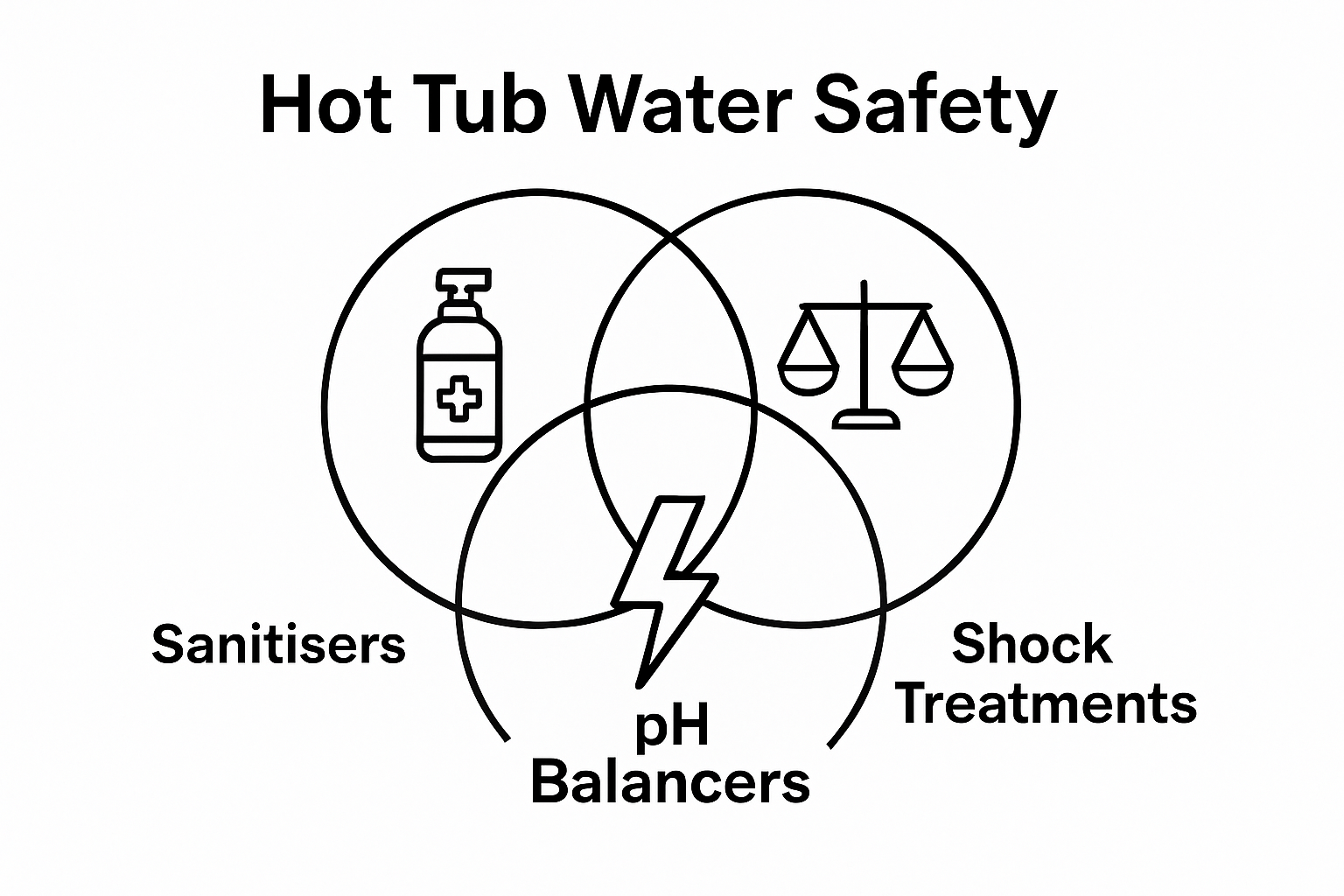
- Sanitisers: Eliminate harmful bacteria and microorganisms
- pH Balancers: Control water acidity and alkalinity
- Shock Treatments: Oxidise contaminants and restore water clarity
Water Chemistry Management
Proper water chemistry is fundamental to hot tub maintenance. According to the Health and Safety Executive, maintaining appropriate chemical levels prevents the growth of dangerous pathogens like Legionella bacteria. This requires regular testing and precise chemical adjustments to ensure water remains safe and comfortable.
The chemical interactions in a hot tub are complex. Chlorine and bromine serve as primary sanitisers, destroying bacteria and preventing algae growth. pH balancers like sodium bicarbonate and sodium carbonate help stabilise water conditions, preventing equipment corrosion and ensuring user comfort.
Understanding the role of each chemical allows hot tub owners to create a balanced, hygienic environment that protects both the equipment and the individuals enjoying the spa experience.
Below is a table outlining the primary categories of hot tub chemicals, their main functions, and typical examples to help users quickly understand their roles.
| Category | Main Function | Example Chemicals |
|---|---|---|
| Sanitisers | Eliminate bacteria and microorganisms | Chlorine, Bromine |
| pH Balancers | Control acidity and alkalinity | Sodium bicarbonate, Sodium carbonate |
| Shock Treatments | Oxidise contaminants and restore clarity | Chlorine shock, Non-chlorine shock |
| Water Conditioners | Prevent scale and corrosion, soften water | Calcium hardness increaser, Metal remover |
| Algaecides | Inhibit and control algae growth | Quaternary ammonium compounds |
Why Hot Tub Chemical Safety is Important
Hot tub chemical safety extends far beyond routine maintenance. It represents a critical aspect of user health, equipment preservation, and overall spa experience quality. Improper chemical management can transform what should be a relaxing environment into a potential health hazard.
Health Risks and Potential Consequences
Unsafe chemical practices can lead to significant health complications. According to the Centers for Disease Control and Prevention, inadequate chemical management increases risks of contracting serious illnesses. Potential health threats include:
- Respiratory infections triggered by bacterial exposure
- Skin irritations and allergic reactions
- Gastrointestinal disorders from waterborne pathogens
- Potential chemical burns or respiratory complications
Chemical Interaction and User Safety
Chemical interactions within hot tubs are complex and potentially dangerous. Incorrect chemical concentrations can create harmful compounds that pose immediate and long-term health risks. Specific dangers arise from:
- Chlorine and bromine interactions producing toxic fumes
- Unbalanced pH levels causing skin and eye irritations
- Improper shock treatment leading to chemical instability
Beyond human health, inappropriate chemical management damages expensive hot tub equipment. Corrosion, mineral buildup, and accelerated wear can result from chemical imbalances, potentially rendering costly spa installations unusable within a short timeframe.
Ultimately, understanding and implementing proper hot tub chemical safety protocols protects users, preserves equipment investment, and ensures a consistently enjoyable spa experience. Responsible chemical management requires ongoing education, regular testing, and a commitment to maintaining precise water chemistry standards.
How Hot Tub Chemicals Interact with Water
Chemical interactions in hot tubs represent a complex ecosystem of precise balances and reactive processes. These interactions determine water quality, user safety, and overall hot tub performance, making understanding their fundamental mechanisms crucial for responsible maintenance.
Chemical Equilibrium Dynamics
Water serves as a dynamic medium where chemical compounds continuously engage in intricate reactions. Temperature plays a significant role in accelerating these interactions, with hot tub environments creating unique conditions that amplify chemical transformations. According to Devon and Somerset Trading Standards Service, proper water chemistry management requires understanding these nuanced interactions.
Key chemical interaction processes include:
- Neutralisation of acidic and alkaline compounds
- Oxidation of organic contaminants
- Mineral ion exchange and precipitation
- Bacterial inhibition through chemical barriers
Sanitisation and Water Protection Mechanisms
Chlorine and bromine act as primary defensive agents in hot tub water chemistry. These chemicals undergo complex transformations when introduced to water, breaking down into active compounds that target and neutralise microorganisms. Their effectiveness depends on multiple factors:
- Water pH levels
- Total dissolved solids
- Water temperature
- Presence of organic matter
The chemical breakdown process involves converting these sanitisers into hypochlorous acid and hypobromous acid, which directly attack bacterial cell structures. This mechanism ensures continuous water purification and prevents pathogen growth.
Understanding these intricate chemical interactions allows hot tub owners to maintain a safe, balanced aquatic environment. Precise chemical management transforms water from a potential breeding ground for harmful microorganisms into a clean, enjoyable recreational space.
Key Safety Measures for Hot Tub Chemical Use
Ensuring safety when handling hot tub chemicals requires a comprehensive approach that addresses storage, application, personal protection, and environmental considerations. Chemical management is not merely about maintaining water quality, but protecting human health and preventing potential hazardous interactions.
Chemical Storage and Handling Protocols
Proper chemical storage is fundamental to preventing accidents and maintaining product efficacy. According to the Health and Safety Executive, critical safety measures include:
- Storing chemicals in original, clearly labelled containers
- Keeping chemicals in cool, dry environments away from direct sunlight
- Segregating incompatible chemical types to prevent accidental reactions
- Using secure, locked storage areas inaccessible to children and pets
Chemical containers must remain tightly sealed and stored at consistent temperatures. Exposure to extreme heat, cold, or moisture can compromise chemical stability and potentially create dangerous compounds.
Personal Protection and Handling Guidelines
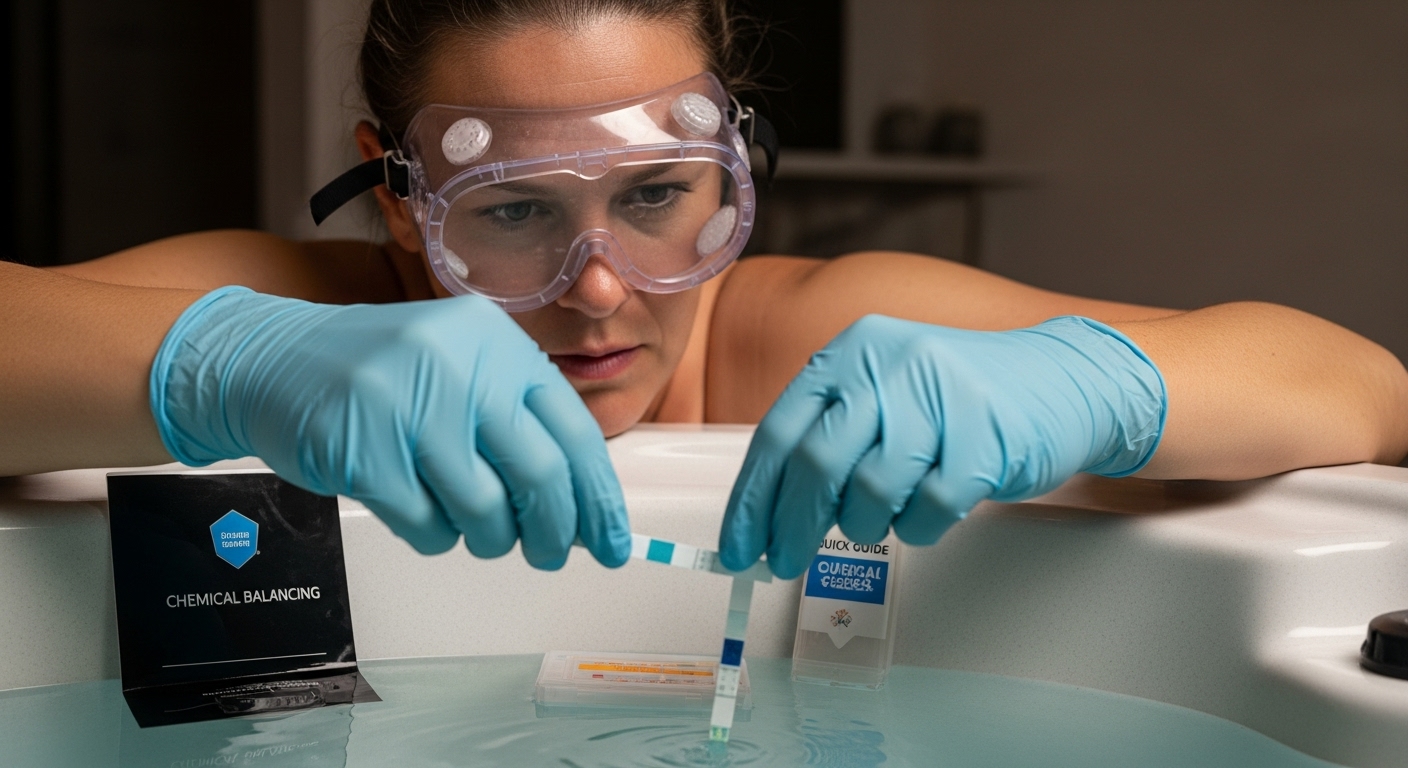
Personal safety during chemical interactions is paramount. Protective equipment is non-negotiable when managing hot tub chemicals. Essential protective gear includes:
- Chemical-resistant gloves
- Safety goggles or face shields
- Protective clothing that covers exposed skin
- Respiratory protection when handling powdered or granular chemicals
Additionally, users should always add chemicals to water, never water to chemicals, to prevent potentially violent chemical reactions. Mixing different chemical products can release toxic fumes or create unpredictable interactions that compromise user safety.
By implementing rigorous safety protocols, hot tub owners can transform chemical management from a potential risk into a controlled, safe process.
The following table compares the core safety protocols for hot tub chemical storage and personal handling, allowing users to quickly distinguish between required measures for each aspect.
| Safety Aspect | Key Protocols |
|---|---|
| Chemical Storage | Store in original, clearly labelled containers; keep in cool, dry, locked areas inaccessible to children and pets; segregate incompatible chemicals |
| Handling Procedures | Always add chemicals to water (never vice versa); do not mix different chemical products; follow manufacturer instructions strictly |
| Personal Protective Equipment | Wear chemical-resistant gloves, safety goggles, protective clothing, and respiratory protection when dealing with powdered chemicals |
| Understanding and respecting chemical properties ensures a safe, enjoyable hot tub experience for all users. |
Understanding Chemical Balancing and Testing
Chemical balancing in hot tubs represents a sophisticated process of precise measurement, adjustment, and ongoing monitoring. This intricate system ensures water remains safe, clean, and comfortable for users while protecting expensive hot tub equipment from potential damage.
Fundamental Chemical Parameters
Water chemistry is a delicate ecosystem requiring careful management of multiple interconnected variables. According to the Trading Standards Service, critical chemical parameters include:
- pH levels (ideal range between 7.2 and 7.6)
- Total alkalinity (80-120 parts per million)
- Sanitiser concentrations
- Calcium hardness levels
These parameters interact dynamically, with changes in one potentially triggering cascading effects across the entire water system. Regular testing allows hot tub owners to detect and correct minor imbalances before they escalate into significant problems.
Testing Methodologies and Frequency
Comprehensive water testing involves multiple approaches. Hot tub owners should employ both digital testing devices and traditional chemical test strips to cross-verify results. Recommended testing frequencies include:
- Daily testing of basic parameters like pH and sanitiser levels
- Weekly comprehensive chemical analysis
- Monthly professional water quality assessments
Modern digital testing kits provide rapid, precise measurements, enabling immediate corrective actions. These tools can detect minute chemical variations that traditional methods might miss, offering a more nuanced understanding of water chemistry.
Maintaining balanced hot tub water is not merely a technical requirement but a critical aspect of user safety and equipment longevity. By understanding and implementing rigorous testing protocols, hot tub owners can create a consistently safe and enjoyable aquatic environment.
Protect Your Hot Tub Experience with ClearSpa Solutions
Struggling to maintain safe and healthy water in your hot tub can feel overwhelming, especially when the smallest mistake in chemical handling leads to skin irritations or even equipment damage. If you find balancing sanitisation, pH levels, and shock treatments confusing, you are not alone. Many hot tub owners worry about waterborne illnesses and want to ensure every dip is relaxing and risk-free. ClearSpa understands your concerns. Our products are carefully developed and tested to address the exact chemical safety challenges outlined in your hot tub routine. With our expertly crafted water treatments, you can protect both your family and your investment. Discover how the right balance unlocks a worry-free, refreshing soak every time by visiting ClearSpa’s main site.
Ready to create a safer, more enjoyable hot tub experience right now? Browse our trusted hot tub chemicals to find exactly what you need for precise chemical balancing and dependable sanitisation. Do not leave your water quality or health to chance. Choose ClearSpa today and enjoy peace of mind with every soak.
Frequently Asked Questions
What are the main roles of hot tub chemicals?
Hot tub chemicals serve three critical functions: sanitisation to eliminate harmful bacteria, water balance to control acidity and alkalinity, and shock treatments to oxidise contaminants and restore water clarity.
Why is understanding hot tub chemical safety important?
Understanding hot tub chemical safety is essential to prevent health risks such as respiratory infections, skin irritations, and gastrointestinal disorders. Proper chemical management also protects expensive equipment and ensures a safe, enjoyable spa experience.
How can I maintain proper chemical levels in my hot tub?
To maintain proper chemical levels, regularly test water parameters, such as pH, total alkalinity, and sanitiser concentrations. Implement daily testing for basic parameters and conduct comprehensive weekly assessments. Use both digital testing devices and traditional test strips for accuracy.
What protective equipment should I use when handling hot tub chemicals?
When handling hot tub chemicals, it is crucial to wear protective equipment such as chemical-resistant gloves, safety goggles, protective clothing, and respiratory protection when dealing with powdered or granular chemicals.