Chlorine Demand: Optimising Hot Tub Water Balance
Chlorine demand explained for hot tub owners - understand causes, how to measure, and tackle common mistakes to maintain crystal-clear spa water.
Struggling to keep your spa water clean despite regular chlorine checks? For British hot tub owners, understanding chlorine demand is the secret to taking the guesswork out of water care. Factors like bather load, sweat, and weather mean your water devours disinfectant at a unique rate, influencing how much chlorine is truly needed. This guide breaks down how chlorine demand works, why it matters, and what you can do to keep your tub fresh, safe, and free from chemical overload.
Table of Contents
- Chlorine Demand Defined For Hot Tubs
- Why It Matters For Your Hot Tub
- How To Spot High Chlorine Demand
- The Difference Between Chlorine Demand And Residual Chlorine
- Common Causes Of High Chlorine Demand
- Measuring And Controlling Chlorine Levels
- Mistakes To Avoid When Managing Demand
Key Takeaways
| Point | Details |
|---|---|
| Understanding Chlorine Demand | Chlorine demand indicates the amount of chlorine needed to keep hot tub water safe, influenced by factors like bather load and organic contaminants. |
| Importance of Regular Testing | Frequent testing of chlorine levels helps identify demand patterns, ensuring proper sanitation and preventing chemical overdosing. |
| Managing Chemical Imbalances | Maintaining balanced pH and alkalinity is crucial for chlorine efficiency; imbalances can raise chlorine demand significantly. |
| Addressing Root Causes | Investigating sudden spikes in chlorine demand is essential; look for issues like dirty filters or high organic matter rather than just increasing chlorine levels. |
Chlorine Demand Defined for Hot Tubs
Chlorine demand is the amount of chlorine your hot tub water actually needs to stay safe and balanced. Think of it as your water’s appetite for disinfectant. The higher the demand, the more chlorine you’ll need to add.
When you test your water, you’re measuring free chlorine - the chlorine available to kill bacteria and viruses. But free chlorine in hot tubs gets consumed constantly by organic matter, sunlight, and bather use.
This consumption is chlorine demand in action.
Why It Matters for Your Hot Tub
Chlorine demand varies significantly based on what’s happening in your water. Understanding these variations helps you maintain consistent sanitisation without guessing or overdosing chemicals.
Key factors that drive chlorine demand include:
- Bather load: More people using your tub means more organic matter entering the water
- Organic contaminants: Sweat, sunscreen, and body oils consume chlorine rapidly
- Sunlight exposure: UV rays break down chlorine molecules, increasing demand
- Temperature: Warmer water accelerates chlorine breakdown
- pH levels: Unbalanced pH reduces chlorine’s effectiveness, raising demand
- Water age: Older water accumulates compounds that consume chlorine
High chlorine demand means your water is actively consuming disinfectant - this is normal and expected in a regularly used hot tub.
Your goal is matching chlorine additions to your specific demand rate. Add too little, and bacteria survive. Add too much, and you create uncomfortable chlorine smells and eye irritation.
How to Spot High Chlorine Demand
If chlorine levels drop quickly between tests, your water has high demand. You might notice this pattern:
- Test water, chlorine reads at proper level
- Wait 24 hours
- Retest, chlorine has dropped significantly
This rapid drop tells you something is consuming chlorine faster than normal. It’s not a failure - it’s your water telling you what it needs.
Common causes include heavy use, recent heavy rain, or accumulated organic matter needing oxidation.
The Difference Between Chlorine Demand and Residual Chlorine
Residual chlorine is what remains after demand is satisfied. It’s the protective cushion keeping your water safe between additions.
Chlorine demand is the total amount needed to reach that safe residual level.
When you add chlorine, some immediately gets used (demand), and the rest stays behind (residual).
To better understand chlorine demand, here’s how residual chlorine and chlorine demand differ for hot tubs:
| Concept | How It Works | Role in Water Safety |
|---|---|---|
| Chlorine Demand | Chlorine used up by contaminants | Determines how much sanitiser to add |
| Residual Chlorine | Chlorine remaining after demand is met | Maintains ongoing protection between doses |
Understanding this distinction prevents under-treatment. Many hot tub owners test only for residual levels and assume their water is fine - but if demand suddenly increased, that residual disappears quickly.
Pro tip: Test your chlorine levels at the same time each day to spot demand patterns. If levels consistently drop by a certain amount daily, you’ve identified your average demand rate and can adjust dosing accordingly.
Common Causes of High Chlorine Demand
High chlorine demand doesn’t appear out of nowhere. Something specific is triggering your water to consume disinfectant faster than normal. Identifying the cause helps you address the root problem rather than just adding more chemicals.
Most causes fall into predictable categories. Once you recognise them, you’ll stop being surprised by sudden demand spikes.
Organic Matter Overload
Bather load is the primary driver of chlorine demand. More bodies in the water means more sweat, body oils, and skin cells being introduced constantly.
Organisms and organic compounds consume chlorine rapidly when they contact the water. Think of it as your chlorine fighting off contaminants one molecule at a time.
Other organic sources include:
- Sunscreen and cosmetics from swimmers
- Leaves, grass, and debris falling in
- Dead algae cells and bacterial matter
- Ammonia compounds from urine
- Food and drink spills
When you host a hot tub party, demand increases dramatically. A single heavy-use day can consume twice the normal chlorine amount.
Organic matter is the single largest consumer of chlorine in residential hot tubs - addressing bather hygiene habits reduces demand significantly.
Environmental Factors
Sunlight exposure breaks down chlorine molecules continuously. Direct UV rays destroy chlorine faster than nearly any other cause, which is why outdoor hot tubs struggle more than covered ones.
Water temperature accelerates chlorine breakdown. Hotter water causes chemical reactions to happen faster, increasing demand by roughly 50% for every 10 degrees Celsius increase.
Wind and rain also affect demand. Heavy rainfall dilutes chlorine concentrations, whilst splashing increases surface area exposed to UV damage.
Chemical Imbalances
Unbalanced water chemistry itself drives higher chlorine demand. When chlorine for spas operates in suboptimal conditions, it becomes less efficient.
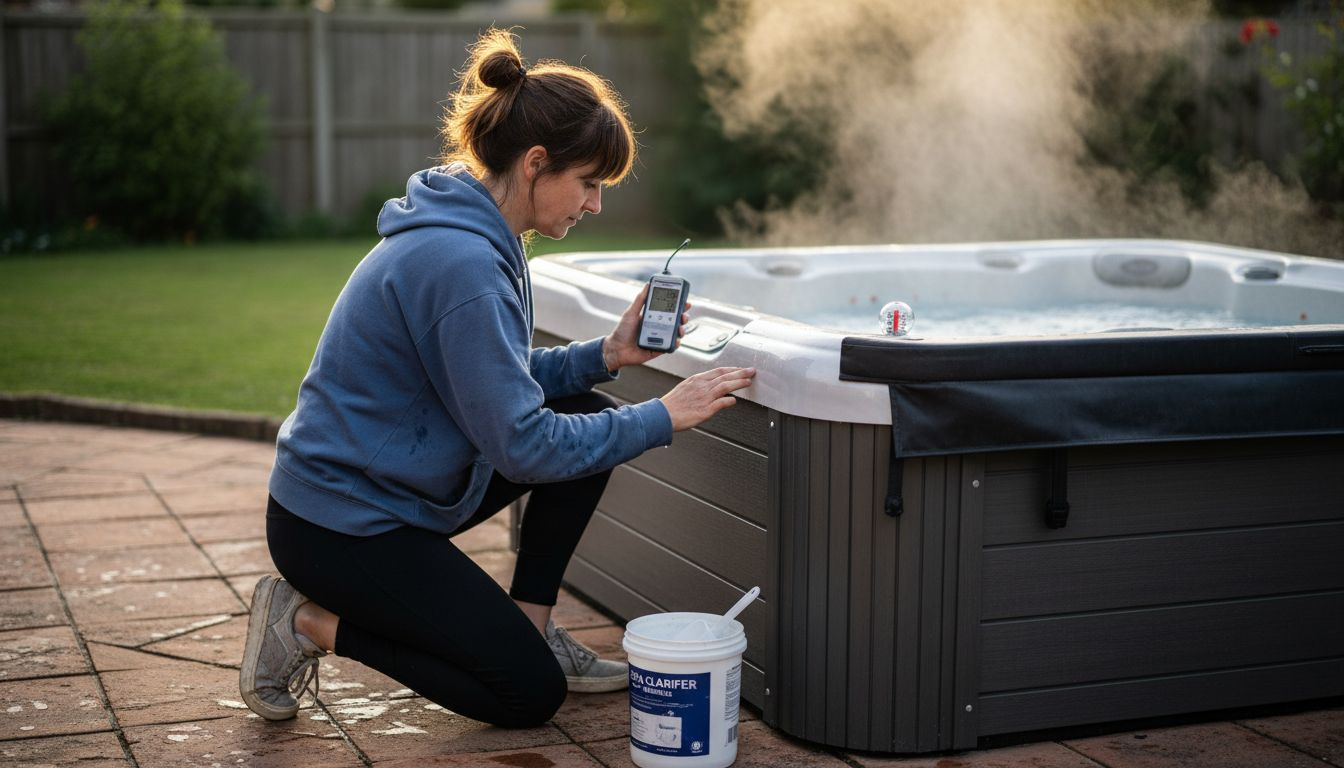
High pH reduces chlorine’s killing power dramatically. At pH 8.0, chlorine is only half as effective as at pH 7.2. Your water compensates by demanding more chlorine to achieve the same sanitisation level.
Low alkalinity causes pH swings that destabilise chlorine. Your water keeps demanding more chlorine as it fights to maintain balance.
Accumulated chloramines - spent chlorine that’s bonded to organic matter - indicate rising demand. These compounds smell like chlorine but don’t sanitise effectively.
System and Equipment Issues
A malfunctioning heater running continuously increases water temperature, which accelerates chlorine breakdown.
Poor filtration allows particles and organic matter to accumulate. The more debris in your water, the higher the demand.
Leaking jets or damaged seals introduce algae and bacteria that weren’t properly filtered.
Pro tip: Check your water pH and alkalinity first when you notice rising chlorine demand - correcting these parameters often reduces demand by 30 to 40 percent without adding more chlorine.
Measuring and Controlling Chlorine Levels
Accurate measurement is where water chemistry stops being guesswork. You need to know your actual chlorine levels, not assume they’re fine based on how the water looks or smells.
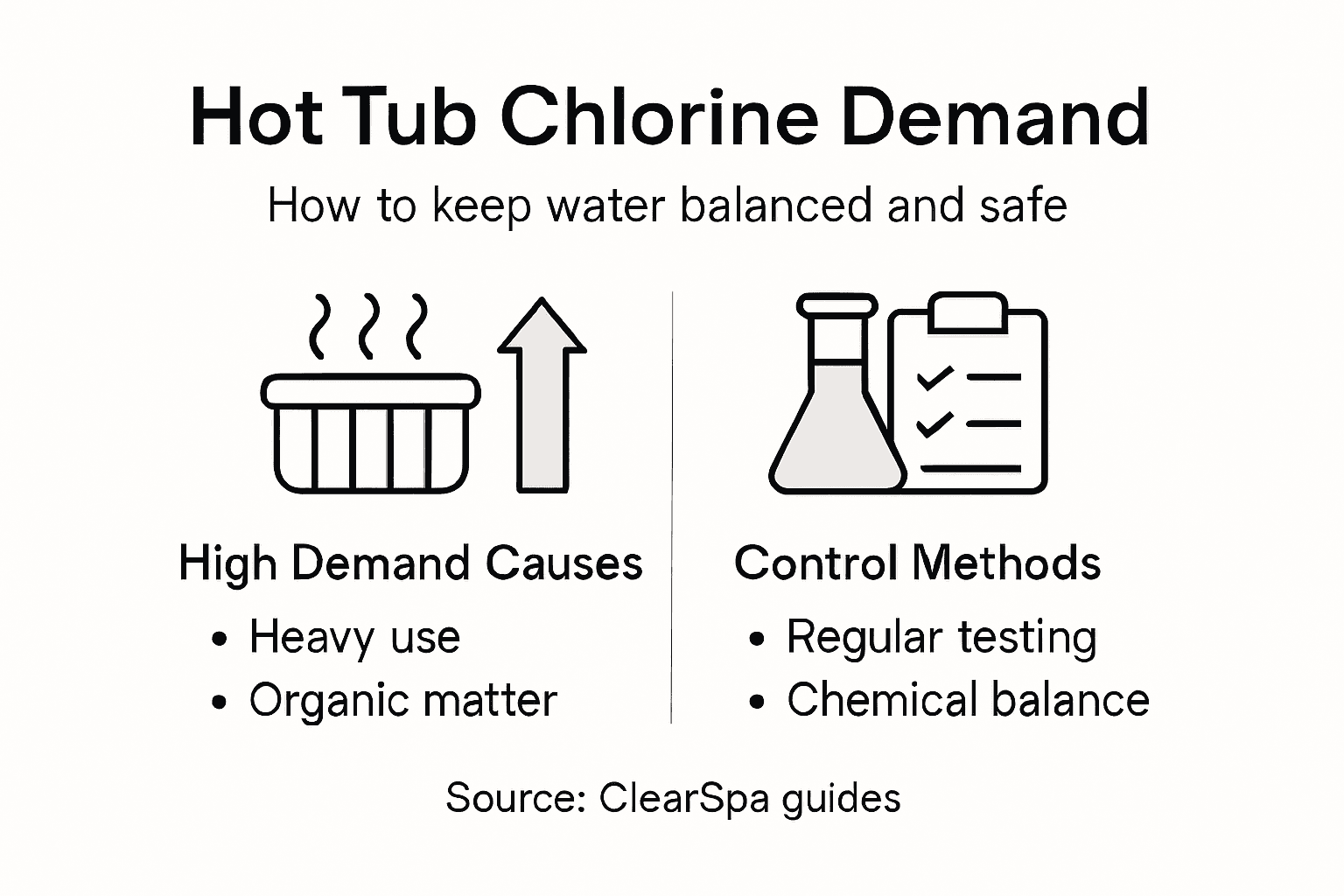
Testing regularly reveals your chlorine demand pattern. Over time, you’ll spot trends - like demand spiking every weekend or dropping after heavy rain.
Testing Methods Available
You have three main ways to measure chlorine levels. Each offers different accuracy levels and timeframes.
Test strips are the quickest option. Dip a strip in your water, wait 15 seconds, and compare the colour to a chart. They’re convenient but less precise than other methods, with accuracy typically within 0.5 ppm.
Digital test kits use liquid reagents to produce colour changes. You add drops to water samples and compare results. These are more accurate than strips, typically within 0.2 ppm.
Electronic testers provide instant digital readings. They’re the most expensive option but offer maximum accuracy and require no waiting time.
Here’s a quick reference for common chlorine testing methods and their advantages:
| Method | Accuracy Level | Time Required | Typical Use Case |
|---|---|---|---|
| Test Strips | ±0.5 ppm | 15 seconds | Rapid routine checks |
| Digital Test Kits | ±0.2 ppm | 2 minutes | Detailed weekly assessment |
| Electronic Testers | ±0.1 ppm | Instant | Precise, frequent monitoring |
Regular testing is the only way to match your chlorine additions to actual demand - guessing leads to either under-sanitisation or chemical overload.
How Often to Test
Frequency depends on usage and your chlorine demand pattern. Most hot tub owners should test at least twice weekly.
Increase testing frequency during:
- Heavy use periods
- Hot weather (higher UV exposure)
- After heavy rainfall
- When you notice demand changes
- During your first month of ownership
Consistent testing times - morning or evening - help you spot demand trends reliably.
Adjusting Chlorine Doses
Once you know your levels, the next step is adding chlorine safely in the right amounts.
Target range for hot tubs sits between 2.0 and 4.0 ppm (parts per million). Most UK manufacturers recommend 3.0 ppm as the ideal maintenance level.
If your test shows 1.5 ppm, you need to increase. If it shows 5.0 ppm, reduce or pause chlorine additions.
Small adjustments work better than large ones. Add chlorine gradually, wait 20 minutes, then retest rather than dumping large quantities.
Your chlorine demand rate tells you how much to add regularly. If your level drops 1.0 ppm daily, add enough daily to restore that amount.
Pro tip: Keep a simple logbook of your test results and chlorine additions - after four weeks of data, you’ll know your exact demand pattern and can automate your dosing schedule.
Mistakes to Avoid When Managing Demand
Many hot tub owners unknowingly create problems whilst trying to manage chlorine demand. These mistakes range from minor inefficiencies to genuinely dangerous practices.
Learning what not to do saves money, time, and prevents water chemistry disasters.
Ignoring Test Results
The biggest mistake is not testing at all. Some owners add chlorine on a fixed schedule regardless of actual levels, treating their hot tub like clockwork.
This approach fails because demand varies constantly. You might be overdosing one week and under-dosing the next.
Others test occasionally but ignore the results. You can’t manage what you don’t measure. Skipping tests means you’re flying blind.
Relying on appearance or smell to judge chlorine levels is unreliable - water can look clear whilst being either over or under-treated.
Over-Correcting in One Addition
When tests show low chlorine, temptation strikes: add lots of chlorine now to solve the problem quickly. This backfires spectacularly.
Adding excessive chlorine in one dose creates uncomfortable levels. Your water becomes harsh, your eyes sting, and the smell overwhelms.
Worse, you then have to wait hours for levels to drop naturally before the hot tub becomes usable again.
Small, frequent additions work far better than large, infrequent ones. Add half of what you think you need, wait 20 minutes, retest, then adjust.
Neglecting pH and Alkalinity
Managing chlorine demand whilst ignoring pH is like trying to steer with a broken wheel. Imbalanced chemistry makes chlorine far less effective.
Many owners focus only on chlorine numbers, assuming that’s enough. But managing hot tub chlorine levels requires balanced pH and alkalinity working together.
High pH causes chlorine to lose potency. Low alkalinity causes pH to swing wildly. Both situations drive up apparent chlorine demand because your chlorine isn’t working efficiently.
Fix chemistry first, then evaluate chlorine needs.
Using Expired or Degraded Chemicals
Chlorine degrades over time, especially in heat or sunlight. Old chlorine bottles sitting in your garage lose strength gradually.
Using weak chlorine means adding more to achieve results. You’ll chase demand that’s partly caused by using ineffective products.
Check purchase dates. Most chlorine products last 12 to 24 months when stored properly in cool, dry conditions.
Not Addressing Root Causes
When demand spikes, some owners simply add more chlorine repeatedly. They treat the symptom, not the cause.
If demand suddenly increases, investigate why. Is the filter dirty? Did you have a party? Has pH drifted? Is the heater malfunctioning?
Addressing the root cause often reduces demand naturally without extra chemicals.
Pro tip: Create a chlorine management spreadsheet tracking test dates, results, and additions - patterns emerge after three weeks, revealing your actual demand rate and preventing reactive over-corrections.
Take Control of Your Hot Tub Chlorine Demand with ClearSpa
Managing chlorine demand is crucial to maintaining a safe and balanced hot tub environment. The constant need to adjust chlorine levels due to factors like bather load, high temperatures, and pH imbalances can feel overwhelming. You deserve reliable solutions that simplify water care while protecting your investment and your wellbeing.
ClearSpa offers a carefully selected range of high-quality hot tub chemicals and spa essentials designed to help you master chlorine demand challenges. With products that support accurate dosing and maintain optimum water chemistry, you gain confidence in keeping your water clear, comfortable, and safe.
Discover how ClearSpa’s water treatment products remove the guesswork from sanitisation. Act now to experience improved water balance and enjoy your hot tub without the hassle of constant chlorine corrections. Visit ClearSpa today and take the first step towards effortless hot tub care.
Frequently Asked Questions
What is chlorine demand in hot tubs?
Chlorine demand refers to the amount of chlorine your hot tub water needs to effectively sanitise against bacteria, viruses, and organic contaminants. It indicates how quickly chlorine is consumed in the water.
How can I tell if my hot tub has high chlorine demand?
You can identify high chlorine demand if you notice significant drops in chlorine levels between tests, especially within 24 hours. A rapid decrease indicates that your water is consuming chlorine faster than normal due to factors like bather load or organic matter.
What factors increase chlorine demand in hot tubs?
Chlorine demand increases due to various factors such as high bather load, the presence of organic contaminants like sweat and sunscreen, sunlight exposure, elevated water temperatures, unbalanced pH levels, and the age of the water.
How often should I test the chlorine levels in my hot tub?
It is recommended to test chlorine levels at least twice a week. However, you should increase testing frequency during heavy usage periods, hot weather, after rainfall, or when you notice changes in chlorine demand.