What Is Pool Stabiliser and Why It Matters
Pool stabiliser explained: discover what it is, types available, how it protects hot tubs, and common mistakes UK owners should avoid for clearer water.
Cloudy, ever-changing water can take away from the comfort and safety of your hot tub experience. For many UK hot tub owners, keeping crystal-clear, hygienic water goes well beyond throwing in a chlorine tablet or two. Proper use of a pool stabiliser helps your chlorine last longer, protecting it from rapid breakdown caused by sunlight and heat, so your spa stays inviting and safe throughout the year. Learn how stabiliser can make water care simpler and more reliable for your hot tub.
Table of Contents
- Pool Stabiliser Explained For Hot Tubs
- Main Types And How They Differ
- How Pool Stabiliser Protects Water Quality
- Safe Usage, UK Regulations And Best Practices
- Common Mistakes And Alternatives For Owners
Key Takeaways
| Point | Details |
|---|---|
| Importance of Pool Stabiliser | Pool stabiliser, primarily cyanuric acid, significantly extends chlorine effectiveness, preventing rapid breakdown from UV exposure. |
| Maintaining Water Quality | Regular stabiliser use supports consistent sanitisation, reducing chemical fluctuations and protecting against harmful bacteria and algae. |
| Dosage and Testing | Proper dosing and monthly testing are essential to avoid over or under-stabilisation, ensuring water remains safe and stable. |
| Understanding Alternatives | While traditional stabilisers are typically best for hot tubs, exploring alternative systems can offer benefits but requires careful consideration and maintenance. |
Pool stabiliser explained for hot tubs
Pool stabiliser is a chemical compound that protects your hot tub water from deteriorating when exposed to sunlight and heat. Think of it as a shield that keeps your chlorine working effectively, rather than breaking down uselessly in the sun.
Your hot tub faces unique challenges. Unlike outdoor pools that only operate seasonally, hot tubs run year-round and maintain higher temperatures. This accelerates chemical breakdown and UV damage. Cyanuric acid (the most common pool stabiliser) reduces chlorine loss by up to 90%, meaning your sanitiser lasts significantly longer.
How Pool Stabiliser Works in Hot Tubs
Chlorine naturally degrades when exposed to ultraviolet light. Without stabiliser, you’d lose about 50% of your chlorine within hours on a sunny day. Stabiliser molecules bind with chlorine, creating a protective barrier that prevents UV rays from destroying it.
This is especially important for hot tubs because:
- Higher water temperatures accelerate chemical reactions and chlorine breakdown
- Frequent use creates demand for consistent sanitisation
- Year-round operation exposes water to seasonal UV variation
- Smaller volume means chemical imbalances happen faster
Proper water stabilisation is foundational to maintaining safe, pleasant water quality - it’s one of the first steps professional operators consider when managing any spa system.
Why Stabiliser Matters for Your Hot Tub
Without stabiliser, you’d need to add chlorine constantly. Your chemical bills would soar, and your water quality would fluctuate unpredictably. Stabiliser creates stability, reducing how often you test and treat your water.
Maintaining proper water balancing means understanding how stabiliser fits into your overall chemical strategy. It’s not a standalone solution - it works alongside alkalinity, pH, and chlorine levels.
Proper stabiliser levels also extend equipment life. Unstable water corrodes heater elements, pumps, and jets faster. By maintaining consistency, you protect your investment long-term.
Typical stabiliser levels for hot tubs sit between 30-50 ppm (parts per million). Most hot tub water arrives with zero stabiliser, so you’ll need to add it during initial fill or when performing water changes.
Pro tip: Test your stabiliser level monthly using a test strip or liquid test kit - once established, stabiliser depletes slowly, so you rarely need to add more unless you’re draining and refilling your tub.
Main types and how they differ
Pool stabilisers come in different chemical formulations, each designed to protect chlorine in specific ways. The main type used in hot tubs is cyanuric acid, but understanding the alternatives helps you choose what works best for your water.
Cyanuric acid is by far the most common stabiliser for hot tubs in the UK. It bonds with chlorine to shield it from UV degradation, allowing your sanitiser to work longer before breaking down. Most hot tub owners start and stick with cyanuric acid because it’s affordable, reliable, and widely available.
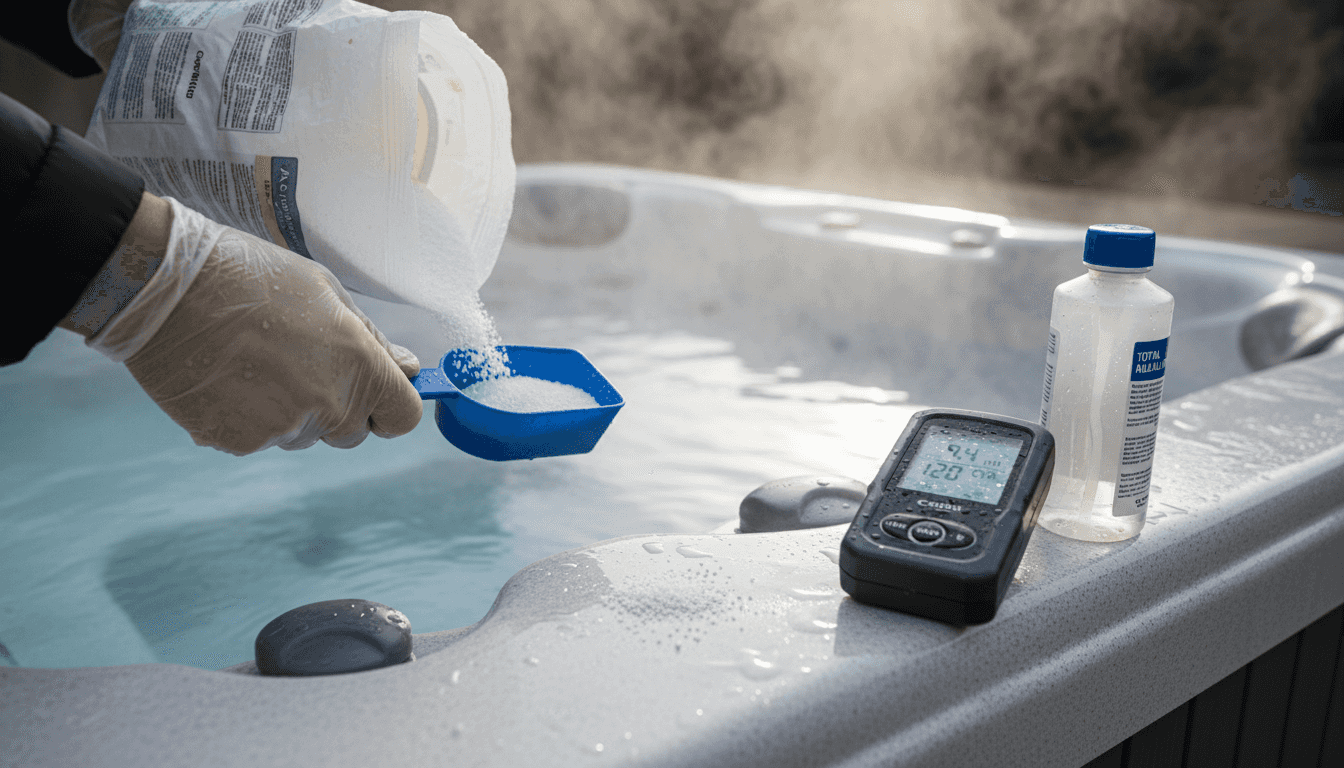
Pool stabilisers differ by their chemical formulations and protection levels, which determine how effectively they stabilise your water chemistry. Some variants work better in extreme conditions, whilst others suit standard domestic use.
Types of Pool Stabiliser
Here’s what you’ll actually encounter:
Here’s a quick overview of common pool stabiliser types used in hot tubs:
| Stabiliser Type | Formulation | Speed of Action | Typical Use Case |
|---|---|---|---|
| Cyanuric acid | Liquid/granule | Immediate after dissolving | Standard domestic hot tubs |
| Sodium cyanurate | Pre-dissolved | Rapid | High-turnover commercial tubs |
| Isocyanurates | Tablet | Slow, prolonged release | Specialised or long-term dosing |
- Cyanuric acid (liquid or granule) - Dissolves quickly, begins protecting chlorine immediately. Most popular choice for hot tubs. Typically dosed at 30-50 ppm.
- Sodium cyanurate - Pre-dissolved form that raises stabiliser levels faster. Useful when you need rapid protection without waiting for granules to dissolve.
- Isocyanurates - Slower-acting variants that release stabilisation over time. Less common in hot tubs but occasionally used in specific applications.
Cyanuric acid is the standard choice for hot tub operators because it reliably protects chlorine without interfering with other water chemistry parameters.
Choosing the Right Type for Your Hot Tub
For most UK hot tub owners, cyanuric acid in granule or liquid form covers your needs completely. Granules work well if you’re filling your tub from scratch. Liquid stabiliser suits smaller adjustments when topping up existing water.
Your water type and usage patterns matter here. High-use commercial hot tubs might benefit from sodium cyanurate’s faster action. Home spas typically find granular cyanuric acid adequate and cost-effective.
If your hot tub sits indoors or under cover, stabiliser becomes less critical since UV exposure drops significantly. Outdoor tubs demand more aggressive stabilisation, especially during summer months.
Pro tip: Add cyanuric acid granules during your initial water fill when your tub is emptier and circulation is running - this lets them dissolve completely before you begin using the tub.
How pool stabiliser protects water quality
Pool stabiliser works by keeping your chlorine effective for longer, which is the core defence against contamination in your hot tub. Without it, your sanitiser breaks down rapidly under sunlight, leaving your water vulnerable to harmful bacteria and algae growth.
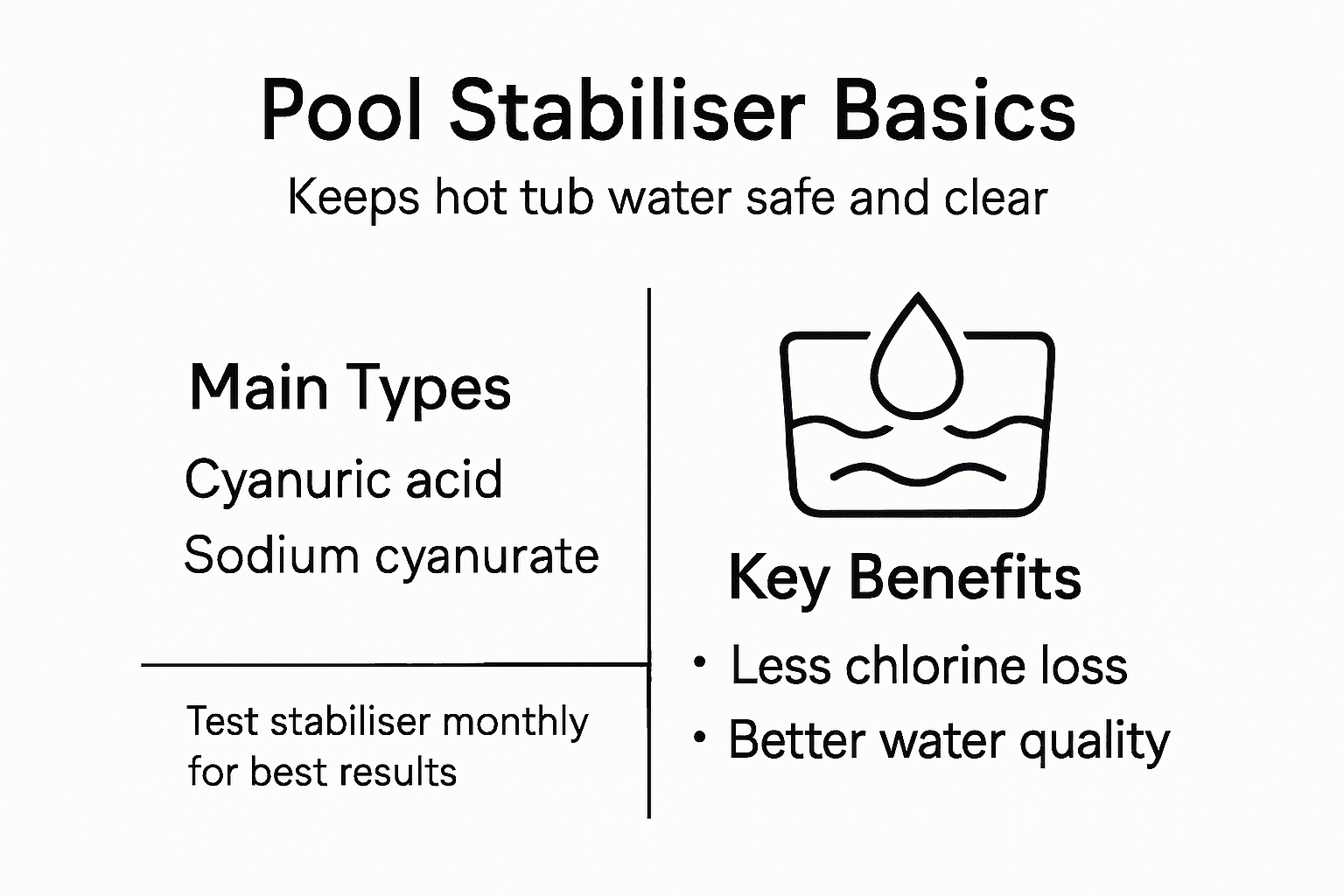
Here’s what actually happens: chlorine molecules are fragile. UV rays smash them apart within hours on a sunny day. Stabiliser wraps around chlorine molecules like a protective coat, preventing UV damage and keeping your disinfectant working at full strength.
This protection matters because water quality in recreational venues depends on maintaining effective disinfectant levels, which stabiliser helps achieve by extending chlorine’s lifespan. Your hot tub becomes safer and cleaner as a result.
The Protection Mechanism
Stabiliser operates through a simple but powerful chemical relationship with chlorine:
- Binds with chlorine molecules - Creates a stable compound that resists UV degradation
- Slows chlorine loss - Without stabiliser, you lose roughly 50% per day in sunlight; with it, loss drops to minimal levels
- Maintains consistent sanitisation - Steady chlorine means steady protection against pathogens
- Reduces testing frequency - Your water stays balanced longer between adjustments
Chlorine degrades rapidly under UV exposure, but stabiliser prevents this loss, keeping disinfecting power intact and water safer for longer periods.
What Happens Without Stabiliser
Skip stabiliser and your water quality deteriorates quickly. You’d need to add chlorine constantly just to maintain minimum safe levels. Your chemical costs explode, and your water becomes unpredictable - sometimes safe, sometimes risky.
Worse, unstable chlorine levels allow bacteria, viruses, and algae to flourish. Your hot tub becomes uninviting and potentially unsafe. Equipment suffers too, as fluctuating chemistry corrodes pipes, heaters, and seals faster.
Stabiliser also helps maintain water clarity and prevents the growth of harmful microorganisms that thrive when chlorine protection weakens. The result is visibly cleaner water that stays safe week after week.
Proper stabiliser levels ensure your chlorine works smarter, not harder. You test less often, add chemicals less frequently, and enjoy consistently clear, safe water year-round.
Pro tip: Check your stabiliser level monthly using a test kit - if it drops below 20 ppm, add more, as low stabiliser means your chlorine is degrading rapidly even when your tub isn’t in use.
Safe usage, UK regulations and best practices
Using pool stabiliser safely means following dosing guidelines, storing chemicals correctly, and understanding how stabiliser interacts with other water treatments. The UK takes water safety seriously, and pool owners must comply with health and safety standards to protect users.
Stabiliser isn’t dangerous when used properly, but careless dosing creates problems. Add too much and your water becomes over-stabilised, making chlorine less effective. Add too little and you lose the protection you’re paying for. Getting the balance right prevents both scenarios.
UK Regulations and Compliance
The UK requires that anyone maintaining pool systems understands chemical management principles. Safe stabiliser use involves correct dosing and monitoring chemical interactions to comply with health and safety laws protecting water quality and user safety.
Key regulatory points include:
- Testing protocols - Test stabiliser levels monthly using approved test kits
- Accurate dosing - Follow manufacturer instructions precisely; never guess quantities
- Chemical storage - Keep stabiliser in cool, dry conditions away from chlorine
- Record-keeping - Document all chemical additions and water tests for compliance
- pH and chlorine balancing - Stabiliser works only when other parameters are correct
Proper chemical management training ensures you maintain safe water that meets UK health standards whilst protecting your equipment and users.
Best Practices for Hot Tub Owners
Start by testing your water before adding anything. You can’t know what stabiliser level you need without baseline data. Use recommended hot tub safety practices that cover chemical handling from start to finish.
Dose stabiliser gradually. If your water has zero stabiliser, don’t dump the full amount in at once. Split the dose across a few days, testing between additions. This prevents overshooting and gives you control.
Never mix stabiliser with chlorine directly. Add stabiliser first, let it dissolve completely, then add chlorine separately. Mixing them in the tub or in containers creates chemical reactions that reduce effectiveness.
Store stabiliser away from children and pets. Keep it sealed in original containers and away from heat sources. Damp storage areas cause clumping and degradation.
Wash your hands after handling any chemical. Use measuring scoops rather than cups from your kitchen. Replace them if they crack or corrode.
Pro tip: Test your water before opening your hot tub for the season and dose stabiliser at half strength initially, then test again after 24 hours before adjusting further - this prevents over-stabilisation mistakes.
Common mistakes and alternatives for owners
Most hot tub owners make predictable mistakes with stabiliser that cost them money and create water quality problems. Understanding these pitfalls and knowing your alternatives puts you ahead of the curve.
The biggest mistake is neglecting regular water testing. You can’t maintain proper stabiliser levels without knowing what you’re starting with. Many owners guess or skip testing entirely, leading to either over-stabilised or under-protected water.
Top Mistakes to Avoid
Common errors include:
- Over-dosing stabiliser - Adding too much makes chlorine sluggish and less effective at killing bacteria
- Under-dosing - Skipping doses or ignoring depletion leaves water vulnerable to UV damage
- Ignoring weather effects - Heavy rain dilutes stabiliser; sunny periods increase UV stress requiring adjustment
- Not replacing stabiliser as needed - Stabiliser gradually depletes and must be topped up seasonally
- Mixing stabiliser with chlorine - Combining these chemicals reduces their effectiveness significantly
- Forgetting pH balance - Stabiliser only works properly when pH sits between 7.2 and 7.8
Common maintenance mistakes include over-dosing, under-dosing, and neglecting regular testing - all of which reduce chlorine effectiveness and compromise water safety.
Alternative Water Treatment Systems
If traditional chemical stabilisers don’t suit your situation, alternatives exist. UV systems use ultraviolet light to sanitise water, reducing chemical reliance. Ozone generators oxidise contaminants without heavy chlorine dependence. Both require proper maintenance and work best alongside some residual chlorine.
These systems cost more upfront but reduce ongoing chemical expenses. They suit owners with chemical sensitivities or those seeking lower environmental impact. However, they don’t replace stabiliser entirely - most still require backup chlorine protection.
Salt chlorine generators (saltwater systems) produce chlorine from salt, eliminating purchased chlorine bottles. They still need stabiliser to protect the generated chlorine from UV breakdown. Salt systems work well for permanent installations but cost significantly more.
Compare alternative water treatment options for hot tub owners:
| System Type | Chemical Reduction | Initial Cost | Maintenance Complexity |
|---|---|---|---|
| UV System | Moderate | High | Requires lamp replacement |
| Ozone Generator | High | Moderate to high | Needs ozone cell care |
| Saltwater Generator | Some (chlorine still needed) | Highest | Regular cell cleaning |
| Traditional Stabiliser | None | Lowest | Simple strip/test maintenance |
Consider your local water conditions too. Hard water areas may benefit from water softening solutions alongside stabiliser, as mineral buildup affects chemical balance and equipment longevity.
For most UK hot tub owners, traditional cyanuric acid stabiliser remains the most practical, affordable option. Alternatives suit specific situations but require professional installation and ongoing maintenance.
Pro tip: If considering alternative systems, start by mastering traditional chemical maintenance for one full season - this teaches you how your specific tub responds to treatment, making future system upgrades more informed.
Protect Your Hot Tub Water with Expert Pool Stabiliser Solutions
Maintaining the right pool stabiliser levels is essential to keep your chlorine active and your hot tub water safe and crystal clear throughout the year. If you are tired of constantly battling with rapid chlorine loss, fluctuating water chemistry, or costly chemical top-ups, ClearSpa offers a comprehensive range of high-quality stabilisers and water treatment products designed to address these exact challenges. Our expertly formulated cyanuric acid stabilisers ensure your chlorine lasts longer, reducing chemical consumption and protecting your hot tub equipment from corrosion and damage.
Take control of your hot tub water quality today by exploring our carefully tested selection of hot tub chemicals and spa essentials at ClearSpa. Discover solutions tailored for consistent water balancing and learn how our products can simplify your maintenance routine. Visit our hot tub chemicals collection to shop stabilisers and related products that meet UK safety standards, then enjoy safer, more enjoyable spa sessions with less hassle and expense.
Frequently Asked Questions
What is pool stabiliser?
Pool stabiliser is a chemical compound, primarily cyanuric acid, that helps protect chlorine in hot tub water from degradation due to sunlight and heat, allowing the sanitiser to work more effectively and last longer.
How does pool stabiliser benefit my hot tub?
Pool stabiliser reduces chlorine loss by up to 90% when exposed to UV light, maintaining effective sanitisation and improving water quality. This also extends the lifespan of your hot tub equipment by stabilising the water chemistry.
What are the main types of pool stabiliser?
The most common type of pool stabiliser is cyanuric acid, available in liquid or granule forms. Sodium cyanurate is a pre-dissolved option for rapid stabilisation, while isocyanurates offer slow, prolonged release, usually for specific applications.
How often should I test my stabiliser levels?
It’s recommended to test your stabiliser levels monthly using a test strip or liquid test kit. If your stabiliser level drops below 20 ppm, you should add more to prevent your chlorine from degrading rapidly.