Complete Guide to Signs of Balanced Spa Water
Discover signs of balanced spa water with this comprehensive guide. Learn water clarity, pH indicators, proper sanitiser levels, and troubleshooting tips.
Did you know that unbalanced spa water can shorten equipment lifespan by up to 50 percent and increase the risk of skin irritation? Many spa owners overlook water chemistry, yet small imbalances can trigger costly damage, cloudy water, or even health issues. Understanding the fundamentals of spa water balance empowers you to prevent hidden problems, enjoy consistent comfort, and protect your investment for the long term.
Table of Contents
- Defining Balanced Spa Water Standards
- Physical Signs of Water Quality
- Understanding pH, Alkalinity, and Hardness
- Role of Sanitiser and Chemical Levels
- Common Imbalances and Troubleshooting
Key Takeaways
| Point | Details |
|---|---|
| Balanced Spa Water | Maintaining balanced spa water is crucial for optimal performance, user comfort, and equipment longevity. Regular monitoring and testing of parameters like pH, total alkalinity, and calcium hardness are essential. |
| Sanitiser Importance | Keeping appropriate levels of sanitisers like chlorine or bromine is vital for disinfecting water and ensuring user safety. Regular adjustments based on usage and environmental factors are recommended. |
| Physical Indicators of Quality | Visual cues like discoloration or unusual odors can signal water quality issues. Proactive visual inspections help detect problems early before they escalate. |
| Troubleshooting Common Imbalances | Common issues like pH instability and sanitiser deficiency require systematic identification and corrective measures to maintain water quality and prevent equipment damage. |
Defining Balanced Spa Water Standards
Balanced spa water represents a precise chemical equilibrium that ensures optimal performance, user comfort, and equipment longevity. According to gov.uk, maintaining this balance involves carefully regulating several critical parameters.
The key components of balanced spa water include:
- pH Levels: Indicates water’s acidity or alkalinity
- Total Alkalinity: Measures water’s ability to neutralise acids
- Calcium Hardness: Determines water’s mineral content
- Total Dissolved Solids (TDS): Tracks dissolved mineral concentrations
- Water Temperature: Controls chemical interactions and user experience
These interconnected factors work together to prevent two primary problems: scaling and corrosion. When water becomes unbalanced, it can damage spa equipment, create uncomfortable user experiences, and potentially pose health risks. Books.hse.gov.uk highlights that properly balanced water ensures a safe environment by preventing water from becoming either overly scale-forming or excessively corrosive.
Achieving and maintaining balanced spa water requires consistent monitoring and precise chemical adjustments. Regular testing using professional-grade testing kits allows spa owners to make incremental corrections, keeping water parameters within recommended ranges. By understanding these standards and implementing proactive maintenance, you can extend your spa’s lifespan and ensure a consistently pleasant and hygienic spa experience.
Here’s a summary of the key spa water parameters and their ideal ranges:
| Parameter | Ideal Range | Purpose |
|---|---|---|
| pH | 7.2 - 7.8 | Comfort Equipment protection |
| Total Alkalinity | 80 - 120 ppm | pH stabilisation Prevents fluctuations |
| Calcium Hardness | 150 - 250 ppm | Protects surfaces Prevents corrosion |
| Chlorine (Sanitiser) | 1 - 3 ppm | Disinfection Kills microorganisms |
| Bromine (Sanitiser) | 3 - 5 ppm | Disinfection Stable at high temps |
| Total Dissolved Solids | < 1,500 ppm | Limits scaling Ensures chemical effectiveness |
| Water Temperature | 36°C - 40°C | User comfort Optimal chemical action |
Physical Signs of Water Quality
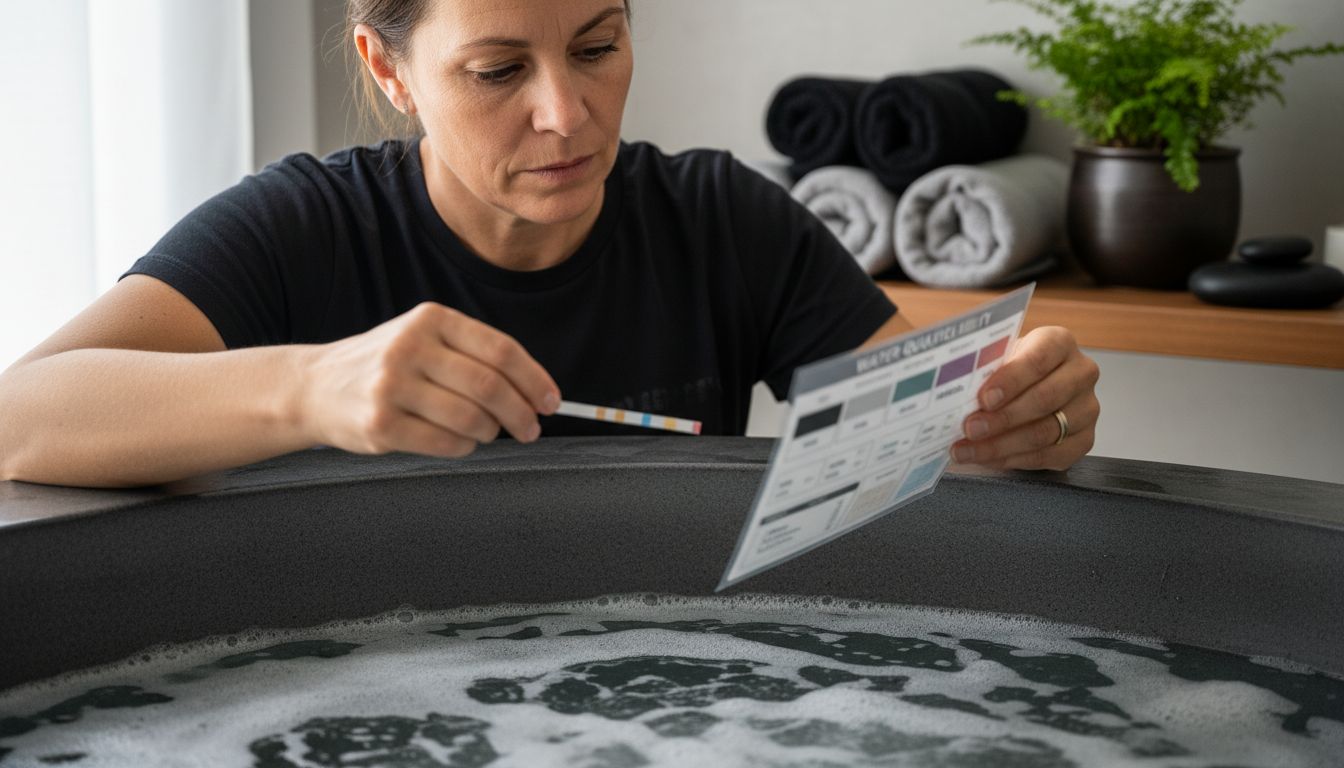
Visual and sensory cues play a crucial role in identifying potential issues with spa water quality. gov.uk emphasises that clear, odorless water is the primary indicator of good condition, with any deviation potentially signalling underlying problems.
Key physical signs that suggest water quality concerns include:
- Discoloration: Water appearing cloudy, yellow, green, or brown
- Unusual Odours: Musty, chlorine-like, or metallic smells
- Surface Appearance: Presence of foam, scum, or oily film
- Visible Debris: Floating particles or sediment
- Water Clarity: Reduced transparency or murky appearance
According to gov.uk, the presence of visible pollutants can indicate significant water quality issues. These physical signs are early warning signals that something might be disrupting the delicate chemical balance of your spa water. Foam, for instance, often suggests excessive organic contamination or imbalanced chemical levels.
Proactive spa owners should conduct regular visual inspections and address any unusual characteristics immediately. A simple water clarity test can reveal potential problems before they escalate. If you notice any of these physical signs, it’s recommended to perform comprehensive water testing, adjust chemical levels, and potentially seek professional advice to restore your spa water to optimal condition.
Understanding pH, Alkalinity, and Hardness
The intricate relationship between pH, total alkalinity, and calcium hardness forms the cornerstone of balanced spa water chemistry. Books.hse.gov.uk emphasises the critical importance of maintaining pH levels between 7.0 and 7.6, which ensures both effective water treatment and user comfort.
Let’s break down these key water chemistry components:
-
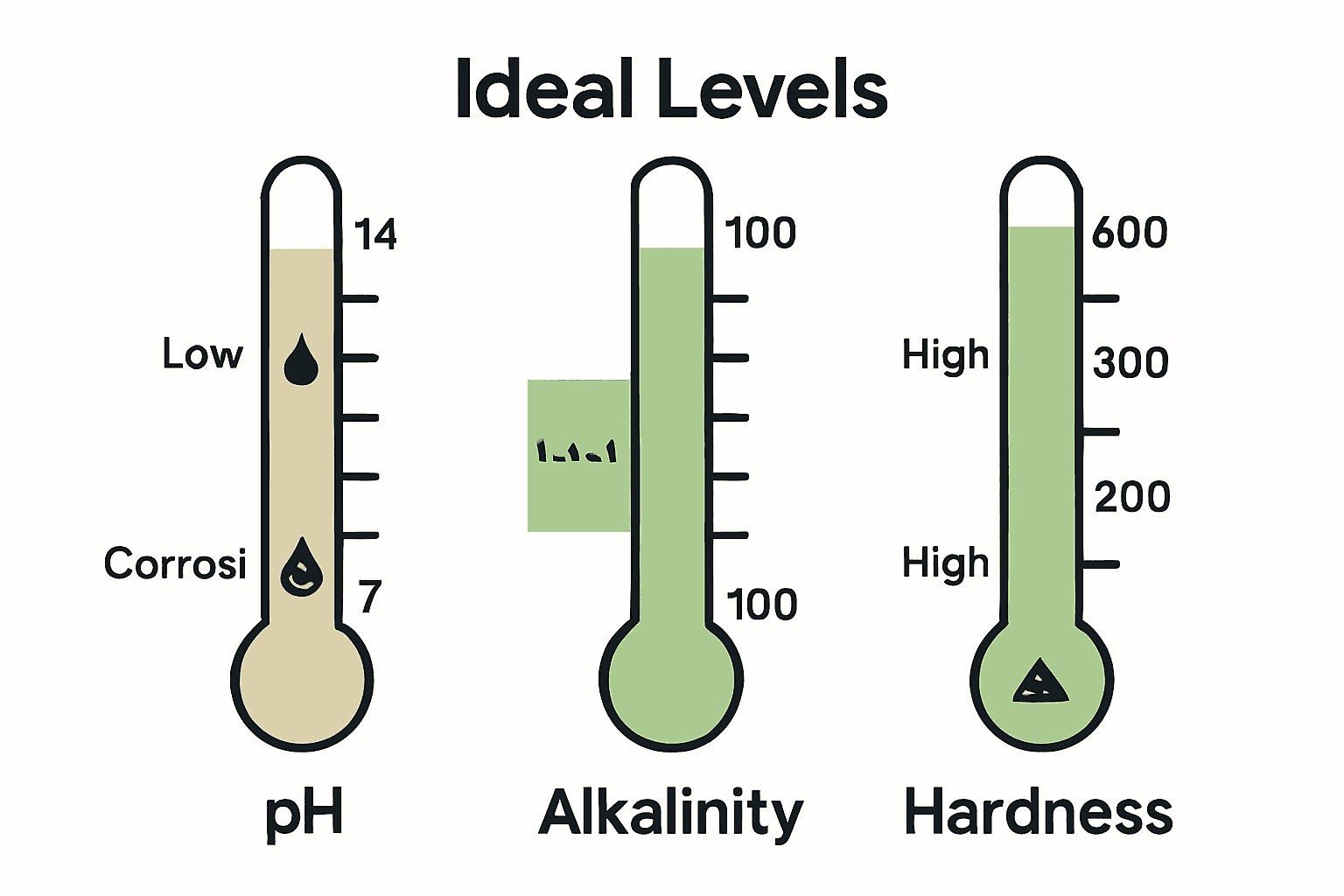
pH: Measures water’s acidity or alkalinity on a scale of 0-14
- Ideal range: 7.2 - 7.8
- Too low: Corrosive water
- Too high: Scale formation
-
Total Alkalinity: Acts as a pH buffer
- Ideal range: 80 - 120 parts per million (ppm)
- Prevents rapid pH fluctuations
- Stabilises water chemistry
-
Calcium Hardness: Tracks dissolved calcium minerals
- Ideal range: 150 - 250 ppm
- Prevents water from becoming too soft or aggressive
According to gov.uk, these factors are deeply interconnected, with each parameter influencing the others. When one falls out of balance, it can trigger a cascade of water chemistry issues that compromise both equipment integrity and user experience.
To maintain optimal water conditions, regular testing and precise chemical adjustments are essential. Understanding how these three elements interact can help spa owners prevent common problems like scaling, corrosion, and potential equipment damage. By keeping these parameters within their recommended ranges, you’ll ensure a safe, comfortable, and enjoyable spa environment.
Role of Sanitiser and Chemical Levels
Sanitisers are the frontline defenders of spa water quality, acting as critical agents in maintaining a safe and hygienic environment. Books.hse.gov.uk emphasises the vital importance of maintaining appropriate sanitiser levels to eliminate harmful microorganisms and ensure user safety.
The primary sanitisers used in spa water management include:
-
Chlorine
- Most common sanitiser
- Rapidly kills bacteria and microorganisms
- Ideal concentration: 1-3 parts per million (ppm)
-
Bromine
- Alternative to chlorine
- More stable at higher temperatures
- Ideal concentration: 3-5 parts per million (ppm)
-
Alternative Sanitisers
- Mineral systems
- UV sanitisation
- Saltwater chlorination
According to gov.uk, effective spa water management requires consistent monitoring and precise adjustment of sanitiser levels. The key is finding the delicate balance that prevents microbial growth without overwhelming the water with chemicals.
To maintain optimal chemical levels, understanding the most critical pool chemical becomes crucial. Regular testing, typically using test strips or digital testing kits, allows spa owners to make real-time adjustments. Factors like bather load, frequency of use, and environmental conditions can all impact sanitiser effectiveness, making frequent monitoring an essential aspect of responsible spa maintenance.
Common Imbalances and Troubleshooting
Books.hse.gov.uk highlights that spa water imbalances are common challenges that require systematic identification and resolution. Understanding these potential issues is crucial for maintaining a safe and enjoyable spa experience.
Common water chemistry imbalances include:
-
pH Instability
- Symptoms: Skin irritation, equipment corrosion
- Causes: Incorrect chemical dosing, high bather load
- Solution: Gradual pH adjustment using pH increasers or decreasers
-
Sanitiser Deficiency
- Symptoms: Cloudy water, unpleasant odours
- Causes: Insufficient chlorine/bromine levels
- Solution: Shock treatment and precise chemical rebalancing
-
Total Dissolved Solids (TDS) Accumulation
- Symptoms: Foamy water, reduced chemical effectiveness
- Causes: Mineral buildup, infrequent water replacement
- Solution: Partial water drainage and complete system refresh
According to gov.uk, addressing spa water issues requires identifying root causes and implementing targeted corrective measures. This proactive approach prevents minor imbalances from escalating into more significant problems.
To effectively manage these challenges, understanding the most critical pool chemicals becomes essential. Regular testing, maintaining proper chemical inventories, and understanding the intricate relationships between different water parameters will help spa owners maintain optimal water conditions and extend the life of their spa equipment.
Maintain Perfectly Balanced Spa Water with ClearSpa Solutions
Understanding the delicate balance of your spa water chemistry is essential to avoid common challenges like skin irritation, equipment corrosion, or cloudy water caused by poor pH, alkalinity, or sanitiser levels. The discomfort of unusual odours, foamy surfaces, or murky water signals the need for precise chemical adjustments to protect both your spa and your wellbeing.
Take control of your spa’s health today. Our expertly formulated hot tub chemicals and spa essentials at ClearSpa are designed to help you effortlessly achieve and maintain the ideal pH, alkalinity, and sanitiser levels outlined in the “Complete Guide to Signs of Balanced Spa Water.”
Don’t let minor water imbalances spoil your enjoyment. Explore ClearSpa’s trusted range to find the perfect products for your specific needs and experience the confidence that comes with crystal-clear, comfortable spa water. Visit us now and take the first step towards a safe and relaxing spa experience.
Frequently Asked Questions
What are the key parameters for balanced spa water?
The key parameters for balanced spa water include pH levels (7.2 - 7.8), total alkalinity (80 - 120 ppm), calcium hardness (150 - 250 ppm), chlorine and bromine sanitiser levels, total dissolved solids (TDS), and water temperature (36°C - 40°C).
How can I tell if my spa water is not balanced?
Signs of unbalanced spa water include discoloration (cloudy, yellow, green, or brown), unusual odors (musty or metallic), surface appearance issues (foam or oily film), visible debris (floating particles), and poor water clarity (murky appearance).
Why is maintaining proper pH and alkalinity important for spa water?
Maintaining proper pH and alkalinity is crucial because they work together to stabilize chemical reactions, ensure user comfort, and protect spa equipment from corrosion or scaling.
What should I do if I notice foam or unusual odors in my spa water?
If you notice foam or unusual odors, it’s essential to conduct a comprehensive water test, adjust chemical levels accordingly, and consider performing a shock treatment to restore balance and eliminate contaminants.