Understanding Why Test Hot Tub Water for Health and Safety
Explore why test hot tub water is crucial for maintaining safety, hygiene, and enjoyment in your hot tub experience.
Hot tubs promise relaxation, warmth, and comfort, drawing millions of owners in every year. Yet, beneath the bubbling surface, threats can multiply silently and fast. A single poorly maintained hot tub can become a source of dangerous bacteria like Legionella, which causes serious illness in hundreds of cases reported annually in the UK. Most people expect crystal-clear water means all is well but water that looks clean may still be hiding harmful microbes and unstable chemicals. This gap between appearance and safety is where proper water testing changes everything.
Table of Contents
- What Is Hot Tub Water Testing?
- Why Testing Hot Tub Water Matters For Health
- Understanding The Key Water Quality Parameters
- How Water Chemistry Affects Hot Tub Performance
- Real-World Implications Of Poor Water Testing
Quick Summary
| Takeaway | Explanation |
|---|---|
| Regular testing prevents health risks. | Consistent water analysis helps avoid bacteria like Legionella and E. coli, which can cause serious health issues. |
| Monitor key water parameters closely. | Focus on pH levels, alkalinity, sanitiser concentration, and calcium hardness to maintain safe and effective hot tub water. |
| Unbalanced water chemistry damages equipment. | Improper chemical levels can cause corrosion and reduce the efficiency of hot tub components, leading to costly repairs. |
| Neglecting tests raises economic risks. | Without proper water management, you’ll face expensive component replacements and increased maintenance costs due to rapid degradation. |
| Understand bacterial contamination indicators. | Biologically testing for pathogens ensures harmful microorganisms are identified and managed before they become a significant threat. |
What is Hot Tub Water Testing?
Hot tub water testing is a comprehensive process of evaluating the chemical composition, bacterial presence, and overall water quality in a hot tub or spa environment. This systematic examination helps owners understand and maintain the precise balance of their hot tub water, ensuring both optimal performance and user safety.
The Science Behind Water Analysis
Water testing involves measuring multiple critical parameters that directly impact water safety and hot tub functionality. Our comprehensive guide on hot tub chemicals provides deeper insights into this complex process. The primary measurements include: Compare your results against the target ranges in our hot tub water chemistry reference.
- pH levels
- Total alkalinity
- Sanitiser concentration
- Calcium hardness
- Potential bacterial contamination
These measurements provide a detailed snapshot of water conditions, revealing potential risks that might not be visible to the naked eye. By quantifying these parameters, hot tub owners can prevent potential health hazards and equipment damage.
Why Precision Matters
According to research from the Health and Safety Executive, water systems present significant risks if not properly monitored. Hot tub water testing is not merely about maintaining aesthetic appeal but represents a critical health protection strategy. Incorrect water chemistry can create environments where harmful bacteria like Legionella proliferate, posing serious health risks to users.
Professional water testing goes beyond simple chemical balance. It involves sophisticated techniques that detect microscopic changes in water composition, helping identify potential issues before they become significant problems. By understanding these nuanced indicators, hot tub owners can take proactive measures to maintain a safe, hygienic aquatic environment.
Why Testing Hot Tub Water Matters for Health
Healthcare professionals consistently emphasise the critical importance of maintaining safe hot tub water conditions. Beyond aesthetic considerations, proper water testing represents a fundamental protective measure against potentially serious health risks that can emerge in poorly managed aquatic environments.
Preventing Bacterial Contamination
Hot tub water provides an ideal breeding ground for harmful microorganisms due to its warm temperature and enclosed environment. Our comprehensive guide on hot tub maintenance highlights the significance of regular monitoring. Bacteria such as Legionella, Pseudomonas aeruginosa, and E. coli can rapidly multiply in improperly maintained hot tubs, leading to significant health complications:
- Respiratory infections
- Skin rashes
- Gastrointestinal illnesses
- Potential pneumonia risks
According to research from the Health and Safety Executive, spa pool systems are recognised sources of infectious agents that can cause severe health problems if not meticulously managed.
Chemical Balance and Personal Protection
Unbalanced water chemistry does more than compromise microbial safety. Incorrect pH levels and sanitiser concentrations can cause direct physical harm to hot tub users. Excessive chlorine or bromine can cause skin irritation, while insufficient sanitisation leaves users vulnerable to bacterial exposure. Chemical imbalances may also lead to:
-
Skin and eye inflammation
-
Allergic reactions
-
Potential long-term health complications
Proactive water testing serves as a crucial preventative healthcare strategy, transforming hot tub ownership from a potential health risk into a safe, enjoyable experience. By understanding and maintaining precise water parameters, owners protect themselves and their guests from potential waterborne health threats.
Understanding the Key Water Quality Parameters
Water quality parameters are intricate measurements that provide a comprehensive assessment of hot tub water safety and performance. These indicators go beyond simple visual inspection, offering precise insights into the complex chemical and biological environment within a hot tub.
Core Chemical Parameters
Our comprehensive guide on pool chemicals highlights the nuanced nature of water chemistry. The fundamental parameters that demand meticulous monitoring include:
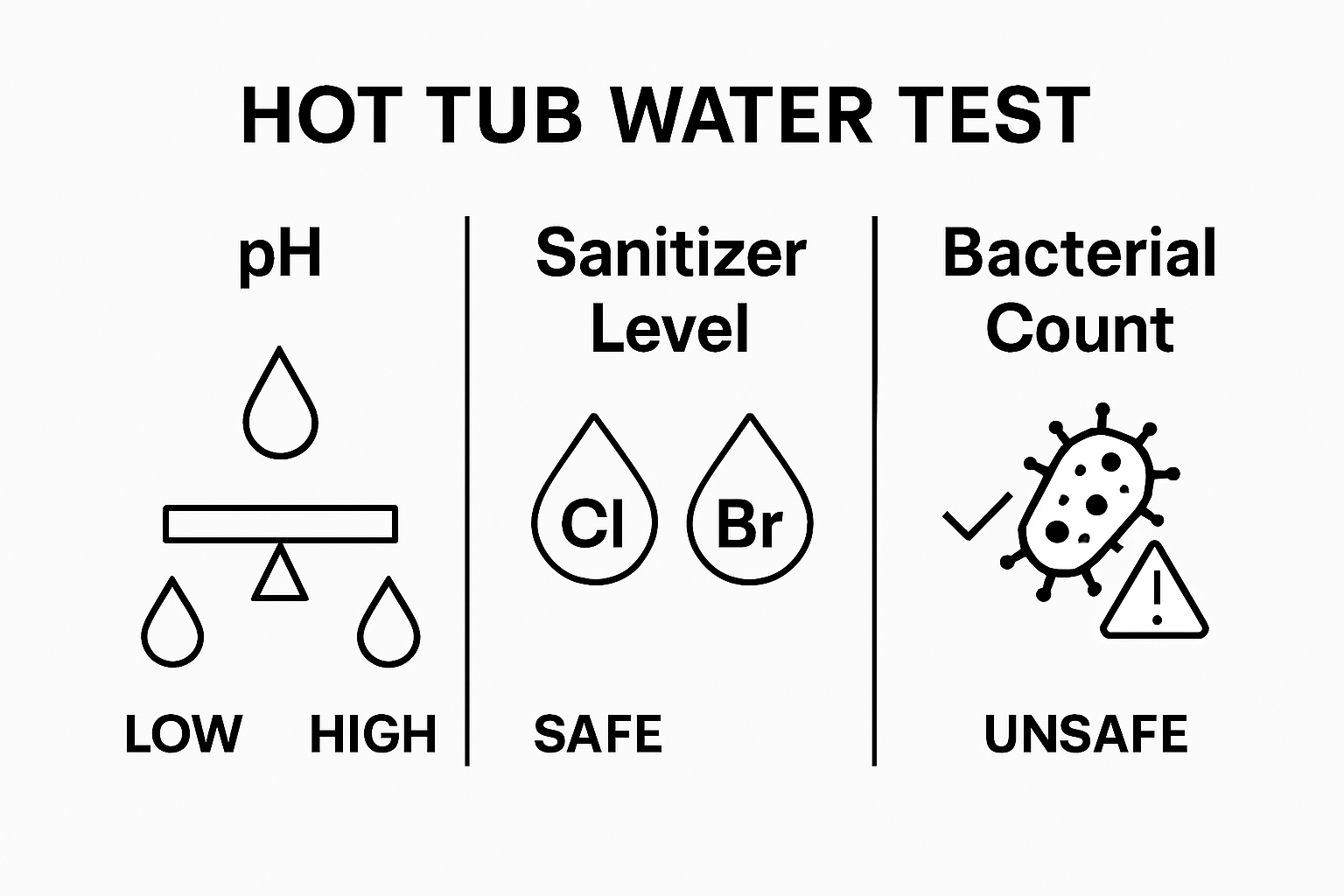
- pH Levels: Indicates water acidity or alkalinity
- Total Alkalinity: Measures water’s ability to resist pH changes
- Sanitiser Concentration: Ensures bacterial control
- Calcium Hardness: Prevents equipment corrosion
Each parameter plays a critical role in maintaining a safe and comfortable hot tub environment. Incorrect levels can lead to equipment damage, user discomfort, and potential health risks.
Biological and Microbial Indicators
According to research from the Health and Safety Executive, water systems present significant microbiological risks. Beyond chemical measurements, hot tub water testing must assess potential biological contamination. Microbial indicators help identify the presence of harmful organisms that might not be visible through standard chemical testing.
Biological testing typically evaluates:
- Bacterial colony counts
- Presence of specific pathogenic microorganisms
- Potential biofilm development
These sophisticated assessments provide a comprehensive understanding of water quality, ensuring that hot tub owners can proactively manage potential health risks before they become significant problems. Recording each set of readings and reviewing them over time makes emerging trends far easier to spot; Water Insight & Tracking — ClearSpa's free water logging dashboard with colour-coded readings, trend charts and reorder reminders — helps you keep that history in one place.
The table below presents core chemical and biological parameters essential for hot tub water safety and clarity, along with their corresponding roles as discussed in the article.
| Parameter | Role in Hot Tub Safety |
|---|---|
| pH Levels | Indicates acidity or alkalinity, affects sanitiser effectiveness |
| Total Alkalinity | Buffers pH changes, stabilises water balance |
| Sanitiser Concentration | Controls bacteria and pathogen levels |
| Calcium Hardness | Prevents corrosion and scaling of equipment |
| Bacterial Colony Counts | Identifies rising microbial populations |
| Pathogenic Microbe Presence | Detects specific harmful organisms (e.g., Legionella, E. coli) |
| Biofilm Development | Highlights risk of persistent microbial communities |
How Water Chemistry Affects Hot Tub Performance
Water chemistry represents a complex ecosystem that fundamentally determines the operational efficiency, user comfort, and longevity of hot tub systems. Each chemical parameter interacts dynamically, creating a delicate balance that directly influences overall performance and user experience.
Impact on Equipment Functionality
Our detailed guide on total alkalinity reveals how precise chemical composition protects hot tub infrastructure. Imbalanced water chemistry can cause significant mechanical challenges:
- Accelerated equipment corrosion
- Premature seal and gasket deterioration
- Reduced heating element efficiency
- Potential pump and filtration system damage
Unstable water chemistry transforms what should be a relaxing investment into a potential maintenance nightmare, with repair costs potentially exceeding hundreds of pounds.
User Experience and Safety Considerations
According to research from the Health and Safety Executive, water chemistry directly influences user safety and comfort. Chemical imbalances can create environments that compromise both physiological well-being and enjoyment:
- Skin and eye irritation
- Increased bacterial growth potential
- Unpleasant water odour and appearance
- Reduced sanitiser effectiveness
Professional water management ensures that hot tub owners can confidently maintain an environment that balances technical performance with user satisfaction. By understanding and controlling water chemistry, individuals transform their hot tub from a potential health risk into a safe, enjoyable relaxation zone.
Real-World Implications of Poor Water Testing
Poor hot tub water testing can trigger a cascade of serious health and infrastructural consequences that extend far beyond simple maintenance inconveniences. The repercussions of neglecting comprehensive water quality assessment represent significant risks to both individual users and broader public health environments.
To help clarify the different types of threats and repercussions related to poorly managed hot tub water, the table below summarises key health and economic consequences described in the article.
| Consequence | Description |
|---|---|
| Legionnaires’ Disease | A potentially fatal respiratory infection caused by Legionella bacteria in untested water. |
| Pseudomonas Infections | Skin rashes and ear complications from bacteria proliferating in poorly maintained water. |
| Respiratory Tract Infections | Increased risk due to bacterial growth in warm, untreated water environments. |
| Gastroenterological Disorders | Illnesses including nausea or diarrhoea from microbial contamination. |
| Equipment Corrosion and Degradation | Imbalanced chemistry causing accelerated wear, leading to expensive repairs or replacements. |
| Increased Maintenance and Repair Costs | Additional costs incurred from preventable component failures and ongoing poor water quality. |
| Potential Legal Liabilities | Legal risks arising from user illness linked to improper water management. |
| Reduced Hot Tub Lifespan | Overall operational longevity decreases with continued neglect of water testing. |
Health Consequences
Our comprehensive guide on hot tub maintenance underscores the critical nature of regular water quality monitoring. Inadequate water testing can expose users to severe health challenges:
- Legionnaires’ Disease: A potentially fatal respiratory infection
- Pseudomonas Infections: Causing skin rashes and ear complications
- Respiratory Tract Infections: Triggered by bacterial proliferation
- Gastroenterological Disorders: Resulting from microbial contamination
These health risks are not hypothetical concerns but documented medical realities that can emerge from compromised hot tub water environments.
Economic and Infrastructure Implications
According to research from the Health and Safety Executive, inadequate water testing can lead to substantial financial and operational consequences. Unchecked water chemistry accelerates equipment degradation, creating a domino effect of mechanical failures:
- Premature replacement of expensive hot tub components
- Increased maintenance and repair expenditures
- Potential legal liabilities from health-related incidents
- Reduced hot tub operational longevity
The financial impact of neglecting proper water testing can transform a leisure investment into a significant economic burden, with potential repair and replacement costs running into thousands of pounds.
Take Control of Your Hot Tub Water - Protect What Matters Most
You already know the risks that come with ignoring proper water chemistry and skipping regular hot tub water testing. Bacterial contamination, skin irritation, and costly equipment damage are all real threats. At ClearSpa, we understand the frustration of balancing pH, controlling sanitiser levels and the worry of unseen dangers like Legionella. Our premium water treatment products are expertly designed to help you achieve a safe and comfortable hot tub environment every time you step in.

Why wait to secure your hot tub’s health and your peace of mind? Visit ClearSpa today to access our trusted range of hot tub chemicals and essential tools for water quality management. Make your next soak safer, clearer and more reliable by taking action before problems arise. Explore our solutions now and discover how simple maintenance can transform your relaxation routine.
Frequently Asked Questions
What are the key parameters tested in hot tub water?
The key parameters include pH levels, total alkalinity, sanitiser concentration, calcium hardness, and potential bacterial contamination. Monitoring these ensures a safe and balanced water environment.
Why is regular hot tub water testing important for health?
Regular testing is crucial for preventing the growth of harmful bacteria like Legionella and Pseudomonas, which can lead to serious health issues such as respiratory infections and skin rashes.
How can unbalanced hot tub water chemistry affect its performance?
Unbalanced water chemistry can lead to equipment corrosion, reduced heating efficiency, and increased maintenance costs. It can also create an uncomfortable experience for users, including skin irritation or unpleasant odours.
What are the possible health risks of poor water testing in hot tubs?
Poor water testing can expose users to severe health risks such as Legionnaires’ disease, Pseudomonas infections, respiratory issues, and gastrointestinal disorders, all stemming from untreated microbial contamination.