How to Maintain a Hot Tub for Crystal Clear Water
Discover how to maintain a hot tub step-by-step and achieve sparkling, safe water with easy cleaning, water balancing, and routine checks for lasting enjoyment.
Did you know that poor water maintenance causes over 80 percent of hot tub-related issues? Keeping your hot tub clean and safe goes far beyond looks, helping protect both your health and your investment. By following a few careful steps, you can prevent bacteria, cloudy water, and costly repairs while enjoying sparkling, worry-free relaxation every time you use your spa.
Quick Summary
| Key Point | Explanation |
|---|---|
| 1. Gather essential supplies before starting | Prepare your water testing equipment and maintenance toolkit for effective hot tub care. |
| 2. Clean filters and surfaces thoroughly | Remove debris from filters and sanitize hot tub surfaces to prevent bacterial growth. |
| 3. Balance water chemistry meticulously | Maintain free chlorine and bromine levels within recommended ranges for safety and clarity. |
| 4. Add water treatment products gradually | Follow manufacturer’s dosage recommendations for sanitizers and pH adjusters to ensure safety. |
| **5. Conduct a final safety check |
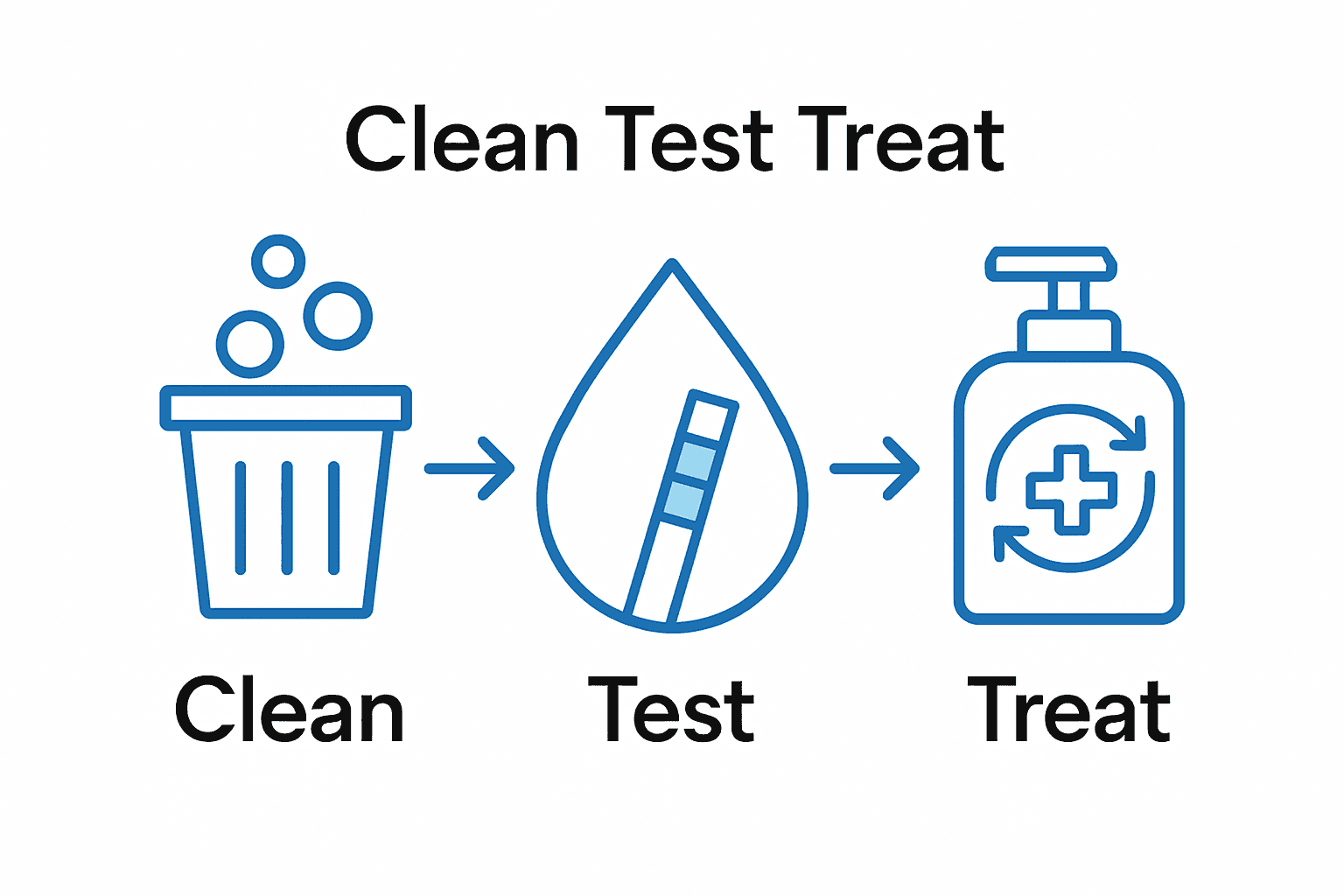 ** | Ensure proper water chemistry before use and establish clear usage rules to enhance safety.
Table of Contents
- Step 1: Prepare Your Hot Tub With Essential Supplies
- Step 2: Clean The Surfaces And Filters Thoroughly
- Step 3: Test And Balance Water Chemistry Accurately
- Step 4: Add Water Treatment Products As Needed
- Step 5: Verify Safety And Enjoy Your Hot Tub
Step 1: Prepare your hot tub with essential supplies
If you want crystal clear water and a hot tub that performs beautifully, gathering the right supplies is your first critical step. According to hot tub maintenance guidance from Devon and Somerset Trading Standards, having a proper testing kit and documentation is essential before you even start.
Start by collecting your water testing equipment. You will need a reliable photometer or comparator kit such as Palintest or Lovibond. These tools help you precisely measure water chemistry and bacterial levels. Consider getting professional log sheets to track your water’s condition over time. Think of these as your hot tub’s health record book.
Here’s a comparison of key hot tub water testing methods and their features:
| Testing Method | Accuracy | Ease of Use | Cost |
|---|---|---|---|
| Photometer/Comparator Kit | Very High | Moderate | High |
| Digital Testing Kit | High | Very Easy | Moderate-High |
| Test Strips | Moderate | Very Easy | Low |
| Professional Lab Service | Extremely High | Professional only | Highest |
Next, assemble your maintenance toolkit. This should include pH testing strips, chlorine or bromine sanitiser, water balancing chemicals, filter cleaning solution, and spare filter cartridges. Cornwall Council’s water testing recommendations emphasise understanding your specific water testing parameters to select the right supplies.
Pro Tip: Purchase a digital water testing kit for more accurate and consistent readings compared to traditional test strips.
Before filling your hot tub, ensure you have a clean water source and a reliable way to measure water volume. Having these supplies prepared means you are ready to create a pristine and safe hot tub environment. Your next step will involve setting up your initial water chemistry and understanding precise measurement techniques.
Step 2: Clean the surfaces and filters thoroughly
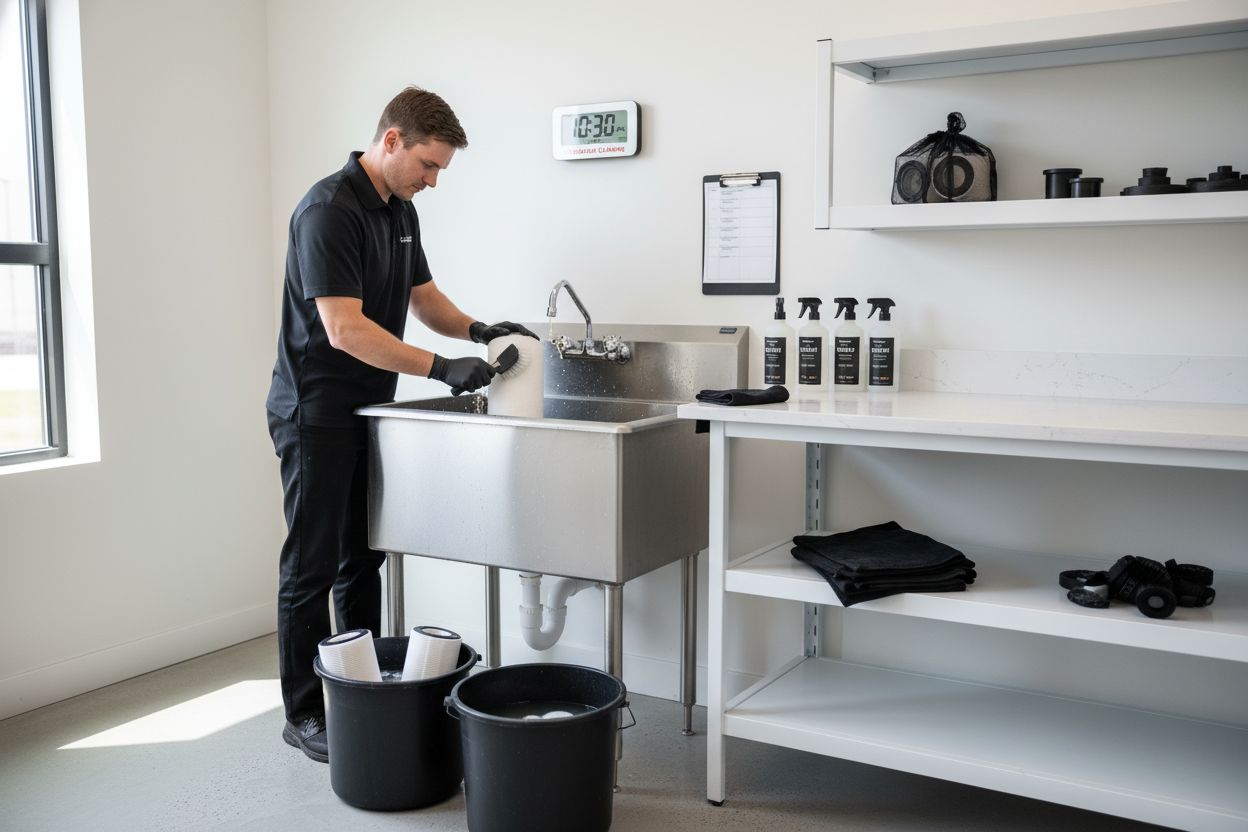
Getting your hot tub sparkling clean requires more than just a quick wipe down. According to Devon and Somerset Trading Standards, proper cleaning involves comprehensive sanitisation of surrounds, pipework, and surfaces to prevent bacterial growth.
Start with your filters. Remove them carefully and rinse with clean water to dislodge visible debris. Our filter cleaner granules can help deep clean hard to reach areas. Soak the filters in a specialised cleaning solution for at least 24 hours. This process breaks down oils, lotions, and microscopic contaminants that standard rinsing misses.
For surface cleaning, use a soft cloth and non abrasive cleaner specifically designed for hot tub surfaces. Pay special attention to waterlines, jets, and corners where grime accumulates. Cornwall Council’s water testing research highlights that thorough surface cleaning prevents microbial contamination like coliforms and pseudomonas.
Pro Tip: Always drain and thoroughly dry surfaces when your hot tub will be unused for extended periods to prevent bacterial growth.
Once cleaned, reinstall your filters and prepare for the next step of water chemistry balancing. Your meticulously cleaned hot tub is now ready for pristine water treatment.
Step 3: Test and balance water chemistry accurately
Balancing your hot tub water chemistry is like being a precision scientist in your own backyard. According to Devon and Somerset Trading Standards, maintaining accurate chemical levels is crucial: free chlorine should sit between 3-5 mg/l and bromine between 4-6 mg/l.
Start by using our professional spa water test strips to check your water parameters. These strips will help you measure free chlorine, bromine, pH, and alkalinity in one quick sweep. The Drinking Water Inspectorate explains that chlorine’s disinfection power depends critically on concentration and pH levels.
Pay special attention to your pH levels. You want to keep them between 7.2 and 7.6 for optimal chlorine effectiveness. If your pH is too high or low, chlorine becomes less efficient at killing bacteria. Use pH increasers or decreasers to fine tune your water chemistry.
Pro Tip: Test your water twice daily and keep detailed records of your chemical adjustments.
Once you have balanced your water chemistry, you are ready to move to the next stage of hot tub maintenance. Your water is now primed for crystal clear brilliance.
Step 4: Add water treatment products as needed
Water chemical treatment requires precision and understanding of your specific hot tub environment. According to Devon and Somerset Trading Standards guidance, chemical selection depends on your source water and operating system, referencing professional standards like HSG282 and PWTAG.
Choose your sanitiser carefully. The Drinking Water Inspectorate explains that different chlorine types such as sodium hypochlorite and calcium hypochlorite have unique properties. Most hot tub owners prefer granular or tablet chlorine for ease of use. Start by adding sanitiser gradually, following the manufacturer’s recommended dosage based on your water volume.
After initial sanitiser addition, you might need supplementary products like pH adjusters, alkalinity increasers, or water shock treatments to maintain water clarity. Always add chemicals slowly and distribute them evenly by running your hot tub jets during application.
Pro Tip: Never mix different chemical products directly and always add chemicals to water not water to chemicals.
With your water treatment complete, you are now ready to enjoy a pristine hot tub experience. Regular maintenance and careful product selection will keep your water sparkling and safe.
Step 5: Verify safety and enjoy your hot tub
You have meticulously prepared, cleaned, and balanced your hot tub - now it is time to enjoy it safely. According to Devon and Somerset Trading Standards, there are essential safety guidelines to follow before diving in.
Before entering, do a final safety check. Verify your water chemistry readings match the recommended levels. Check our frequently asked questions about hot tub ownership for additional guidance. Cornwall Council’s testing services recommend checking for potential pathogens such as E. coli, pseudomonas, and legionella to ensure complete safety.
Establish clear usage rules. No solo bathing, ensure children are supervised, and limit soak times. Always shower before entering to reduce contaminants. Consider setting a maximum occupancy and temperature limit to maintain comfort and safety.
Pro Tip: Keep a small log of your hot tub maintenance and water test results for future reference.
With your thorough preparation complete, you can now relax and enjoy your crystal clear hot tub with confidence and peace of mind.
Achieve Crystal Clear Hot Tub Water with Solutions You Can Trust
Are you tired of unpredictable water quality and the never-ending battle against cloudy tubs? You want reassuring cleanliness and lasting clarity, but keeping your hot tub perfect can feel overwhelming. From balancing chemicals to regular testing, the path to pristine water requires the right tools and dependable products. ClearSpa understands this frustration and provides expertly tested solutions that align perfectly with the guidance in our article.
Imagine stepping into brilliant, sparkling water - every time. With ClearSpa’s wide range of water treatment essentials, like spa water test strips and filter cleaner granules, you can confidently maintain safe and inviting hot tub water. We help take the guesswork out of maintenance so you can focus on relaxing.
Ready to experience a new level of comfort and cleanliness? Visit ClearSpa today to explore our trusted range and elevate your hot tub routine. Act now for peace of mind and a visibly clearer soak - because there is no better time to make every dip worry-free.
Frequently Asked Questions
How can I ensure my hot tub has crystal clear water?
To maintain crystal clear water, regularly test and balance the water chemistry, including pH and sanitizer levels. Test your water twice daily and adjust levels as necessary to keep the pH between 7.2 and 7.6 and free chlorine between 3-5 mg/l.
What steps should I take to clean my hot tub filters?
Start by removing the filters and rinsing them with clean water to remove debris. For deep cleaning, soak the filters in a specialized cleaning solution for at least 24 hours to break down oils and contaminants that regular rinsing may miss.
How often should I test the water chemistry in my hot tub?
You should test the water chemistry daily to maintain balanced levels and ensure a safe soaking environment. Use your test strips, adjusting chemical levels as needed each time, to achieve optimal readings consistently.
What water treatment products do I need for my hot tub?
Common products for hot tub water treatment include chlorine or bromine sanitizers, pH adjusters, and alkalinity increasers. Add these chemicals slowly and run the jets to ensure even distribution throughout the water.
How can I verify my hot tub water is safe before using it?
Before using your hot tub, verify that the water chemistry readings are within the recommended levels. Conduct tests for key parameters and ensure there are no harmful pathogens present, maintaining safety and comfort for all users.
What maintenance records should I keep for my hot tub?
Keep a log of water test results, chemical adjustments, and cleaning schedules to track your hot tub’s maintenance history. This log can help you identify patterns and make informed adjustments, ultimately leading to better water quality.