S1 Hot Tub Filters - Ensuring Clean, Safe Spa Water
S1 hot tub filters explained for UK owners. Learn about types, functions, cleaning, replacement intervals, and avoiding common filter issues.
Keeping your hot tub water fresh is not as simple as adding chemicals and hoping for the best. Every UK spa owner faces the reality that a single missed cleaning or neglected filter can quickly turn that relaxing soak into a hygiene risk. The S1 filter acts as your hot tub’s first and strongest defence, combining mechanical filtration and biological support to physically trap bacteria, debris, and microbes, making water clearer and safer for everyone to enjoy.
Table of Contents
- S1 Hot Tub Filters: Definition And Role
- Core Types And Filtration Methods Explained
- How S1 Filters Maintain Spa Water Quality
- Cleaning, Lifespan, And Replacement Best Practices
- Avoiding Common Problems With S1 Filters
Key Takeaways
| Point | Details |
|---|---|
| Essential Filtration Role | S1 filters are crucial for maintaining safe, clean hot tub water, removing debris, bacteria, and supporting chemical disinfection. |
| Regular Maintenance Required | Clean and replace your S1 filter every 2-4 weeks to prevent clogging and ensure optimal water quality. |
| Biological and Mechanical Filtration | The combination of mechanical and biological filtration in S1 filters enhances water quality beyond chemical treatment alone. |
| Preventive Measures are Key | Maintaining proper water chemistry and avoiding common mistakes can prevent filter complications and ensure consistent performance. |
S1 Hot Tub Filters: Definition And Role
S1 filters are specialised cartridge-style filters designed specifically for hot tubs and spa pools. The “S1” designation refers to a standard filter classification used across the United Kingdom for spa systems. These filters form the foundation of your water treatment strategy.
Think of an S1 filter as the first line of defence in your hot tub. It traps debris, dead skin cells, and other particles before they cause problems. Without proper filtration, your water becomes a breeding ground for contaminants.
S1 filters work through a combination of mechanical filtration and biological support. The mechanical process catches visible particles, whilst the filter media also provides surface area for beneficial bacteria to colonise. This dual approach keeps your water cleaner than chemicals alone could achieve.
Spa pools are recognised sources of infectious disease risks, which is why filtration matters so much. Your S1 filter removes pathogens and microbes by physically trapping them in the filter material. This reduces the burden on your chemical disinfection system.
The key functions of an S1 filter include:
- Removing suspended particles and debris from circulation
- Trapping bacteria and microorganisms before they proliferate
- Supporting the overall chemical disinfection process
- Improving water clarity and appearance
- Reducing strain on your pump and pipework
Most UK hot tub owners underestimate how much work their filter does. A clean S1 filter can remove particles down to 20 microns or smaller. That’s about 1/50th the width of a human hair.
Your S1 filter is not optional - it’s the backbone of safe, clean hot tub water.
Filters function to trap particles and microbes, supporting your chemical system and preventing bacterial growth. When your filter clogs, water circulation slows down, and contaminants build up faster. This is why regular cleaning and replacement matter.
S1 filters come in various sizes to match different hot tub models and flow rates. Larger filters provide more surface area and longer service intervals. The specific dimensions of your S1 filter depend entirely on your hot tub’s specifications.
Understanding different hot tub filter types helps you appreciate why the S1 remains the most common choice for residential systems. Its design balances filtration efficiency with ease of maintenance.
Here is a comparison of S1 hot tub filters with alternative spa filtration types:
| Filter Type | Filtration Efficiency | Maintenance Level | Suitability for Home Spas |
|---|---|---|---|
| S1 Pleated Cartridge | Removes particles to 20 microns | Low-medium (monthly cleaning) | Highly suitable (most common) |
| Sand Filter | Removes particles to 30-40 microns | Medium (backwashing required) | Occasional (mainly pools) |
| Ceramic Disc | Removes particles to 5-15 microns | Low (rinse when dirty) | Rarely used (costly for homes) |
| Foam Filter | Removes particles to 40-60 microns | High (frequent cleaning needed) | Temporary/portable spa models |
Pro tip: Check your S1 filter monthly - if it feels rigid or has visible dirt buildup, schedule a clean or replacement to maintain optimal water quality and circulation.
Core Types And Filtration Methods Explained
S1 filters employ two distinct filtration approaches working together to keep your water safe. Mechanical filtration removes visible debris, whilst biological filtration breaks down harmful organic compounds. Most UK hot tub owners don’t realise these two methods are equally important.
Mechanical filtration removes solid debris by forcing water through filter media like foam or pleated cartridges. Think of it like a sieve - particles larger than the media’s pores get trapped. Your S1 filter’s pleated design maximises surface area, capturing debris more effectively than flat sheets.
Biological filtration is where the magic happens. Beneficial bacteria colonise the filter media and break down ammonia and organic waste. These microorganisms convert harmful compounds into less toxic substances, improving water quality naturally alongside your chemical treatment.
The combination works like this:
- Mechanical stage catches particles and debris first
- Water flows through beneficial bacteria colonies
- Bacteria metabolise harmful organic compounds
- Cleaner water returns to your hot tub
- Both methods support each other for optimal results
Pressure filters operate under feed pressure, which is exactly how your S1 system functions. The pump forces water through the filter cartridge under pressure, enabling efficient particle capture. This pressurised approach works better than gravity-fed systems for hot tubs.
S1 filters typically use pleated cartridge media made from polyester or similar synthetic materials. These pleats dramatically increase the surface area available for both mechanical trapping and bacterial colonisation. A single cartridge can have surface area equivalent to several metres of flat material.
Water flows from outside the pleats inward, pushing particles deeper into the media. Smaller particles travel further before becoming trapped. This design creates zones of different filtration efficiency.
Both mechanical and biological filtration matter equally - skip one, and your water quality suffers.
Your S1 filter typically removes particles down to 20 microns. For perspective, a human hair is roughly 75 microns thick. This level of mechanical filtration prevents most visible cloudiness and debris.
The biological component develops over time. When you first fill your hot tub, beneficial bacteria are absent. Within days to weeks, they naturally colonise the filter media, gradually improving water quality beyond what chemicals alone can achieve.
Temperature affects both processes. Warmer water speeds biological activity but also increases bacterial growth. This is why maintaining proper sanitiser levels remains critical even with excellent filtration.
Understanding how different filter types work helps you appreciate why the S1 remains the most practical choice for residential systems. Its dual-action approach provides reliable, low-maintenance water purification.
Pro tip: Allow your S1 filter 3-4 weeks to develop beneficial bacteria colonies before hosting guests - this significantly improves water clarity and reduces chlorine demand.
How S1 Filters Maintain Spa Water Quality
Your S1 filter is the workhorse keeping your spa water safe and clear. It actively prevents dangerous microorganisms from multiplying whilst maintaining the conditions your chemicals need to work effectively. Without it, even the best chemical treatment fails.
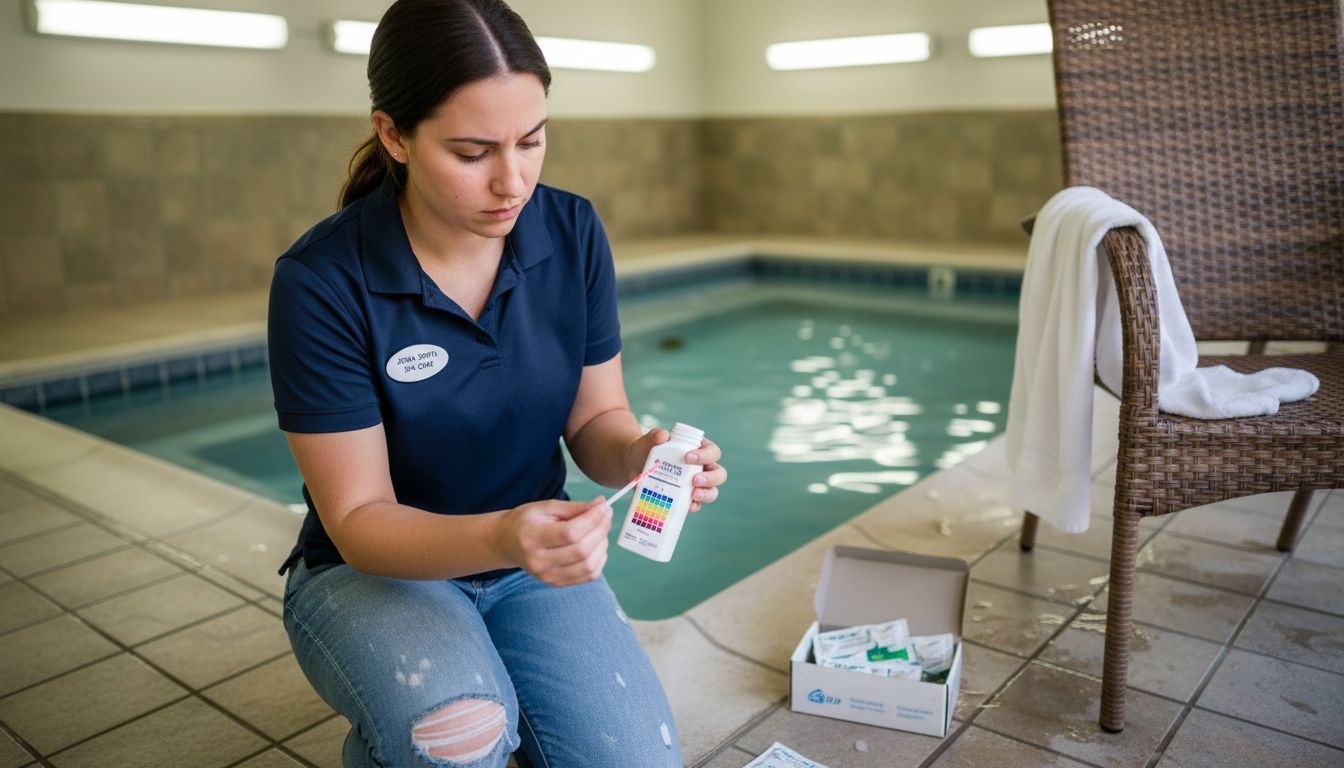
Regular maintenance and appropriate filtration are essential for preventing legionella growth and maintaining microbiologically safe water. Your S1 filter traps particulate matter that would otherwise become a breeding ground for harmful bacteria. This mechanical action directly reduces the microbial load your disinfectants must handle.
Here’s how your S1 filter maintains water quality:
- Removes suspended particles before they cloud your water
- Traps organic matter that bacteria would metabolise
- Reduces the workload on your chemical sanitisers
- Creates conditions where beneficial bacteria thrive
- Prevents biofilm formation on pipework and jets
When your filter clogs, water circulation drops immediately. Stagnant areas develop faster, and contaminants accumulate in dead zones. This is why filter condition directly impacts your water quality.
Filter media must be regularly cleaned or replaced according to best practices to prevent fouling and ensure consistent water treatment. A clogged S1 filter loses its mechanical efficiency first, then its biological effectiveness. You lose both types of filtration simultaneously.
Your chemicals work harder when your filter clogs. Chlorine or bromine must fight bacteria that a clean filter would have already removed. This strains your chemical balance and often leads to poor water clarity despite correct sanitiser readings.
A clean filter is worth more than additional chemicals - prevention beats treatment every time.
The biological component of your S1 filter improves water quality continuously. Beneficial bacteria break down ammonia and organic compounds your chemicals can’t touch. This gradual process reduces the total chemical demand, lowering both costs and irritation to users.
Temperature stability matters too. When circulation slows due to filter fouling, hot tubs struggle to maintain consistent heating. Your pump works harder, chemicals distribute unevenly, and dead spots develop where temperature drops.
Monitoring your filter’s condition is straightforward. Check the pressure gauge on your filter housing weekly. Rising pressure indicates accumulating debris - time to clean. Most S1 filters reach their cleaning point every 2-4 weeks depending on usage.
Water clarity gives you another visual clue. If your water looks slightly hazy despite correct chlorine levels, your filter likely needs attention. Crystal-clear water means your mechanical filtration is working perfectly alongside your chemical treatment.
Proper spa maintenance includes regular filter inspections and cleaning as a core component. This simple habit prevents 90% of water quality problems UK hot tub owners experience.
Pro tip: Clean your S1 filter when pressure rises 0.5 bar above baseline - don’t wait for maximum pressure readings, as early cleaning prevents efficiency loss and extends cartridge lifespan.
Cleaning, Lifespan, And Replacement Best Practices
Keeping your S1 filter clean is the single most important maintenance task you can do. A clean filter maintains water clarity, reduces chemical demand, and prevents system failures. Most UK hot tub owners neglect this until problems emerge.
Clean your S1 filter when pressure rises 0.5 bar above your baseline reading. Don’t wait for maximum pressure - early intervention preserves filter efficiency. Most filters need cleaning every 2-4 weeks depending on bather load and debris.
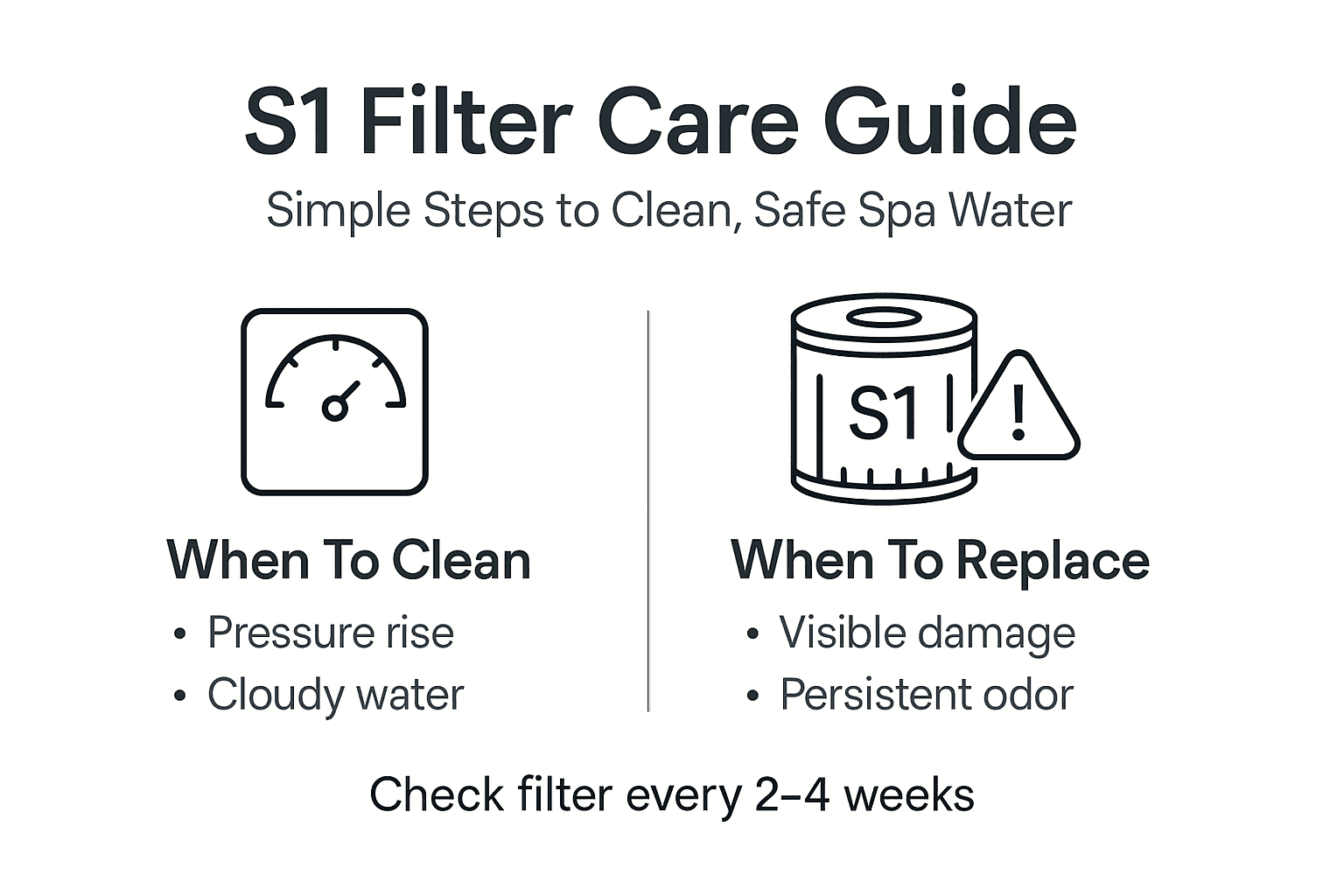
Routine cleaning and appropriate replacement prevent biological fouling which reduces filter efficiency and lifespan. Proper cleaning removes accumulated debris, dead bacteria, and chemical residues that degrade performance. This documented maintenance ensures consistent water quality.
Your S1 filter cleaning process involves:
- Turn off your pump system completely
- Access your filter housing and remove the cartridge carefully
- Rinse with clean water from a hose, working top to bottom
- Use a filter cleaning solution for stubborn buildup
- Inspect for tears or damage before reinstalling
- Replace the cartridge if damage is visible
Never use a pressure washer on your S1 cartridge. High-pressure water destroys the pleated media and renders the filter useless. Hand rinsing with a garden hose works perfectly.
Clean filters cost nothing; replacing damaged ones costs £40-80 - prevention wins every time.
Documented cleaning procedures ensure removal of microbial and chemical residues. Keep records of your cleaning dates and filter conditions. This simple log helps you identify patterns and plan replacements before failures occur.
Your S1 filter typically lasts 12-18 months with proper care. Lifespan depends on usage, water chemistry, and cleaning frequency. Heavy use or poor water balance shortens lifespan significantly.
Replace your filter when:
- The pleats show visible tears or damage
- Pressure stays high even after cleaning
- Water clarity doesn’t improve after cleaning
- The cartridge has reached 18 months old
- Visible mould or discolouration appears
Dont stretch a failing filter. A damaged S1 allows debris to bypass filtration, creating problems throughout your system. Bypass water damages your pump and jets.
For quick reference, here’s a guide to troubleshooting S1 filter performance issues:
| Symptom | Likely Cause | Suggested Action |
|---|---|---|
| Cloudy water | Dirty or clogged filter | Rinse with hose, deep clean or replace |
| High pressure reading | Excessive debris/biofilm | Thorough cleaning, inspect pleats |
| Rapid chlorine loss | Biological contaminant build-up | Disinfect filter and check spa water |
| Reduced water flow | Blocked cartridge/pipework | Remove cartridge, check for obstructions |
| Persistent odours | Filter fouling/bacterial issue | Clean filter, check water balance |
Winter storage affects lifespan too. Store your filter in a cool, dry place if your hot tub sits unused for months. Never store a wet filter - it develops mould that ruins the media.
Order replacement cartridges before your current one fails. Having a spare means zero downtime when replacement timing arrives. Most UK suppliers stock S1 cartridges for quick delivery.
Pro tip: Take photos of your filter pressure gauge reading after cleaning - this establishes your baseline, making it easy to spot when pressure has risen enough to warrant your next clean.
Avoiding Common Problems With S1 Filters
Most S1 filter problems are preventable with basic knowledge and consistent maintenance. Understanding what goes wrong helps you spot issues before they become expensive. UK hot tub owners often repeat the same mistakes unknowingly.
Biofilm buildup is the sneakiest problem. This slimy layer of bacteria grows inside your filter pleats, reducing water flow and harbouring pathogens. You can’t see it developing, but your pressure gauge reveals the truth.
Biofilm develops when:
- You skip regular filter cleaning
- Water temperature drops below 38°C
- Chlorine or bromine levels fall too low
- Dead organic matter accumulates in the filter
- Your filter isn’t cleaned for over 4 weeks
Chemical imbalances directly damage your S1 cartridge. Incorrect pH levels corrode pleated media, whilst excessive chlorine degrades polyester materials. High bromine concentrations also weaken filter construction over time.
Test your water chemistry weekly. Maintain pH between 7.2-7.6 and sanitiser levels within recommended ranges. This simple habit prevents most chemical damage to your filter.
Clogging from debris happens faster than you’d expect. Hair, dead skin, leaves, and fibres accumulate rapidly. Pressure rises steadily, signalling the need for cleaning before bypass occurs.
Biofilm buildup, clogging, and chemical imbalances reduce filter effectiveness significantly. Addressing these issues requires understanding water chemistry and circulation patterns. Regular maintenance prevents all three problems simultaneously.
Prevent problems rather than repair damage - a failing filter creates cascading system issues.
Legionella contamination represents the serious health risk. Stagnant water, temperature drops, and biofilm create ideal conditions for this pathogen. Maintaining effective water temperatures and regular cleaning schedules prevents bacterial growth and ensures user safety.
Keep your water temperature above 38°C and never below 35°C. Run your circulation system daily, even when not using your hot tub. Temperature drops combined with poor circulation create legionella risk rapidly.
Avoid these common mistakes:
- Using pressure washers on filter cartridges
- Leaving filters wet during storage
- Ignoring rising pressure gauge readings
- Skipping chlorine or bromine testing
- Storing filters in sunlight or extreme temperatures
- Reusing damaged or torn cartridges
Damaged filters bypass water around the cartridge, sending unfiltered water into your system. This damages your pump impeller and clogs jets within days. Replacement costs more than prevention.
Master the filter cleaning process to prevent 80% of S1 filter problems. Proper technique removes biofilm, maintains cartridge integrity, and extends lifespan significantly.
Pro tip: Test water chemistry every 3 days during active use - catching imbalances early prevents filter media degradation and maintains optimal sanitiser effectiveness.
Keep Your Hot Tub Crystal Clear with ClearSpa Solutions
Maintaining your S1 Hot Tub Filter is essential to ensure clean and safe spa water through effective mechanical and biological filtration. If you are struggling with clogged filters reducing water flow or worried about biofilm and pathogen buildup, ClearSpa offers expertly crafted water treatment products designed to complement your filter’s vital role. Our range helps you maintain proper chemical balances that protect your filter media from damage while enhancing water clarity and hygiene.
Explore ClearSpa’s premium selection of hot tub chemicals and spa essentials that work hand in hand with your S1 filter. Don’t wait for cloudy water or rising pressure readings to act Maintain your filter perfectly today by visiting ClearSpa and discover the difference a well-supported filtration system can make. Protect your investment and ensure safe, inviting spa water with products trusted by spa owners across the United Kingdom.
Frequently Asked Questions
What is the role of an S1 hot tub filter?
An S1 filter is crucial for maintaining clean and safe hot tub water. It traps debris, dead skin cells, and harmful microorganisms, reducing the workload on your chemical disinfection system and preventing contamination.
How often should I clean my S1 filter?
You should clean your S1 filter every 2-4 weeks, depending on usage and debris accumulation. Clean the filter when the pressure gauge rises by 0.5 bar above the baseline reading.
What are the signs that my S1 filter needs replacement?
Replace your S1 filter when you notice visible damage, persistent high-pressure readings even after cleaning, poor water clarity, or if the cartridge has reached 18 months old.
How do mechanical and biological filtration work together in an S1 filter?
Mechanical filtration in the S1 filter removes visible debris, while biological filtration utilises beneficial bacteria to break down harmful organic compounds. Together, they ensure optimal water quality, making the filtration process more effective than relying solely on chemicals.