Hot Tub Maintenance - What UK Homeowners Should Know
Hot tub maintenance in the UK explained, including daily care tasks, water chemistry tips, product selection, and common mistakes to avoid.
Keeping your hot tub running smoothly can quickly become more challenging than expected, especially with so many moving parts and chemical levels to monitor. For UK homeowners, regular maintenance goes far beyond a quick clean or random check. Instead, adopting a routine inspired by comprehensive home care strategies is the best way to avoid costly repairs and truly enjoy your spa. Consistent attention and smart product choices are key to preventing chemical imbalances and keeping your hot tub experience relaxing and hassle-free.
Table of Contents
- Hot Tub Maintenance Explained for Homeowners
- Core Daily and Weekly Care Tasks
- Understanding Water Chemistry and Testing
- Choosing the Right Hot Tub Products
- Common Maintenance Mistakes to Avoid
Key Takeaways
| Point | Details |
|---|---|
| Regular Maintenance is Essential | Consistent attention to water chemistry, filtration system care, and equipment checks prevents costly repairs and extends the lifespan of your hot tub. |
| Daily and Weekly Routines | Establish routines for daily water quality checks and weekly comprehensive maintenance to ensure optimal performance and prevent issues. |
| Water Chemistry Management | Maintain balanced pH and sanitiser levels by testing water frequently to avoid health risks and equipment damage. |
| Avoid Common Mistakes | Inconsistent sanitisation, neglecting filters, and improper winterisation can lead to significant long-term damage and costly repairs. |
Hot Tub Maintenance Explained for Homeowners
Maintaining a hot tub requires consistent attention and strategic care to ensure its longevity and performance. UK homeowners understand that a well-maintained spa can provide years of relaxation and enjoyment, but this demands more than occasional cleaning. Comprehensive home maintenance strategies suggest regular inspections and proactive care are crucial for preventing costly repairs.
Successful hot tub maintenance involves several critical components: water chemistry management, filtration system care, surface cleaning, and equipment checks. Proper water balance is paramount - this means regularly testing pH levels, alkalinity, and sanitiser concentrations using reliable testing kits. You’ll want to maintain chlorine or bromine levels within recommended ranges, typically 3-5 parts per million for chlorine or 4-6 for bromine, to prevent bacterial growth and ensure water remains crystal clear.
The mechanical aspects of hot tub care are equally important. This includes inspecting pump seals, checking electrical connections, and cleaning or replacing filters every 3-4 months. Understanding routine property maintenance teaches us that early detection of potential issues can save significant time and money in the long run. Pay special attention to signs of wear, unusual noises from equipment, or water discolouration that might indicate underlying problems.
Expert tip: Invest in a high-quality cover and keep it securely fastened when the hot tub is not in use to minimise debris accumulation and maintain water temperature efficiency.
Core Daily and Weekly Care Tasks
Successful hot tub maintenance hinges on establishing a consistent routine of daily and weekly care tasks that prevent potential issues and maintain optimal performance. Systematic home maintenance approaches emphasise the importance of regular inspections and proactive care to identify and address potential problems before they escalate.
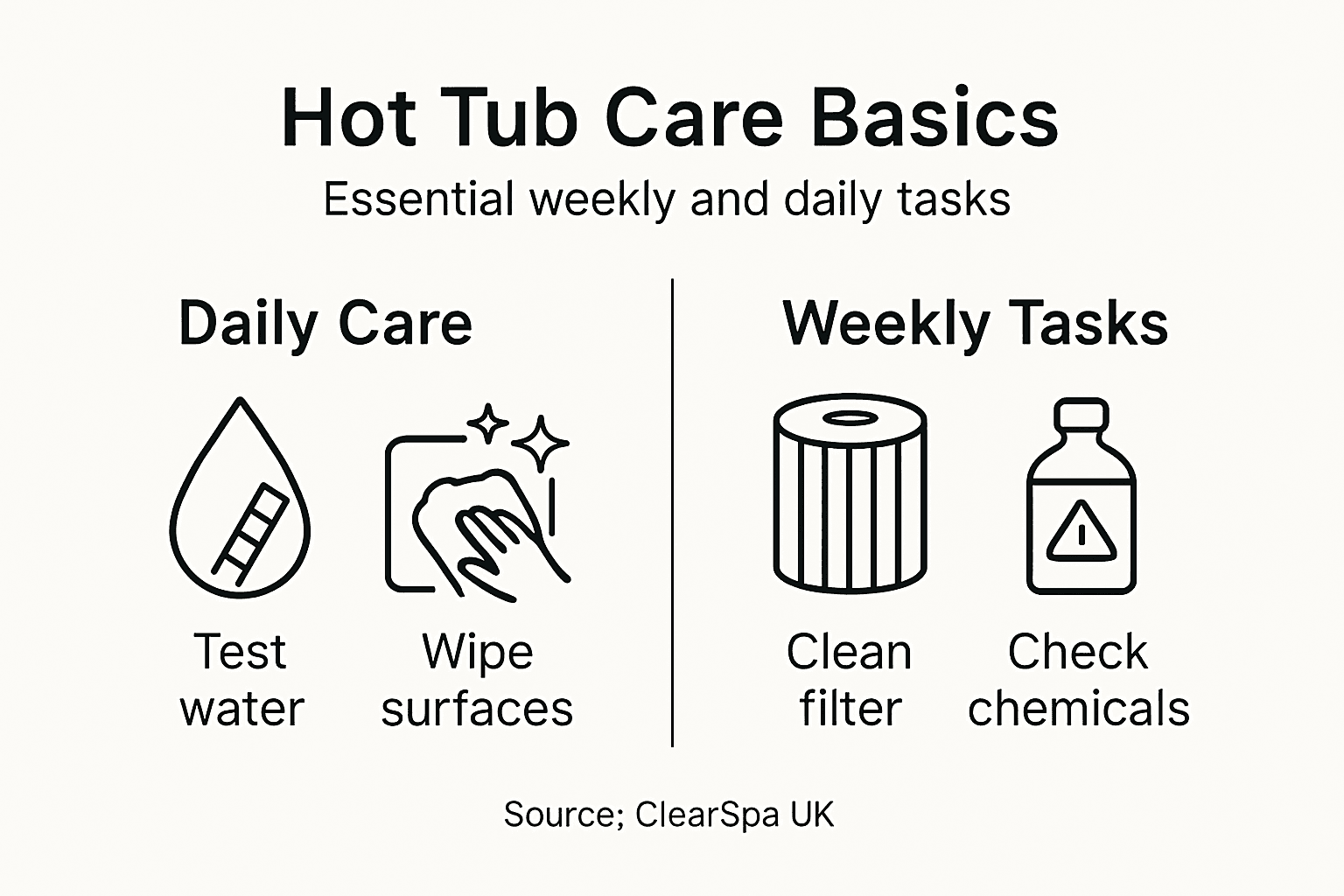
Daily tasks should focus on water quality and surface cleanliness. This includes testing water chemistry using reliable test strips, checking pH and sanitiser levels, and removing any visible debris from the water surface. Skim the water with a net, clean the waterline with a specialised hot tub surface cleaner, and ensure the water remains clear and inviting. Running the hot tub’s circulation pump for at least 15-20 minutes daily helps distribute chemicals evenly and maintain water clarity.
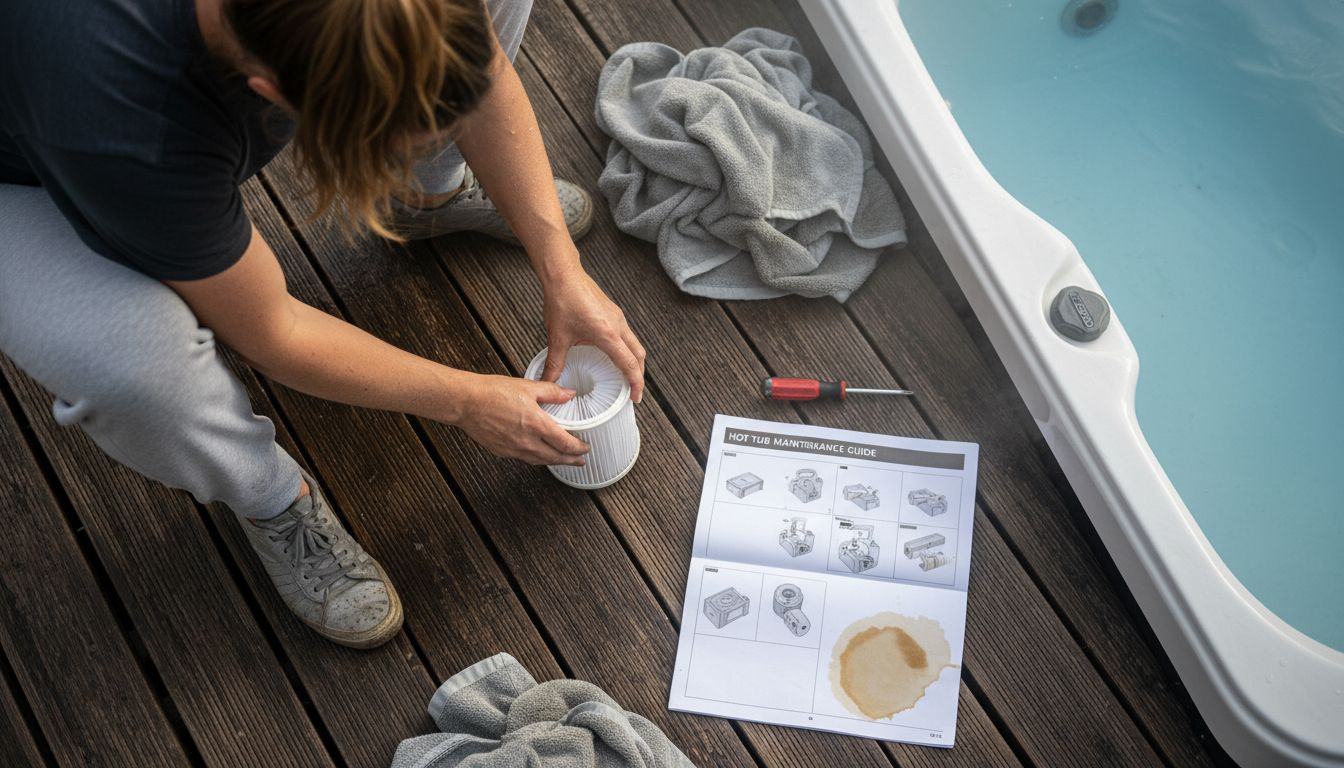
Weekly maintenance involves more comprehensive care. Clean or replace filters according to manufacturer recommendations, typically every 3-4 weeks. Thoroughly inspect the hot tub’s equipment, checking for any signs of wear, loose connections, or unusual noises from pumps and heaters. Routine care practices underscore the significance of consistent attention to prevent potential breakdowns and extend the lifespan of your hot tub.
Expert tip: Keep a maintenance log to track water chemistry readings, filter changes, and equipment inspections, helping you stay organised and identify patterns or potential issues early.
Understanding Water Chemistry and Testing
Maintaining proper water chemistry is the cornerstone of hot tub health and enjoyment. Water sampling techniques emphasise the critical importance of understanding chemical balance and using accurate testing methods to prevent potential health risks and equipment damage.
Hot tub water chemistry involves balancing multiple chemical parameters, including pH levels, total alkalinity, sanitiser concentration, and calcium hardness. A balanced pH between 7.2 and 7.6 ensures optimal sanitiser effectiveness and prevents potential skin irritation. Sanitisers like chlorine or bromine are essential for killing harmful bacteria and maintaining water hygiene. Most hot tub owners should test their water at least 2-3 times per week using reliable test strips or digital testing kits that provide precise measurements of these critical chemical parameters.
Comprehensive water testing goes beyond simple chemical measurements. Nutrient pollution indicators highlight the importance of understanding water quality parameters that might not be immediately visible. This includes checking for total dissolved solids, potential metal contamination, and other factors that could compromise water safety. Professional hot tub owners often invest in digital testing equipment that provides more detailed analysis, allowing for more precise chemical adjustments and preventing potential long-term damage to both water quality and hot tub equipment.
Expert tip: Always keep a log of your water chemistry readings and chemical adjustments, which will help you identify patterns and maintain consistent water quality over time.
Choosing the Right Hot Tub Products
Selecting the appropriate hot tub products requires careful consideration of your specific needs, water chemistry requirements, and equipment compatibility. Energy efficiency considerations play a crucial role in determining the most suitable chemical treatments and maintenance solutions for your hot tub.
When choosing hot tub chemicals, prioritise products specifically designed for spa use rather than generic pool chemicals. Look for comprehensive treatment ranges that include pH balancers, sanitisers, shock treatments, and water clarifiers. Chlorine and bromine are the two primary sanitiser options, each with unique advantages. Chlorine tends to be more cost-effective and fast-acting, while bromine provides longer-lasting protection and works more effectively at higher temperatures typical of hot tub environments.
Beyond chemical selection, consider investing in high-quality testing equipment that allows precise monitoring of water parameters. Hot water system calculators can help determine appropriate product quantities based on your specific hot tub volume and usage patterns. Professional-grade test strips or digital testing devices provide more accurate readings than basic colour-matching kits, enabling more precise chemical adjustments and preventing potential water quality issues.
Expert tip: Invest in a comprehensive hot tub starter kit that includes multiple chemical treatments, allowing you to address various water chemistry challenges systematically.
Common Maintenance Mistakes to Avoid
Home maintenance guidance reveals that neglecting routine care can lead to significant long-term damage, a principle particularly true for hot tub maintenance. Many UK homeowners inadvertently make critical errors that can compromise their spa’s performance, water quality, and overall longevity.
One of the most prevalent mistakes is inconsistent water chemistry management. Homeowners often either over-sanitise or under-sanitise their hot tub, both of which create significant problems. Over-chlorination can damage equipment seals and irritate skin, while under-sanitisation allows harmful bacteria to proliferate. Another common error is neglecting to clean or replace filters regularly, which reduces water circulation efficiency and puts unnecessary strain on the hot tub’s pump system.
Improper winterisation and seasonal maintenance represent another critical area of potential failure. Maintenance planning principles emphasise the importance of systematic, documented care routines. Many hot tub owners fail to drain and thoroughly clean their spa before extended periods of non-use, leading to potential water contamination, equipment corrosion, and seal degradation. Additionally, ignoring small leaks or unusual equipment noises can result in expensive repairs that could have been prevented through early intervention.
Expert tip: Create a dedicated maintenance calendar with specific tasks, dates, and reminders to ensure no critical hot tub care steps are accidentally overlooked.
Elevate Your Hot Tub Care with ClearSpa Solutions
Maintaining the perfect water chemistry and ensuring your hot tub equipment remains in top condition can be challenging for UK homeowners. The risk of inconsistent sanitiser levels, clogged filters, and overlooked equipment checks might lead to costly repairs and diminished enjoyment. ClearSpa understands these specific challenges and offers expertly formulated hot tub chemicals designed for precise water balance and longer-lasting protection. With our high-quality products, including pH balancers, sanitisers, and shock treatments, you can confidently keep your spa water crystal clear and safe.
Take control of your hot tub maintenance routine today by exploring our extensive range at ClearSpa. Don’t wait until small problems escalate; invest in spa essentials crafted to extend your hot tub’s lifespan and optimise performance. For trusted advice and quality you can rely on, visit ClearSpa now and make your relaxation time worry-free.
Frequently Asked Questions
How often should I test the water in my hot tub?
You should test the water chemistry at least 2-3 times per week using reliable test strips or digital testing kits to ensure proper pH levels, sanitiser concentration, and overall water balance.
What are the essential chemicals needed for hot tub maintenance?
The essential chemicals include sanitisers like chlorine or bromine, pH balancers, shock treatments, and water clarifiers. It’s important to choose products specifically designed for hot tubs rather than generic pool chemicals.
How can I prevent my hot tub from developing bacterial growth?
To prevent bacterial growth, maintain the sanitiser levels within the recommended range (typically 3-5 parts per million for chlorine, 4-6 for bromine), regularly clean filters, and ensure the water is balanced in terms of pH and alkalinity.
What can I do to ensure my hot tub remains energy efficient?
To ensure energy efficiency, invest in a high-quality cover to retain heat, regularly maintain the filtration system, and use energy-efficient chemicals and equipment to reduce overall running costs.