Pool Filter Type VI: 30% Longer Life & Clearer UK Water
Master Type VI pool filters for 30% longer life and crystal clear UK hot tub water. Expert maintenance tips, PWTAG standards, and troubleshooting guide.
Many UK hot tub owners assume sand filters are the gold standard for water clarity. That’s a costly mistake. Type VI cartridge filters deliver superior ease of maintenance, better filtration for residential use, and extend equipment life by up to 30% with proper care. This guide empowers you to master Type VI filters, banish cloudy water, and slash maintenance time.
Table of Contents
- Introduction To Pool Filter Type VI: What UK Owners Need To Know
- How Pool Filter Type VI Works: Mechanism And Benefits
- UK Water Quality And PWTAG Standards Impacting Filter Use
- Maintaining Your Type VI Pool Filter: Cleaning, Replacement, And Tips
- Comparing Type VI With Other Filter Types: Pros, Cons, And Misconceptions
- Advanced Tips And Troubleshooting For Type VI Filters
- Summary And Practical Next Steps For UK Hot Tub And Pool Owners
- Enhance Your Pool & Hot Tub Care With ClearSpa™ Solutions
Key Takeaways
| Point | Details |
|---|---|
| Type VI Design | Pleated dacron fabric captures debris from microscopic to visible particles efficiently. |
| Maintenance Schedule | Weekly rinsing and monthly deep cleaning extend filter life by 30%. |
| Replacement Timing | Replace every 12 to 18 months to prevent pump strain and maintain clarity. |
| UK Standards | PWTAG requires filtration to control pathogens like cryptosporidium resistant to chemicals alone. |
| Cartridge Advantage | Easier maintenance than sand filters with no backwashing or bulky equipment needed. |
Introduction to Pool Filter Type VI: What UK Owners Need to Know
Understanding your filter design transforms maintenance from guesswork into confidence. Type VI filters utilize pleated dacron filter media engineered to trap particles ranging from microscopic contaminants to larger debris like hair and leaves. This design offers a smart alternative to sand filtration systems that dominate commercial pools but overwhelm home users.
Why do UK hot tub owners gravitate toward Type VI? The answer lies in practicality. These cartridge filters deliver excellent performance without the space demands or maintenance complexity of sand systems. Their compact design fits seamlessly into small to medium hot tubs, including popular inflatable and plug and play models common in UK gardens.
Here’s what makes Type VI filters stand out:
- Pleated structure maximizes surface area within a compact cartridge
- Compatible with most UK residential hot tub brands and models
- No backwashing required, saving water and reducing chemical waste
- Easy visual inspection to assess cleanliness and wear
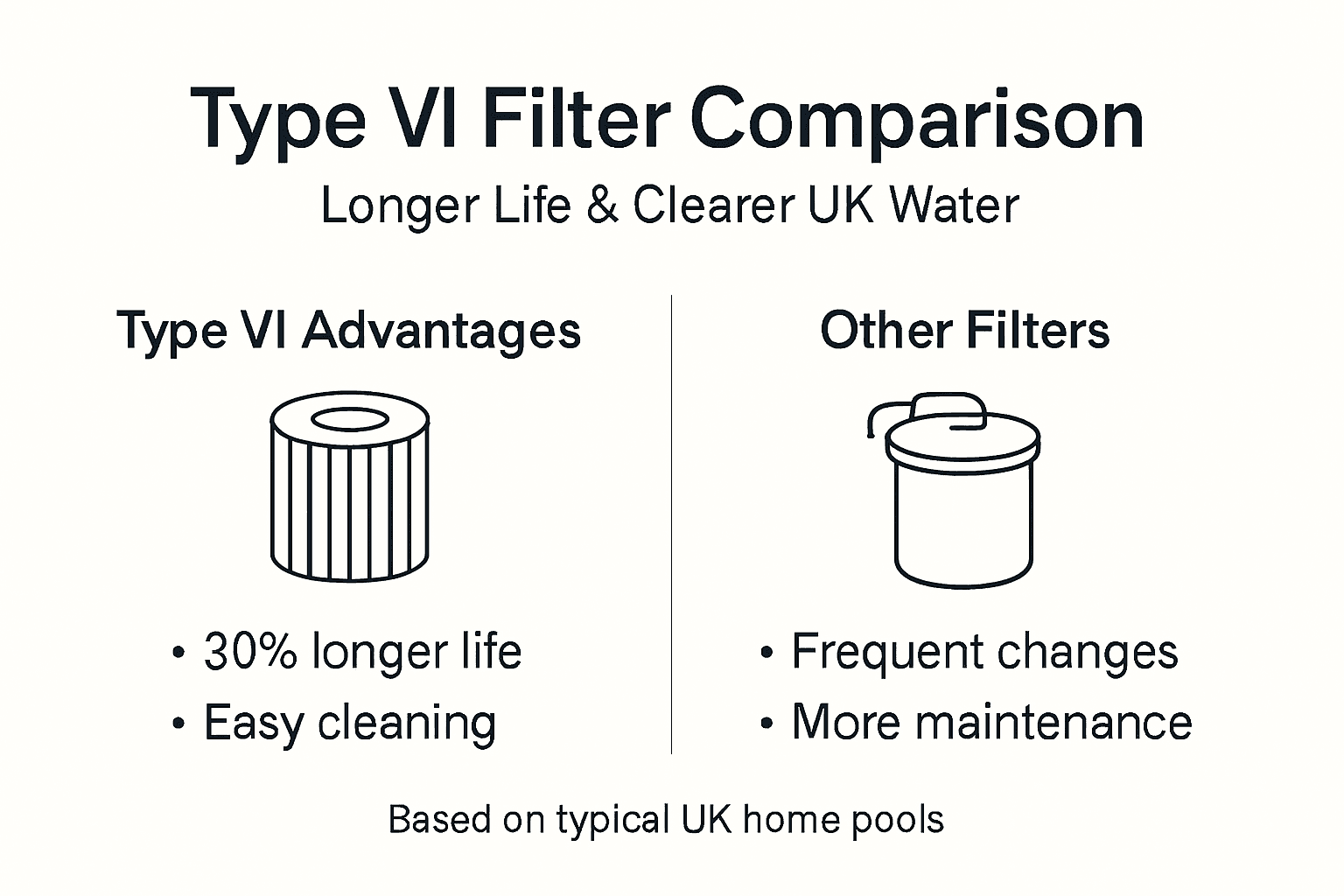
For owners exploring types of hot tub filters, Type VI represents the sweet spot between performance and user friendliness. You get professional grade filtration without needing a degree in pool engineering. The dacron fabric withstands repeated cleaning cycles while maintaining its particle trapping capability, making it a cost effective choice for regular residential use.
How Pool Filter Type VI Works: Mechanism and Benefits
Filtration mechanics matter because they directly impact your water quality and chemical efficiency. Water passes through pleated filter media trapping particles, with physical removal reducing reliance on chemical sanitizers. Think of your filter as the first line of defense, capturing contaminants before they dissolve or require chemical intervention.
The pleated design isn’t just for show. Those folds dramatically increase surface area, allowing more water contact with filter material in a smaller footprint. As your pump circulates water through the cartridge, particles get trapped in the dacron fabric layers while clean water flows back into your tub.
This physical filtration process delivers tangible benefits:
- Reduced sanitizer consumption since fewer contaminants remain in suspension
- Clearer water with improved light reflection and visual appeal
- Lower chemical costs over time as filtration handles the heavy lifting
- Healthier bathing environment with fewer irritants and allergens
Pro Tip: Check your pool filter parts regularly for proper seal integrity. A small leak bypasses filtration entirely, wasting your pump’s effort and allowing unfiltered water back into circulation.
The efficiency gains compound over time. Better filtration means your chlorine or bromine focuses on sanitizing rather than oxidizing suspended particles. You’ll notice the difference in both water sparkle and how long your chemicals remain effective between doses.
UK Water Quality and PWTAG Standards Impacting Filter Use
Legal compliance isn’t optional, and understanding UK standards protects both your health and investment. The PWTAG Code of Practice sets minimum safety standards for water treatment to control pathogens like cryptosporidium and legionella. These guidelines apply to commercial facilities but offer crucial guidance for residential hot tub safety.
Why does PWTAG emphasize filtration so heavily? Certain pathogens resist chemical treatment alone. Cryptosporidium, a parasitic organism causing severe gastrointestinal illness, survives typical chlorine levels. Physical removal through proper filtration becomes essential for protecting users, especially children and immunocompromised individuals.
Key aspects of PWTAG standards relevant to Type VI filters include:
- Minimum turnover rates ensuring all water passes through filtration multiple times daily
- Particle removal standards to reduce pathogen harboring debris
- Regular maintenance schedules to maintain filtration effectiveness
- Water testing protocols to verify both chemical and physical treatment adequacy
Type VI cartridge filters meet these filtration rate criteria when properly sized and maintained. The pleated media captures particles down to 10 to 15 microns, well within the range needed for pathogen control. This makes them suitable for residential applications where owners want commercial grade safety without industrial complexity.
For more detailed guidance, review the complete PWTAG Code of Practice to understand how your home spa relates to professional standards. While you’re not legally bound by these commercial regulations, following them elevates your water safety and equipment longevity.
Maintaining Your Type VI Pool Filter: Cleaning, Replacement, and Tips
Proper maintenance separates crystal clear water from constant frustration. Weekly rinsing with dedicated cleaners prevents clogs and maintains efficient filtration, with replacements every 12 to 18 months recommended for optimal performance. This schedule isn’t arbitrary; it’s based on how quickly oils, minerals, and organic matter accumulate in filter media.
Follow this proven maintenance routine:
- Remove the cartridge weekly and rinse thoroughly with a garden hose, spraying between pleats to dislodge trapped debris.
- Perform monthly deep cleaning by soaking the filter overnight in a specialized filter cleaner solution.
- Inspect for tears, compressed pleats, or persistent discoloration indicating material breakdown.
- Rotate between two filters if possible, allowing one to dry completely while the other operates.
- Replace filters showing visible damage or reduced flow even after deep cleaning.
Outdoor hot tubs in UK gardens face additional contamination from leaves, pollen, and airborne dirt. Increase your rinsing frequency during autumn when leaf fall peaks, and after heavy storms that introduce debris. This proactive approach extends filter life by preventing deep embedded contamination.
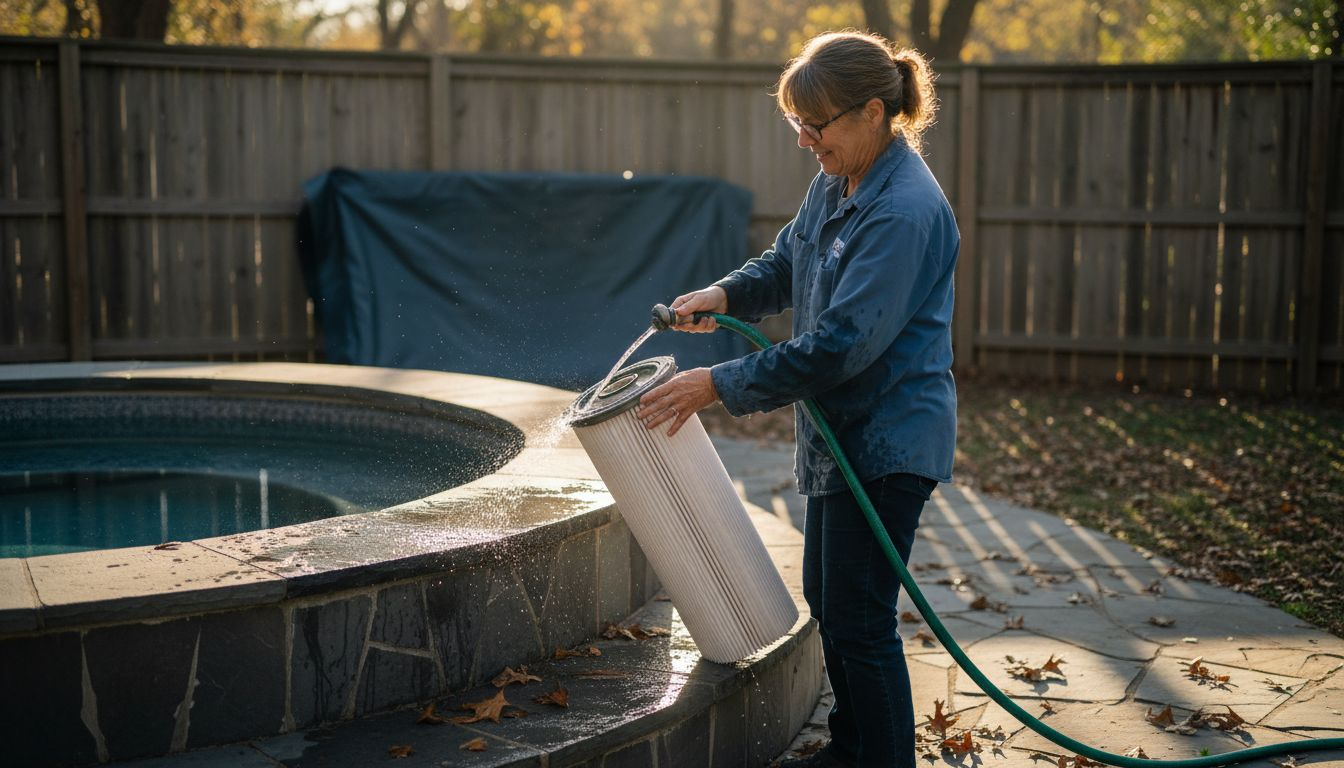
Pro Tip: Never use a pressure washer on Type VI filters. The high pressure damages the dacron fabric structure, creating gaps that allow particles to bypass filtration. Stick to moderate water pressure from a standard garden hose.
Keeping a maintenance log transforms guesswork into data driven care. Note each cleaning date, any issues observed, and water quality before and after service. This record helps you identify patterns, optimize your schedule, and know precisely when 12 to 18 months have elapsed for replacement. For comprehensive guidance, explore our UK hot tub maintenance tips covering seasonal considerations and troubleshooting strategies. You can also reference detailed hot tub filter maintenance guidance for specific cleaning techniques.
Comparing Type VI with Other Filter Types: Pros, Cons, and Misconceptions
Choosing the right filter type eliminates years of unnecessary hassle. Cartridge filters like Type VI offer user friendly operation and compact design, while sand filters require backwashing and bulky housings better suited to commercial pools. Understanding these differences helps you make an informed decision aligned with your actual needs rather than outdated assumptions.
| Feature | Type VI Cartridge | Sand Filter |
|---|---|---|
| Maintenance | Weekly rinsing, monthly deep clean | Regular backwashing, media replacement every 5 years |
| Size | Compact, fits small spaces | Large tank requires dedicated area |
| Water Usage | Minimal, only for rinsing | High during backwashing process |
| Filtration | 10 to 15 microns | 20 to 40 microns |
| Cost | Moderate initial, regular replacements | Higher initial, lower ongoing |
The persistent myth that sand filters provide superior filtration collapses under scrutiny. Cartridge filters actually capture smaller particles, delivering clearer water for typical residential use. Sand excels in high volume commercial applications where the extra maintenance complexity justifies the durability benefits.
Key advantages of Type VI for UK homeowners:
- No backwashing means lower water bills and simpler operation
- Visual inspection shows exactly when cleaning is needed
- Lighter weight makes handling easier for solo maintenance
- Better particle capture improves water clarity noticeably
For detailed comparisons across all filter categories, review our guide on types of spa filters explaining when each type makes sense. Your choice should match your tub size, usage frequency, and willingness to perform different maintenance tasks.
Advanced Tips and Troubleshooting for Type VI Filters
Mastering advanced techniques elevates good maintenance into exceptional results. Using dual filters alternately ensures continuous filtration and extends filter life by allowing complete drying between uses. This strategy particularly benefits owners who use their tubs frequently or host regular gatherings that increase contamination loads.
Expert strategies for maximum filter performance:
- Balance your water chemistry religiously since improper pH accelerates filter degradation and microbial growth
- Store spare filters in a cool, dry location away from direct sunlight to prevent material breakdown
- Mark installation dates directly on the cartridge with permanent marker for instant reference
- Monitor pump pressure gauges if equipped; rising pressure indicates filter clogging even if visual inspection looks acceptable
Pro Tip: If water clarity declines despite a freshly cleaned filter, test your sanitizer levels immediately. The issue often lies in chemical imbalance rather than filtration failure, saving you from unnecessary filter replacement.
Recognizing filter wear signs prevents system damage. Increased pump run times, reduced jet pressure, or persistent cloudiness after cleaning all signal that your filter has reached end of life. Don’t push a worn filter beyond its capacity. The few pounds saved risk pump motor damage costing hundreds to repair.
For comprehensive problem solving strategies, consult our hot tub troubleshooting tips covering everything from chemical issues to equipment malfunctions. Additional advanced filter care tips provide manufacturer specific guidance for optimizing your particular system.
Summary and Practical Next Steps for UK Hot Tub and Pool Owners
You now possess the knowledge to transform your filtration from mysterious black box into controlled, predictable system. Type VI cartridge filters deliver efficient, easy to maintain filtration perfectly suited to UK residential hot tubs when you follow proven maintenance protocols. The 30% life extension from proper care isn’t marketing hype; it’s achievable through consistent weekly rinsing and monthly deep cleaning.
Your action plan moving forward:
- Establish a weekly filter rinsing routine, marking calendar reminders to build the habit
- Purchase a backup filter to enable rotation and eliminate downtime during cleaning
- Commit to 12 to 18 month replacement cycles regardless of visual appearance
- Test water chemistry weekly to catch imbalances before they damage your filter
- Keep detailed maintenance logs to optimize your schedule and predict replacement needs
Adhering to PWTAG standards protects your family’s health even though you’re not legally required to follow commercial pool regulations. The peace of mind from knowing your water meets professional safety criteria justifies the modest extra effort. Combining proper filtration with correct chemical balance reduces sanitizer consumption while improving spa enjoyment through consistently clear, inviting water.
The investment in quality filtration maintenance pays dividends in equipment longevity, reduced chemical costs, and superior bathing experiences. Your hot tub represents a significant investment in home relaxation and wellness. Protect that investment through informed, proactive filter care that keeps water safe and sparkling year round.
Enhance Your Pool & Hot Tub Care with ClearSpa™ Solutions
Transform your maintenance routine from reactive troubleshooting into proactive care with ClearSpa™ comprehensive solutions. Our water filtration parts include Type VI replacements engineered for UK hot tub compatibility and long service life.
Stay ahead of problems with our expert hot tub maintenance tips tailored specifically for UK owners facing unique climate and water quality challenges. Optimize your sanitizer effectiveness using our detailed chemical dosing guide for hot tubs that eliminates guesswork and reduces waste. ClearSpa™ delivers professional grade products with guidance that makes expert care accessible to every owner.
FAQ
What is a Pool Filter Type VI and how does it differ?
Type VI is a cartridge style filter featuring pleated dacron fabric media designed for residential hot tubs and small pools. Unlike sand filters requiring backwashing or DE filters needing powder additions, Type VI offers simple rinse and replace maintenance ideal for UK homeowners.
How often should I clean and replace my Type VI filter?
Rinse your filter weekly with a garden hose and perform monthly deep cleaning soaks in specialized solution. Replace the cartridge every 12 to 18 months regardless of appearance, as internal media degradation isn’t always visible but compromises filtration effectiveness.
Can I rely on filtration alone without chemicals?
No, filtration removes physical particles but cannot kill harmful microorganisms like bacteria and viruses. Chemical sanitizers such as chlorine or bromine remain essential for destroying pathogens and maintaining safe bathing water.
What are signs my Type VI filter needs replacement?
Watch for increased water cloudiness despite regular cleaning, longer pump operating times to maintain circulation, visible tears or compressed pleats in the media, or persistent odors indicating bacterial colonization. Any of these signals demand immediate filter replacement to protect your equipment and water quality.