7-Step Hot Tub Troubleshooting Checklist for UK Owners
Discover a practical hot tub troubleshooting checklist for UK owners, with 7 expert tips to solve common spa maintenance issues and boost water quality.
British hot tub owners often find that small maintenance issues can snowball into costly repairs if left unchecked. With over 150,000 hot tubs installed across the United Kingdom, even a simple drop in water level or unusual noise from the pump can disrupt the relaxation you expect at home. Getting familiar with the practical side of spa troubleshooting will help you keep your hot tub running smoothly and avoid unwelcome surprises.
Table of Contents
- 1. Check Water Levels And Heating Issues
- 2. Inspect Power Supply And Circuit Breakers
- 3. Examine Filter For Clogs Or Damage
- 4. Test Water Chemistry And Adjust Chemicals
- 5. Review Jets For Blockages Or Malfunctions
- 6. Assess Pump Functionality And Noise
- 7. Monitor Thermostat And Control Panel Settings
Quick Summary
| Key Message | Explanation |
|---|---|
| 1. Maintain Proper Water Levels | Keep water levels 2.5 to 5 centimetres above the skimmer opening to ensure optimal performance and prevent mechanical stress. |
| 2. Regularly Inspect Electrical Components | Check power supply, circuit breakers, and RCDs for optimal operation and safety; address any faults immediately. |
| 3. Clean and Replace Filters | Regularly rinse filters every two weeks, with a deep clean monthly, to maintain water flow and pump efficiency. |
| 4. Test Water Chemistry Weekly | Use a digital testing kit to monitor pH, alkalinity, and sanitiser levels, ensuring a safe and enjoyable hot tub experience. |
| 5. Check Jets for Blockages | Inspect and clean jets regularly to maintain hydrotherapy performance; address clogs promptly to enhance relaxation. |
1. Check Water Levels and Heating Issues
Maintaining proper water levels and understanding heating performance are critical first steps in hot tub troubleshooting for UK spa owners. Water levels that are too low or too high can significantly impact your hot tub’s functionality and potentially damage expensive components.
Precise water levels are essential for optimal pump and heating system performance. When water falls below the recommended mark, your hot tub’s internal mechanisms become vulnerable to air intake, which can cause serious mechanical stress. Conversely, overfilling creates unnecessary pressure on internal systems.
To accurately assess water levels, locate your spa’s skimmer or water level indicator. Most hot tubs require water to sit approximately 2.5 to 5 centimetres above the skimmer opening. Use a garden hose to top up water slowly, checking levels incrementally to prevent overflow.
Heating issues often stem from water level problems or electrical interruptions. If your hot tub struggles to maintain temperature, first verify water levels are correct. Insufficient water can prevent heating elements from functioning properly, leading to inconsistent warmth and potential system strain.
Careful water management is fundamental to spa maintenance, ensuring your hot tub operates efficiently and remains in peak condition.
Sage Advice: Always check water levels when the hot tub is cool and not in use, using adequate lighting to ensure precise measurement and prevent potential overflow or underfilling.
2. Inspect Power Supply and Circuit Breakers
Electrical issues can transform your relaxing hot tub experience into a frustrating ordeal. Understanding how to diagnose power supply problems is crucial for UK hot tub owners to ensure safe and consistent operation.
Circuit breakers serve as critical safety mechanisms protecting your hot tub’s electrical system from potential overloads or short circuits. When a breaker trips, it indicates an underlying electrical problem that requires immediate attention. Proper hot tub electrical diagnostics can help you identify and resolve these issues before they escalate.
Start by locating your main electrical panel and checking the dedicated hot tub circuit breaker. A tripped breaker will appear in a mid position between the fully on and fully off positions. Reset the breaker by switching it completely off and then back on firmly. If the breaker immediately trips again, this suggests a more serious electrical fault that requires professional investigation.
For outdoor hot tubs common in the United Kingdom, ensure your Residual Current Device (RCD) is functioning correctly. These safety switches protect against electrical shock and will interrupt power if they detect any current leakage. Check that the RCD is not in a tripped state and can be reset without difficulty.
Visual inspection of power cables and connections is equally important. Look for signs of wear, fraying, or damage that might indicate potential electrical risks. Moisture and outdoor conditions can deteriorate electrical components over time, so regular checks are essential.
Sage Advice: Always use a qualified electrician for complex electrical diagnostics, and never attempt repairs beyond basic troubleshooting if you are uncertain about electrical systems.
3. Examine Filter for Clogs or Damage
Your hot tub’s filter acts as the primary defence against debris and contaminants, making regular inspection crucial for maintaining water quality and system performance. A compromised filter can transform your relaxing spa experience into a maintenance nightmare.
Filters accumulate minerals, body oils, and microscopic particles over time, which can significantly reduce water flow and strain your hot tub’s pumping system. Identifying common hot tub filter issues helps prevent potential long term damage and ensures optimal spa functionality.
Begin by visually examining the filter cartridge for signs of wear. Look for telltale damage indicators such as tears, discolouration, or visible mineral scaling. Check the pleats carefully for any trapped debris or signs of structural deterioration. A healthy filter should have crisp, uniform pleats without obvious distortion or breakdown.
Perform a simple water flow test by observing your hot tub’s jets. Reduced water pressure might indicate a clogged filter restricting water movement. Gently remove the filter and rinse it thoroughly with a garden hose, ensuring you spray between the pleats to dislodge trapped contaminants.
Regular cleaning extends filter life and maintains your hot tub’s efficiency. Aim to rinse your filter every two weeks and perform a deep chemical cleaning monthly. Replace the filter cartridge entirely every 12 to 18 months, depending on usage frequency and water quality.
Sage Advice: Always keep a spare filter cartridge on hand, allowing you to swap filters quickly during maintenance and preventing unexpected downtime of your hot tub.
4. Test Water Chemistry and Adjust Chemicals
Maintaining precise water chemistry is fundamental to ensuring a safe, hygienic, and enjoyable hot tub experience for UK spa owners. Unbalanced water can lead to skin irritation, equipment damage, and potential health risks. For the full set of UK target ranges and what each parameter does, see our hot tub water chemistry reference.
Water testing techniques for hot tubs are crucial for preventing potential problems before they escalate. A comprehensive water chemistry test involves measuring several key parameters: pH levels, alkalinity, sanitiser concentration, and calcium hardness.
Begin by using a reliable digital water testing kit designed specifically for hot tubs. These advanced tools provide more accurate readings compared to traditional test strips. Key chemical balance targets include maintaining pH between 7.2 and 7.6, total alkalinity between 80 and 120 parts per million, and sanitiser levels appropriate for your specific hot tub model.
When adjusting chemicals, add them incrementally and allow sufficient circulation time. Always add chemicals directly to the water with the pump running to ensure thorough distribution. Avoid adding multiple chemical types simultaneously, which can cause unpredictable reactions and potentially damage your hot tub’s internal components.
Regular water testing should occur weekly, with more frequent checks during periods of heavy use. Keep a detailed log of your water chemistry readings to track trends and identify potential issues early. Remember that environmental factors like rainfall, temperature, and frequency of use can rapidly alter water chemistry.
Sage Advice: Purchase a water testing kit with digital capabilities and calibrate it regularly to ensure the most accurate and reliable measurements for your hot tub maintenance routine.
5. Review Jets for Blockages or Malfunctions
Hot tub jets are the heart of your spa experience, transforming a simple water basin into a therapeutic massage system. Understanding how to diagnose and resolve jet performance issues can save you significant time and frustration.
Hot tub jet systems require regular inspection to maintain optimal hydrotherapy performance. Common jet problems include reduced water pressure, uneven water flow, and complete jet blockages that can significantly diminish your relaxation experience.
Begin by visually examining each jet carefully. Look for signs of mineral buildup, debris accumulation, or physical damage to the jet nozzles. Gently rotate each jet to check for smooth movement and clean the exterior with a soft cloth. Pay special attention to the jet’s internal mechanisms where calcium and mineral deposits can restrict water flow.
To address potential blockages, remove the jet face carefully and clean it thoroughly. Use a soft brush to remove any visible mineral scale or debris. For stubborn blockages, soak the jet components in a specialised cleaning solution designed for hot tub maintenance. Ensure you replace the jet precisely to maintain proper water circulation and pressure.
Airlock issues can also cause jet malfunctions. If you notice inconsistent jet performance, try purging air from the system by turning on the pumps and allowing them to run for several minutes. This can help dislodge trapped air pockets that prevent optimal water flow and jet performance.
Sage Advice: Keep a small soft toothbrush and specialised jet cleaning solution in your hot tub maintenance kit to address minor jet blockages quickly and efficiently.
6. Assess Pump Functionality and Noise
Your hot tub’s pump is its fundamental circulatory system, responsible for water movement, filtration, and overall spa performance. Understanding how to diagnose potential pump issues can prevent costly repairs and unexpected breakdowns.
Professional hot tub pump troubleshooting requires careful observation and systematic evaluation. Warning signs of pump malfunction include unusual grinding noises, intermittent operation, reduced water pressure, and unexpected electrical humming.
Start by listening carefully to your pump’s operational sounds. A healthy pump should produce a consistent, moderate humming noise. Grinding, squealing, or excessively loud sounds indicate potential bearing wear, misalignment, or internal mechanical problems. Vibrations or rhythmic thumping might suggest loose mounting or impeller damage.
Check for visible signs of water leakage around the pump seal and connections. Small drips can indicate seal degradation, which might require immediate professional intervention. Inspect electrical connections for corrosion or signs of water damage, ensuring all wiring remains secure and dry.
When testing pump functionality, observe water flow through the jets. Weak or inconsistent water pressure suggests potential pump inefficiency. Verify that the pump engages smoothly when activated, without hesitation or unusual resistance. If the pump fails to start or produces a humming sound without movement, this typically indicates an electrical or mechanical failure.
Sage Advice: Always disconnect electrical power before performing any physical inspection of your hot tub pump, and consider professional assessment for complex mechanical issues.
7. Monitor Thermostat and Control Panel Settings
The control panel and thermostat represent the central nervous system of your hot tub, dictating temperature, jet performance, and overall operational efficiency. Understanding how to read and interpret these settings can prevent potential malfunctions and ensure optimal spa performance.
Key diagnostic indicators on your control panel include temperature readouts, error codes, and system status lights. Modern hot tub control systems are designed to provide immediate feedback about potential issues, with many models featuring self diagnostic capabilities that highlight specific operational problems.
Begin by checking the current temperature setting and comparing it to the actual water temperature. Discrepancies between set and actual temperatures might indicate thermostat malfunction or heating element problems. Look for any blinking lights or unusual symbols that could signal underlying system complications.
Ensure your control panel buttons respond correctly when pressed. Unresponsive or sticky buttons can indicate electrical issues or moisture infiltration. Some control panels feature diagnostic modes that allow you to run system tests and identify specific component failures without professional intervention.
Pay attention to error codes displayed on the panel. These alphanumeric sequences provide crucial information about potential system problems. Consult your hot tub manufacturer’s manual to decode these messages accurately, as each brand uses slightly different diagnostic protocols.
Sage Advice: Keep your hot tub’s user manual in a waterproof sleeve near the control panel for quick reference during troubleshooting scenarios.
Below is a comprehensive table summarising the main steps and considerations for hot tub maintenance and troubleshooting based on the provided article.
| Topic | Description | Suggestions |
|---|---|---|
| Water Levels and Heating | Proper water levels ensure optimal pump and heating performance. | Maintain levels 2.5-5 cm above the skimmer opening. |
| Power Supply and Circuits | A functioning electrical setup is critical to avoid malfunctions. | Inspect breakers and RCD, and reset if necessary; seek professional help as needed. |
| Filters | Clean filters maintain water quality and prolong pump lifespan. | Rinse regularly, deep clean monthly, and replace as required. |
| Water Chemistry | Balanced water prevents equipment damage and skin irritation. | Test weekly for pH, alkalinity, and sanitiser levels. |
| Jets | Jets ensure the hydrotherapy experience, needing routine maintenance. | Remove blockages and cleanse with appropriate solutions. |
| Pump Functionality | The pump drives water movement and filtration. | Listen for unusual sounds and check for leaks or loose connections. |
| Thermostat and Control Panel | Ensures operational and temperature consistency. | Monitor settings and consult manuals for error codes. |
Keep Your Hot Tub Perfectly Balanced with ClearSpa
Dealing with water chemistry issues or persistent hot tub troubles can feel overwhelming. This 7-Step Hot Tub Troubleshooting Checklist highlights common challenges like water level management, filter clogs, and thermostat errors - all crucial for maintaining a relaxing and safe spa experience in the United Kingdom. You deserve hassle-free maintenance with trusted solutions tailored to your needs.
At ClearSpa, we offer premium water treatment products and spa essentials that simplify your hot tub care routine. Whether you need precise chemicals for balancing water or reliable tools to keep your jets and filters running smoothly, our range delivers effective results tested to the highest standards.
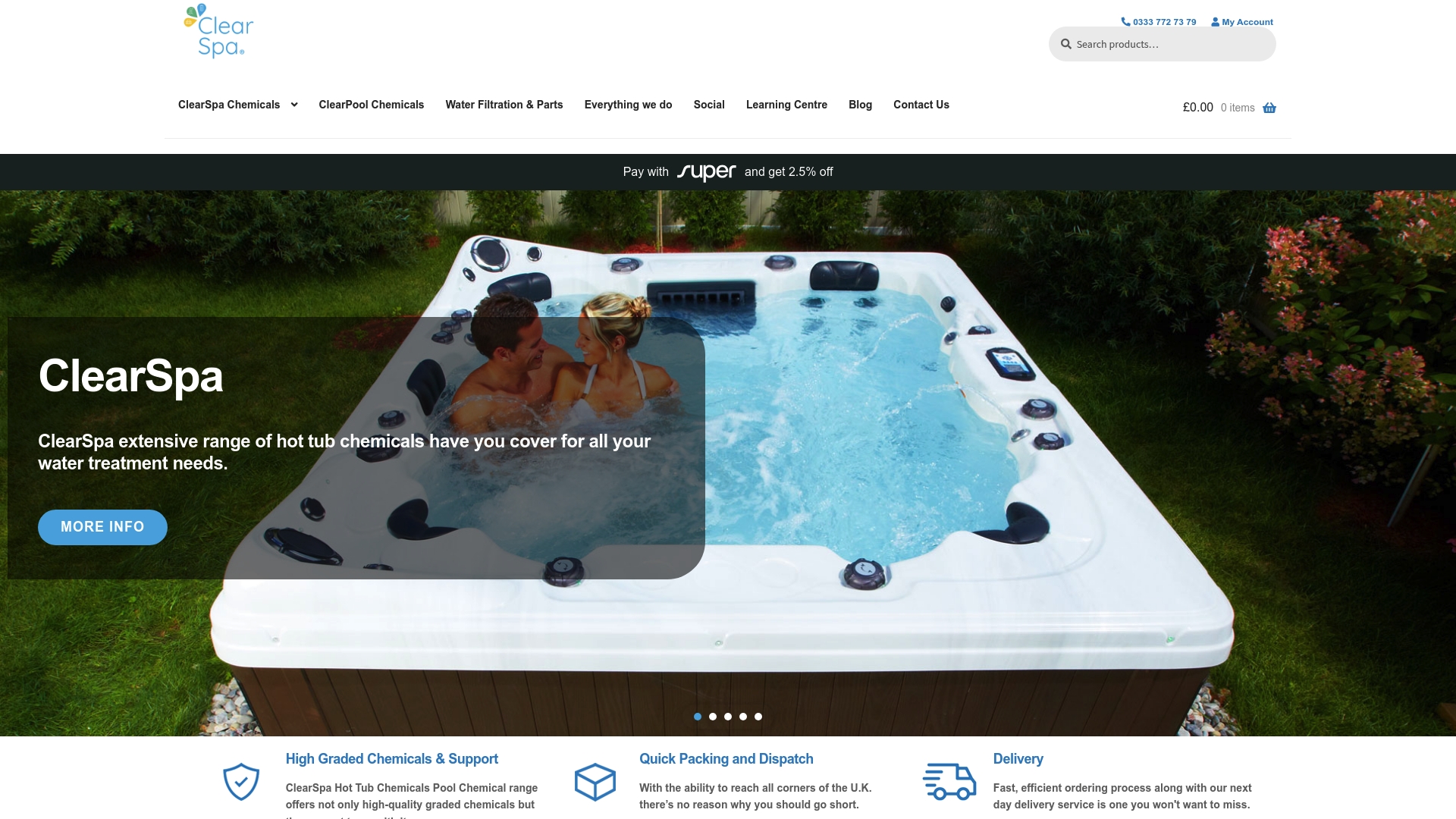
Experience the confidence of a well-maintained hot tub by exploring our complete selection at ClearSpa. Take the first step towards flawless water management and enjoy your spa worry-free. Visit us now and invest in the quality your hot tub deserves.
Frequently Asked Questions
How can I check the water levels in my hot tub?
To check the water levels in your hot tub, locate the skimmer or water level indicator. Ensure the water sits approximately 2.5 to 5 centimetres above the skimmer opening to maintain optimal performance.
What should I do if my hot tub won’t heat up?
If your hot tub won’t heat up, first check the water levels to ensure they are adequate. If the water level is correct but heating still fails, inspect the power supply and circuit breakers for potential electrical issues.
How often should I clean my hot tub filter?
You should rinse your hot tub filter every two weeks and perform a deep chemical cleaning monthly. Replace the filter cartridge entirely every 12 to 18 months to maintain peak performance and water quality.
What steps can I take to balance my hot tub water chemistry?
To balance your hot tub water chemistry, test key parameters such as pH, alkalinity, and sanitiser concentration weekly. Adjust chemicals incrementally while the pump is running and allow sufficient circulation time for an even distribution.
How can I identify issues with my hot tub jets?
To identify issues with your hot tub jets, visually inspect each jet for blockages or mineral buildup. If you notice reduced water pressure, remove and clean the jet components to restore optimal flow.
What are the signs of pump malfunction in my hot tub?
Signs of pump malfunction may include unusual noises, reduced water pressure, or failure to start. Always listen for consistent humming sounds during operation, and check for leaks or electrical issues around the pump.