How to Remove Hot Tub Debris for Pristine Water Quality
Follow this clear step-by-step guide on how to remove hot tub debris naturally and efficiently to keep your spa water clean, healthy, and enjoyable every time.
Most british hot tub owners underestimate just how quickly debris can affect water clarity and spa hygiene. Leaves, insects, and grime build up faster than you might expect, often leading to more than 50 percent of maintenance issues over time. Understanding how to assess debris levels and prepare the right tools not only protects your investment but also preserves that luxurious spa feeling every time you step in. Discover strategies that make spa upkeep feel easy and refreshingly efficient.
Table of Contents
- Step 1: Assess Debris Levels And Prepare Cleaning Tools
- Step 2: Turn Off And Secure The Hot Tub Safely
- Step 3: Skim And Collect Surface Debris Thoroughly
- Step 4: Vacuum And Brush The Hot Tub Interior
- Step 5: Check And Clean Filters For Optimal Flow
- Step 6: Test And Adjust Water Clarity And Quality
Quick Summary
| Key Point | Explanation |
|---|---|
| 1. Assess and gather cleaning tools | Start by inspecting the hot tub for debris and contaminants, collecting necessary tools to facilitate efficient cleaning. |
| 2. Power down for safety | Always turn off the electrical supply to your hot tub at the isolator switch to avoid shocks during cleaning. |
| 3. Use a skimmer net effectively | Skim the surface with a wide mesh net, ensuring all visible debris is collected without shaking the net over the water. |
| 4. Clean the interior thoroughly | Vacuum the hot tub’s interior and brush surfaces gently to eliminate trapped dirt and prevent scratches. |
| 5. Regularly test water quality | Employ a testing kit to monitor pH, chlorine, and alkalinity, adjusting chemical levels as needed to maintain clarity and safety. |
Step 1: Assess debris levels and prepare cleaning tools
Removing debris from your hot tub requires a systematic approach that starts with careful assessment. Your first task is to survey the current state of your spa water and identify what types of contaminants have accumulated. Wellis UK recommends examining your hot tub thoroughly to understand the cleaning challenge ahead.
Begin by grabbing a bright torch and inspecting the water surface carefully. Look for visible particles such as leaves, grass clippings, dead insects, and other floating debris. Check the water line around the edges of your hot tub where grime and scum tend to collect. Make note of any discolouration or unusual film on the water surface. Next, gather your essential cleaning tools before starting: you will need a skimmer net, soft microfibre cloths, spa surface cleaner, a water testing kit, and disposable gloves to protect your hands during the cleaning process.
Prepare a clean workspace near your hot tub with all your tools laid out systematically. This will help you work efficiently and keep everything organised as you progress through the cleaning stages. Having your equipment ready prevents interruptions and ensures a smooth debris removal experience.
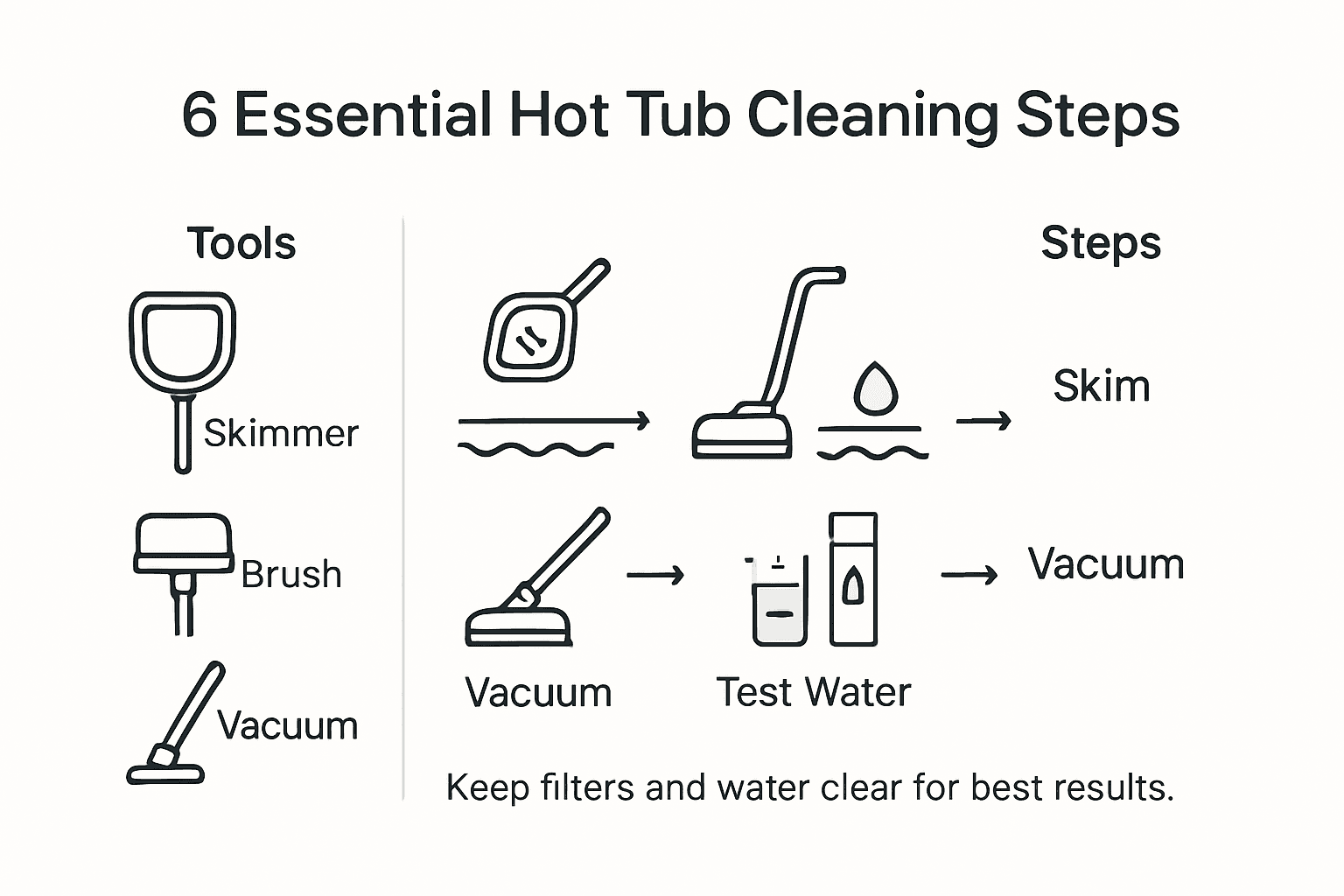
Here is an overview of essential cleaning tools and their specific uses for hot tub maintenance:
| Tool | Primary Use | Best Practice Tip |
|---|---|---|
| Skimmer net | Collect surface debris | Use wide mesh for leaves |
| Microfibre cloths | Wipe edges and remove grime | Replace cloths regularly |
| Spa surface cleaner | Remove stubborn scum | Choose spa-safe formulations |
| Water testing kit | Check water quality | Test weekly for consistency |
| Disposable gloves | Protect skin during cleaning | Use a new pair each session |
Pro tip: Always keep a small bucket or container nearby to immediately deposit removed debris and prevent it from falling back into the water during cleaning.
Step 2: Turn off and secure the hot tub safely
Before beginning any cleaning or maintenance, you must safely power down your hot tub to prevent potential electrical hazards. Electrical safety protocols require disconnecting power at the primary isolator switch to protect both your equipment and yourself during the cleaning process.
Locate your hot tub’s main electrical isolator switch, which is typically positioned near the spa or in a dedicated electrical panel. This switch controls the entire electrical supply to your hot tub. Carefully switch it to the off position, ensuring no electrical current is running to the system. If you are uncertain about the exact location of your isolator switch, consult your hot tub manufacturer’s manual or seek assistance from a professional electrician.
After powering down, secure the area around your hot tub by removing any loose items or potential trip hazards. Place your cleaning tools within easy reach but ensure they are positioned safely away from the water’s edge. Double check that no electrical equipment is near the hot tub that could potentially fall into the water during your cleaning process.
Pro tip: Always wear rubber soled shoes and use dry hands when handling electrical switches to minimise any risk of electrical shock.
Step 3: Skim and collect surface debris thoroughly
Removing surface debris is a crucial step in maintaining your hot tub’s cleanliness and water quality. Your goal is to systematically clear away any floating particles that might compromise the spa’s pristine condition. While no specific research source was provided, the process requires careful and methodical attention to detail.
Start by using a wide mesh skimmer net with an extendable handle that allows you to reach across the entire hot tub surface. Begin at one edge and slowly move the net across the water in smooth sweeping motions, ensuring you capture leaves, insects, grass clippings, and any other visible debris. Work methodically from one side to the other, overlapping your sweeps slightly to prevent missing any areas. As you collect debris, lift the skimmer carefully to avoid dropping particles back into the water.
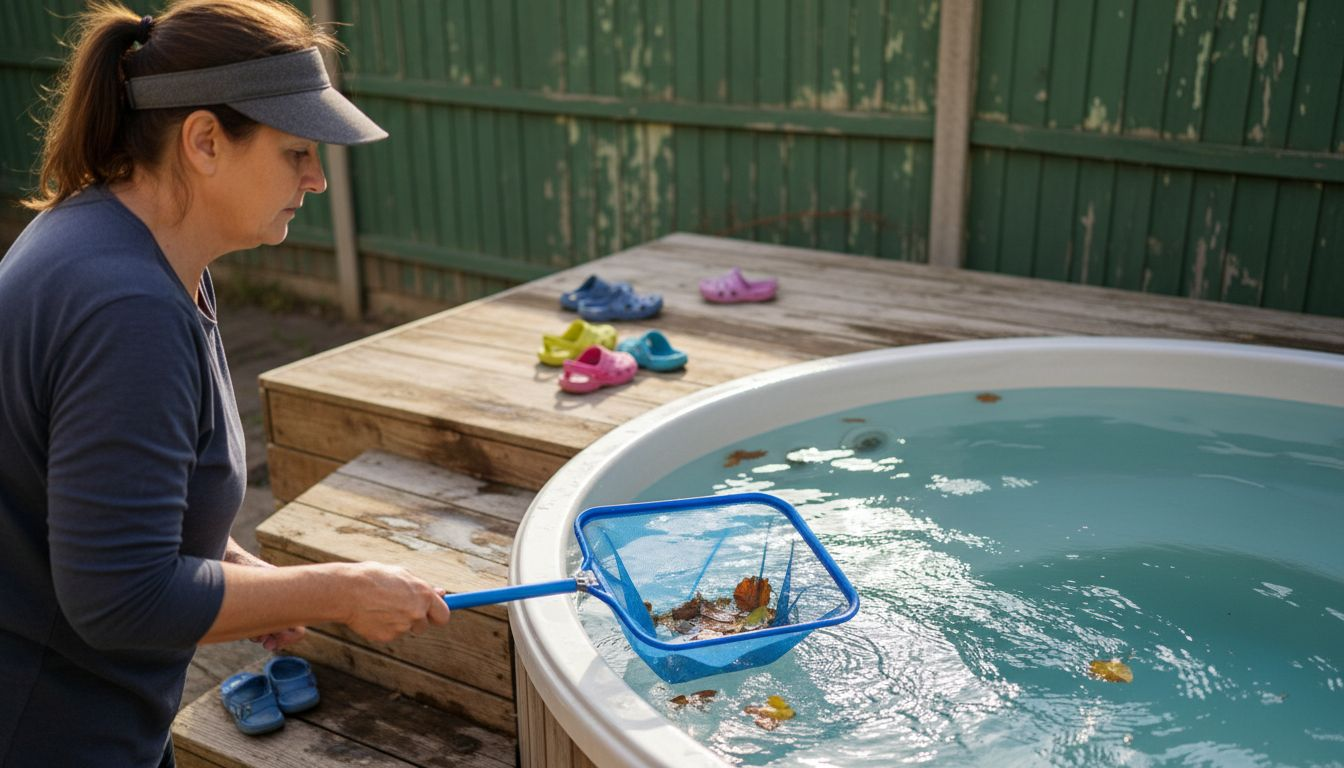
Once you have collected the surface debris, transfer it immediately to a nearby bin or disposal container. Avoid shaking the skimmer over the hot tub, which could reintroduce unwanted particles. Take care to inspect the water surface thoroughly after your initial pass, looking for any remaining small fragments or hard to catch items that might require a second gentle sweeping.
Pro tip: Use a fine mesh skimmer for smaller debris and consider doing a second pass with a lighter touch to catch any remaining microscopic particles.
Step 4: Vacuum and brush the hot tub interior
Cleaning the interior surfaces of your hot tub requires careful attention to detail and specialised techniques to remove settled debris and potential biofilm buildup. Your goal is to thoroughly clean every surface while avoiding damage to the delicate spa interior.
Begin by selecting a spa specific vacuum designed for hot tub surfaces. These specialised vacuums have soft attachments that prevent scratching while effectively removing dirt and sediment from the floor and walls. Start at the deepest point of the hot tub and work your way systematically towards the edges, using slow deliberate movements to ensure you capture all loose particles. Pay extra attention to corners and areas around jets where debris tends to accumulate.
After vacuuming, switch to a soft bristled brush specifically made for spa surfaces. Use gentle circular motions to scrub the walls and floor, focusing on removing any remaining biofilm or stubborn dirt patches. Work in sections to ensure you cover the entire interior surface without missing spots. Rinse your brush frequently to prevent redepositing dirt and maintain clean brushing technique.
Pro tip: Always keep your cleaning tools dedicated to hot tub use and rinse them thoroughly after each cleaning session to prevent cross contamination.
Step 5: Check and clean filters for optimal flow
Hot tub filter maintenance is crucial for maintaining water quality and system performance. Your filters work tirelessly to trap dirt, debris, and bacteria, making regular cleaning an essential part of your spa care routine.
Remove the filter cartridge carefully from your hot tub and inspect it thoroughly. Look for visible signs of wear, such as tears, discolouration, or excessive buildup of grime. Rinse the filter under running water using a gentle spray pattern, working from top to bottom to dislodge trapped particles. Pay special attention to the pleats, using your fingers to carefully separate and clean between them. For deeper cleaning, use a specialised filter cleaning solution designed to break down oils and organic matter that standard rinsing cannot remove.
After cleaning, allow the filter to air dry completely before reinstalling. This prevents potential bacterial growth and ensures optimal filtration efficiency. If the filter shows significant wear or cannot be effectively cleaned, consider replacing it to maintain your hot tub’s performance and water quality.
Pro tip: Store a spare clean filter cartridge so you can immediately replace the dirty one while cleaning, minimising downtime for your hot tub.
Step 6: Test and adjust water clarity and quality
Regular water quality testing is a critical aspect of maintaining your hot tub’s health and performance. Your goal is to ensure a safe, balanced, and crystal clear spa environment that protects both your equipment and your health.
Begin by selecting a comprehensive water testing kit designed specifically for hot tubs. These kits typically measure key parameters such as pH levels, alkalinity, sanitiser concentration, and potential contaminants. Dip the test strip into the water and compare the resulting colour changes against the kit’s colour chart. Look for balanced readings across all parameters chlorine levels should ideally sit between 3 and 5 parts per million (4 to 6 for bromine), while pH should range between 7.2 and 7.6 for optimal water chemistry.
The following table highlights the main hot tub water parameters and their ideal ranges:
| Parameter | Ideal Range | Importance |
|---|---|---|
| Chlorine/Bromine | 3-5 ppm chlorine, 4-6 ppm bromine | Disinfects, prevents bacteria growth |
| pH Level | 7.2-7.6 | Maintains comfort and system health |
| Alkalinity | 80-120 ppm | Buffers pH, stabilises water balance |
| Clarity | Crystal clear | Indicates clean and healthy water |
Based on your test results, add the appropriate chemical treatments to restore balance. If pH is too low, use a pH increaser to raise levels. Conversely, if pH is too high, apply a pH reducer. Alkalinity acts as a buffer, so adjust this before fine tuning pH. Always add chemicals in small increments, allowing time for thorough circulation and retesting to prevent overcorrection. Mix chemical treatments carefully by adding them directly to the water while the hot tub jets are running to ensure even distribution.
Pro tip: Keep a log of your water test results and chemical adjustments to track your hot tub’s performance and identify any recurring patterns.
Keep Your Hot Tub Spotless with ClearSpa’s Expert Solutions
Removing debris such as leaves, insects and grime is essential for preserving your hot tub’s water clarity and overall health. The challenge lies in effective surface skimming, vacuuming, and maintaining balanced chemical levels like pH and sanitiser concentration. ClearSpa understands how frustrating it can be to deal with stubborn scum or unclear water despite your efforts. That is why we offer a comprehensive range of top-quality water treatment products and spa essentials designed to simplify your maintenance routine and restore your hot tub’s pristine condition.
Explore our meticulously tested hot tub chemicals and spa care tools at ClearSpa to take the guesswork out of water balance and filtration. With reliable solutions for improving water clarity and preventing debris buildup, you can enjoy a safer and more relaxing spa experience every time. Don’t wait for problems to escalate - visit ClearSpa today and discover how our products can help you maintain sparkling clear water with ease.
Frequently Asked Questions
How can I assess debris levels in my hot tub?
Start by using a bright torch to inspect the water surface and identify visible particles such as leaves and insects. Carefully check the water line for grime and note any discolouration before gathering your cleaning tools.
What cleaning tools do I need for removing debris from my hot tub?
Gather essential tools like a skimmer net, soft microfibre cloths, spa surface cleaner, a water testing kit, and disposable gloves. Having these tools ready will streamline your cleaning process and enhance efficiency.
How do I safely turn off my hot tub for cleaning?
Locate the main electrical isolator switch near your hot tub and switch it off to ensure no electrical current runs to the system. This step is crucial for protecting yourself and your equipment during the cleaning process.
What steps should I take to vacuum and brush the hot tub interior?
First, use a spa-specific vacuum designed to remove dirt without scratching surfaces, starting from the deepest point and moving outward. After vacuuming, use a soft-bristled brush to clean the walls and floor with gentle circular motions, paying special attention to corners and edges.
How often should I check and clean the filters in my hot tub?
Check your hot tub filters at least once a month to maintain optimal flow and water quality. Remove the filter cartridge, rinse it thoroughly, and consider using a specialised filter cleaner for deeper cleaning when necessary.
How can I test and adjust the water quality of my hot tub?
Use a comprehensive water testing kit to measure essential parameters like pH and sanitiser levels weekly. Based on test results, add the correct chemical treatments in small increments to maintain balanced water quality and prevent issues.