Hot Tub Heater Troubleshooting for Reliable Soaks
Hot tub heater troubleshooting with ClearSpa: common causes of heater failure, DIY diagnostics, practical fixes and safety steps to avoid costly repairs.
A chilly soak in your hot tub can swiftly ruin what should be a relaxing retreat. For many British DIY enthusiasts, heater troubles often lurk beneath the surface, with faults ranging from corrosion in heating elements to malfunctioning sensors that disrupt warmth. Staying informed about safe diagnostic steps and common pitfalls means you can tackle issues confidently and keep your spa inviting, while avoiding costly, unnecessary repairs.
Table of Contents
- What Hot Tub Heater Troubleshooting Involves
- Types of Hot Tub Heaters and Common Faults
- How Hot Tub Heating Systems Work
- Diagnosing Heater Problems Step by Step
- DIY Repairs, Prevention, and Safety Tips
- When to Seek Professional Help in the UK
Key Takeaways
| Point | Details |
|---|---|
| Systematic Troubleshooting is Essential | Always approach hot tub heater diagnostics methodically, ensuring safety by disconnecting power before inspections. |
| Regular Maintenance Prevents Issues | Consistent water chemistry and clean filters are vital for avoiding component corrosion and prolonging heater life. |
| Know When to Call a Professional | Seek expert help for complex electrical faults or persistent performance problems to ensure safety and compliance. |
| Understand Heater Types and Their Needs | Recognise the differences between electric resistance and gas-powered heaters to tailor your maintenance practices effectively. |
What Hot Tub Heater Troubleshooting Involves
Hot tub heater troubleshooting requires a systematic approach to identify and resolve electrical and mechanical issues that can disrupt your spa experience. Understanding the complex interactions between electrical components and water systems is crucial for maintaining a reliable and safe hot tub environment.
The core of hot tub heater troubleshooting involves several critical diagnostic steps:
- Testing the heating element using an ohmmeter
- Checking essential safety sensors like high limit switches
- Inspecting the thermostat and pressure switch functionality
- Examining potential electrical connection problems
Electrical safety is paramount when diagnosing hot tub heater issues. Hot tub heater failure diagnostics typically involve complex electrical testing that should only be performed by competent professionals. Corrosion can cause short circuits that trip residual current devices (RCDs), creating potentially dangerous scenarios.
Most heater problems emerge from wear and age, with units older than three to four years often requiring complete heater assembly replacement. Younger hot tubs might only need specific component replacement, such as the heating element. Systematic troubleshooting helps identify whether repair or full replacement is the most cost-effective solution.
Pro tip: Always disconnect electrical power completely before attempting any hot tub heater diagnostics to prevent potential electrical shock.
Types of Hot Tub Heaters and Common Faults
Hot tub heaters are sophisticated electrical systems designed to maintain comfortable water temperatures, with two primary variants dominating the market: electric resistance heaters and gas-powered heaters. Understanding the nuanced differences between these systems is crucial for effective maintenance and troubleshooting.
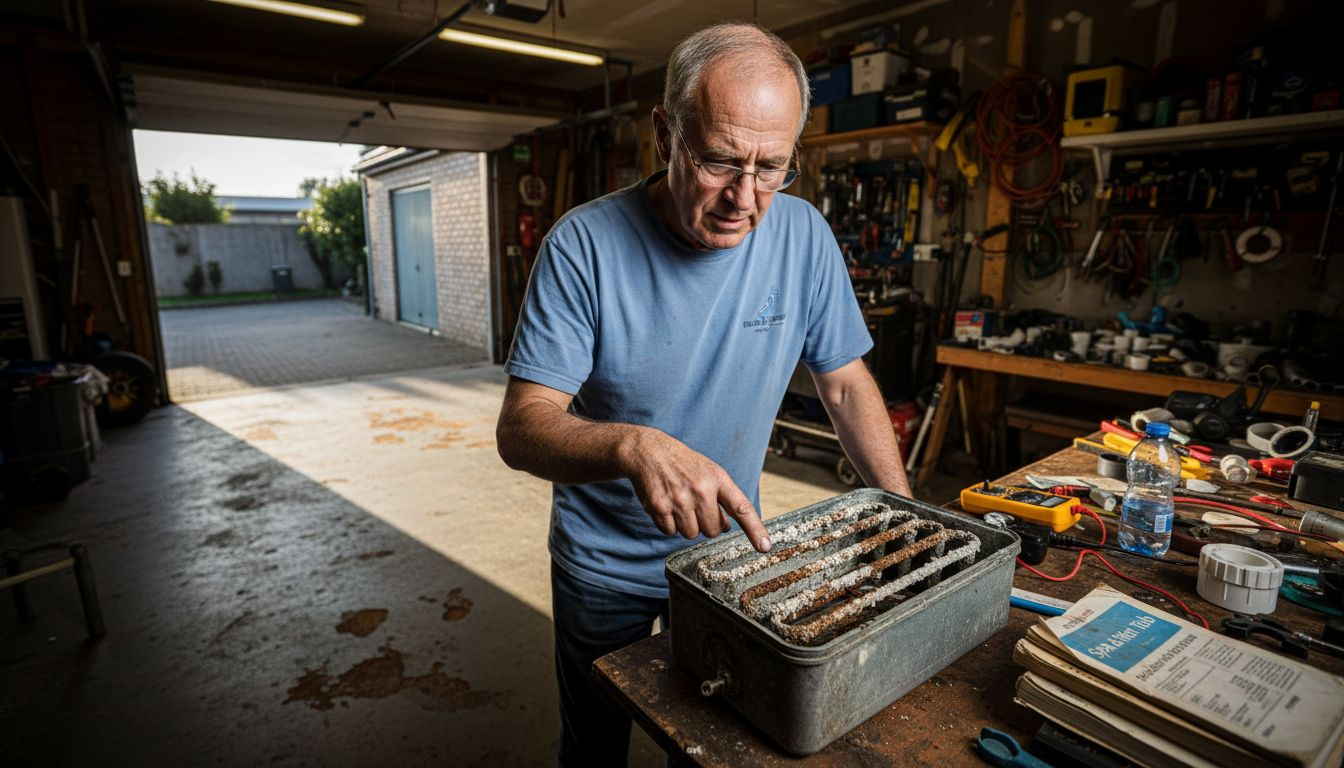
Electric resistance heaters, the most common type, feature distinctive components:
- Heating element with metal coil design
- Integrated sensor housings
- Thermostat and high-limit switch mechanisms
- Pressure switch for safety monitoring
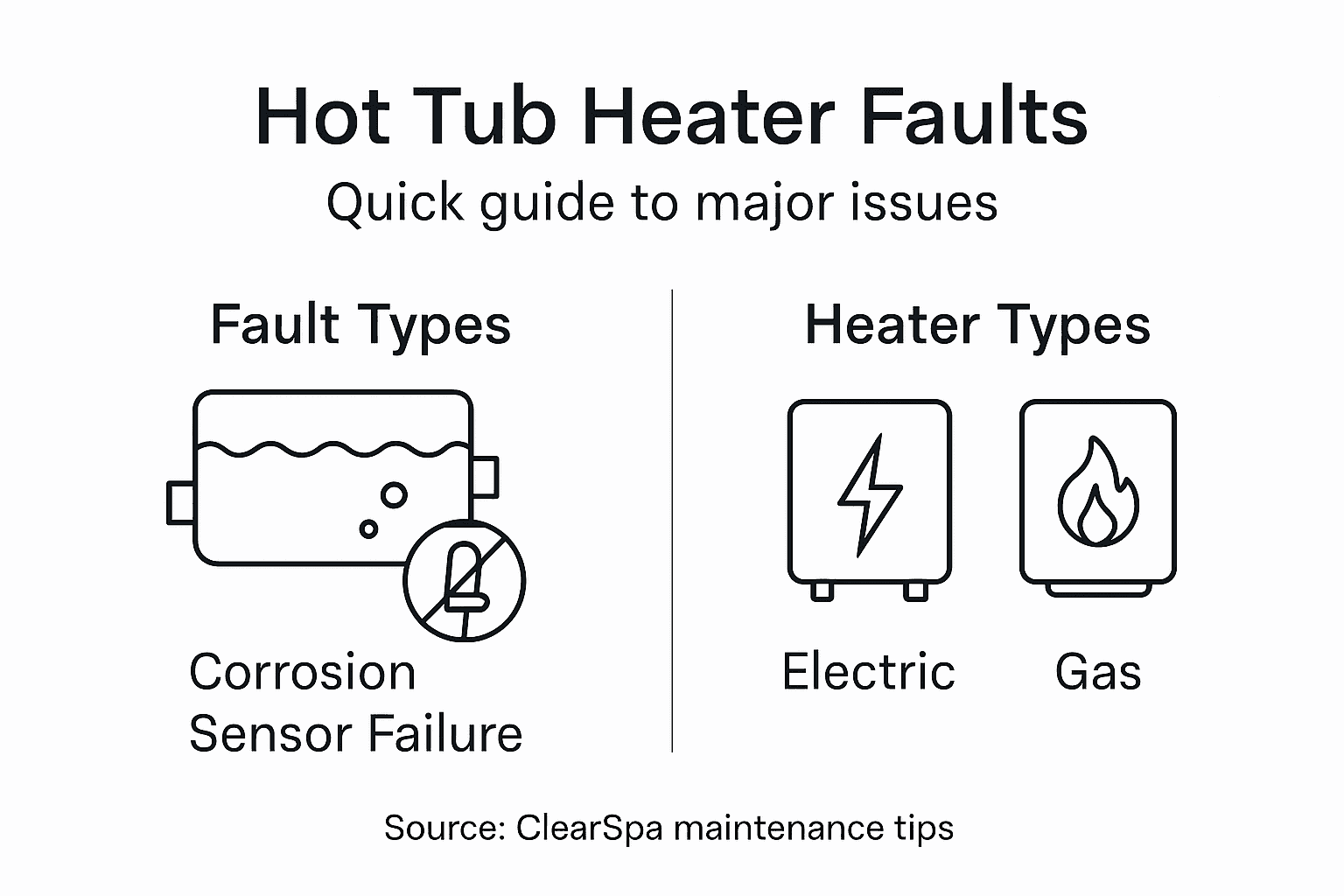
Hot tub heating system diagnostics reveal multiple potential fault points that can compromise heating performance. Common issues include electrical resistance element corrosion, sensor malfunctions, and water flow restrictions that prevent efficient heating.
Gas-powered heaters represent an alternative configuration, typically found in larger commercial or specialised hot tub installations. These systems operate differently from electric models, utilising combustion processes to generate heat. Diagnostic challenges include verifying gas flow, checking ignition systems, and ensuring proper ventilation. Water chemistry plays a critical role in preventing corrosion and maintaining heater longevity across both electric and gas variants.
Here’s a comparison of electric resistance and gas hot tub heaters highlighting their key characteristics and maintenance needs:
| Heater Type | Key Features | Maintenance Complexity | Typical Applications |
|---|---|---|---|
| Electric Resistance | Metal coil, safety sensors, simple controls | Moderate, regular water chemistry | Domestic and small spas |
| Gas-Powered | Combustion-based, complex ignition, ventilation | High, gas flow and ventilation checks | Large, commercial, specialist tubs |
Pro tip: Regularly test water chemistry and maintain appropriate pH levels to minimise heater component corrosion and extend your hot tub’s heating system lifespan.
How Hot Tub Heating Systems Work
Hot tub heating systems are intricate thermal management networks designed to transform electrical energy into precise water temperature control. At their core, these systems rely on sophisticated electrical components that work in concert to deliver consistent, safe, and comfortable heating experiences for users.
Hot tub heater mechanisms typically involve a complex process of heat transfer through specialised components:
- Resistance element that generates thermal energy
- Integrated water circulation system
- Multiple safety sensor networks
- Precision temperature control mechanisms
The primary heating process begins when electrical current passes through a resistance element coil, which generates heat within a sealed housing. Water flowing through the heater tube absorbs this thermal energy, with carefully positioned sensors monitoring critical parameters. These sensors perform multiple crucial functions:
- Tracking water temperature
- Preventing potential overheating
- Ensuring safe operational conditions
- Regulating electrical current flow
Each heating system component plays a critical role in maintaining optimal performance. The water circulation pump ensures consistent heat distribution, preventing localised temperature variations and protecting the heating element from potential damage. Thermal transfer efficiency depends on maintaining proper water flow and managing electrical resistance with precision.
Pro tip: Regularly inspect your hot tub’s water circulation system and heating sensors to prevent potential performance degradation and maintain optimal thermal efficiency.
Diagnosing Heater Problems Step by Step
Diagnosing hot tub heater issues requires a methodical and safety-conscious approach that helps identify underlying problems before they escalate into costly repairs. Hot tub owners must combine technical understanding with careful systematic investigation to effectively troubleshoot heating system malfunctions.
Hot tub heater troubleshooting guide recommends a structured diagnostic process with critical initial steps:
- Check control panel for error codes
- Verify electrical power supply
- Inspect water level and circulation
- Examine filter condition
- Test heating element resistance
The diagnostic process involves multiple essential stages that progressively narrow down potential issues. Begin by confirming the hot tub is in the correct operational mode, as economy settings can inadvertently restrict heating functions. Check water levels to ensure sufficient volume for proper circulation, and carefully inspect filters for any signs of blockage or contamination.
Mechanical diagnostics require precise measurement techniques:
- Disconnect electrical power completely
- Use an ohmmeter to test heating element resistance
- Inspect wiring connections for signs of corrosion
- Check sensor functionality
- Look for potential air locks in circulation systems
Careful visual and technical inspection helps prevent unnecessary professional intervention, potentially saving significant repair costs. Understanding the intricate interactions between electrical components, water flow, and temperature sensors is crucial for effective hot tub heater maintenance.
Pro tip: Always keep a detailed maintenance log documenting each diagnostic step and observation to track your hot tub’s performance history and identify recurring issues.
DIY Repairs, Prevention, and Safety Tips
Navigating hot tub heater maintenance requires a delicate balance of technical skill, safety awareness, and preventative strategy. Hot tub owners must approach repairs and maintenance with caution, understanding that electrical systems combined with water present unique challenges.
Hot tub heater maintenance guidelines emphasise several critical preventative measures:
- Regular water chemistry monitoring
- Comprehensive filter cleaning
- Electrical connection inspections
- Leak detection protocols
- Component wear assessment
DIY repairs demand strict adherence to safety protocols. Before attempting any maintenance, owners must completely disconnect electrical power and use appropriate protective equipment. Basic repair skills include testing heater elements with an ohmmeter, identifying corrosion points, and understanding when component replacement is necessary.
Prevention strategies are far more cost-effective than reactive repairs:
- Maintain consistent water chemistry
- Clean filters monthly
- Check electrical connections quarterly
- Monitor heater performance regularly
- Replace worn components promptly
Electrical safety remains paramount when working with hot tub heating systems. Understanding the potential risks of mixing electricity and water is crucial. Always use insulated tools, wear rubber-soled shoes, and never attempt repairs without proper knowledge and precautions.
Pro tip: Invest in a dedicated multimeter and protective electrical safety gear before attempting any hot tub heater diagnostic or repair work.
This table summarises crucial steps for safe, effective hot tub heater diagnostics and maintenance:
| Step | Purpose | Safety Consideration |
|---|---|---|
| Disconnect all power | Prevents electrical shock | Essential before any inspection |
| Inspect heating element | Identify wear or damage | Use insulated tools |
| Check water chemistry | Avoids component corrosion | Wear gloves for chemical handling |
| Clean filters regularly | Ensures optimal water circulation | Avoids contamination and blockages |
When to Seek Professional Help in the UK
Deciding when to seek professional assistance with hot tub heater issues requires careful consideration of technical complexity, safety risks, and potential warranty implications. Hot tub owners must recognise the critical moments when DIY approaches transition into scenarios demanding expert intervention.
Hot tub heater repair guidelines highlight several scenarios requiring professional expertise:
- Complex electrical system faults
- Warranty-protected equipment repairs
- Advanced sensor diagnostic requirements
- Persistent heating performance issues
- Potential water circulation system failures
UK regulations and safety standards mandate professional intervention in several specific scenarios. Electrical repairs involving direct heater element manipulation present significant risk, particularly when intricate wiring connections or specialised sensor networks are involved. Professional technicians possess the necessary qualifications, diagnostic equipment, and insurance coverage to handle these complex technical challenges safely.
Key indicators that professional help is necessary include:
- Unexplained electrical tripping
- Persistent heating performance problems
- Water leakage near electrical components
- Complex sensor malfunctions
- Potential warranty invalidation through DIY repairs
Professional hot tub technicians in the UK undergo rigorous training to diagnose and repair sophisticated heating systems. They understand the nuanced interactions between electrical components, water chemistry, and thermal regulation mechanisms. Engaging a certified professional ensures not only immediate problem resolution but also long-term system reliability and safety compliance.
Pro tip: Always verify a technician’s professional credentials and specialisation in hot tub heating systems before scheduling a repair.
Keep Your Hot Tub Heater Running Smoothly with ClearSpa
Troubleshooting hot tub heater issues requires careful attention to electrical safety, water chemistry, and component wear. If you are facing challenges such as heating element corrosion, sensor malfunctions, or inconsistent water temperatures, it is essential to maintain optimal water chemistry and regularly inspect your heating system. ClearSpa offers a comprehensive selection of premium water treatment products designed to protect your hot tub’s heating components and improve overall performance.
Enhance your hot tub experience by choosing from our trusted range of hot tub chemicals and spa essentials at ClearSpa. Take control of your hot tub maintenance today with quality products that support reliable heater function and safer, more enjoyable soaks. Visit ClearSpa now and discover solutions that keep your hot tub warm year-round.
Frequently Asked Questions
How can I troubleshoot my hot tub heater not working?
To troubleshoot a hot tub heater not working, start by checking the control panel for error codes. Verify that there is an adequate electrical power supply, inspect the water level and circulation, examine the filter condition, and test the heating element resistance using an ohmmeter.
What are common faults in electric resistance hot tub heaters?
Common faults in electric resistance hot tub heaters include corrosion of the heating element, malfunctioning sensors, and water flow restrictions that hinder efficient heating. Regular maintenance can help prevent these issues.
When should I seek professional help for my hot tub heater?
You should seek professional help for your hot tub heater if you encounter complex electrical system faults, persistent heating performance problems, or unexplained electrical tripping. These issues require specialised knowledge and equipment to resolve safely.
How often should I maintain my hot tub heating system?
It’s advisable to maintain your hot tub heating system regularly by monitoring water chemistry monthly, cleaning filters every month, checking electrical connections quarterly, and replacing any worn components promptly. Regular maintenance helps ensure optimal performance and prolongs the lifespan of the heater.