Free Chlorine in Hot Tubs: Why Water Balance Matters
Free chlorine in hot tubs ensures safe, clean water. Learn the difference between free and combined chlorine, ideal UK levels, and common maintenance pitfalls.
Free chlorine is the active, unbonded chlorine that actually sanitises your hot tub water, and in the UK you should keep it between 3 and 5 ppm at all times. It is measured separately from combined chlorine (spent chloramines) and total chlorine, and it is the number that tells you whether your water is genuinely protected.
Keep free chlorine in that range, test at least twice weekly, and shock the water when combined chlorine climbs above 0.5 ppm. The sections below explain the free-versus-combined distinction, how free chlorine cleans, the UK standards behind these figures, and the common mistakes that leave water under-protected.
Table of Contents
- What Free Chlorine Means For Hot Tubs
- Free Versus Combined Chlorine Explained
- How Free Chlorine Cleans And Protects
- UK Standards For Safe Chlorine Levels
- Common Free Chlorine Maintenance Mistakes
Key Takeaways
| Point | Details |
|---|---|
| Free Chlorine is Essential | Maintain free chlorine levels between 3 and 5 ppm to ensure bacteria elimination and safe water quality. |
| Understanding Combined Chlorine | Monitor combined chlorine levels as they indicate ineffective sanitisation and potential irritation; aim to minimise their presence. |
| Regular Testing is Crucial | Test free chlorine levels at least twice a week, particularly during heavy usage, to catch issues early and maintain water safety. |
| Compliance with UK Standards | Adhere to HSE guidelines for free chlorine levels and testing protocols to ensure safety and legal compliance. |
What Free Chlorine Means for Hot Tubs
Free chlorine is the active chlorine that’s actively working in your hot tub water right now. It’s the portion of chlorine that hasn’t bonded with other compounds, remaining available to sanitise and kill bacteria, viruses, and other harmful microorganisms. Think of it like having a team of security guards patrolling your water around the clock. Without free chlorine actively protecting your hot tub, you’d face rapid bacterial growth and water quality issues that make the tub unsafe and uninviting within days.
Maintaining the correct free chlorine level is what separates a clean, hygienic soak from a breeding ground for pathogens. The ideal range sits between 3 and 5 ppm (parts per million) for hot tubs, which is higher than swimming pools because the warmer water and heavier bather load use up chlorine faster. This narrow range matters because too little chlorine leaves your water vulnerable to contamination, whilst too much can irritate your skin, eyes, and respiratory system. Don’t fall for marketing claims about “chemical-free” hot tubs either. As a residual sanitiser, chlorine (or bromine as an alternative) is absolutely necessary to provide ongoing protection and prevent harmful microorganism growth. Without it, no hot tub can remain safe for extended use.
The reason free chlorine management deserves your attention is straightforward: it directly affects your health and comfort. When you test your water with test strips or a digital reader, you’re specifically measuring free chlorine to ensure it’s doing its job. If your levels drop below 3 ppm, bacteria can establish themselves quickly. If they creep above 5 ppm, you’ll notice a strong chemical smell and experience irritation. Regular monitoring and balancing free chlorine levels aren’t optional extras. They’re the foundation of a safe and genuinely relaxing hot tub experience.
Pro tip: Test your free chlorine levels at least twice weekly during heavy use periods, as the warm water, body oils, and organic matter consume chlorine faster than you might expect.
Free Versus Combined Chlorine Explained
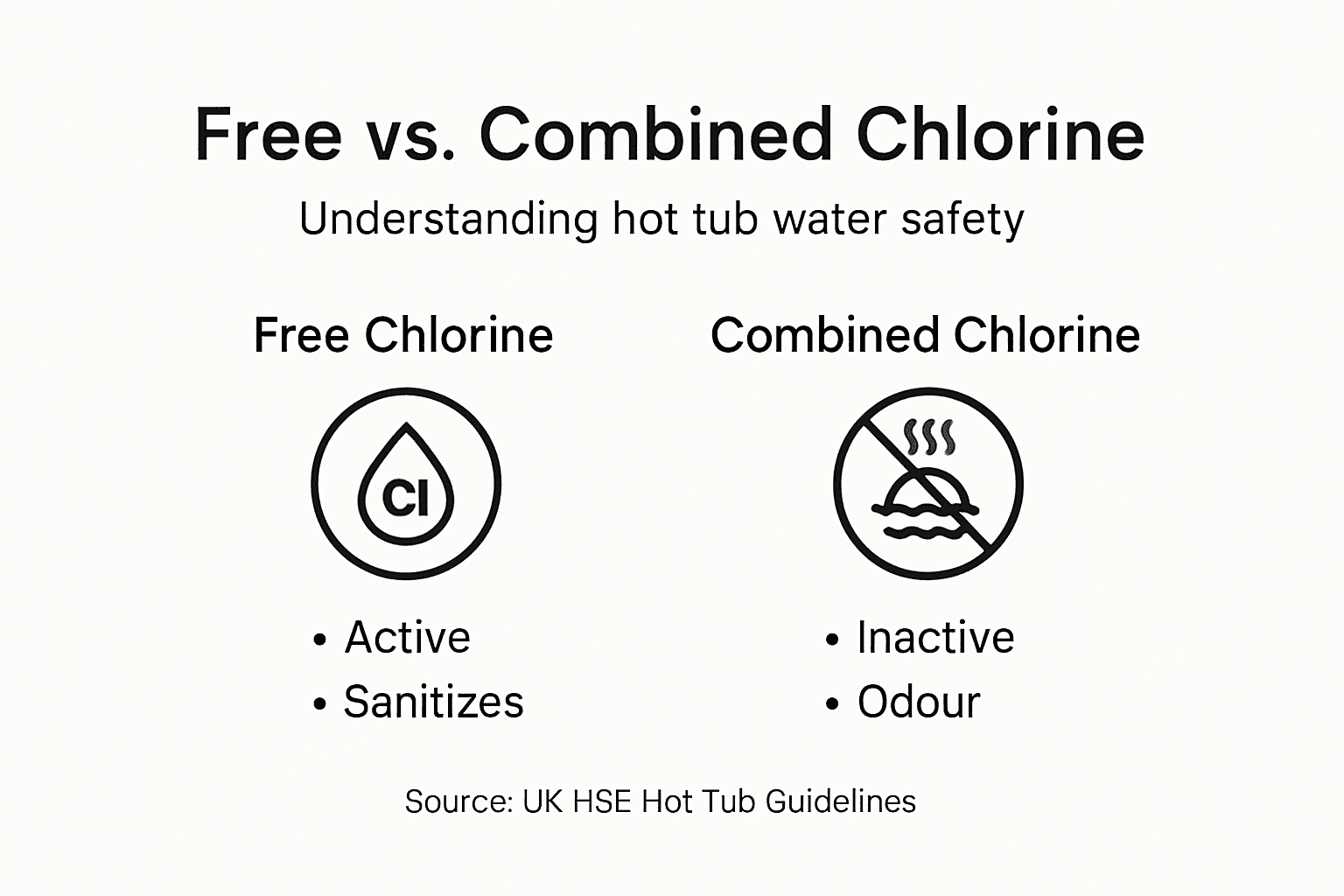
Here’s where things get interesting. Not all chlorine in your hot tub is created equal, and understanding the difference between free and combined chlorine is crucial for keeping your water genuinely clean. Free chlorine is the active sanitising form that kills bacteria and microorganisms efficiently, working as your water’s primary defence. Combined chlorine (also called chloramines) forms when free chlorine bonds with contaminants like sweat, oils, and urine. This is the chlorine that’s already done its job and become ineffective. When you notice that distinctive sharp chlorine smell in your hot tub, you’re not actually smelling fresh chlorine - you’re smelling chloramines. That pungent odour signals that your water needs attention, not that you have plenty of chlorine protecting you.
The key problem with combined chlorine is that it’s weak. Once free chlorine attaches to contaminants, it can no longer sanitise effectively. Your water might test high for total chlorine (which combines both free and combined readings), but the portion that’s actually working is much lower. This is why you can’t simply look at total chlorine numbers and assume your hot tub is safe. You need to know the breakdown. Combined chlorine forms when free chlorine reacts with organic matter, creating compounds that irritate skin and eyes whilst failing to protect against new bacterial growth. The ideal situation is minimising combined chlorine and keeping your free chlorine topped up and active.
Understanding this distinction changes how you approach water maintenance. Total chlorine equals free chlorine plus combined chlorine, so if your total reads 4 ppm but free is only 2 ppm, you actually have 2 ppm of chloramines sitting in your water doing nothing. This imbalance is why test kits that measure all three values (free, combined, and total) are worth the investment. Many hot tub owners measure only total chlorine and wonder why their water still feels off or smells strongly. The solution isn’t always adding more chemicals. Sometimes it’s removing the combined chlorine through a process called shock treatment, which oxidises those spent compounds and restores your free chlorine’s effectiveness.
Pro tip: When your combined chlorine exceeds 0.5 ppm, it’s time to shock your hot tub; this breaks down chloramines and regenerates your free chlorine’s sanitising power, giving you fresher water and eliminating that harsh chemical smell.
Here is a clear comparison of how free chlorine and combined chlorine function in hot tubs:
| Characteristic | Free Chlorine | Combined Chlorine |
|---|---|---|
| Sanitising Effect | Actively kills microorganisms | Largely ineffective |
| Chemical Smell | Minimal when in balance | Strong, unpleasant odour |
| Water Quality Impact | Maintains clear, safe water | Causes irritation and murkiness |
| Required Response | Regular top-ups to maintain | Shock treatment to remove |
How Free Chlorine Cleans and Protects
Free chlorine doesn’t just sit in your water looking official. It actively transforms into powerful cleaning agents that hunt down and destroy harmful microorganisms. When free chlorine dissolves in your hot tub water, it forms hypochlorous acid and hypochlorite ions. These chemical compounds are the real workers, penetrating bacterial cell walls and destroying them from the inside. This is why free chlorine works by forming hypochlorous acid rather than simply floating passively in your water. The process happens automatically when your chlorine mixes with water, creating a 24-hour shield against pathogens. Without this conversion, your hot tub would become a petri dish within days, no matter how much chlorine you added.
The protection free chlorine provides is both immediate and ongoing. When a bacterium or virus enters your water through a guest’s body or organic debris, the hypochlorous acid immediately attacks it. The microorganism cannot survive this chemical assault, and it dies before it can multiply. This continuous cycle means your hot tub stays protected as long as free chlorine levels remain adequate. Think of it as having an invisible security team working around the clock, eliminating threats before they become problems. The effectiveness depends entirely on maintaining sufficient free chlorine levels, which is why testing and topping up your water regularly is non-negotiable. A drop in free chlorine creates a window of vulnerability where bacteria can establish themselves.
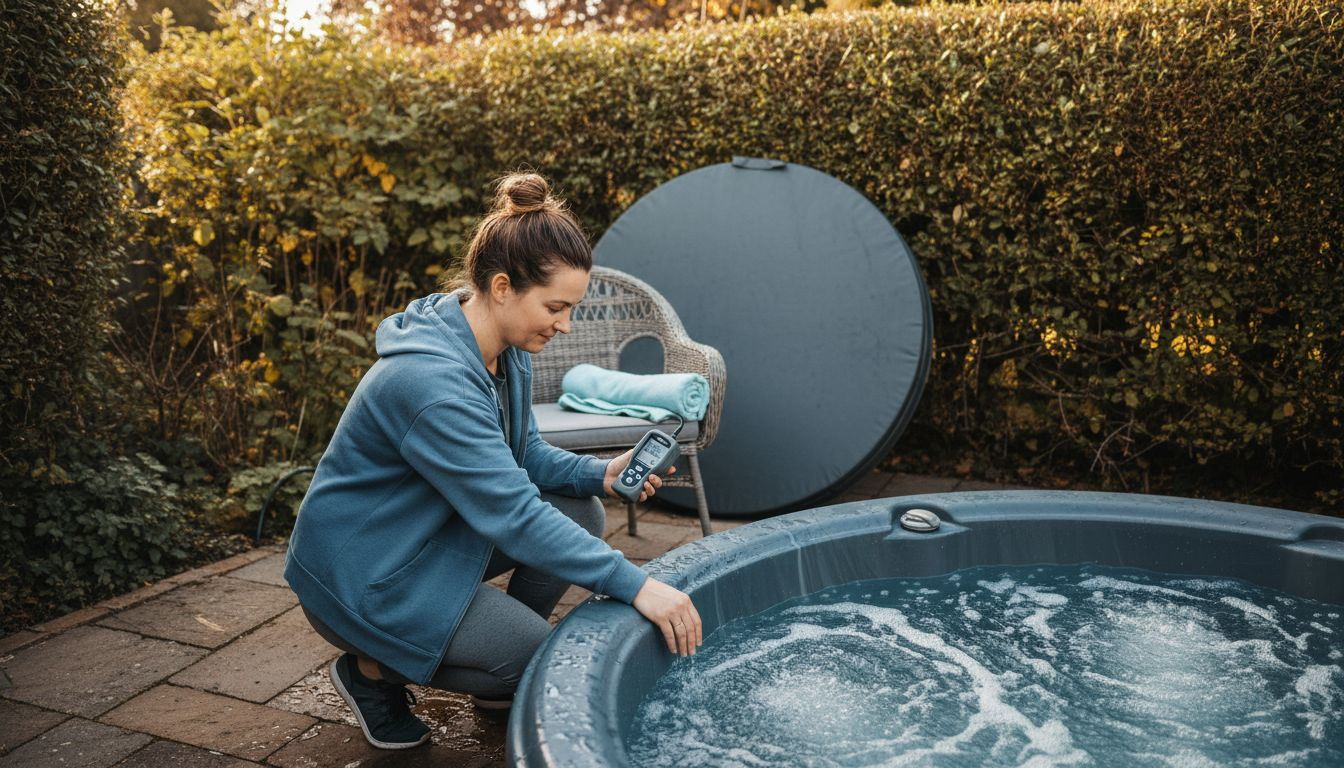
What many hot tub owners miss is that this protection only works when free chlorine stays above combined chlorine. If your water develops too many chloramines (combined chlorine), they clog the system and prevent the formation of new hypochlorous acid. You end up with water that looks treated but isn’t actually protected. Regular testing reveals whether your chlorine is actively working or sitting idle. When you maintain free chlorine above combined chlorine, you’re not just following chemistry principles. You’re actively preventing algae blooms, bacterial growth, and skin irritation that could ruin your hot tub experience. The margin between safe and unsafe water is surprisingly small, which makes consistent monitoring your best defence.
Pro tip: Keep a simple test kit within arm’s reach of your hot tub and test free chlorine levels before every use; catching a drop in levels immediately prevents the buildup of combined chlorine and saves you from needing emergency shock treatments later.
UK Standards for Safe Chlorine Levels
In the UK, water safety isn’t just a suggestion. The Health and Safety Executive (HSE) has established clear guidelines for hot tub maintenance, particularly through HSG282, which specifies that chlorine or bromine must be used continuously to prevent serious health risks. These aren’t arbitrary numbers pulled from thin air. They’re based on decades of research into what actually keeps people safe from Legionella, Pseudomonas, and other dangerous bacteria that thrive in warm water environments. If you own a hot tub in the UK, understanding these standards isn’t optional. It’s your responsibility to your guests and your legal obligation as an owner.
For private domestic hot tubs, the guidance remains consistent: maintain free chlorine between 3 and 5 ppm at all times. However, commercial establishments face stricter requirements with more frequent testing protocols. Safe chlorine levels must be continuously maintained to mitigate bacteria risks, especially in public-use settings. Public-use hot tubs in the UK require regular water testing for bacteria and Legionella, with specific testing frequencies recommended by UKAS-accredited laboratories. This means if you operate a commercial hot tub, you can’t just eyeball your chlorine levels. You need professional testing records, documentation, and a clear maintenance log showing you’re meeting HSE requirements. The regulatory framework exists because neglecting these standards has led to serious outbreaks of Legionnaires’ disease and other infections.
What many hot tub owners underestimate is how quickly compliance becomes complicated. Even a private hot tub used occasionally by guests falls into a grey area where HSE guidance applies. The organisation recommends treating any hot tub used by multiple people with the same rigour as a commercial installation. This means maintaining detailed records of your chlorine levels, testing frequency, and any issues encountered. You’re not just protecting people’s health. You’re protecting yourself legally. If someone becomes ill from contaminated water in your hot tub, you could face liability claims, especially if records show you weren’t maintaining proper chlorine levels. The cost of a simple test kit and regular monitoring is minimal compared to the potential consequences of non-compliance.
Pro tip: Keep a logbook specifically for your hot tub maintenance, recording free chlorine levels, combined chlorine, pH, and testing dates; this documentation proves you’re meeting UK standards and protects you legally if questions arise.
Below is a summary of UK standards and best practices for maintaining safe chlorine levels in hot tubs:
| Requirement | Private Hot Tubs | Commercial Hot Tubs |
|---|---|---|
| Free Chlorine Range | 3-5 ppm constant | 3-5 ppm constant |
| Testing Frequency | Twice weekly minimum | Daily or more, professionally |
| Record Keeping | Optional but advised | Legally required, documented |
| Legal Framework | HSG282 guidance | HSG282 - strict enforcement |
Common Free Chlorine Maintenance Mistakes
Most hot tub owners make the same critical error: they obsess over total chlorine instead of free chlorine. Your test strips might show a total chlorine reading of 5 ppm, and you think everything is fine. But here’s the problem. That total number includes both the active chlorine doing the work and the dead chlorine (combined chlorine) doing nothing. Users often mistake free chlorine levels by relying solely on total chlorine without understanding what’s actually protecting their water. You could have only 1 ppm of free chlorine and 4 ppm of combined chlorine, leaving your water dangerously under-protected whilst appearing to have adequate chlorine on paper. This distinction matters because it’s the difference between a safe soak and a bacterial breeding ground that feels safe.
Another widespread mistake is adding chemicals and then walking away. Many owners dump chlorine tablets into their floater, sprinkle shock treatment into the water, and assume the job is done. They skip the crucial step of circulating the water after adding chemicals. Proper circulation ensures the chemicals distribute evenly throughout the entire volume of water, not just near where you poured them. Without circulation, you get dead zones with low chlorine levels whilst other areas become over-chlorinated. This inconsistency means some bacteria survive in the weak spots whilst your skin suffers irritation in the strong spots. Always run your circulation system for at least 20 minutes after adding any chemicals to achieve uniform distribution, and follow a step-by-step guide to adding chlorine so each dose goes in correctly.
The third major mistake is ignoring combined chlorine until it becomes a crisis. Many owners notice a strong chemical smell and think they need more chlorine. Actually, that pungent odour signals the opposite problem. Combined chlorine has built up, and you need to shock your water to break it down. Shocking oxidises the chloramines and restores your free chlorine’s effectiveness. By waiting until combined chlorine reaches dangerous levels, you’ve allowed weeks of inadequate sanitation to pass. Your water has been vulnerable the entire time, even though it smelled like a swimming pool. Regular testing twice weekly catches these issues early when simple maintenance prevents major problems. Don’t wait for symptoms. Test proactively and shock when combined chlorine exceeds 0.5 ppm.
Pro tip: Use separate test strips that measure free chlorine specifically, not just total chlorine; this single change catches most maintenance mistakes before they become serious water quality issues.
Maintain Perfect Free Chlorine Balance with ClearSpa
Keeping the right free chlorine levels in your hot tub is essential for health, comfort, and water safety. This article highlights common challenges such as distinguishing free chlorine from combined chlorine, avoiding skin irritation, and complying with UK safety standards. If you want to prevent unpleasant odours, reduce chemical shocks, and enjoy a clear and safe soak every time, precise water balance is your key goal.
Take control of your hot tub care with expert-tested products from ClearSpa. Our extensive selection includes high-quality hot tub chemicals designed specifically to maintain ideal free chlorine levels and combat combined chlorine build-up effectively. Visit ClearSpa now to find the exact solutions that match the needs discussed in this guide. Start testing, balancing and protecting your water the smart way and enjoy peace of mind with every relaxing soak.
Frequently Asked Questions
What is free chlorine in hot tubs?
Free chlorine is the active form of chlorine that sanitises hot tub water by killing bacteria, viruses, and harmful microorganisms. It remains available and effective for water safety.
How do I maintain the right free chlorine levels in my hot tub?
To maintain the ideal free chlorine level of 3 to 5 ppm, regularly test your water using test strips or a digital reader. Monitor and balance your chlorine levels, adding more as needed, especially during periods of heavy use.
What happens if my free chlorine levels drop too low?
If free chlorine levels drop below 3 ppm, your hot tub water becomes susceptible to bacterial growth and contamination, leading to safety and hygiene issues.
What is the difference between free chlorine and combined chlorine?
Free chlorine actively sanitises the water, while combined chlorine (or chloramines) forms when free chlorine bonds with contaminants. Combined chlorine is ineffective and can cause odours and skin irritation, signalling that your water needs attention.
Recommended
- The Power of Chlorine: Ensuring Clean and Safe Pool Water - ClearSpa™
- Why is Total Alkalinity so important in hot tubs or pools - ClearSpa™
- What is the most critical pool chemical? - ClearSpa™
- Stabilised Chlorine vs Un-stabilised Chlorine - ClearSpa™
Sources and further reading
- ClearSpa Stabilised Chlorine Granules - product label dosing instructions
- Pool Water Treatment Advisory Group (PWTAG) - UK technical guidance on pool and spa water treatment
This guide is written and maintained under the ClearSpa editorial policy. Dose rates and target ranges mirror the product labels current at the time of the last review.