What Is Free Chlorine in a Hot Tub - Essential Facts
What is free chlorine in a hot tub? Learn why it matters, how to test levels, UK safety standards, and the impact on spa water quality.
Keeping your hot tub water fresh and safe often feels like a balancing act. For British spa enthusiasts, understanding the difference between free chlorine and total chlorine is vital for preventing harmful bacteria and getting the most enjoyment from your investment. By focusing on free chlorine as the active sanitiser, you can avoid cloudy water, unwanted odours, and skin irritation while maintaining a relaxing spa experience in line with United Kingdom regulations.
Table of Contents
- Free Chlorine Explained For Hot Tub Owners
- How Free Chlorine Works In Hot Tub Water
- Testing And Maintaining Proper Chlorine Levels
- UK Standards And Health Implications
- Common Mistakes When Managing Chlorine
Key Takeaways
| Point | Details |
|---|---|
| Importance of Free Chlorine | Free chlorine is crucial for sanitising hot tub water, actively killing bacteria and contaminants while combined chlorine is ineffective. |
| Optimal Chlorine Levels | Maintain free chlorine levels between 2 and 4 parts per million (ppm) for safety; below this, bacteria can thrive, and above can cause irritation. |
| Regular Testing | Test free chlorine levels every 2 to 3 days and after heavy use or rain to prevent water quality issues. |
| Common Missteps | Avoid underestimating the need for consistent testing and adjusting chlorine levels based on actual usage to ensure a safe hot tub environment. |
Free Chlorine Explained for Hot Tub Owners
Free chlorine is the active form of chlorine that actually disinfects your hot tub water. When chlorine dissolves in water, it transforms into hypochlorous acid, the compound doing the real work of killing bacteria, algae, and other nasties. This is why free chlorine matters far more than total chlorine when you’re testing your spa.
Think of it like this: total chlorine includes both the active free chlorine and the “spent” chlorine that’s already done its job. The spent portion, called combined chlorine, no longer sanitises effectively. Your test kit distinguishes between these two forms, and you want to focus entirely on maintaining proper free chlorine levels.
Here is a quick reference comparing free chlorine and combined chlorine:
| Type of Chlorine | Role in Spa Water | Effectiveness | Typical Testing Method |
|---|---|---|---|
| Free Chlorine | Actively sanitises and oxidises contaminants | Highly effective | Measured directly with test kits |
| Combined Chlorine | Indicates spent chlorine, forms after reaction | Poor, causes irritation | Calculated from total minus free chlorine |
Understanding how chlorine forms in aqueous solutions helps explain why free chlorine is your primary concern. When you add chlorine tablets or liquid to your hot tub, that initial spike represents free chlorine available for sanitising. Over time, as it neutralises contaminants, some of it converts to combined chlorine, which is why regular testing and topping up becomes necessary.
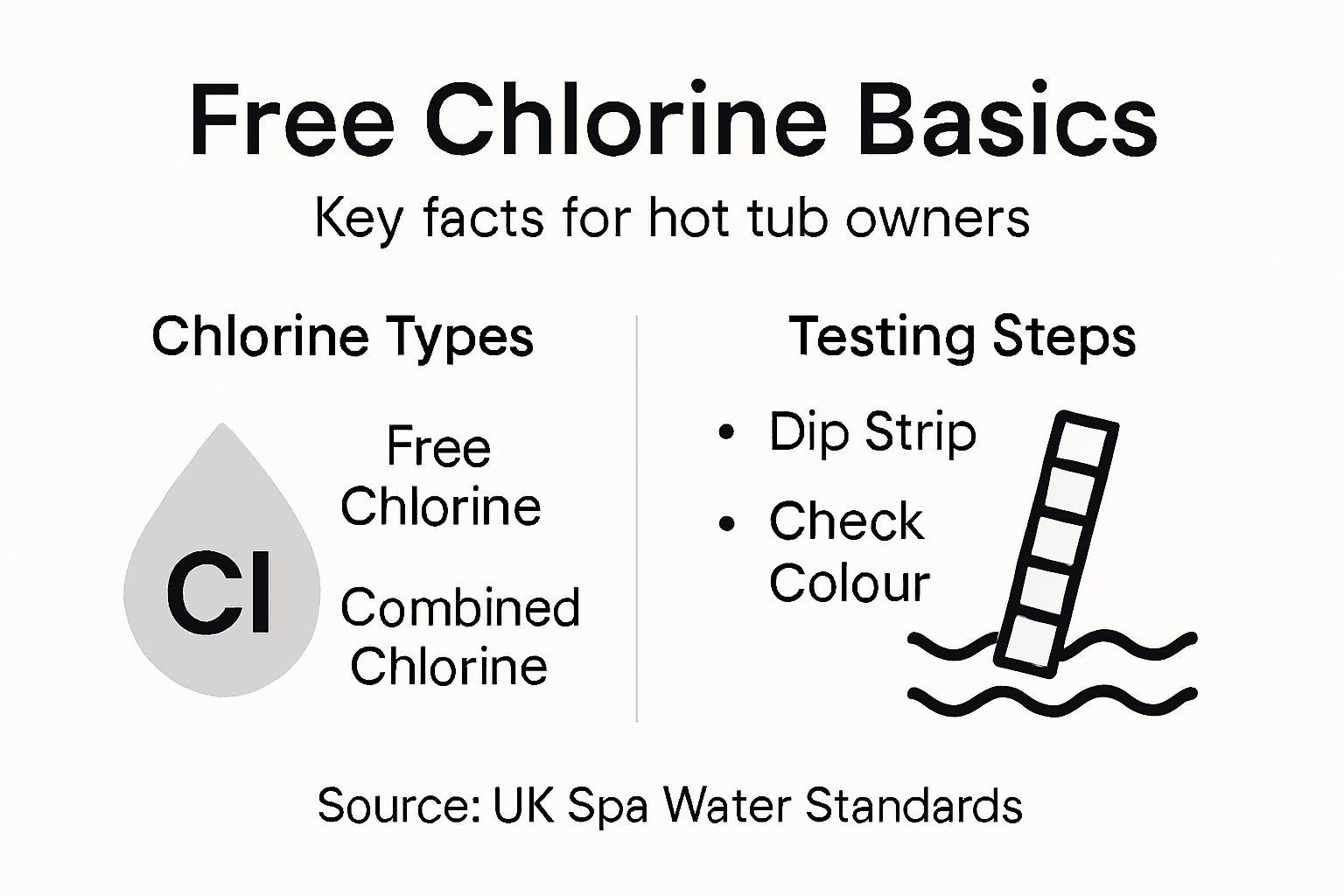
Most hot tub guides recommend maintaining free chlorine between 2 and 4 parts per million (ppm) for optimal safety and comfort. Below 2 ppm, bacteria can start multiplying. Above 4 ppm, you’ll likely experience chlorine smell, eye irritation, and that distinctive pool odour that actually signals chloramine buildup rather than excess chlorine itself. Getting this balance right transforms your spa experience from uncomfortable to genuinely relaxing.
The reason chlorine’s oxidative properties prove essential for water treatment is straightforward: those oxidising agents break down organic matter and kill microorganisms. Your hot tub’s warm water temperature speeds up this chemical reaction, which is why spas need slightly higher chlorine levels than pools.
Pro tip: Test your free chlorine every 2 to 3 days during regular use, and immediately after heavy bather load or rain, to catch problems before they affect water quality.
How Free Chlorine Works in Hot Tub Water
When you add chlorine to your hot tub, something fascinating happens at the molecular level. The chlorine dissolves in water and converts into hypochlorous acid (HOCl), the actual disinfectant doing all the heavy lifting. This transformation is why free chlorine matters so much. Without this chemical change, your chlorine tablets would sit in your tub accomplishing nothing.
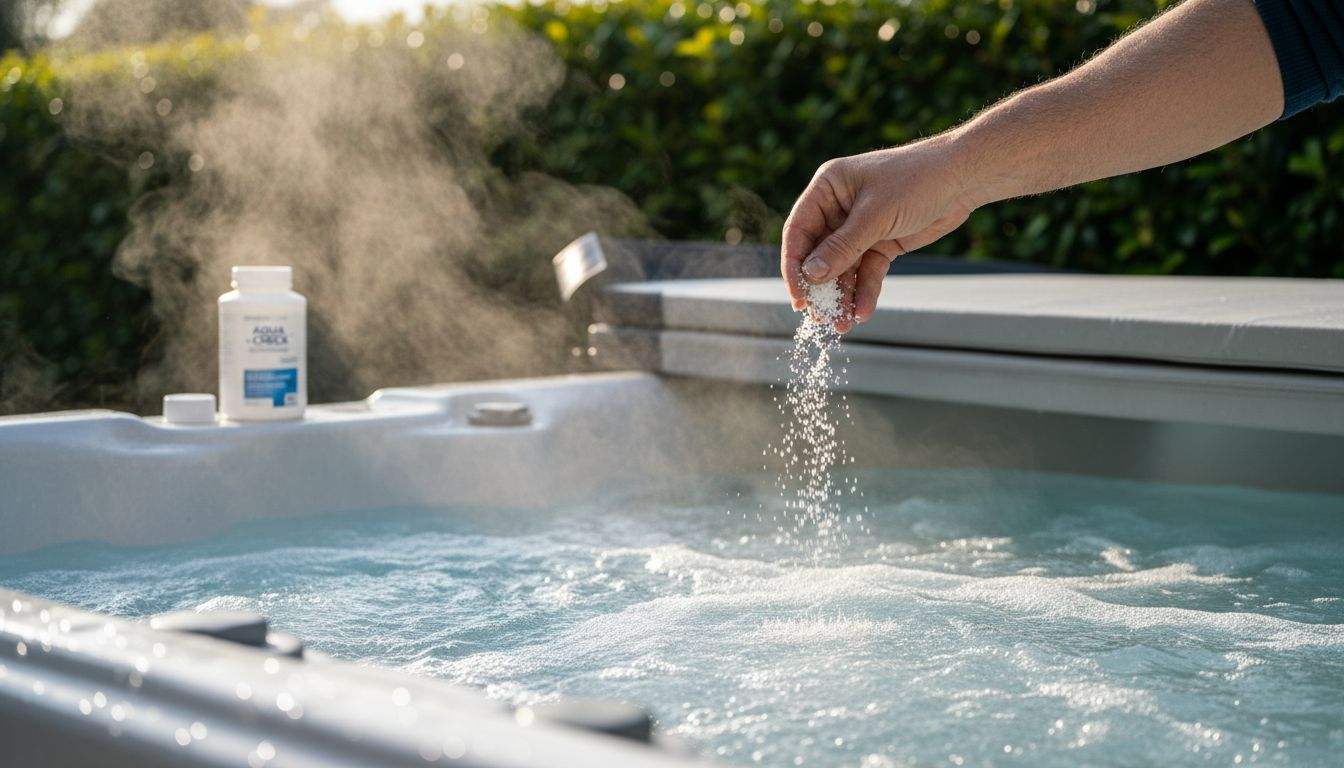
Hypochlorous acid works by attacking the cell walls of bacteria, viruses, and algae. The oxidative action of chlorine essentially breaks down these microorganisms from the inside out. Your hot tub stays clear and safe because this acid is constantly patrolling the water, neutralising anything harmful before it becomes a problem. This process happens continuously as long as you maintain adequate free chlorine levels.
The warm temperature of your hot tub actually accelerates this chemical reaction. Your spa heats water to around 37 to 40 degrees Celsius, which speeds up how quickly free chlorine oxidises contaminants compared to a swimming pool kept at 25 degrees Celsius. This is why hot tubs typically require higher free chlorine concentrations than pools do.
How chlorine eliminates pathogens through oxidation depends partly on the pH of your water. When your water is slightly acidic (pH around 7.0 to 7.4), the hypochlorous acid form remains dominant and works most effectively. If your pH drifts too high, more chlorine converts to a less effective form called hypochlorite ion, meaning you need more chlorine to achieve the same disinfection.
As free chlorine does its job, it gradually becomes depleted. The chlorine molecules that have neutralised contaminants transform into combined chlorine, no longer able to sanitise. This cycle repeats continuously, which is why regular testing and chlorine top-ups are essential for maintaining a safe spa environment.
Pro tip: Check your water pH regularly alongside free chlorine levels, as proper pH ensures your chlorine works at peak efficiency and prevents wasteful over-chlorination.
Testing and Maintaining Proper Chlorine Levels
Testing your hot tub water regularly is the only way to know if your free chlorine is doing its job. A simple test kit reveals your current free chlorine level in seconds. You can use either liquid reagent kits or digital testers, both giving accurate readings when used correctly. Testing twice weekly during regular use keeps you ahead of problems before they develop.
When you test, you are measuring the concentration of active chlorine available to sanitise your water. Maintaining effective disinfectant concentrations requires understanding your target range. For hot tubs, that target sits between 2 and 4 ppm. Below 2 ppm, bacteria starts multiplying rapidly. Above 4 ppm, you risk irritation and chlorine taste complaints from bathers.
Adding chlorine depends on your test results. If levels drop below 2 ppm, you need to raise them by adding chlorine tablets, liquid, or powder. Keeping chlorine levels within safe ranges protects both water quality and bather safety. Most hot tub owners add chlorine every few days, though usage varies based on bather load, sunlight exposure, and water temperature.
The frequency of your additions matters as much as the amount. Heavy use weekends or warm weather accelerates chlorine consumption, demanding more frequent testing and topping up. Weather also plays a role. Ultraviolet light from sunshine breaks down free chlorine rapidly, which is why outdoor spas need more chlorine than enclosed ones.
Summary of factors influencing hot tub free chlorine levels:
| Influencing Factor | Impact on Chlorine Levels | Suggested Action |
|---|---|---|
| Warm water temperature | Accelerates chlorine depletion | Test and dose more frequently |
| High bather load | Increases contaminant introduction | Increase testing after use |
| Sunlight exposure | Breaks down chlorine rapidly | Add chlorine more often outdoors |
| Incorrect storage | Decreases chlorine potency | Store in cool, dry, ventilated place |
Don’t overlook your test kit’s expiry date. Outdated reagents give false readings, leading you to add either too much or too little chlorine. Replace your test kit annually or when you notice inconsistent results. Store it away from direct sunlight and extreme temperatures to preserve accuracy.
Pro tip: Test your free chlorine every morning before the spa is used, then again in the evening after bathers have finished, giving you a complete picture of how quickly your chlorine depletes during actual use.
UK Standards and Health Implications
The United Kingdom maintains strict standards for chlorine use in water treatment, including hot tubs and spas. These regulations exist to protect public health and ensure water safety across residential and commercial installations. Understanding these standards helps you maintain compliance whilst safeguarding anyone using your spa.
Recommended limits for free chlorine concentrations are established by UK water industry guidelines. For hot tubs specifically, the acceptable range sits between 2 and 4 ppm of free chlorine. This range kills pathogens effectively whilst remaining safe for bathers. Going above 4 ppm increases health risks without providing additional sanitisation benefits.
Excessive chlorine exposure causes tangible health problems. Eye irritation, skin redness, and respiratory irritation all stem from over-chlorination. Many people mistake strong chlorine smells for safety, but that odour actually signals chloramine formation, which indicates inadequate water management. Proper free chlorine control eliminates both the smell and these health concerns.
Underchlorinated water creates different but equally serious problems. Bacteria, viruses, and algae multiply rapidly when free chlorine drops below 2 ppm. Bathers can contract legionella, pseudomonas, and other waterborne pathogens from contaminated spa water. Regular testing prevents this scenario entirely by catching chlorine levels before they become problematic.
UK regulations also address handling and storage safety. Chlorine products must be stored away from heat, direct sunlight, and incompatible chemicals. Many hot tub owners store chlorine tablets in damp basements or garages, a risky practice that accelerates degradation and can create dangerous chemical reactions. Store your chlorine in a cool, dry location with proper ventilation.
Personal protective equipment becomes necessary when handling concentrated chlorine solutions. Gloves and eye protection prevent chemical burns. Always add chlorine to water, never the reverse. Adding water to concentrated chlorine causes violent reactions that can cause serious injury.
Pro tip: Keep records of your free chlorine readings and chlorine additions, creating a maintenance log that demonstrates compliance with UK standards and helps identify patterns in your spa’s chemical consumption.
Common Mistakes When Managing Chlorine
Most hot tub owners make predictable chlorine management mistakes that undermine water quality and safety. Understanding these pitfalls helps you avoid them entirely. The good news is that once you recognise these errors, they are straightforward to fix.
Skipping regular testing ranks as the most common error. Many owners assume chlorine levels remain stable between additions, then wonder why their water turns cloudy or develops odour. Inadequate testing schedules prevent early detection of chlorine problems, allowing under-chlorination or over-chlorination to develop unchecked. Test your free chlorine at least twice weekly to catch issues before they become serious.
Incorrect chlorine storage causes rapid degradation of your chemical supply. Storing tablets in damp bathrooms, exposed to direct sunlight, or near heat sources dramatically reduces their effectiveness. Your chlorine may appear unchanged, yet its potency has declined significantly. Store tablets in a cool, dry location with proper ventilation, ideally in a sealed container within a dedicated cabinet.
Adding chlorine without checking current levels leads to dangerous over-chlorination. You might add tablets on a routine schedule rather than based on actual test results. This wastes chlorine and creates uncomfortable conditions for bathers. Conversely, infrequent dosing leaves chlorine depleted, allowing bacteria to multiply. Base all additions on your most recent test reading.
Misunderstanding the difference between free and total chlorine confuses many new owners. You might focus on total chlorine when free chlorine is what actually sanitises your water. Total chlorine includes spent chlorine doing no sanitising work. Always test and maintain free chlorine specifically, not total chlorine.
Failing to adjust for usage patterns creates predictable problems. A quiet week requires minimal chlorine, but a busy weekend with multiple guests depletes supplies rapidly. Heavy bather loads, warm weather, and rain all accelerate chlorine consumption. Anticipate these scenarios and increase testing frequency accordingly.
Pro tip: Set phone reminders for testing days and note your readings in a simple spreadsheet, making it easy to spot trends and adjust your routine before water quality issues develop.
Keep Your Hot Tub Safe and Sparkling with ClearSpa Solutions
Maintaining the perfect level of free chlorine in your hot tub is essential to create a relaxing and safe spa environment. The challenge of balancing free chlorine between 2 and 4 ppm, avoiding chloramine build-up, and testing frequently can feel overwhelming. ClearSpa understands these key pain points - whether it is the confusing difference between free and combined chlorine, the impact of warm water temperatures, or the need for reliable, easy-to-use products that help you maintain water quality effortlessly.
Take full control of your hot tub water treatment with ClearSpa’s range of premium hot tub chemicals and spa essentials. Our products are specially designed and rigorously tested to help you efficiently manage free chlorine levels and maintain ideal pH balance so hypochlorous acid does its job perfectly every time. Discover how simple it is to keep your spa hygienic and comfortable by visiting ClearSpa today. Explore reliable water treatment solutions and never worry about eye irritation or unpleasant smells again. Start enjoying your spa safely with professional quality products from a trusted Spa Trade Group Brand.
Frequently Asked Questions
What is free chlorine and why is it important for hot tubs?
Free chlorine is the active form of chlorine that disinfects hot tub water by converting into hypochlorous acid. It is essential for killing bacteria, algae, and other contaminants, making it crucial for maintaining water safety.
How often should I test the free chlorine levels in my hot tub?
It is recommended to test free chlorine levels every 2 to 3 days during regular use, and immediately after heavy bather loads or rain, to ensure that water quality remains optimal.
What should my free chlorine levels be for safe hot tub use?
For safe and effective sanitisation, free chlorine levels should be maintained between 2 and 4 parts per million (ppm). Levels below 2 ppm can lead to bacterial growth, while levels above 4 ppm can cause skin and eye irritation.
How does temperature affect free chlorine effectiveness in a hot tub?
The warm water temperature of a hot tub accelerates the oxidation process, making free chlorine work more effectively. This means hot tubs typically require higher chlorine concentrations than swimming pools to maintain proper disinfection.