What is Bromine and What is it Used For?
Bromine is mainly used to sanitise hot tub and spa water, where it stays effective in warm water and across a wider pH range than chlorine. It is also used in flame retardants and pharmaceutical manufacturing. Concentrated bromine is hazardous, so spa products are dosed and handled with care.
Discover bromine what is it used for and why it matters. Understand its applications and importance in various industries today.
Bromine is a chemical element (symbol Br, atomic number 35) used mainly as a water sanitiser, a flame retardant, and a building block in pharmaceutical and chemical manufacturing. In UK spas and hot tubs it kills bacteria in place of chlorine, staying more stable at higher temperatures, irritating skin and eyes less, and working across a broader pH range.[1]
It is also the only nonmetallic element that is liquid at room temperature, appearing as a dense, reddish-brown liquid that readily forms a red vapour. Beyond water treatment, bromine compounds reduce fire risk in electronics, textiles, and building materials, and help synthesise complex molecules in medicines and specialist chemicals.
Table of Contents
- Understanding Bromine: What Is It?
- The Importance of Bromine in Various Industries
- How Bromine Works: Chemical Properties and Reactions
- Key Applications of Bromine in Everyday Life
- Environmental and Health Considerations of Bromine Use
Quick Summary
| Takeaway | Explanation |
|---|---|
| Bromine is a unique liquid at room temperature. | It is the only nonmetallic element that exists as a liquid at standard conditions, distinguished by its reddish-brown colour and strong odour. |
| Bromine enhances water treatment processes. | Bromine is more stable and less irritating than chlorine, making it ideal for swimming pool and spa sanitation. |
| Bromine plays a vital role in fire safety. | Used as a flame retardant, bromine compounds protect materials from ignition, particularly in electronics and construction. |
| Bromine’s reactivity aids pharmaceutical development. | Its ability to bond with various elements helps synthesize complex molecules essential in medicinal and chemical applications. |
| Health and environmental concerns are significant. | While valuable, bromine poses health risks upon direct exposure and may persist in the environment, necessitating careful management. |
Understanding Bromine: What is It?
Bromine is a fascinating chemical element that plays a crucial role in various industrial and scientific applications. As a member of the halogen group, bromine represents a unique substance with distinctive physical and chemical properties that set it apart from other elements.
The Chemical Identity of Bromine
At its core, bromine is a nonmetallic element with the chemical symbol Br and atomic number 35. According to the University of Nottingham research, bromine is remarkable for being the only nonmetallic element that exists as a liquid at room temperature. Its appearance is distinctive: a dense, reddish-brown liquid that readily evaporates into a striking red vapor with a strong, chlorine-like odor.
This table outlines the key physical and chemical properties of bromine, offering a concise reference for its most distinctive characteristics mentioned in the article.
| Property | Description |
|---|---|
| Chemical Symbol | Br |
| Atomic Number | 35 |
| Appearance | Dense, reddish-brown liquid |
| State at Room Temperature | Liquid (only nonmetallic element in liquid form) |
| Boiling Point | 58.8°C |
| Melting Point | -7.2°C |
| Group in Periodic Table | 17 (Halogen group) |
| Odour | Strong, chlorine-like |
| Reactivity | Highly reactive, forms numerous compounds |
Key characteristics of bromine include:
- Atomic weight of 79.904
- Belongs to group 17 (halogen group) in the periodic table
- Highly reactive chemical element
- Capable of forming compounds with multiple elements
Physical and Chemical Properties
Bromine exhibits fascinating physical properties that make it unique in the chemical world. Its boiling point is approximately 58.8 degrees Celsius, and it has a melting point of -7.2 degrees Celsius. These characteristics contribute to its liquid state at standard environmental conditions.
Research from the Sheffield University group highlights that bromine is a volatile and mobile substance. Its chemical reactivity is significant, enabling it to form various compounds and participate in numerous chemical reactions. This reactivity stems from its electronic configuration, which allows it to readily bond with other elements.
The element’s versatility makes it valuable across multiple industries, from water treatment to pharmaceutical manufacturing. Its ability to interact with other substances makes bromine an essential component in creating complex chemical compounds that serve diverse technological and scientific purposes.
The Importance of Bromine in Various Industries
Bromine’s unique chemical properties make it an indispensable element across multiple sectors, contributing significantly to technological advancements and industrial processes. Its versatility and reactive nature enable bromine to play critical roles in diverse applications that impact our daily lives.
Water Treatment and Sanitation
According to the Essential Chemical Industry, bromine compounds are extensively used in water treatment and sanitation processes.[2] Unlike chlorine, bromine offers distinct advantages in spa and swimming pool maintenance. Its chemical structure allows for effective sanitisation without producing the strong, characteristic odour associated with chlorine-based treatments, which is one reason many owners weigh up chlorine versus bromine for a domestic hot tub.
Key advantages of bromine in water treatment include:
- More stable at higher temperatures
- Less irritating to skin and eyes
- Effective across a broader pH range
- Superior performance in warm water environments
Fire Safety and Industrial Applications
Bromine plays a crucial role in fire safety and industrial manufacturing. Flame retardant production represents one of its most significant applications. Compounds like tetrabromobisphenol A are incorporated into plastics and electronic components to reduce fire risks. These bromine-based compounds help prevent potential fire hazards in consumer electronics, building materials, and automotive components.
Additionally, bromine finds extensive use in the oil drilling industry. Clear brines containing bromine compounds serve multiple functions, including:
- Lubricating drilling equipment
- Dispersing solid particles
- Controlling pressure during drilling operations
Pharmaceutical and Chemical Manufacturing
The pharmaceutical and chemical industries leverage bromine’s remarkable reactivity to synthesize complex molecular structures. Its ability to form diverse chemical compounds makes it invaluable in creating sophisticated medicines, specialized chemicals, and advanced materials.
From water treatment to fire safety and pharmaceutical innovation, bromine demonstrates remarkable versatility. Its unique chemical properties continue to drive technological progress across multiple industrial sectors, highlighting the element’s critical importance in modern manufacturing and scientific research.
How Bromine Works: Chemical Properties and Reactions
Bromine operates through a complex series of chemical interactions that showcase its remarkable reactivity and versatility. Understanding its fundamental chemical properties reveals why this element plays such a critical role in numerous scientific and industrial applications.
Molecular Interaction and Water Solubility
According to research from the University of Sheffield, bromine exhibits fascinating chemical behaviour when interacting with water and other substances. When dissolved in water, bromine produces hypobromite ions (OBr⁻), with the equilibrium position dynamically shifting based on the solution’s pH level.
Key characteristics of bromine’s molecular interactions include:
- Ability to form complex interhalogen compounds
- Dynamic pH-dependent reaction mechanisms
- High reactivity with multiple elemental groups
- Capacity to generate diverse ionic configurations
Thermal and Reactive Properties
Bromine’s thermal characteristics enable unique chemical transformations. At different temperatures, it can generate various molecular compounds through sophisticated reaction pathways. For instance, bromine can react with fluorine in gaseous states to create interhalogen species such as BrF, which further decompose into complex molecular structures like Br₂, BrF₃, and BrF₅.
Additional reactive properties include:
- Capacity to form bromate ions (BrO₃⁻) when reacting with hot aqueous alkali
- Ability to participate in three-body associative chemical processes
- Potential for creating neutral and charged molecular configurations
Electron Configuration and Bonding
The element’s electron configuration fundamentally drives its chemical reactivity. Bromine’s outer electron shell allows it to form multiple types of chemical bonds, making it exceptionally versatile in creating complex molecular structures. This characteristic enables bromine to serve critical functions in pharmaceuticals, industrial processes, and scientific research.
Bromine’s intricate chemical properties demonstrate how a single element can play multiple roles across different scientific and industrial domains. Its unique reactivity, molecular flexibility, and ability to transform under various conditions make it an indispensable component in modern chemical engineering and technological innovation.
Key Applications of Bromine in Everyday Life
Bromine’s versatile chemical properties make it an essential element in numerous aspects of daily life, from water treatment to advanced technological applications. Its unique characteristics enable it to play critical roles across various industries and consumer products.
Water Treatment and Sanitation
According to the Royal Society of Chemistry, bromine is particularly crucial in water purification systems, especially for swimming pools and hot tubs.[1] Its effectiveness as a sanitising agent stems from its ability to eliminate harmful microorganisms while providing several advantages over traditional chlorine treatments. In practice this is usually delivered through slow-dissolving bromine tablets or fast-acting bromine granules.
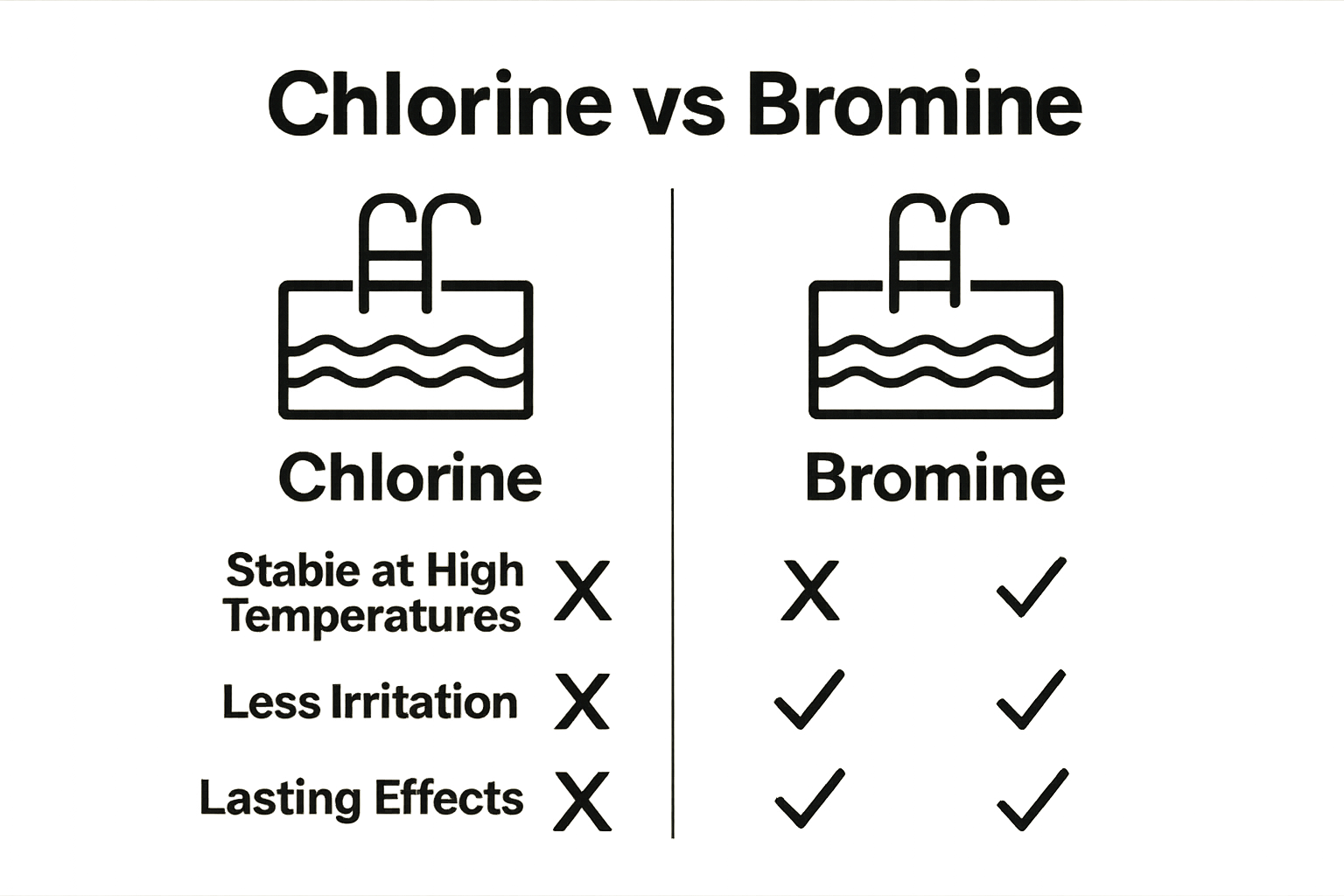
Below is a table comparing the properties and advantages of bromine versus chlorine as water sanitisers, helping to clarify why bromine is often preferred for swimming pools and spas.
| Property | Bromine | Chlorine |
|---|---|---|
| Physical State at Room Temperature | Liquid (nonmetal) | Gas (nonmetal) |
| Stability at High Temperatures | More stable | Less stable |
| Irritation to Skin and Eyes | Less irritating | More irritating |
| Effectiveness Across pH Range | Effective across a broader pH range | Less effective outside optimal pH |
| Odour | Lower, less pungent | Strong, characteristic chlorine odour |
| Performance in Warm Water | Superior, especially in spas and hot tubs | Less effective in warm water |
| Lasting Sanitisation | Longer lasting | May dissipate more quickly |
Key benefits of bromine in water treatment include:

- More stable performance in higher temperatures
- Reduced skin and eye irritation
- Longer-lasting sanitisation effects
- Lower chemical odour compared to chlorine
Fire Safety and Consumer Electronics
Bromine compounds are extensively used in flame retardant technologies, protecting consumers across multiple product categories. These specialised chemical formulations are integrated into everyday items to significantly reduce fire risks. Electronic devices, household appliances, textiles, and building materials all benefit from bromine-based fire safety solutions.
Applications of bromine in fire protection include:
- Protecting electrical circuit boards
- Enhancing textile fire resistance
- Improving safety in automotive components
- Reducing flammability in construction materials
Agricultural and Pharmaceutical Innovations
In agriculture and pharmaceutical manufacturing, bromine serves as a critical component in developing advanced chemical compounds. Its reactive nature allows scientists and researchers to synthesise complex molecules that contribute to crop protection, medical treatments, and innovative chemical solutions.
Bromine’s remarkable versatility demonstrates how a single chemical element can impact multiple aspects of modern life. From ensuring clean water and enhancing fire safety to supporting agricultural and medical advancements, bromine continues to play an indispensable role in technological and scientific progress.
Environmental and Health Considerations of Bromine Use
Bromine’s widespread industrial applications necessitate a comprehensive understanding of its potential environmental and health implications. While this versatile element offers numerous technological benefits, responsible management and awareness of its potential risks are crucial for safe utilisation.
Toxicological Profile and Health Exposure
According to the UK Health Security Agency, bromine presents specific health considerations that require careful management. Direct exposure to bromine can produce significant physiological responses, making proper handling and safety protocols essential.
Key health exposure considerations include:
- Potential respiratory system irritation
- Possible skin and mucous membrane inflammation
- Risk of eye damage upon direct contact
- Potential for systemic toxicity with prolonged exposure
Environmental Dispersal and Impact
Bromine compounds, particularly brominated flame retardants, have attracted scientific scrutiny regarding their environmental persistence and potential ecological consequences. The element’s chemical stability means it can remain in environmental systems for extended periods, potentially affecting wildlife and ecosystem dynamics.
Significant environmental considerations encompass:
- Potential bioaccumulation in aquatic ecosystems
- Long-term persistence in soil and water systems
- Possible interactions with organic matter
- Potential biomagnification through food chains
Regulatory and Safety Management
Recognising bromine’s complex environmental and health profile, regulatory bodies have developed comprehensive guidelines to mitigate potential risks. These frameworks focus on limiting exposure, establishing safe handling protocols, and monitoring industrial applications to protect human and environmental health.
Comprehensive safety management involves understanding bromine’s unique properties and implementing rigorous control measures. While bromine remains an invaluable industrial element, responsible use requires continuous research, monitoring, and adaptive regulatory approaches to balance technological innovation with environmental and health protection.
Experience the Real Benefits of Bromine with ClearSpa Solutions
Struggling to maintain consistently clean and gentle water in your hot tub or spa? The article explained how bromine’s unique chemical properties provide superior sanitisation, lasting performance in high temperatures, and less irritation compared to chlorine. Many owners feel frustrated by chemical odours, skin discomfort, or the hassle of balancing their water. That is where a precise and reliable water treatment routine makes a real difference.

Choose greater comfort and peace of mind with ClearSpa. Our collection of premium bromine-based hot tub chemicals is crafted to solve these common issues. We deliver trusted, effective products designed to keep your water crystal clear and inviting. Visit our website now to discover the difference that proper bromine solutions can make for your spa or pool. Take control of your water quality today at ClearSpa for a safer, more relaxing experience every single time.
Frequently Asked Questions
What are the key properties of bromine?
Bromine is a nonmetallic element with the chemical symbol Br and atomic number 35. It is unique for being the only nonmetal that exists as a liquid at room temperature, with a boiling point of approximately 58.8 degrees Celsius and a melting point of -7.2 degrees Celsius. It is a dense, reddish-brown liquid that readily evaporates into a red vapour.
What are the primary uses of bromine in water treatment?
Bromine is extensively used in water treatment and sanitation, particularly in spas and swimming pools.[2] It is more stable at higher temperatures compared to chlorine, produces less irritation to skin and eyes, and remains effective across a broader pH range.
How does bromine serve in fire safety applications?
Bromine is crucial in the production of flame retardants, which are used to enhance fire safety in consumer electronics, textiles, building materials, and automotive components. It helps prevent fire hazards by reducing the flammability of various materials.
What are the health and environmental considerations associated with bromine?
Bromine can present health risks such as respiratory irritation, skin inflammation, and potential systemic toxicity with prolonged exposure. Environmentally, bromine compounds may persist in ecosystems, posing risks like bioaccumulation and biomagnification, necessitating responsible handling and regulatory measures.
What is the difference between bromine and bromide?
Bromine is the active sanitiser that kills bacteria in your water, while bromide (such as sodium bromide) is the inactive reserve salt that is left behind once the bromine has been used up. Adding an oxidiser, or shock, regenerates active bromine from that bromide bank, which is why BCDMH bromine tablets and granules keep working steadily between doses.
Recommended
- What Do Bromine Tablets Do? Benefits and Usage Explained - ClearSpa™
- Global market for bromine hot tubs and pools - ClearSpa™
- Why are hot tub bromine tablets so widely used? - ClearSpa™
- Clean and Safe Spa Water: The Power of Spa Bromine Tabs - ClearSpa™
Sources and review
Reviewed on . Next review due .
- HSG282: The control of legionella and other infectious agents in spa-pool systems - Health and Safety Executive
- Guidelines for safe recreational water environments. Volume 2: swimming pools and similar environments - World Health Organization