Bromine Tablets Explained: Safer Hot Tub Water
Bromine tablets dissolve slowly in a floating dispenser to hold hot tub bromine at 4-6 mg/l. Use roughly one to three 20 g tablets per 1,000 litres; they last one to two weeks. Test regularly and adjust the dispenser rather than guessing, and always follow the label dose.
Bromine tablets for hot tubs offer superior sanitation, gentler water, and easy maintenance. Discover types, benefits, risks, and alternatives.
Bromine tablets are slow-dissolving 20g pucks you load into a floating dispenser to hold a steady sanitiser level in a hot tub, typically 4 to 6 ppm.[2] For most tubs you use 1 to 3 tablets per 1,000 litres, which holds the level for one to two weeks before topping up. They release hypobromous acid gradually and, unlike chlorine, stay effective in the warm, higher-pH water a spa runs at.
They are safe when used at the recommended concentration: the toxicity worries you may have read about relate to elemental bromine, not the stabilised bromine in water-treatment tablets. Below is how they work, the right dose for your spa, and how they compare with chlorine.
Table of Contents
- Bromine Tablets And Common Misconceptions
- Types And Sizes Of Bromine Tablets
- How Bromine Tablets Sanitize Hot Tubs
- Dosing Methods And Ideal Levels
- Benefits And Drawbacks Of Bromine Use
- Bromine Tablets Versus Chlorine Options
Key Takeaways
| Point | Details |
|---|---|
| Bromine Effectiveness | Bromine tablets offer superior sanitisation for hot tubs, effectively eliminating harmful microorganisms and maintaining clean water. |
| Safety Considerations | Concerns about bromine’s toxicity are largely unfounded; when used at recommended concentrations, it is safe for water treatment. |
| Comparison to Chlorine | Bromine performs better in hot environments and causes less skin irritation compared to chlorine, although it is typically more expensive. |
| Dosing Accuracy | Precise dosing based on spa size and usage is crucial for optimal sanitisation, emphasising the importance of measuring water volume accurately. |
Bromine tablets and common misconceptions
Bromine tablets play a crucial role in maintaining safe and clean hot tub water, yet numerous misconceptions persist about their effectiveness and safety.[1] Unlike chlorine, bromine offers unique water treatment properties that make it a preferred choice for many spa owners. Bromine’s unique sanitising properties stem from its ability to release hypobromous acid, which effectively eliminates harmful microorganisms.
Many hot tub owners harbour unnecessary fears about bromine’s toxicity, but scientific research indicates these concerns are largely unfounded. While elemental bromine is indeed highly toxic, the bromine used in water treatment tablets is safe when applied at recommended concentrations. The key distinction lies in understanding how bromine functions in water treatment:
- Releases hypobromous acid for sanitisation
- Remains effective across wider pH ranges
- Produces less odour compared to chlorine
- Continues working effectively even after neutralising contaminants
Another significant misconception involves believing that bromine and chlorine perform identically in water treatment. In reality, bromamine compounds formed by bromine retain powerful sanitising properties that differ substantially from chlorine’s combined forms. Government guidelines confirm bromine’s safety when used correctly, emphasising that concentration and duration are critical factors in responsible usage.
Pro tip: Always follow manufacturer instructions precisely when using bromine tablets to ensure optimal hot tub water quality and safety.
Types and sizes of bromine tablets
Bromine tablets are essential water treatment solutions designed to sanitise hot tubs and swimming pools efficiently. Commercial bromine formulations are carefully engineered to provide controlled, consistent water treatment across various pool and spa sizes. These tablets come in different weights and dissolution rates, allowing hot tub owners to select the most appropriate option for their specific water volume and maintenance requirements.
The most common bromine tablet sizes typically range from 20 grams to 40 grams, each designed to address different spa capacities and usage patterns. Smaller spas are often best served by the slow-dissolving ClearSpa 20g bromine tablets. These standardised weights enable precise dosing and help maintain consistent water chemistry. Key characteristics of bromine tablets include:
- Slow-release sanitisation mechanism
- Consistent bromine concentration
- Varying tablet weights for different spa sizes
- Compact, easy-to-use format
- Effective across different water temperatures
Hot tub owners should consider several factors when selecting bromine tablets, including their spa’s water volume, frequency of use, and specific sanitisation requirements. Tablet composition plays a crucial role in determining effectiveness, with professional-grade tablets containing carefully balanced bromide compounds that ensure optimal water treatment. Some tablets are designed for quick dissolution, while others provide a more gradual release of sanitising agents. Where an instant boost is needed, many owners keep fast-dissolving bromine granules alongside their tablets.
Use this reference table to quickly match bromine tablet sizes with typical hot tub water volumes:
| Tablet Size (grams) | Suitable Water Volume (litres) | Common Usage Frequency |
|---|---|---|
| 20g | 500-1,000 | Lighter, smaller spas - weekly |
| 30g | 1,000-1,500 | Medium-sized hot tubs - weekly |
| 40g | 1,500-2,000 | Larger spas - weekly or more |
Pro tip: Always measure your hot tub’s water volume precisely and consult the manufacturer’s dosage recommendations to select the most appropriate bromine tablet size.
How bromine tablets sanitise hot tubs
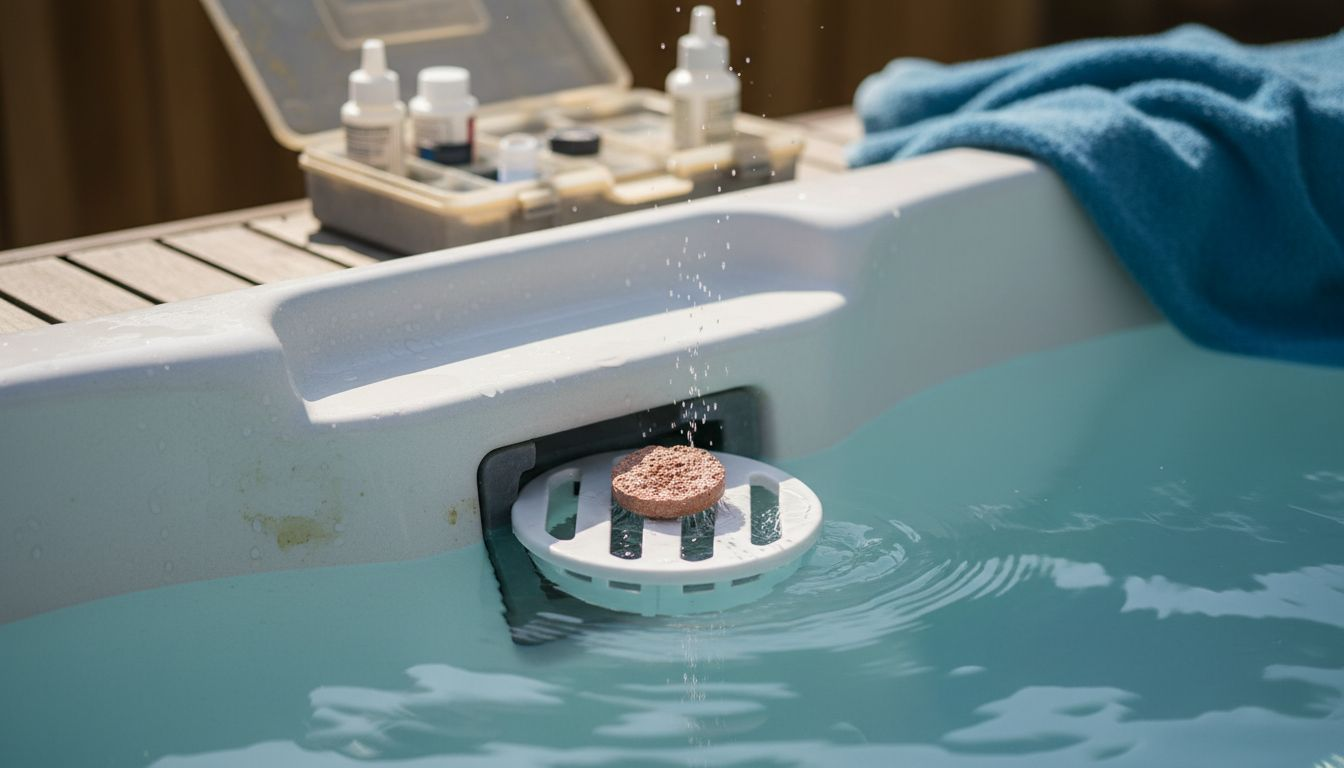
Understanding the intricate process of hot tub water sanitisation is crucial for maintaining a safe and hygienic spa environment. Bromine’s unique sanitisation mechanism involves the release of powerful oxidising agents that effectively eliminate harmful microorganisms. When bromine tablets dissolve in water, they create a complex chemical reaction that transforms the water into a powerful cleaning solution.
The sanitisation process involves several key scientific principles. As bromine tablets break down, they generate two primary active compounds that work synergistically to clean and protect hot tub water:
- Hypobromous acid (HOBr): The primary biocidal agent
- Hypobromite ions (OBr-): Additional oxidising compounds
- Effective across wider pH ranges
- Continuous sanitisation mechanism
- Long-lasting water protection
Bromine’s remarkable effectiveness stems from its ability to remain active even after neutralising contaminants. Bromamine compounds formed during the sanitisation process continue to provide water treatment benefits, unlike chlorine-based alternatives that become less effective after initial use. Hot tub owners appreciate bromine’s ability to maintain water quality consistently, with the tablets releasing sanitising agents gradually to ensure ongoing protection against bacteria, algae, and other potentially harmful microorganisms.
Pro tip: Test your hot tub water regularly and adjust bromine tablet dosage to maintain optimal sanitisation levels and water chemistry.
Dosing methods and ideal levels
Maintaining precise bromine levels is critical for ensuring optimal hot tub water quality and sanitisation. Bromine level monitoring requires careful attention and regular testing to keep water safe and clean. The recommended bromine concentration for most hot tubs falls within a specific range that balances effective sanitisation with water comfort.
The ideal bromine levels for hot tub maintenance typically involve several key parameters:
- Optimal range: 4-6 parts per million (ppm)
- Consistent monitoring using test strips
- Adjusting dosage based on hot tub usage
- Considering water temperature and frequency of use
- Accounting for environmental factors like sunlight exposure
Dosing methods vary depending on hot tub size, frequency of use, and environmental conditions. Tablet dissolution rates are engineered to provide gradual, consistent bromine release, helping hot tub owners maintain stable water chemistry. Professional-grade bromine tablets typically dissolve at a controlled rate, allowing for more predictable sanitisation and reducing the likelihood of over or under-treatment.
Pro tip: Invest in a reliable digital bromine test kit to ensure precise and consistent water chemistry monitoring.
Benefits and drawbacks of bromine use
Comparing bromine’s performance in hot tub water treatment reveals a nuanced landscape of advantages and potential challenges. Hot tub owners must carefully weigh the unique properties of bromine against alternative sanitisation methods to make an informed decision about their water treatment strategy.
The key benefits of bromine in hot tub maintenance include:
- Lower skin and eye irritation
- More stable in hot water environments
- Milder, less intrusive odour
- Effective sanitisation across broader pH ranges
- Slower chemical breakdown compared to chlorine
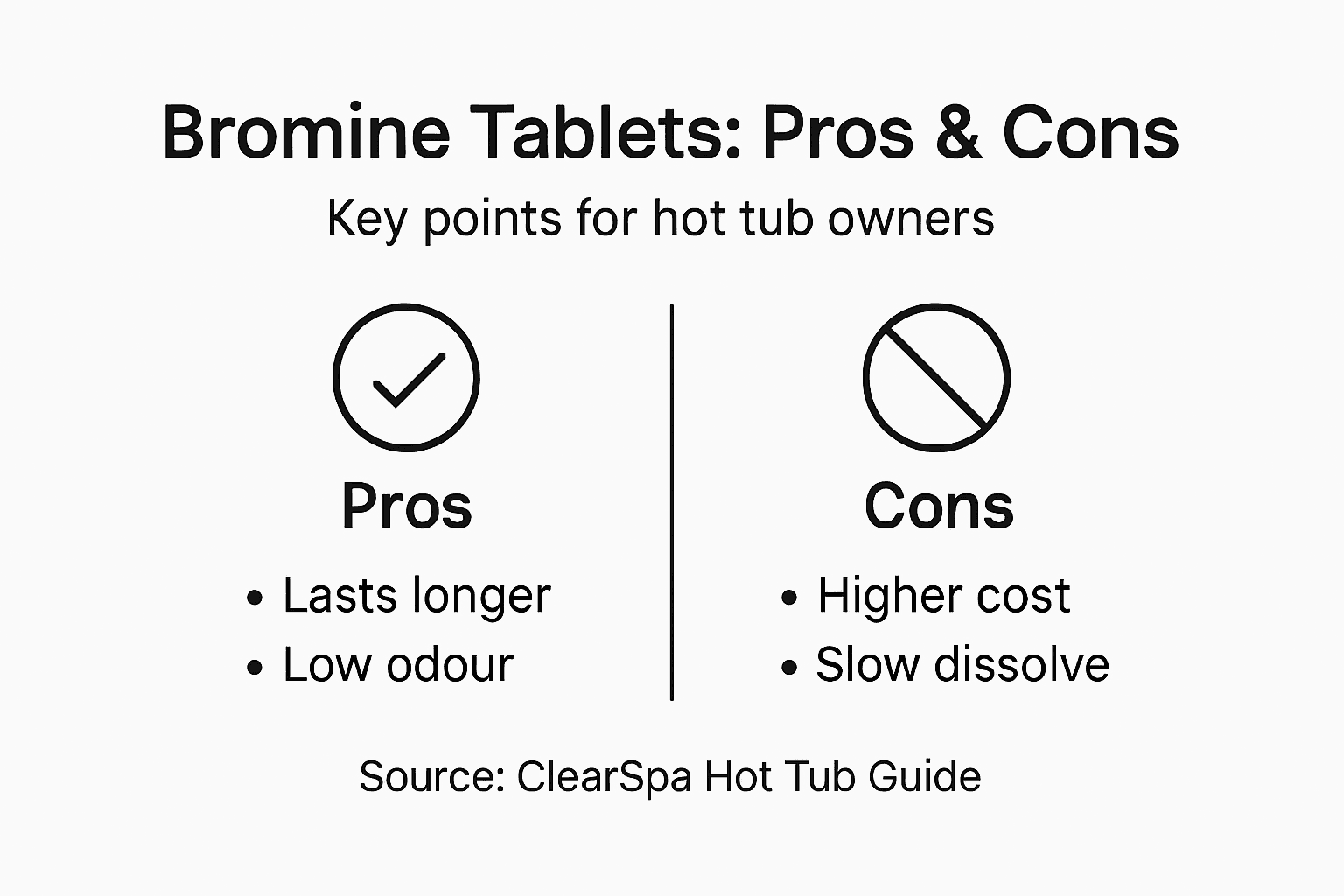
However, bromine is not without its drawbacks. Cost considerations play a significant role, as bromine products typically command a higher price point than traditional chlorine-based treatments. The chemical’s sensitivity to sunlight means additional stabilising agents are often required, potentially complicating the water treatment process. Professional hot tub owners must carefully balance these factors, recognising that bromine’s higher initial cost may be offset by its more consistent performance in high-temperature water environments.
Pro tip: Consider your specific hot tub usage patterns and environmental conditions when selecting between bromine and alternative sanitisation methods.
Bromine tablets versus chlorine options
Comparing water sanitisation methods reveals significant differences between bromine tablets and traditional chlorine treatments. Hot tub owners must understand these nuanced distinctions to make an informed choice about their water maintenance strategy, considering factors beyond simple cost and availability.
Key comparative aspects between bromine and chlorine include:
- Stability in hot water: Bromine performs better
- Temperature tolerance
- Skin and eye irritation levels
- Chemical breakdown rates
- Cost-effectiveness
- Odour intensity
While chlorine remains a popular and cost-effective option, chemical performance varies dramatically between the two treatments. Bromine tablets offer superior stability in high-temperature environments, making them particularly suited for hot tubs. Chlorine breaks down more quickly and produces stronger odours, potentially causing increased skin and eye irritation. Professional hot tub owners often prefer bromine for its more consistent sanitisation properties and gentler chemical profile; our detailed chlorine versus bromine comparison weighs up which suits your household.
Here’s a summary of the key differences between bromine and chlorine for hot tub sanitisation:
| Criteria | Bromine Tablets | Chlorine Treatments |
|---|---|---|
| Performance in Heat | Highly stable in hot water | Breaks down faster in hot water |
| Skin Irritation | Lower irritation risk | Higher potential for irritation |
| Odour | Subtle, less sharp smell | Strong, often pungent smell |
| Cost | Generally more expensive | Typically less expensive |
| Sunlight Sensitivity | Degrades faster, needs stabilisers | More sunlight-resistant |
| Residual Sanitiser | Remains effective post-reaction | Loses sanitising power quickly |
Pro tip: Consider your specific hot tub usage, water temperature, and personal sensitivity when selecting between bromine and chlorine sanitisation methods.
Discover Safer Hot Tub Water with ClearSpa Bromine Solutions
Maintaining optimal bromine levels is essential for clean and safe hot tub water without harsh odours or skin irritation. If you are seeking effective, long-lasting sanitisation that works well in hot water environments, understanding the benefits of high-quality bromine tablets is the first step. ClearSpa offers a carefully selected range of professional-grade bromine tablets and spa chemicals designed to help you achieve consistent water chemistry and lasting hygiene.
Explore our trusted selection at ClearSpa and enjoy the advantages of superior bromine sanitisation. Whether you need tablets tailored to your spa size or tools to maintain precise bromine dosing, we provide everything to enhance your hot tub experience. Act now to safeguard your spa water and enjoy crystal-clear comfort all year round with solutions backed by expert testing and rigorous quality control.
Frequently Asked Questions
What are bromine tablets and how do they work?
Bromine tablets are sanitising agents used in hot tubs and swimming pools. They dissolve in water to release hypobromous acid, which effectively kills harmful microorganisms, providing a safe and clean spa environment.
Are bromine tablets safe to use in hot tubs?
Yes, bromine tablets are safe for use in hot tubs when applied at recommended concentrations. They differ from elemental bromine, which is toxic, as the bromine in tablets is stabilised and safe for water treatment.
How should I dose bromine tablets in my hot tub?
To maintain optimal hot tub water quality and sanitisation, bromine levels should be kept between 4-6 parts per million (ppm). The dosage can vary based on your hot tub’s size, frequency of use, and environmental conditions, so regular testing is essential.
What are the advantages of bromine tablets compared to chlorine?
Bromine tablets offer several advantages over chlorine, including lower skin and eye irritation, greater stability in hot water, and a milder odour. Additionally, bromine remains effective across a wider pH range and does not break down as quickly as chlorine in high temperatures.
Recommended
- What are Bromine Granules? - ClearSpa™
- Why are hot tub bromine tablets so widely used? - ClearSpa™
- Hot Tub Bromine Tablets 20g - Slow Dissolving - ClearSpa™
- Bromine Tablets - ClearSpa™
Sources and review
Reviewed on . Next review due .
- HSG282: The control of legionella and other infectious agents in spa-pool systems - Health and Safety Executive
- PWTAG Code of Practice: the management and treatment of swimming pool water - Pool Water Treatment Advisory Group