Complete Guide to Spa Water Replacement UK
Spa water replacement guide for the UK covering when to change, step-by-step process, safety precautions, costs, and expert maintenance tips.
Most british spa owners are surprised to learn that heating a hot tub can cost up to £600 each year, making maintenance choices more important than ever. Clean, fresh water is not only about peace of mind, it directly affects the health and experience of everyone using the spa. Understanding when and why to replace spa water helps prevent costly mistakes, minimises health risks, and can save money over time.
Table of Contents
- Spa Water Replacement: Essential Concepts
- When and Why to Replace Spa Water
- Step-By-Step Spa Water Replacement Process
- Safety and Environmental Considerations UK
- Costs, Maintenance, and Common Mistakes
Key Takeaways
| Point | Details |
|---|---|
| Regular Water Replacement | Replace spa water after 100 uses per cubic metre or when half the capacity is used to prevent health risks and maintain cleanliness. |
| Indicators for Change | Look for cloudy water, strong odours, or skin irritations as signs that it’s time to replace the water. |
| Maintenance Process | Follow a detailed procedure involving draining, cleaning, and refilling to ensure optimal hygiene and spa equipment longevity. |
| Financial Awareness | Be mindful of ongoing costs, such as heating and chemical treatments, to manage expenses effectively and prevent costly repairs. |
Spa Water Replacement: Essential Concepts
Spa water replacement is a critical maintenance procedure that ensures the safety, cleanliness, and optimal performance of your hot tub. According to the Chartered Institute of Plumbing and Heating Engineering (CIPHE), regular water replacement is essential to prevent potential health risks associated with stagnant or contaminated water.
The process involves systematically draining and refilling your spa with fresh water, which helps eliminate accumulated contaminants, minerals, and organic materials that can compromise water quality. As recommended by UK Government guidance, water should be replaced when the number of bathers reaches 100 times the water volume in cubic metres, or when half the total water capacity has been used.
Key considerations for spa water replacement include:
- Frequency of usage
- Number of bathers
- Water chemistry levels
- Visible water quality
- Manufacturer recommendations
Proper water replacement not only maintains hygienic conditions but also protects your spa equipment from potential damage caused by mineral build-up and bacterial growth. Regular maintenance helps extend the lifespan of your hot tub and ensures a safe, enjoyable experience for all users.
When and Why to Replace Spa Water
Understanding when to replace spa water is crucial for maintaining a safe and hygienic hot tub environment. CIPHE highlights the significant risks associated with neglecting water replacement, particularly the potential for bacterial growth in warm, stagnant water conditions.
The frequency of water replacement depends on several critical factors. UK Government guidance recommends replacing water when the number of bathers reaches 100 times the water volume in cubic metres, or when half the total water capacity has been used. In commercial settings, such as public spas or wellness centres, daily water replacement might be necessary to mitigate infection risks.
Key indicators that signal the need for spa water replacement include:
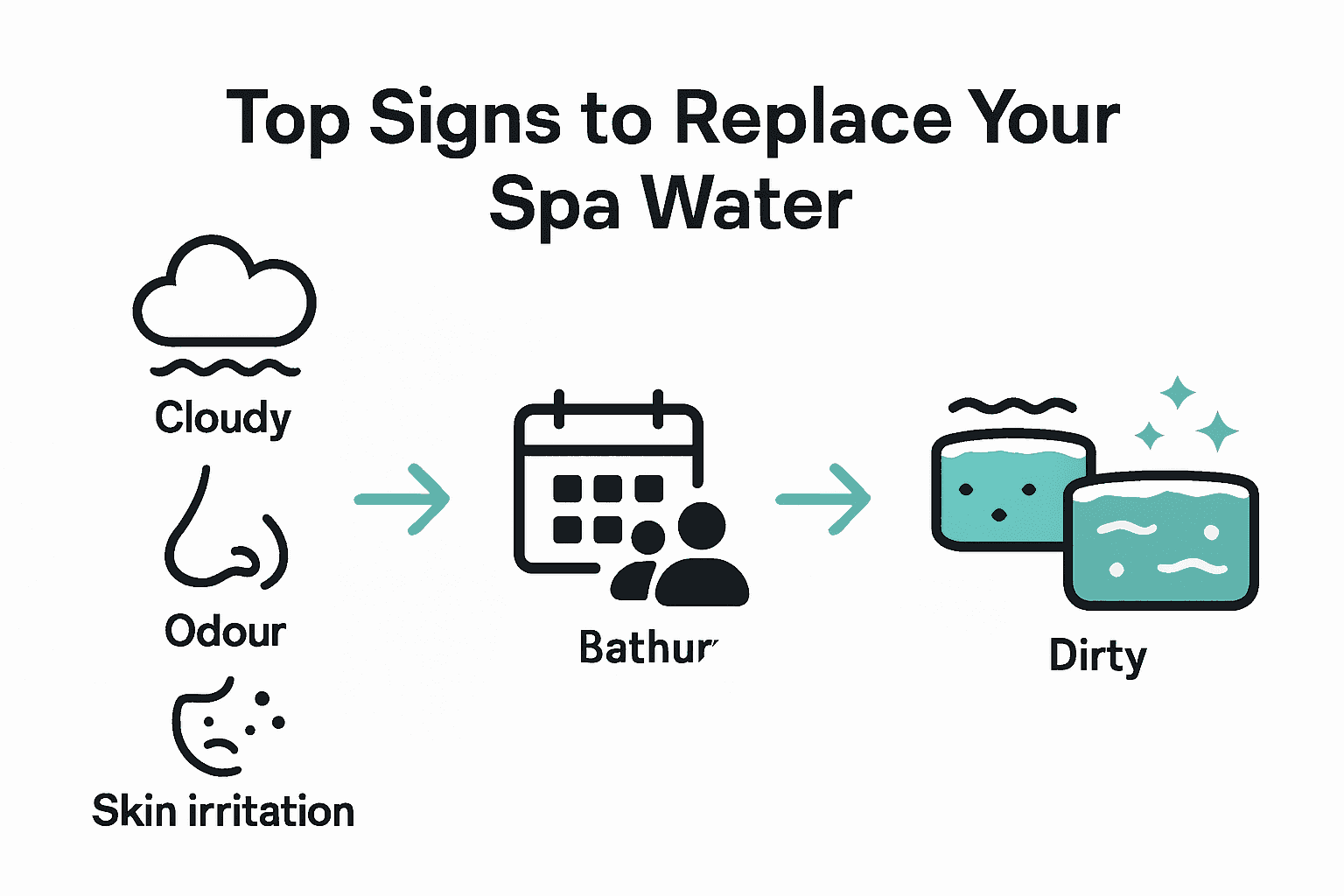
- Cloudy or discoloured water
- Strong chemical or musty odours
- Visible debris or film on water surface
- Persistent pH or chemical balance issues
- Increased skin irritation after spa use
Moreover, regular water replacement not only prevents potential health hazards but also protects your spa equipment from mineral build-up and corrosion. Proactive maintenance through timely water replacement ensures a safe, enjoyable, and prolonged spa experience.
Step-By-Step Spa Water Replacement Process
Replacing spa water requires a methodical approach to ensure optimal hygiene and equipment performance. CIPHE emphasises the critical importance of following precise manufacturer instructions during the maintenance process to guarantee safe and effective water replacement.
UK Government guidance recommends a comprehensive water replacement procedure that ensures thorough cleaning and sanitisation. Here’s a detailed step-by-step process for spa water replacement:
- Preparation and Safety
- Switch off and unplug spa electrical connections
- Gather necessary cleaning supplies
- Ensure proper drainage area and equipment
- Draining the Spa
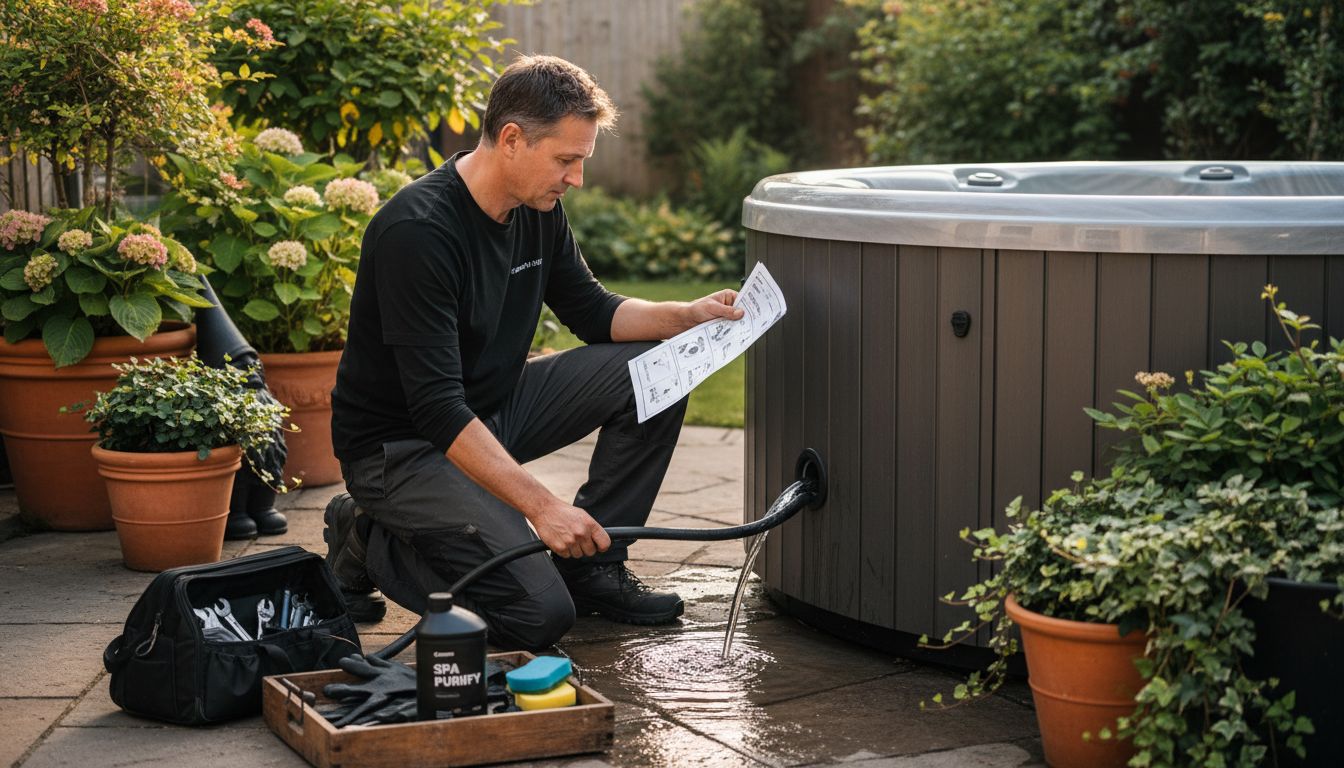
- Connect drainage hose to spa’s drain valve
- Direct water to appropriate drainage location
- Allow complete water removal
- Thorough Cleaning
- Remove and clean filters
- Scrub interior surfaces with spa-specific cleaner
- Rinse all surfaces completely
- Wipe down walls and floor with clean cloth
- Refilling and Chemical Treatment
- Refill spa with fresh water
- Test and balance water chemistry
- Add appropriate sanitising chemicals
- Run spa system to circulate chemicals
Careful attention to each step ensures a hygienic, safe spa environment and extends the longevity of your hot tub equipment. Regular maintenance prevents potential health risks and maintains optimal water quality.
Safety and Environmental Considerations UK
Safety and environmental responsibility are paramount when managing spa water replacement. UK Government guidance emphasises the critical importance of implementing robust water treatment protocols to minimise health risks and protect environmental resources.
CIPHE recommends a comprehensive approach to spa water management that balances user safety with ecological considerations. This involves careful chemical handling, responsible water disposal, and adherence to local environmental regulations.
Key safety and environmental considerations include:
- Proper chemical storage and handling
- Minimising water wastage during replacement
- Using environmentally friendly cleaning products
- Preventing chemical contamination of drainage systems
- Implementing energy-efficient heating and circulation practices
By adopting a responsible approach to spa water maintenance, UK homeowners can protect both their personal health and the broader environmental ecosystem. Thoughtful water management reduces chemical waste, conserves water resources, and minimises potential ecological impacts associated with spa ownership.
Costs, Maintenance, and Common Mistakes
Managing a spa involves understanding the financial and maintenance implications of ownership. CIPHE highlights that heating a hot tub can cost up to £600 annually, emphasising the importance of strategic maintenance to control ongoing expenses and prevent costly repairs.
UK Government guidance identifies several critical maintenance mistakes that can significantly impact both spa performance and operational costs:
Common Maintenance Errors:
- Inconsistent water chemistry testing
- Neglecting filter cleaning and replacement
- Improper chemical storage and handling
- Overlooking equipment inspection
- Irregular water replacement schedules
Financial Considerations:
- Annual heating costs: £500-£600
- Chemical treatments: £150-£250 per year
- Filter replacements: £50-£100 annually
- Emergency repairs: Potentially £200-£1000
Proactive maintenance can reduce long-term expenses by preventing major equipment failures and ensuring optimal spa performance. Regular inspections, timely repairs, and consistent water management are key to controlling both health risks and financial outlays associated with spa ownership.
Keep Your Spa Water Crystal Clear and Safe with Expert Care
Maintaining your hot tub’s water quality is essential to avoid common issues like cloudy water, skin irritation and costly equipment damage discussed in the Complete Guide to Spa Water Replacement UK. Frequent water replacement and precise chemical balancing can be challenging but are critical to ensuring your spa remains a clean and safe retreat. ClearSpa offers an extensive range of meticulously tested hot tub chemicals and maintenance products designed to simplify water treatment and protect your investment.
Take control of your spa care today by exploring our complete selection of premium products at ClearSpa. Visit our site to find everything you need to confidently manage your spa water chemistry, maintain optimal hygiene and enjoy peace of mind. Start your journey to a safer, sparkling spa experience now.
Frequently Asked Questions
When should I replace the water in my spa?
Water in your spa should be replaced when the number of bathers reaches 100 times the water volume in cubic metres or after half the total water capacity has been used. Additionally, indicators like cloudy water, strong odours, or persistent chemical balance issues signal the need for a replacement.
What is the process for replacing spa water?
The process involves turning off the spa, draining the water, thorough cleaning of the interior and filters, refilling the spa with fresh water, and then balancing the water chemistry before using sanitising chemicals.
How often should I test the water chemistry?
Regular water chemistry testing is crucial and should be conducted at least once a week to ensure proper balance and sanitation in your spa, preventing issues like bacterial growth and mineral build-up.
What are the common mistakes to avoid in spa maintenance?
Common mistakes include inconsistent water chemistry testing, neglecting filter cleaning, improper chemical storage, overlooking equipment inspection, and not following a regular water replacement schedule.