Step by Step Hot Tub Setup for UK Homeowners
Discover step by step hot tub setup for UK homeowners. Easily install, treat and maintain your new hot tub using trusted ClearSpa products.
Most british homeowners underestimate just how much planning goes into setting up a hot tub for the first time. From site selection to keeping the water sparkling clean, each decision shapes the safety and comfort of your new spa retreat. With modern hot tubs weighing up to 1500 kilograms when filled, careful placement and reliable water care are non negotiable. Here you will find practical steps with clear guidance tailored for british standards, helping you set up and maintain your hot tub using premium products for lasting peace of mind.
Table of Contents
- Step 1: Assess Your Hot Tub Site
- Step 2: Position Your Hot Tub Safely
- Step 3: Connect Electrical And Plumbing
- Step 4: Fill And Treat Your Hot Tub Water
- Step 5: Verify System Function And Chemical Balance
Quick Overview
| Essential Insight | Clarification |
|---------|-----------|
| 1. Assess Site Stability | Ensure the ground is level and stable to support the weight of the hot tub. Use reinforced concrete or a solid deck. |
| 2. Prioritise Safety Measures | Conduct a thorough risk assessment to mitigate hazards like electrical issues and slips. Maintain clear access pathways for safety and maintenance. |
| 3. Professional Electrical Connection | Only qualified electricians should install electrical systems, adhering to UK safety standards and ensuring proper circuit protection for the hot tub. |
| 4. Maintain Water Quality | Regularly test and treat hot tub water to balance pH levels and ensure sanitisation, providing a safe spa experience. |
| 5. System Function Verification | Routinely check hot tub functions and water quality parameters to maintain optimal performance and prevent long-term problems. |
Step 1: Assess Your Hot Tub Site
Selecting the perfect location for your hot tub is crucial for safety, comfort, and long-term enjoyment. This step involves carefully evaluating potential sites around your property to ensure optimal placement and minimise potential risks.
When assessing your hot tub site, start by examining the ground surface. You need a completely level, stable area that can support significant weight. Concrete, reinforced decking, or a professionally constructed patio are ideal. Avoid uneven ground, soft soil, or areas prone to water logging. Consider proximity to your house for convenience, but maintain at least 1.5 metres distance to prevent moisture damage to your property’s foundations.
Safety must be your primary consideration. Conduct a comprehensive risk assessment focusing on electrical safety, potential slip hazards, and accessibility. Check for overhead power lines, nearby electrical outlets, and ensure the area has proper drainage. The site should have clear access from all sides, allowing easy entry and exit, and provide sufficient space for maintenance activities.
Expert Guidance Measure your intended space carefully before purchasing a hot tub to guarantee a perfect fit and smooth installation process.
Step 2: Position Your Hot Tub Safely
Positioning your hot tub requires careful planning and strategic placement to ensure both functionality and safety. This step involves selecting an optimal location that maximises your enjoyment while minimising potential risks and installation challenges.
Start by considering weight distribution and structural support. Hot tubs are incredibly heavy can weigh up to 1500 kilograms when filled with water and occupants. Your chosen surface must be professionally reinforced concrete, a robust deck constructed to commercial load standards, or a specially designed hot tub pad. Avoid wooden decks not engineered for extreme weight or uneven ground that could cause structural instability. Aim to position the hot tub in an area with good drainage to prevent water accumulation and potential foundation damage.
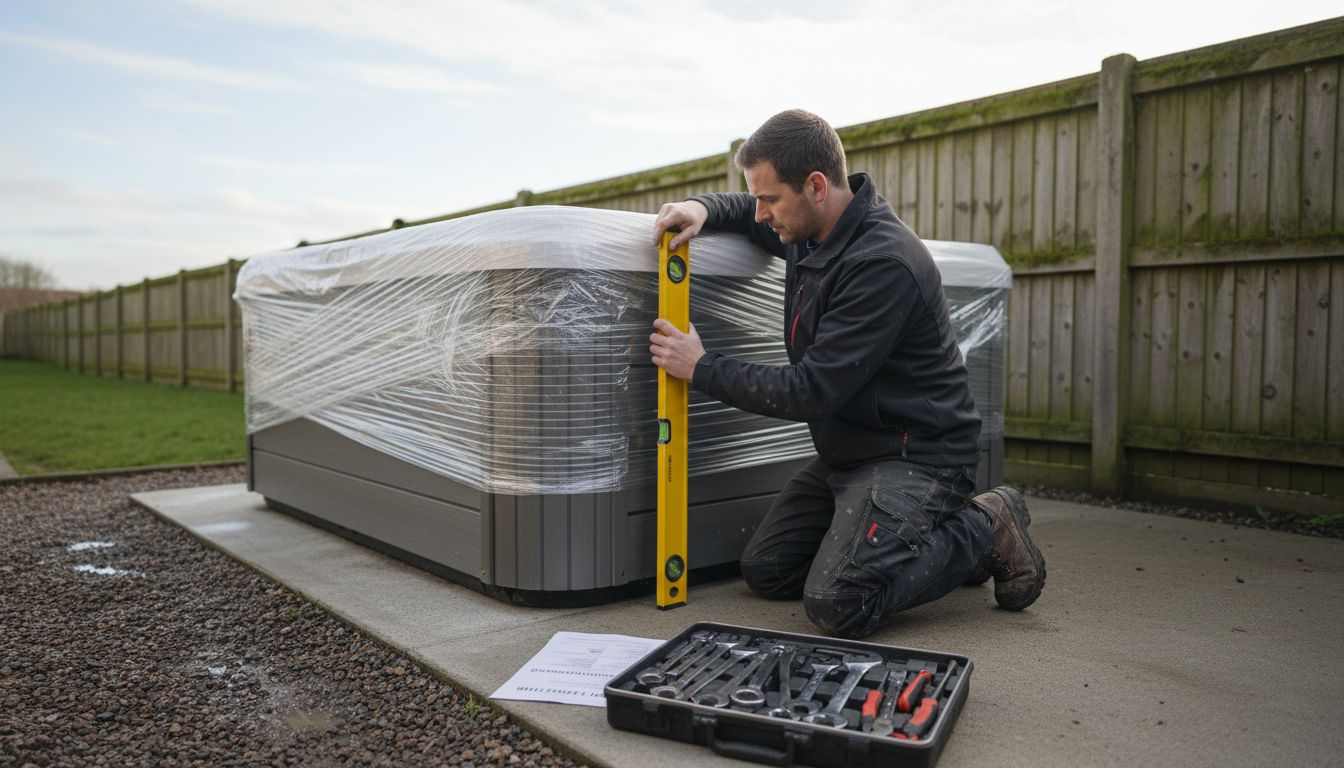
Accessibility and safety are paramount. Ensure you have clear pathways around all sides of the hot tub for maintenance and emergency access. Create a non slip surface using textured outdoor tiles or purpose built decking materials. Consider proximity to your home for convenience while maintaining enough distance to prevent moisture damage. Implement safety protocols by installing adequate lighting, handrails, and ensuring the area is free from overhead obstacles like tree branches or electrical wires.
Expert Recommendation Invest in a professional structural assessment to confirm your chosen site can safely support your hot tub’s total weight and usage requirements.
Step 3: Connect Electrical and Plumbing
Connecting your hot tub’s electrical and plumbing systems is a critical stage that requires professional expertise and strict adherence to safety regulations. This step ensures your hot tub functions safely and efficiently while meeting all UK electrical standards.
Electrical installation is not a DIY task. UK electrical guidelines mandate professional installation with specific requirements for hot tub circuits. You will need a qualified electrician who can install a dedicated outdoor electrical circuit with Residual Current Device (RCD) protection. The circuit must be specifically designed to handle the hot tub’s power requirements typically between 32 and 40 amperes. Ensure the electrician uses waterproof external sockets rated for outdoor use and positioned at least 3.5 metres from the hot tub to prevent electrical hazards.
Plumbing connections require equal precision. Your hot tub will need a reliable water source for initial filling and ongoing maintenance. Position a garden hose connection nearby with sufficient length to reach the tub comfortably. Consider installing a drain point close to the hot tub to simplify water replacement and cleaning processes. Confirm that your chosen location allows for easy access to water and drainage without creating tripping hazards or water damage risks to surrounding structures.
Expert Recommendation Always employ a certified electrician registered with a competent persons scheme to guarantee your hot tub electrical installation meets all legal safety requirements.
Step 4: Fill and Treat Your Hot Tub Water
Filling and treating your hot tub water is a crucial process that determines the overall quality of your spa experience. This step requires careful attention to water chemistry, volume management, and proper chemical treatment to ensure a safe and enjoyable environment.
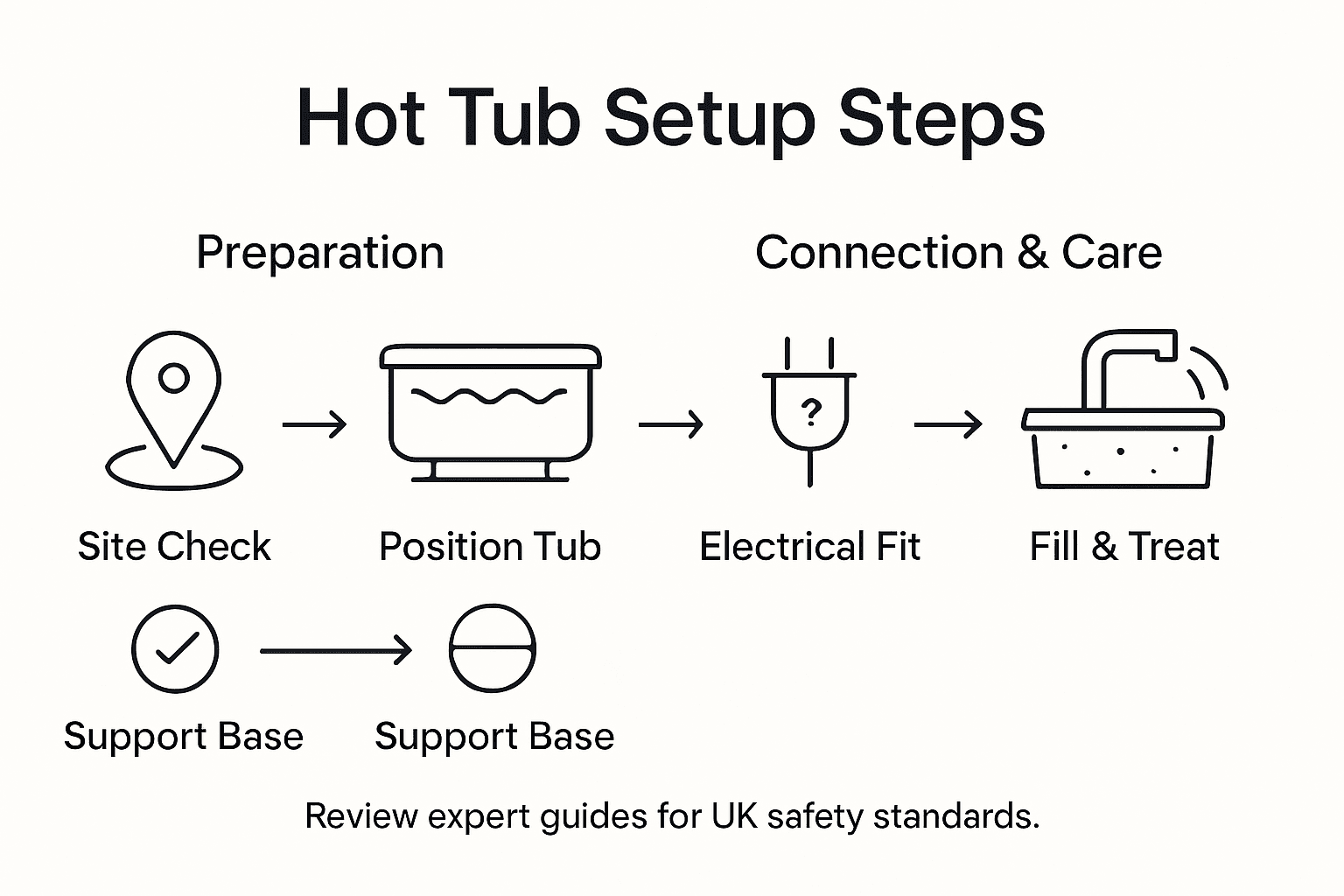
Begin by filling your hot tub with clean water using a garden hose positioned to reach the water inlet. Fill slowly to prevent air locks in the plumbing system, ensuring the water level reaches approximately 2.5 centimetres above the highest jet. Once filled, carefully balance your water chemistry by testing the pH levels using a reliable digital testing kit. Your target pH range should be between 7.2 and 7.6 for optimal comfort and equipment protection. Add pH increasers or decreasers as needed to achieve the correct balance.
Next, introduce the appropriate sanitising chemicals to eliminate bacteria and maintain water hygiene. Chlorine or bromine are the most common options for hot tub water treatment. Start by adding the recommended dosage based on your hot tub’s volume. Allow the chemicals to circulate for at least 20 minutes with the jets running to ensure even distribution. Monitor the sanitiser levels regularly and adjust as required to maintain a safe and clean water environment.
Here is a comparison of common hot tub sanitising chemicals to help you choose the most suitable option for your needs:
| Chemical Type | Key Benefits | Common Drawbacks | Typical Dosage Range |
|---|---|---|---|
| Chlorine | Fast-acting disinfection | Strong odour; can cause irritation | 3-5 ppm |
| Bromine | Gentler on skin and eyes | Slower to activate; more costly | 4-6 ppm |
| Mineral Systems | Lower chlorine usage | Higher initial cost; may require supplement | Dependent on brand |
Expert Recommendation Always keep a log of your water treatment actions to track chemical usage and maintain consistent water quality.
Step 5: Verify System Function and Chemical Balance
Verifying your hot tub’s system function and chemical balance is the final crucial stage in ensuring a safe and enjoyable spa experience. This step involves comprehensive testing and calibration to guarantee optimal water quality and equipment performance.
Establish a systematic maintenance routine that includes weekly water testing and careful monitoring. Use a professional digital water testing kit to check critical parameters such as pH levels, total alkalinity, and sanitiser concentration. Your target ranges should be pH between 7.2 and 7.6, total alkalinity between 80 and 120 parts per million, and chlorine levels between 3 and 5 parts per million (bromine 4 to 6). These precise measurements ensure water safety and prevent potential equipment damage.
For quick reference, here are ideal water quality parameters to maintain optimal hot tub performance:
| Parameter | Ideal Range | Purpose |
|---|---|---|
| pH | 7.2 - 7.6 | Comfort, equipment protection |
| Total Alkalinity | 80 - 120 ppm | pH stability |
| Chlorine/Bromine | 3 - 5 ppm chlorine, 4 - 6 ppm bromine | Sanitisation |
| Calcium Hardness | 175 - 250 ppm | Prevents scaling/corrosion |
Test all system components methodically. Run the jets at different speeds to confirm proper circulation and check for any unusual noises or vibrations. Inspect the filter for cleanliness and signs of wear. Verify that all electrical connections remain secure and that temperature controls function accurately. Pay close attention to water clarity remember that crystal clear water indicates a well balanced system. Address any irregularities immediately to prevent potential long term maintenance issues.
Expert Recommendation Maintain a detailed log of all water test results and maintenance actions to track your hot tub’s performance and identify any emerging patterns or potential problems.
Simplify Your Hot Tub Setup with ClearSpa Solutions
Setting up a hot tub in the UK involves careful site assessment, precise positioning, expert electrical and plumbing connections, and meticulous water treatment. You want lasting enjoyment without the stress of complicated maintenance or safety concerns. Key challenges include maintaining ideal pH and sanitiser levels, ensuring proper system function, and protecting your investment with quality products designed for UK conditions.
ClearSpa understands these priorities and offers a wide range of premium water treatment products to keep your spa safe and inviting. Our expertise helps you maintain perfect water balance and hygiene, aligning with the step-by-step guidance in your hot tub setup journey.
Ready to take the hassle out of your hot tub care? Discover trusted solutions tailored for your needs today.
Explore our carefully selected range of hot tub chemicals and spa essentials at ClearSpa. Start your maintenance routine confidently with expert advice and quality products crafted for UK homeowners like you. Visit ClearSpa Water Treatment and ensure your hot tub experience is effortlessly enjoyable from setup to soak.
Frequently Asked Questions
What should I consider when assessing my hot tub site?
You should examine the ground surface to ensure it’s level and stable enough to support the weight of the hot tub. Aim for concrete or specially constructed decking, and maintain a distance of at least 1.5 metres from your house to prevent moisture damage.
How can I position my hot tub safely in my garden?
Position your hot tub on a reinforced surface that can handle its weight, ideally a solid concrete pad or similarly robust platform. Ensure there is clear access for maintenance and that the area has proper drainage to avoid water accumulation.
What are the proper steps to connect my hot tub’s electrical and plumbing systems?
Hire a qualified electrician to install a dedicated outdoor electrical circuit with RCD protection, adhering to local guidelines. For plumbing, ensure you have a nearby water source and a drain point for easy water replacement; this prevents potential hazards.
How do I fill and treat my hot tub water correctly?
Fill your hot tub using a garden hose and ensure the water level surpasses the highest jet by approximately 2.5 centimetres. Test and balance your water chemistry, aiming for a pH level between 7.2 and 7.6, and treat it with sanitising chemicals according to your hot tub’s volume.
What routine should I follow to verify my hot tub’s system function and water balance?
Establish a weekly maintenance routine that includes testing the water for pH, alkalinity, and sanitiser levels. Ensure that all system components are functioning properly and keep a log of water test results to spot any issues early.
How can I ensure sufficient safety measures around my hot tub?
Implement safety protocols by installing adequate lighting and handrails while maintaining a clear area free of overhead obstacles. Design pathways with non-slip surfaces to prevent accidents and facilitate easy access for users.