The Essential Guide to Hot Tub Safety UK
Never run a hot tub above 40°C (37-38°C is ideal), limit soaks to 15-20 minutes and supervise children constantly. Keep chlorine at 3-5 mg/l or bromine at 4-6 mg/l with pH 7.2-7.6, test two to three times a week, and use an RCD-protected supply fitted by a qualified electrician.
Hot tub safety guide for UK owners: safe temperatures (max 40°C), sanitiser levels, electrical rules and child supervision — clear, practical advice.
Using a hot tub safely comes down to five things: keep the water no hotter than 40°C (37–38°C is ideal for most adults), hold a steady sanitiser level, test the water at least twice a week, supervise children at all times, and make sure the electrics were installed by a qualified electrician. This UK guide covers each of those in practical detail, using current HSE, RoSPA and BISHTA guidance, so you can relax knowing your spa is genuinely safe.
Table of Contents
- Hot Tub Safety Defined And Common Myths
- Essential Hot Tub Safety Rules UK
- Water Hygiene, Sanitisation, And Chemical Safety
- Electrical, Installation, And Supervision Precautions
- Risks, Liabilities, And Legal Requirements
- Frequently Asked Questions
Key Takeaways
| Point | Details |
|---|---|
| Temperature | Never exceed 40°C. Aim for 37–38°C and limit soaks to 15–20 minutes; lower still for children, older adults and anyone pregnant. |
| Sanitiser & balance | Hold free chlorine at 3–5 ppm (or bromine 4–6 ppm), pH 7.2–7.6 and total alkalinity 80–120 ppm. Test 2–3 times a week. |
| Electrics | Fixed wiring must be installed by a qualified electrician to BS 7671, protected by a 30 mA RCD. Never DIY the supply. |
| Supervision & access | Children need constant adult supervision. Fit a lockable, load-rated cover to prevent unsupervised access. |
Hot Tub Safety Defined And Common Myths
Hot tub safety means managing three overlapping risks: heat and its effect on the body, water hygiene and the bacteria it can harbour, and the physical hazards of water combined with electricity. Get all three right and a spa is one of the safest ways to relax at home. The Royal Life Saving Society UK and RoSPA both stress that most incidents are preventable with a few consistent habits.
A common myth is that hot tubs are "self-cleaning" or that a floating chlorine dispenser is enough on its own. It is not — warm water (around 38°C) is an ideal breeding ground for bacteria such as Pseudomonas aeruginosa and Legionella if sanitiser drops.[1] Another myth is that a quick, unsupervised dip for a child is harmless. Young children can lose consciousness in warm water in seconds, so supervision must be constant and hands-on.
The third myth is that hotter is more relaxing. Above 40°C the risk of overheating, dizziness and fainting rises sharply, particularly if you have had alcohol.[2] Understanding these realities — rather than assuming a spa "looks after itself" — is what turns a potential hazard into a safe, dependable part of your routine.
Essential Hot Tub Safety Rules UK
A handful of clear rules cover the vast majority of everyday risk. UK guidance from BISHTA and RoSPA points to the same core practices, whatever spa you own.
- Watch the temperature. Keep the water no hotter than 40°C; 37–38°C suits most adults. Set it lower (around 35–37°C) for children and older bathers.
- Limit soak time. 15–20 minutes is plenty. Get out sooner if you feel light-headed, nauseous or your skin turns red.
- Stay hydrated, skip the alcohol. Alcohol dilates blood vessels and hides the warning signs of overheating — a dangerous combination in hot water.
- Supervise children constantly. Never leave a child unattended, even for a moment, and keep the cover locked when the tub is not in use.
- Fit non-slip matting around the entry and steps, and keep a clear, uncluttered path in and out.
Getting the heat right matters as much for comfort as for safety — our hot tub temperature setting guide explains the ideal ranges for different bathers and how to balance comfort against running costs. If you or a bather has a heart condition, low or high blood pressure, or is pregnant, check with your GP before use, and keep sessions short and cool.
Water Hygiene, Sanitisation, And Chemical Safety
Water hygiene is the single biggest health factor in a hot tub. Because the water is warm and reused, it needs an active sanitiser at all times to kill bacteria before it reaches bathers. Test 2–3 times a week (daily if the tub is used heavily) and hold these ranges:
- Free chlorine: 3–5 ppm (or bromine 4–6 ppm)
- pH: 7.2–7.6 — above this, sanitiser works poorly; below it, water becomes corrosive and irritates skin and eyes
- Total alkalinity: 80–120 ppm, which keeps pH stable
- Calcium hardness: 100–250 ppm to protect surfaces and heaters
Test regularly with 6-in-1 test strips or a photometer, and follow a consistent routine — our water testing workflow guide walks through the order to test and adjust. Shock the water weekly (or after heavy use) with a non-chlorine shock to clear organic waste that dulls your sanitiser and causes cloudy, smelly water. If foam builds up, treat the cause rather than masking it, though a dose of foam remover helps in the short term.
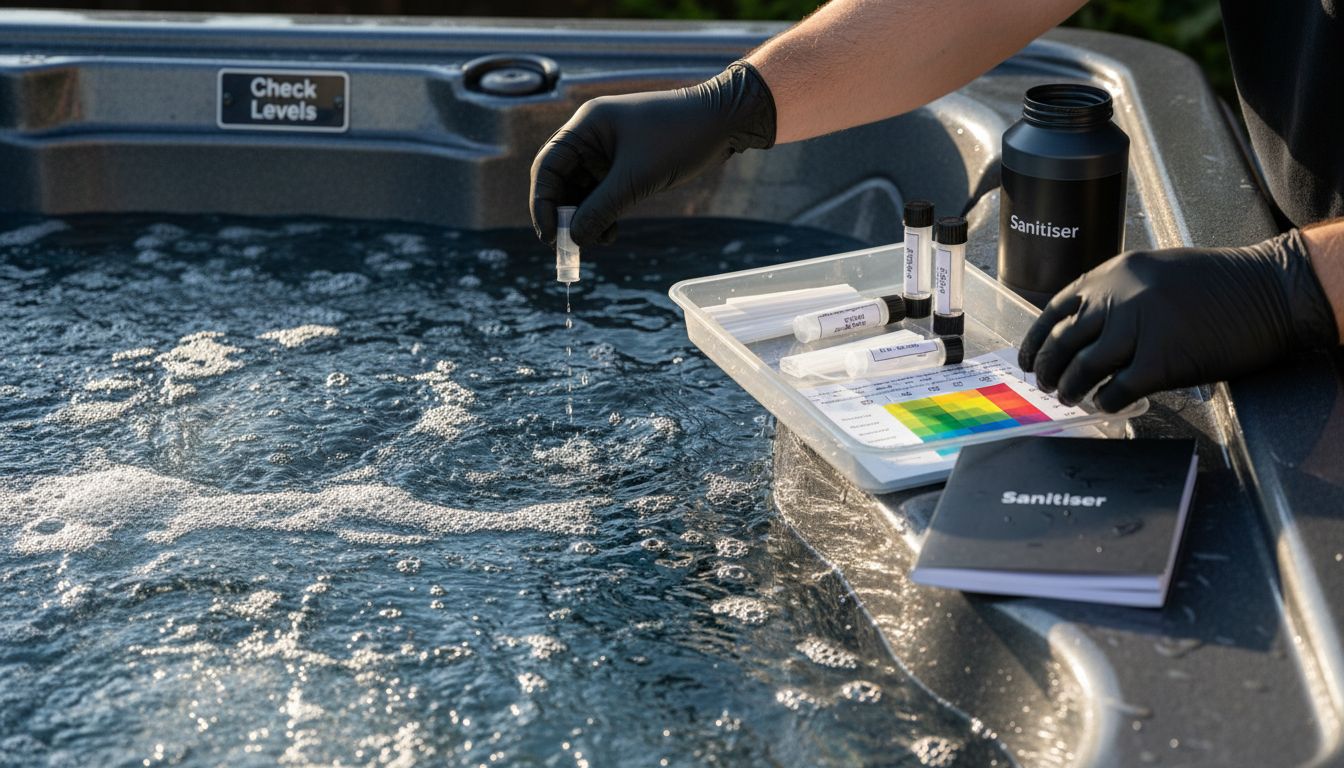
Handle chemicals carefully. Store them in a cool, dry place out of direct sunlight and away from children. Always add chemical to water, never water to chemical, and never mix products together — combining chlorine and acid, for example, releases toxic gas. Wear gloves and eye protection, dose in a ventilated spot, and read the label for exact quantities. For a full walkthrough see our hot tub chemical safety tips.
Round out your routine with regular filter care and a full water change every 3–4 months (or when total dissolved solids climb too high). A clogged filter can't keep water clear no matter how well you dose — our filter cleaning guide shows how to rinse, chemically soak and replace cartridges on schedule.
Electrical, Installation, And Supervision Precautions
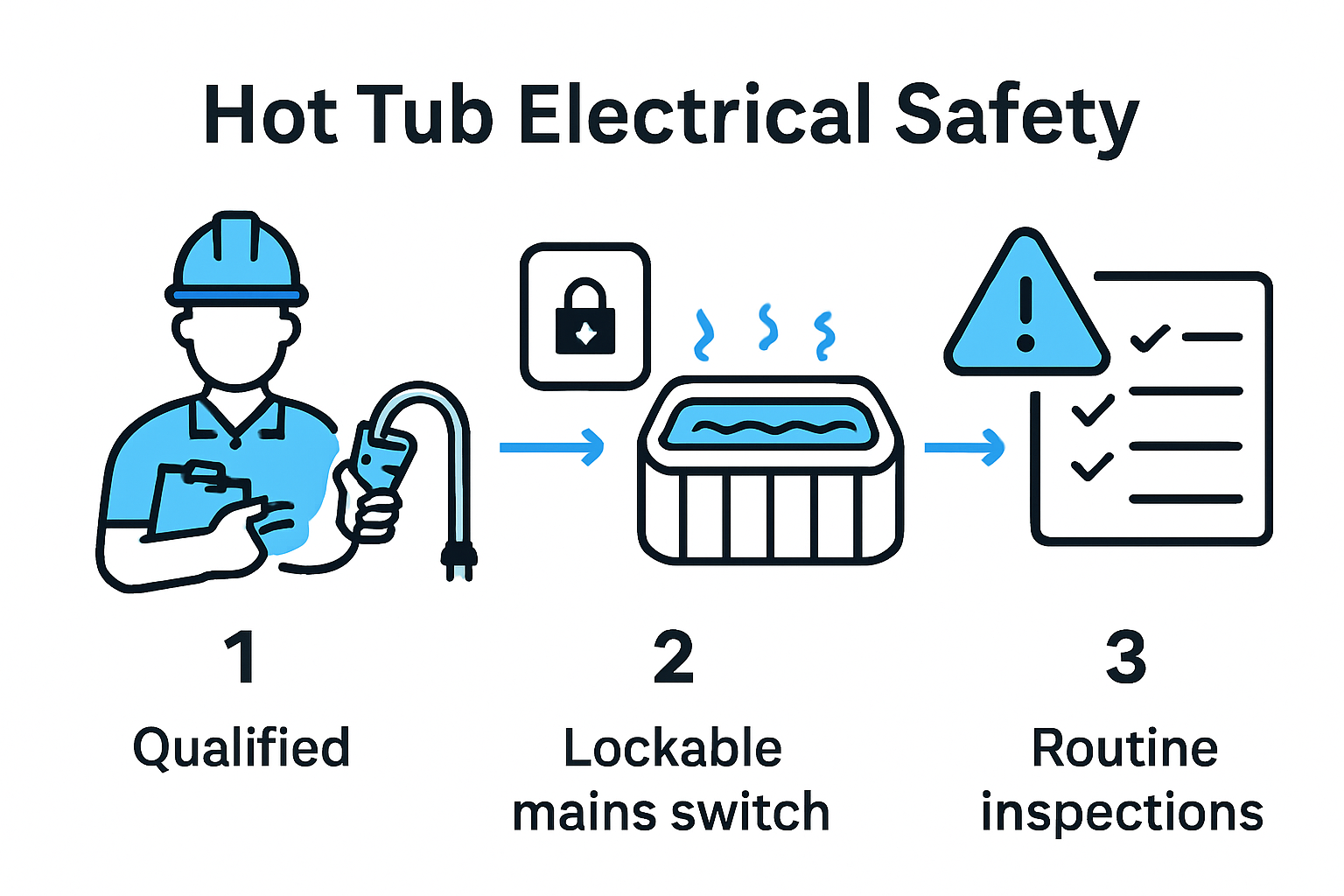
Water and mains electricity are an obvious danger, so the UK is strict about hot tub wiring. Any fixed electrical supply must be installed by a qualified electrician to BS 7671 (the IET Wiring Regulations) and protected by a 30 mA RCD (residual current device) that cuts the power instantly if a fault develops. This is notifiable work under Part P of the Building Regulations — never attempt it yourself. Plug-and-play 13 A models still need a suitable RCD-protected outdoor socket.
Position matters too. Site the tub on a stable, level base rated for its full filled weight (a filled spa with bathers can exceed 1,500 kg), keep it clear of overhead power lines and overhanging branches, and make sure cables are undamaged and connections stay dry. During thunderstorms, get out and, where practical, isolate the supply.
Supervision is the other half of physical safety. Children must be supervised at all times, and a solid, lockable, load-rated cover should be fitted whenever the tub is not in use to stop unsupervised access. Set clear house rules — no running, no diving, no glass near the water — and keep a phone to hand in case you need to call for help.
Risks, Liabilities, And Legal Requirements
For a private domestic hot tub used by your household, there is no licensing regime, but you still have a common-law duty of care to anyone who uses or has access to it. If you let a holiday home, run a rental or open the spa to the public, the picture changes: the HSE's HSG282 guidance on managing spa-pool risks applies, and you are expected to carry out a written risk assessment, keep water-testing records and control the Legionella risk.
Practical steps that protect both bathers and you as the owner include keeping dated records of water tests and maintenance, using a lockable cover, and checking your home insurance covers the spa and any liability. If you rent out a property with a hot tub, most insurers and letting agencies will expect documented daily testing and a clear cleaning regime.
The principle is simple: demonstrable, consistent safety management is your best protection. Keep the water balanced, the electrics compliant and the records up to date, and you sharply reduce both the risk of an incident and any question of liability if one ever occurred.
Keep Your Hot Tub Safe and Sparkling with ClearSpa
Safe hot tub use comes back to balanced water, sensible temperatures and sound electrics — all things you can control with the right products and a steady routine. ClearSpa supplies UK-formulated sanitisers, shock treatments and test kits to help you hold the levels set out above, session after session.
Explore our full range of spa chemicals and testing kits to keep your water clean, clear and safe — and enjoy your hot tub with genuine peace of mind.
Frequently Asked Questions
What temperature is safe for a hot tub?
Keep the water at or below 40°C, with 37–38°C ideal for most adults. Set it lower (around 35–37°C) for children and older bathers, and limit soaks to 15–20 minutes.
How often should I test and shock my hot tub?
Test the water 2–3 times a week (daily with heavy use), holding free chlorine at 3–5 ppm or bromine at 4–6 ppm, pH 7.2–7.6 and alkalinity 80–120 ppm. Shock weekly or after heavy use, and change the water every 3–4 months.
Do I need an electrician to install a hot tub?
Yes. Any fixed electrical supply must be installed by a qualified electrician to BS 7671 and protected by a 30 mA RCD — it is notifiable work under Part P. Even plug-and-play models need an RCD-protected outdoor socket.
Are hot tubs safe for children?
Only with constant, hands-on adult supervision, a lower temperature and a shorter soak time. Fit a lockable, load-rated cover to prevent unsupervised access when the tub is not in use.
Recommended
- Hot Tub Temperature Setting Guide: Complete UK Resource
- Hot Tub Chemical Safety Tips
- Hot Tub Water Testing Workflow Guide
- Hot Tub Filter Cleaning Guide UK
- 7 Essential Things You Need for a Hot Tub in the UK
Sources and review
Reviewed on . Next review due .
- HSG282: The control of legionella and other infectious agents in spa-pool systems - Health and Safety Executive
- Guidelines for safe recreational water environments. Volume 2: swimming pools and similar environments - World Health Organization