Signs You Need to Clean Your Hot Tub: Complete Guide
Learn key signs your hot tub needs cleaning, typical causes of dirty water, and expert cleaning tips in this comprehensive ClearSpa guide for UK owners.
Did you know that poorly maintained hot tubs can harbour bacteria capable of causing serious illness? Legionnaires’ disease affects 300 to 500 people in the UK each year through contaminated water. Understanding how to define and maintain proper cleanliness standards goes far beyond just keeping your hot tub looking sparkling. It means protecting everyone’s health and making every soak safe, comfortable, and worry-free by following precise guidelines for water quality and regular upkeep.
Key Takeaways
| Point | Details |
|---|---|
| Proper Chemical Balance is Essential | Regularly monitor and maintain sanitiser levels, pH balance, alkalinity, and water hardness to ensure safe hot tub water. |
| Recognize Signs of Contamination | Be alert for indicators like cloudy water, persistent foam, or unpleasant odours, which necessitate immediate cleaning and maintenance. |
| Health Risks Grow Without Maintenance | Neglected hot tubs can become breeding grounds for bacteria, leading to serious health conditions, including skin infections and respiratory issues. |
| Implement a Consistent Maintenance Routine | Adopt regular water testing, temperature control, and surface cleaning to create a hygienic hot tub environment. |
Table of Contents
- Defining Cleanliness Standards For Hot Tubs
- Common Signs Indicating Cleaning Is Needed
- Causes Of Water Contamination In Hot Tubs
- Health Risks Linked To Dirty Hot Tubs
- Effective Cleaning And Prevention Tips
Defining Cleanliness Standards for Hot Tubs
Maintaining pristine water quality isn’t just about appearances - it’s about creating a safe, enjoyable hot tub experience. Hot tub maintenance requires understanding precise chemical balance and regular monitoring to prevent potential health risks.
According to UK health guidelines, hot tub cleanliness involves monitoring several critical parameters:
- Sanitiser Levels: Maintain chlorine at 3-5 ppm or bromine at 4-6 ppm
- pH Balance: Keep between 7.2-7.6 for chlorine, or 7.0-7.4 for bromine
- Alkalinity: Target range of 80-120 ppm
- Water Hardness: Maintain total hardness between 100-250 ppm
Regular water testing isn’t just recommended - it’s essential. Monthly water changes help manage total dissolved solids and prevent bacterial growth. Visual inspections of your filter and water surface can also reveal early signs of potential issues. A cloudy appearance, unusual odours, or visible debris are immediate red flags signalling it’s time for a comprehensive clean.
Here’s a summary of essential hot tub water quality parameters:
| Parameter | Recommended Range (Chlorine) | Recommended Range (Bromine) |
|---|---|---|
| Sanitiser Level | 3-5 ppm | 4-6 ppm |
| pH Balance | 7.2-7.6 | 7.0-7.4 |
| Alkalinity | 80-120 ppm | 80-120 ppm |
| Water Hardness | 100-250 ppm | 100-250 ppm |
Remember, consistent maintenance protects not just your hot tub’s longevity, but more importantly, the health of everyone who uses it. Treat your hot tub water like the precision environment it is.
Common Signs Indicating Cleaning Is Needed
Knowing when your hot tub needs attention isn’t just about visual appearance - it’s about understanding the subtle signals that suggest your water chemistry is out of balance. Hot tub chemicals play a crucial role in maintaining a safe and enjoyable spa environment.
According to research from The Hot Tub Engineer, several key indicators signal that your hot tub requires immediate maintenance:
- Persistent Foam: Unusual foaming on the water surface
- Skin Irritation: Itchy skin or burning eyes after use
- Visual Contamination: Slimy walls or visible gunk suggesting biofilm development
- Chemical Instability: Difficulty stabilising chemical levels
- Unpleasant Odours: Strong chemical or musty smells
Cloudy water is another significant red flag. This typically indicates low sanitiser levels or pH drift, which can create an environment ripe for bacterial growth. When your water looks more like a murky pond than a crystal-clear spa, it’s a definitive sign that comprehensive cleaning is overdue.
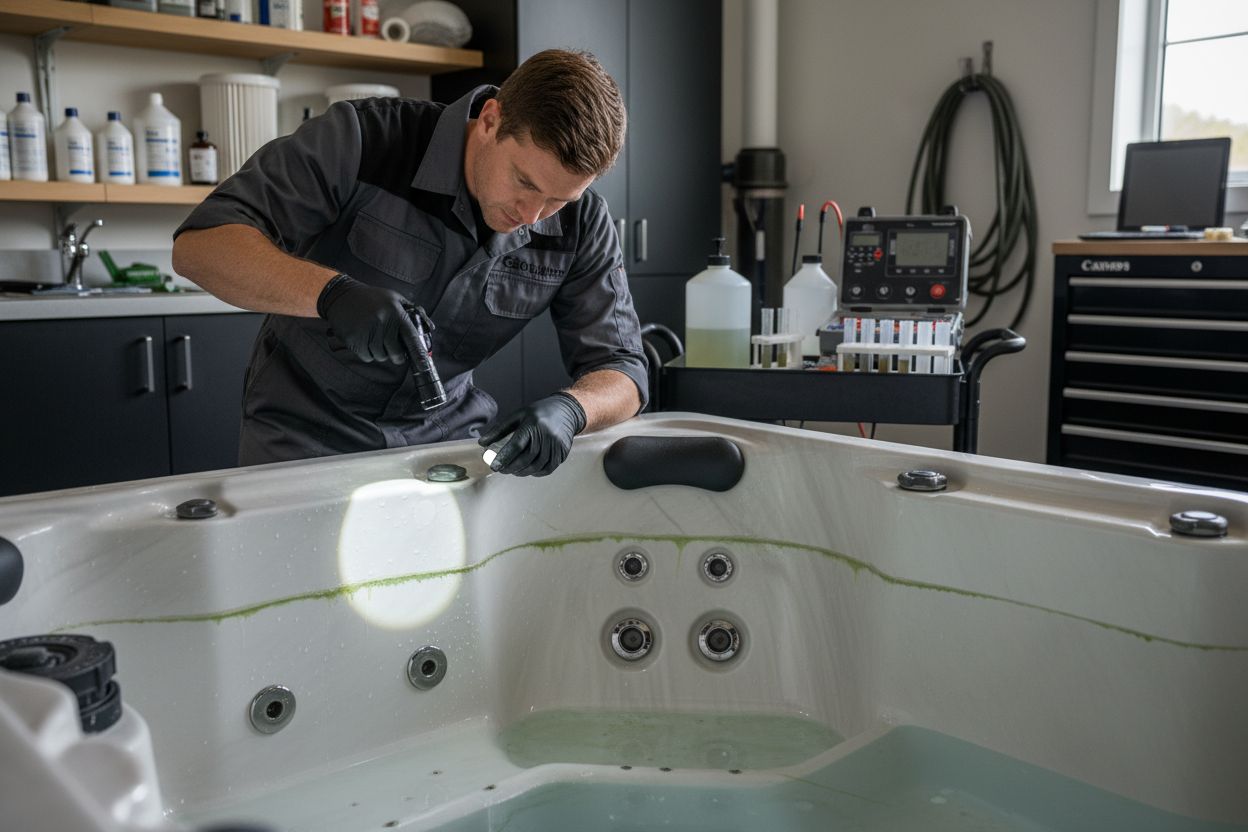
Pay close attention to these warning signs.
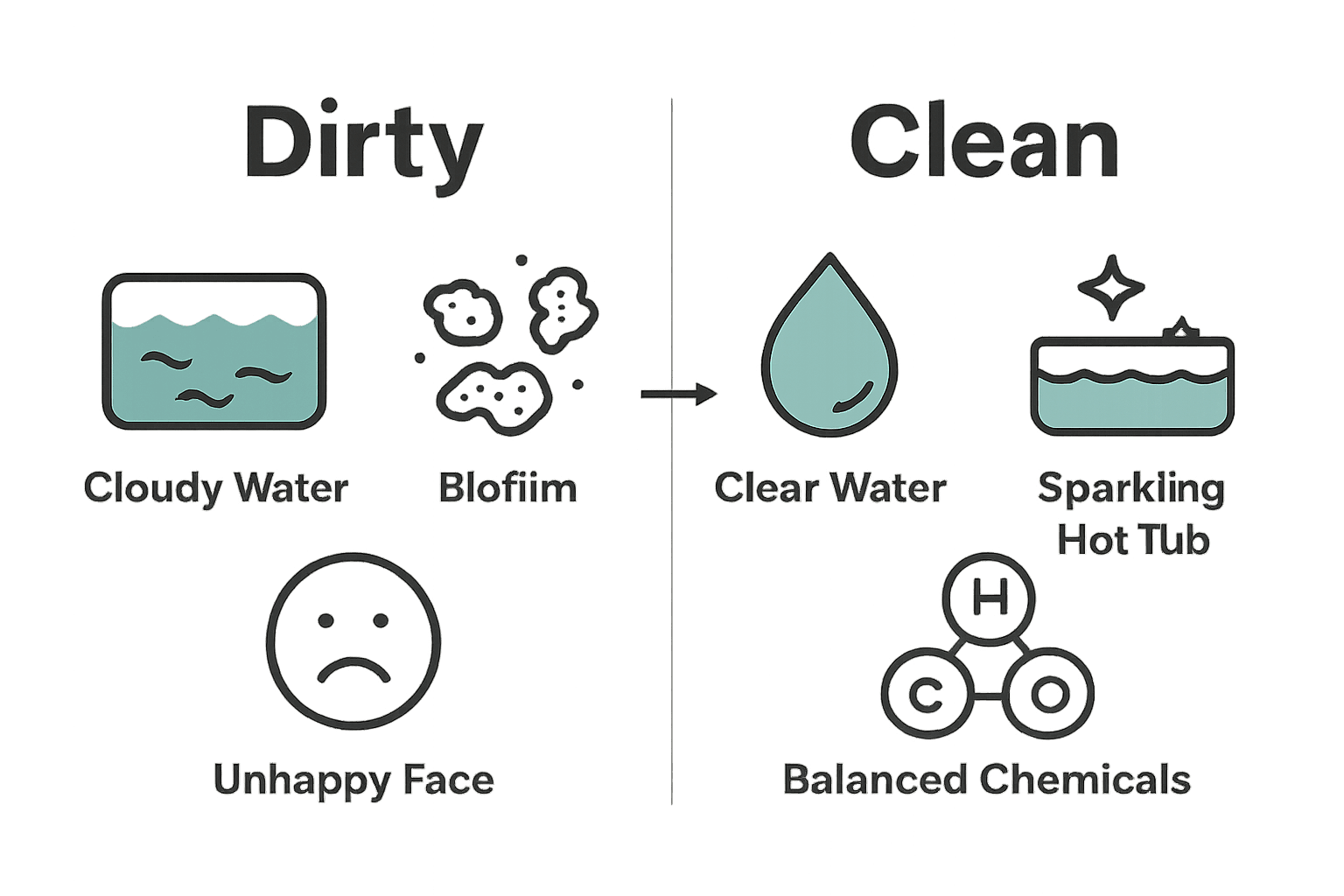 Ignoring them doesn’t just compromise your hot tub’s aesthetic appeal - it potentially exposes you and other users to health risks. Regular maintenance isn’t just recommended; it’s essential for creating a safe, enjoyable hot tub experience.
Causes of Water Contamination in Hot Tubs
Understanding hot tub water contamination goes beyond simple cleanliness - it’s about recognising the complex interactions between human activity and water chemistry. 5 Most Frequently Asked Questions About Owning a Hot Tub can help you better comprehend these intricate dynamics.
According to research from Aquawarehouse, water contamination originates from multiple sources:
- Bacterial Pathogens: Chlorine-resistant organisms like E. coli, Shigella, Giardia
- Parasitic Microorganisms: Cryptosporidium and Pseudomonas aeruginosa
- Bodily Contaminants: Sweat, urine, faecal matter
- Organic Load: Materials that interact with sanitisers
The warm, confined environment of hot tubs accelerates microbial growth. As Simplex Health notes, small water volumes combined with elevated temperatures create an ideal breeding ground for harmful microorganisms. Improper sanitiser levels, uncontrolled pH, and inconsistent alkalinity further exacerbate these risks.
Chloramines - irritant compounds formed when organic matter reacts with chlorine - pose another significant threat. These compounds not only compromise water quality but can also cause skin irritation and respiratory discomfort. Regular water testing, prompt sanitiser replenishment, and understanding the complex chemistry at play are your best defences against these invisible invaders.
Health Risks Linked to Dirty Hot Tubs
When hot tubs aren’t properly maintained, they transform from relaxation zones into potential health hazards. Understanding hot tub temperatures and comfort is crucial, but knowing the associated health risks is even more critical.
According to The Sun’s health reporting, several serious health conditions can emerge from poorly maintained hot tubs:
- Hot Tub Lung: A hypersensitivity pneumonitis caused by inhaling aerosolised Mycobacteria
- Legionnaires’ Disease: Potentially fatal respiratory infection
- Pseudomonas Aeruginosa: Causing skin infections like hot-tub folliculitis
- Respiratory Complications: Including persistent cough and shortness of breath
In the UK, Legionnaires’ disease remains a significant concern, with 300-500 reported cases annually. Warm, stagnant water becomes a perfect breeding ground for dangerous bacteria. The symptoms might initially resemble a common flu but can rapidly progress to severe pneumonia, making preventative maintenance not just a recommendation, but a critical health necessity.
Symptoms like fever, breathing difficulties, and skin irritations are clear warning signs that your hot tub environment might be compromised. Regular cleaning, proper chemical balance, and consistent water circulation are your primary defences against these invisible but potentially life-threatening health risks.
Effective Cleaning and Prevention Tips
Preventing hot tub contamination requires a systematic approach that goes beyond occasional maintenance. Hot tub chemicals are your first line of defence in creating a safe, hygienic spa environment.
According to UK health guidance, maintaining a pristine hot tub involves several critical prevention strategies:
- Regular Water Testing: At least weekly comprehensive chemical analysis
- Temperature Control: Keep water below 40°C to reduce bacterial growth
- Filter Management: Clean and replace filters consistently
- Pre-Soak Hygiene: Shower before entering the hot tub
- Surface Maintenance: Regularly wipe and disinfect all surfaces
Simple Health recommends a monthly water replacement cycle for heavily used hot tubs. This practice helps manage total dissolved solids and prevents the accumulation of contaminants that standard chemical treatments might miss. Pay special attention to your sanitiser levels, ensuring they remain within recommended ranges to create an environment hostile to harmful microorganisms.
Think of hot tub maintenance like caring for a living ecosystem. Each chemical adjustment, each cleaning session, and each careful inspection contributes to a healthier, safer relaxation space. Consistency is key - treat your hot tub with regular, thoughtful care, and it will reward you with a clean, enjoyable experience.
Restore Confidence in Your Hot Tub Water with ClearSpa
Do you ever worry that cloudy water, stubborn foam or unpleasant odours are warning signs that your hot tub is in need of urgent cleaning? The article has shown how easily water quality can slip, leading to discomfort, health concerns and a less enjoyable spa experience. If you recognise these warning signs or find it difficult to keep your water perfectly balanced, you are not alone. Many hot tub owners struggle to maintain the ideal chemical levels and protect their loved ones from hidden risks.
Take back control of your relaxation time. Rely on ClearSpa, the trusted Spa Trade Group Brand, to provide you with high-quality hot tub chemicals and water treatment products that make routine maintenance straightforward. By choosing ClearSpa, you can tackle water contamination head on, ensure safe sanitiser levels and extend the life of your hot tub. Visit clearspa.com today to explore our full selection and start enjoying a sparkling, healthy spa environment. The best protection is prompt action, so do not wait for small problems to become major headaches.
Frequently Asked Questions
What are the signs that indicate my hot tub needs cleaning?
Key signs include persistent foam, skin irritation, visual contamination like slimy walls, chemical instability, unpleasant odours, and cloudy water.
How often should I test the water in my hot tub for cleanliness?
It is recommended to test the water at least weekly to ensure proper chemical balance and prevent bacterial growth.
What are the health risks associated with a dirty hot tub?
Dirty hot tubs can lead to health issues such as Hot Tub Lung, Legionnaires’ Disease, Pseudomonas aeruginosa infections, and respiratory complications.
What preventive measures can I take to maintain my hot tub’s cleanliness?
Regular water testing, temperature control below 40°C, consistent filter management, pre-soaking hygiene, and routine surface maintenance are essential preventive measures.